
Qualification - Certificate in Environmental Restoration
Learn how to restore and protect degraded environments - natural or man-made. This course is designed to lay the foundation for a career in environmental assessment, management or research.







Now is the time to study Environmental Restoration
The restoration of ecological communities and land forms is an integral component of managing natural resources. Throughout the world, we are now seeing meaningful progress in “fixing the environment”, which means that there is now a great need for trained professionals in associated fields.
The field of Environmental Restoration:
• Creates jobs that “fix” rather than “destroy” the environment.
• Provides “quality of life” jobs.
• Provides job security with opportunities for local, on-ground jobs.
Learn to Restore and Protect Degraded Environments
At least 25% of earth's land is estimated to be affected by land degradation (of one form or another) and this affects the lives of more than a billion people, spread across many countries. On top of this, the oceans and air are increasingly affected by environmental decline.
The loss of species due to land degradation is also huge - more than 20,000 species are lost each year. The world population is expected to reach 9 billion by 2050, with the increase concentrated mainly in developing countries - and with increased urbanisation within these countries.
All of this sounds like a very bleak scenario; and yet mankind continues to thrive. Sooner or later though; the sins of the past will catch up with everyone; and if we don't restore our environment, we will not continue to thrive as a species.
WHAT WILL YOU LEARN?
- The nature and scope of ecology
- How to assess damaged or undamaged sites
- How to conserve and manage the environment
- Choose 3 elective units that will suit you
WHO IS THIS COURSE FOR?
- Those who want to work in environmental restoration (e.g. forests, farms, mines, damage from floods and fires.
- Those who want to be environmental assessors.
- Those who want to take the first step towards a solid qualification.
- Those working in the industry who want to extend their knowledge and gain a qualification.
Course Structure
This course is made up of a number of modules. To complete this course you must study and pass all of the modules listed below.
Core Modules
Elective Modules
In addition to the core modules, students must also choose 3 of the following elective modules.
- Healthy Buildings I (Building Construction & Health)
- Healthy Buildings II (Building Environment & Health)
- Introduction To Ecology
- Regenerative Agriculture
- Restoring Established Ornamental Gardens
- Soil Management (Agriculture)
- Soil Microbiome Management
- Trees For Rehabilitation (Landcare Reafforestation)
- Water Conservation And Management
- Wildlife Conservation
Accreditations
What Do the Core Modules Cover?
Module 1: ENVIRONMENTAL STUDIES
There are 6 lessons in this course:
-
Living Things
-
Classification of plants and animals
-
Identifying living organisms
-
Using identification keys
-
-
Basic Ecology
-
Populations
-
Communities
-
Ecosystems
-
Constituents of ecosystem
-
The ecosphere
-
The web of life
-
Habitats and niches
-
Humans in the environment.
-
-
Global Environmental Systems
-
The Earth’s structure
-
The atmosphere
-
Climatic systems
-
Gaia theory
-
The carbon dioxide cycle
-
El Nino.
-
-
Environmental Problems
-
Deforestation
-
Loss of agricultural land
-
Loss of biological diversity
-
Loss of water
-
Loss of non-renewable resources
-
Environmental weeds
-
The Greenhouse Effect
-
Ozone depletion
-
Ozone as a Greenhouse gas
-
-
Conservation
-
The definition and goals of conservation
-
The history of conservation
-
Natural resources (renewable and non-renewable).
-
-
Acting Locally: Thinking Globally
-
Humans and water
-
How to minimize water usage
-
Energy use in the home
-
Reducing household waste
-
Domestic transport and its effect on pollution
-
Building materials and their environmental impact.
-
Module 2: CONSERVATION AND ENVIRONMENTAL MANAGEMENT
Conservation is the wise use of resources of the earth, in order that they will be able to support or sustain, the generations that are yet to come. This can be done in many ways and in different situations. For example:
-
National Parks - The protection of the ecosystems, including endangered species of flora and fauna.
-
Agriculture - Permaculture techniques such as the management of soil erosion and water catchment areas.
-
Industry - Pollution control measures should be used.
-
People - Every person should help to collect and recycle waste.
These examples show that conservation involves the use of resources so that the environment is protected and maintained, and that the ecosystems are rehabilitated and restored. There are 8 lessons in this course:
-
An Introduction To Ecology
-
A Perspective On Environmental Problems
-
Pollution & Industry Effects On The Environment
-
Water & Soil
-
Vegetation Conservation & Management
-
Animal Conservation & Management
-
Marine Conservation & Management
-
The Future
Module 3: ENVIRONMENTAL ASSESSMENT
There are 8 lessons in this course:
-
Introduction to Environmental Assessment
-
Types of Employment for Environmental Scientists, Pre purchase inspections, background data, Flora and Fauna Surveys, Open Space Management Plans, Detection of Pollutants, Use of Plants, Remediation of Polluted Sites, Employment in a Multi-Disciplinary Team.
-
-
Overview of Environmental Assessment
-
What is Environmental Assessment? Definitions of Environmental Assessment, Overview of the Environmental Assessment Process.
-
-
International Environmental Law
-
Foundations of Environmental Law, Making International Laws (Treaties and Customary Law), Milestones in International Environmental Law, Principles of International Environmental Law, Institutions that influence Environmental Law, Environmental Impact Assessment and Environmental Law.
-
-
Domestic Environmental Law
-
Evolving Domestic Environmental Law, Strategies for Domestic Environmental Policy, Establishment of Environmental Standards, Liability, Environmental Impact Assessment, Prior Authorisation and Enforcement.
-
-
Types of Environmental Assessments
-
Environmental Impact Assessment, Environmental Impact Statement, Environmental Risk Assessment, Ecological Risk Assessment, Strategic Environment Assessment, Environmental Audit, Regional Risk Screening, Ecological Impact Assessment, Social Impact Assessments and Statements, Economic and Fiscal Impact Assessment, Health Impact Assessment.
-
-
The Design and Process of Environmental Assessment
-
Steps in the Environmental Assessment Process (Screening, Scoping, Collection and Analysis of Information, Public Consultation and Participation, Reporting the Findings of the Study, Post Project Analysis) Impact Prediction and Evaluation including Impact Identification Methods and Impact Assessment Techniques, Data Collection, Statistical Analysis of Data and Statistical Tests.
-
-
Writing Environmental Reports
-
Environmental Statements, Report Structure, Suggested Layouts for Environmental Statements, Report Presentation, Examples of Environmental Impact Statements.
-
-
Research Project
-
The Research Project is the student’s opportunity to test out their skills as an environmental consultant. In this project, the student will go through the steps involved in carrying out an environmental assessment and write it up as a professional report.
-
ELECTIVE MODULES
These are designed to build extra skills which compliment job in environmental restoration and management. A range of options are offered, to provide students the change of pursuing areas of specific relevance or interest to them. This way every student can build a slightly different set of skills, differentiating themselves from others in industry, and allowing them to develop a reputation as a "specialist" fulfilling a niche that is different to others.
Where Can This Course Lead You?
With a background in Environmental Restoration, you may find yourself working in a variety of roles such as:
-
Ecological monitoring, e.g., ecological field work, consulting and research
-
Community engagement, e.g., events, fundraisers, education
-
Political advocacy
-
Community engagement and leadership
-
Communications.
-
Policy, regulation, legislation, etc.
-
Environmental compliance
-
Invasive species management, e.g., fencing and infrastructure maintenance, and more!
Many organisations utilise environmental restorations personnel, including:
-
Local, state and national government departments.
-
Environment and disaster services.
-
Research organisations.
-
Private conservation organisations.
-
Nature conservancies.
-
Ecological consulting agencies.
Why Study with ACS?
Design your own learning pathway.- Study at your own pace, from anywhere, at any time.
- Receive prompt, expert support from our team of committed and friendly tutors.
Your learning is our priority. We are flexible and adaptable to meet your educational needs!
Enrol using the automated procedure on this site or contact us via phone or email to ask questions and enrol with a real person.
You can enrol at anytime and start the course when you are ready. Enrolments are accepted all year - students can commence study at any time. All study is self paced and ACS does not set assignment deadlines.
Please note that if a student is being assisted by someone else (e.g. an employer or government subsidy), the body offering the assistance may set deadlines. Students in such situations are advised to check with their sponsor prior to enrolling. The nominal duration of a course is approximately how long a course takes to complete. A course with a nominal duration of 100 hours is expected to take roughly 100 hours of study time to complete. However, this will vary from student to student. Short courses (eg. 100 hrs duration) should be completed within 12 months of enrolment. Certificates, Advanced Certificates and Awards (eg. over 500 hours duration) would normally be completed within 3 -5 years of enrolment. Additional fees may apply if a student requires an extended period to complete.
If a student cannot submit their assignments for 6 months to ACS, they should advise the school to avoid cancellation of their student
registration. Recommencement fees may apply.
Simply click on the ENROL OPTIONS button at the top of this screen and follow the prompts.
You can see the course price at the top of this page. Click 'enrolment options' to see any payment options available.
You can pay by Credit Card, PayPal, Afterpay or bank transfer.
Yes! We have payment plans for most courses. Click 'enrolment options' to see the available payment plans.
We also have Afterpay that will allow you to pay for your course or payment plans in four instalments (if you are in Australia).
There are no entry requirements that you need to meet to enrol in our courses, our courses are for everyone.
If you are under 18, we need written permission from your parent/ guardian for your enrolment to continue, we can arrange that after you have enrolled.
You don’t need to purchase any additional resources to complete our courses.
What do I need to know before I enrol?
We aim to teach you the essentials without you having to purchase any specific computer program.
We recommend that you have access to a word processing program, such as Microsoft Word or Google Docs, so that you can easily complete and submit your assignments.
You sure can. We are here to help you learn whatever your abilities.
Yes, if you are enrolling in a Certificate or Advanced Certificate, you might be eligible for credits if you have evidence of your previous studies or relevant experience. More information is here.
We recommend that you are able to browse websites, send emails and conduct online research. You will need to be able to type and submit your assignments.
If you have limited computer skills, we can make special arrangements for you.
This is possible, it depends on the institution. We recommend that if you would like to use our courses that you contact the institution first. Our Course Handbook is a good resource for this.
Our courses are written in English and we only have English speaking academic staff. If you can read and complete your assignments in English, our courses are ideal for you.
Our courses are designed to build knowledge, hands on skills and industry connections to help prepare you to work in the area, running your own business, professional development or as a base for further study.
This course is aimed at providing you with a solid understanding in your selected discipline. It has been designed to take 600 hours, which includes your course reading, assignment work, research, practical tasks, watching videos and more. When you complete the course, will have a good understanding of the area/ industry you want to work in.
It’s up to you. The study hours listed in the course are a rough guide, however if you were to study a short course (100 hours) at 10 hours per week, you could finish the course in 10 weeks (just an example). Our courses are self-paced, so you can work through the courses in your own time. We recommend that you wait for your tutor to mark and return your assignment before your start your next one, so you get the benefits of their feedback.
The course consists of course notes, videos, set tasks for your practical work, online quizzes, an assignment for each lesson (that you receive feedback from your tutor from) and ends in an exam (which is optional, if would like to receive the formal award at the end), using our custom built Learning Management System - Login.Training.
Our courses are designed for adults to gain professional development and skills to further their careers and start businesses.
Our custom online learning portal allows you to conduct your learning online. There may be practical tasks that you can do offline. You have the option of downloading your course notes or print them to read later.
There is also the option to pay an additional fee for printed course notes and or USB (availability limited to location and deliverability).
Yes, if you don’t have access to the internet, you can receive the course as paper notes or on a USB stick for an additional fee. We can also make alternative arrangements for you to send your assignments to us.
We offer printed notes for an additional fee. Also, you can request your course notes on a USB stick for an additional fee.
Yes, your tutor is here to help you. Simply post any questions you have in your login.training portal or contact the office and we can pass on a message to your tutor.
We are more learning focussed, rather than assessment focussed. You have online quizzes to test your learning, written assignments and can complete an exam at the end of the course (if you want to receive your certificate). You will not receive a pass/ fail on your course work. If you need to add more details on your assignment, we will ask you to resubmit and direct you where you need to focus. If you need help, you can ask your tutor for advice in the student room.
Each module (short course) is completed with one exam.
Exams are optional, however you must sit an exam if you would like to receive a formal award. You will need to find someone who can supervise that you are sitting the exams under exams conditions. There is an additional cost of $60 incl. GST for each exam.
More information is here
There are practical components built into the course that have been designed to be achieved by anyone, anywhere. If you are unable to complete a task for any reason, you can ask your tutor for an alternative.
When you complete the course work and the exams (6 exams) and you will be able receive your course certificate- a Certificate. Otherwise, you can receive a Letter of Completion.
You can bundle the short courses to create your own customised learning bundle, Certificates or Advanced Certificates. More information is on this page.
Yes, our courses are built to be applicable for people living anywhere in any situation. We provide the fundamentals, and each student can apply their own unique flair for their own interests, region and circumstances with the one-on-one guidance of a tutor. There is also a bit of student directed research involved.
Employers value candidates with industry skills, knowledge, practical skills and formal learning. Our courses arm you with all of these things to help prepare you for a job or start your own business. The longer you study the more you will learn.
ACS has an arrangement with OAMPS (formerly AMP) who can arrange Professional Indemnity from Australian and New Zealand graduates across all disciplines. Ph: 1800 222 012 or email acs@oamps.com.au.
Who are ACS Distance Education?
ACS Distance Education have been educating people for over 40 years.
We are established and safe- we have been in education for over 40 years.
We are focused on developing innovative courses that are relevant to you now and what you will need to know in the future.
We are focused on helping you learn and make the most of your experience.
You can enrol at any time, you can work on your course when it suits you and at your own pace.
We are connected to many industry bodies and our staff participate in continuous improvement and learning activities to ensure that we are ahead of what learning is needed for the future.
Our courses are not accredited by the Australian Government. However many of our courses are recognised and held in high regard by many industry bodies.
Our courses are written by our staff, who all have many years experience and have qualifications in their speciality area. We have lots of academic staff who write and update our courses regularly.
How do I enrol my staff/ sponsored students?
Yes, you can do a request for a bulk enrolment and request an invoice on our Invoice Request Form
We can prepare an invoice, quote or proforma invoice. Simply complete your details on our Invoice Request form
We can arrange bulk discounts for your course enrolment, please get in touch with us to discuss your needs.
Yes, we have many students who are in locked facilities, such as prisons or hospitals. We can cater by also offering paper notes at an additional cost.
What if I have any more questions or need more information?
We can assist you to find the right course for your needs. Get in touch with us via email (admin@acs.edu.au) call on +61 7 5562 1088 or complete our course advice form.
What if I change my mind?
Please get in touch with studentservices@acs.edu.au if you would like to be removed from our mail list.
If you would like ACS Distance Education to delete your information at any time (whether you are a customer or a prospective customer), please contact our privacy officer and we will process this ( admin@acs.edu.au ).
If students require a reproduction of their certificate, an electronic copy can be provided at a cost of AUD$35 incl GST. Printed copies are not available.
Course Contributors
The following academics were involved in the development and/or updating of this course.

Dr Robert Browne
Zoologist, Environmental Scientist and Sustainability, science based consultancy with biotechnology corporations. Work focused on conservation and sustainability.
Robert has published work in the fields of nutrition, pathology, larval growth and development, husbandry, thermo-biology, reproduction technologies, and facility design.Robert has B.Sc., Ph, D.

Martin Powdrill
25 years working in Telecommunications, IT, Organisational Development, and Energy Conservation & Efficiency, prior to setting up his own Permaculture consulting business. Martin has a Bsc (Hons) Applied Science (Resources Option), MSc Computer Studies, Permaculture Design Certificate.
Martin volunteers with many local environmental and community groups, and facilitates discussions on climate change, peak oil, and transition towns. Martin has an allotment, and is currently enrolled in the Scottish Mountain Bike Leader Award programme.
Martin’s goal as a catalyst for sustainable change brings together his strengths and experience in his environmental, project management, and business backgrounds.

John Mason (Horticulturist)
Parks Manager, Nurseryman, Landscape Designer, Garden Writer and Consultant.
Over 40 years experience; working in Victoria, Queensland and the UK.
He is one of the most widely published garden writers in the world.
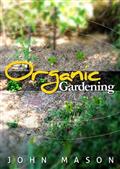
Organic Gardening
For decades farmers have relied upon chemicals to control pests and diseases in order to produce saleable crops. In the ornamental, vegetable and fruit gardens reliance on chemical controls has also been the mainstay for many gardeners.
Starting a Garden or Landscape Business
Expert advice on how to get started in your own garden or landscape business! Packed with valuable business advice, horticultural and landscaping knowledge, and practical ideas - this book is a must have for garden lovers. It is great for anyone thinking about (or already involved in), a horticultural, landscaping or garden business. This updated re-print is only available as an ebook.
Trees and Shrubs
Useful for students, tradespeople already working in the field, or the home gardener who needs a quick reference when choosing plants for a garden.
What to Plant Where
A great guide for choosing the right plant for a particular position in the garden. Thirteen chapters cover: plant selection, establishment, problems, and plants for wet areas. Shade, hedges and screens, dry gardens, coastal areas, small gardens, trees and shrubs, lawns and garden art.
(aud)$3421.00