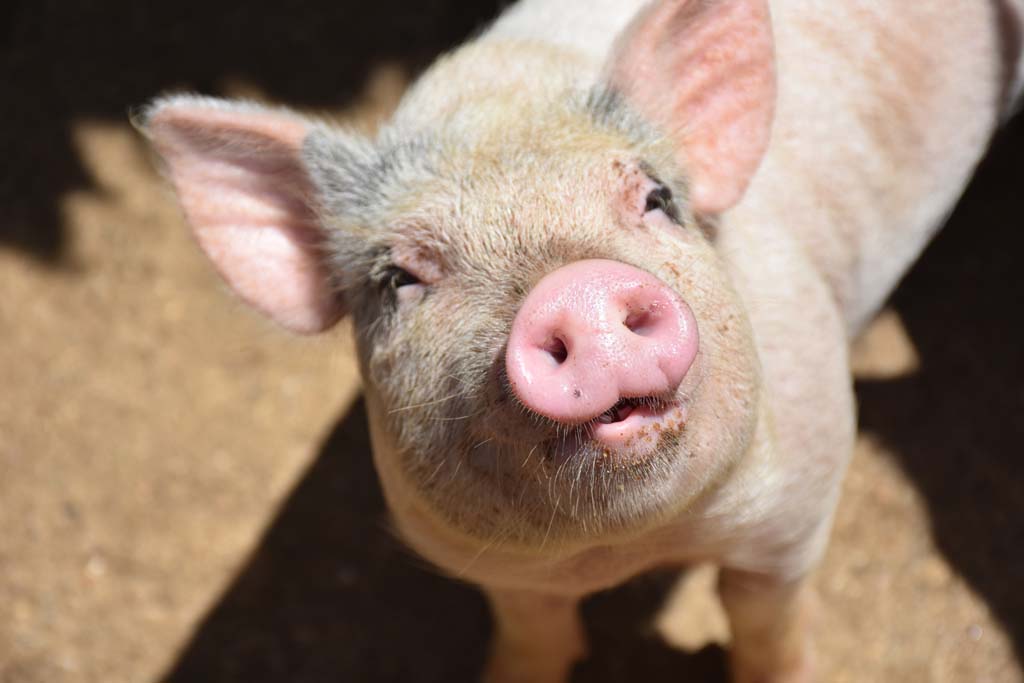
Pigs
Learn to raise pigs on a small or large scale; improve your on-farm management; develop your career or business prospects or lay a foundation for further study.






Study Pig Husbandry
We have been teaching people about pigs for decades. Course reviews and revisions are ongoing to keep the content current. The course provides a substantial foundation in pig husbandry, biology and production; with an emphasis on learning all the requirements to manage the practical daily needs of pigs.
Tutors and Course Developers include agricultural scientists, veterinary professionals, farmers and former university lecturers.A Course for People who are passionate about pigs and want to learn more. It covers:
Aims
- Select appropriate pig breeds for different purposes.
- Explain how to manage the breeding of pigs.
- Explain the physical facilities, including buildings and equipment of a pig farm.
- Explain the procedures used in managing the condition, including the health and feeding of pigs.
- Explain the husbandry operations associated with pig farming.
- Develop strategies for marketing, including both traditional and innovative marketing plans of pigs and pig products.
- Develop different strategies, including both traditional and innovative approaches, to manage the general operations associated with pig farming.
What You Will Do
- List the commercial breeds of pigs being successfully farmed in a specified locality.
- Compare the different characteristics of common breeds of pigs including appearance, hardiness and commercial potential.
- Select appropriate pig breeds for three different specified situations.
- Compare applications for straight breeding with cross breeding of pigs in a specified locality.
-
Explain the different husbandry operations carried out during each of the different stages of pig breeding, including:
- Weaning to service
- Early pregnancy
- Mid pregnancy
- Late pregnancy
- Lactation
- Compare housing requirements for boars with those for sows, in a piggery visited by the learner.
- Develop maintenance guidelines for pig shelters, including large and small sheds.
- Prepare a sketch design of an area for farming pigs, showing the location of major facilities.
- Assess the disposal system(s) being used for effluent at a specified piggery.
- Develop a checklist of general signs which indicate ill health in pigs.
- Describe three significant pests or diseases of pigs, including their symptoms and effect.
- Explain a treatment for each of three different common pests or diseases in pigs.
- Determine the health status of a unit of pigs at a piggery, using a checklist you develop.
- Report on the significance of health services for pigs, including veterinary and quarantine services, as used on a piggery visited by the learner
- Explain the function of the different parts of a pig's digestive system.
-
Explore various food sources for different food nutrients for pigs, including:
- Carbohydrates
- Proteins
- Minerals
- Vitamins
- Analyse the ingredients in a pig diet, being used at a commercial piggery.
- Prepare a sample of pig feed suitable for either a boar, a weaner, or a porker.
- Prepare a timetable of husbandry tasks, from weaning to marketing, for fattening a pig.
- Compare two different, but commercially viable, systems of raising pigs, with reference to costs; materials; equipment; labour and production output
- Prepare an annual program of routine pig husbandry tasks, for a specified enterprise.
- Analyse wholesale and retail marketing systems for pig products.
- Analyse the marketing of a specified pig product from the farm through to the consumer, including associated work tasks, and costs involved.
- Write an innovative plan for the marketing of pigs or a specified pig product.
- List factors which affect the profitability of a pig farm in a specified locality.
- Write a job specification for one member of staff of a piggery.
- Write a management procedure, including contingency arrangements, for control of production targets and budgeted costs on a pig farm.
- Evaluate three different innovations being used in the pig industry.
- Develop a production plan for pigs on a specified property.
- Design a form for record keeping of appropriate piggery data.
Lesson Structure
There are 9 lessons in this course:
-
Introduction
- Background to pig raising
- Pig Farming
- Pig Husbandry terms
- Hybrids in pig farming
- Pig breeds
- Pig Production systems
- Building systems
- Environmental controls
- Building materials
- Floors
- Pig pens
- Waterers and feeders
- Fencing
- Waste water treatment using reed beds
- Water flow
- Anaerobic ponds
- Suitable plants
-
Breeding and selection
- Heritability in pigs
- Testing pig performance
- Points for selection
- Pure breeding
- Cross breeding
- Crossbreeding systems
- Single cross
- Back crossing
- Rotational crossing
- Hybrid breeding
- Artificial insemination
- Animal selection
-
Feeding Pigs
- Types of rations
- Energy requirements
- Protein requirements
- Mineral requirements
- Vitamin requirements
- Digestive system
- Understanding feeding
- Feeding on pasture
-
Pig diseases
- General health problems
- Management practices
- Notifiable pig diseases
- Some major diseases affecting all pigs
- Diseases affecting sows
- Diseases of growing and fattening pigs
- Handling and restraining pigs
- Vices in pigs
- Summary of pig diseases
- Pre-weaning period
- Post-weaning period
- Breeder pigs
-
Managing the boar
- Selecting a boar
- Housing
- Feeding
- Health
- Breeding
-
Managing the sow and litter
- Selection of gilts
- Housing
- Feeding
- Weaning
- Ovulation
- During pregnancy
- Before farrowing
- Farrowing
- Lactation
- After farrowing
- Management of the suckling pig
- Marking Pigs and Ear Notching
- Points to consider at weaning
-
Management of Fattening pigs
- Feeding fatteners
- Housing
- Transporting to market
- Cuts of pig meat
-
Economics and records
- Efficiency factors
- Gross output
- Records
- Pig Calendar
- Pig Ration
- Pig Register
- Sow Record
-
Managing a Piggery
- Research innovative practices
- Evaluate the production performance of a specified piggery.
Accreditations
Hybrid Pig Breeding Improves the Pig Herd
One of the first companies to carry out a hybrid pig breeding program was the British Oil and Cake Millers (COCM) in the UK. Their pig improvement scheme began in 1963 after research had shown that many commercial strains of pigs were unable to make the best use of the company's improved pig rations. Work was carried out on the company's farms in the UK with the aim of improving three breeds: the Landrace, the Large White and the Saddleback and to produce a three-way cross hybrid pig with an overall performance that was 25% than the average.
The scheme started with the purchase of one thousand weaner pigs, of which only 30% were acceptable genetically and visually. All the gilt pigs were performance tested, and the best 12-5% went into the foundation herd. The best sows were subsequently used to breed boars. The selection of boars was so strict that less than one in two hundred and fifty male pigs were finally used. The final hybrid pigs are used for both pork and bacon production.
Most breeders of hybrid pigs work with large numbers and use carefully selected and pure breeds. Two of these breeds are crossed to produce the hybrid sow with the benefits of improved litter numbers, milking ability and better health and vigour. The hybrid sow is then mated to an improved boar of another pure breed to produce the hybrid bacon or pork pig.
Hybrid sows are produced by "multiplying breeders" who get their breeding stock from hybrid breeding companies. These multiplying breeders usually work on a contract basis and are paid by the companies to look after the pigs. The commercial farmer buys his hybrid gilts from the company and the pure-bred boars from the same company. A typical hybrid breeding program is shown in the table on the next page."
Providing an Environment suited to Raising Pigs
The thermal environment is particularly important in pig production as a properly ventilated environment provides numerous benefits to the pig producer. These include:
- More efficient feed use
- Enhanced disease control
- More comfortable working conditions
- Faster growth rates
- Reduced mortality rates
The main object of controlling the pig’s environment is to reduce fluctuations in temperature. This can be achieved by the following:
- Building on a site that has a suitable microclimate – the topography of the site will affect the environment in the piggery, as will the orientation of the buildings on the site.
- Having good construction and proper insulation of buildings – the denser the materials used in the roof and outer walls, the less variable the internal temperature.
- Good ventilation – this is required to ensure carbon dioxide and other gases (such as ammonia and hydrogen sulphide), water vapour, dust, body heat, and air borne pathogens are removed from the building
- Artificial heating/cooling/ventilation systems, for example: fan ventilation, heating for piglets in the farrowing house, and spray cooling or fogging systems for growers, finishers or breeders.
Climate change is likely to lead to an increase in weather variability and the occurrence of extreme events. These changes include long high or low temperature periods, severe storms or flood conditions and drought. Forward planning when building or upgrading pig housing should therefore take this into account.
Environmental concerns in pig farming, particularly about disposal of effluent as well as emission of greenhouse gases, have led to emergence of new technology to reduce pollution and to recycle as much as possible. Effluent comprises wastewater from shed cleaning and cooling, runoff from feedlot outdoor piggeries, drinking water spills, manure and waste feed. An example of recycling is when pig manure or biomass is used to create electricity. Decomposing manure creates methane which is captured, transported and used to generate electricity to provide thermal comfort and appropriate conditions for baby piglets.
Some countries require piggeries to operate in an ecologically sustainable manner. This is to protect aspects of the environment such as air, soil, water and biodiversity. Preservation of community amenities and cultural heritage may also need to be considered. Farmers may therefore need to consider control of gas emissions, control of waste material, recycling and reuse of resources.
Suitable treatment of the large volumes of waste solids and waste water is often the most pressing problem in pig farming. There are many different ways in which these can be collected and treated including use of drains, pits, channels, solid separation systems (e.g. gravity and sieving methods), pumps, effluent treatment ponds (anaerobic, aerobic, evaporation and solid ponds) and reed-beds.
Why Study this Course?
The first step towards success is to have a passion and drive for that particular subject area. With this attitude you can build on knowledge and skills gained in this course to make connections with industry - people, organisations and businesses in the world of pigs. Hands-on experience with pigs will be easier to find and more useful to undertake when built on top of the learning experiences you have in this course.
Graduates may use what they learn in a range of possible situations:
- As a Piggery manger
- Free range pig farmer
- Piggery hand
- Pig breeder
- Research Institute roles
- Manufacturing/supplying products to the pig industry
- Marketing or sales
- Wholesale/Retail Specialist
- Teaching or writing about pigs
- As a consultant
- Self sufficiency
- Caring for "pet" pigs
- A foundation for further studies
Why Study with ACS?
Study at your own pace, from anywhere, at any time.
Receive prompt, expert support from our team of committed and friendly tutors.
Your learning is our priority. We are flexible and adaptable to meet your educational needs!
ACS Student Comments:
"Yes [the course was a valuable learning experience]. It is providing me with new insights and development beyond my former knowledge of this subject. It also provides me with a proper basic knowledge to pursue my dreams in this career path." -- Arnold Taen, Netherlands - Pigs course.
Enrol using the automated procedure on this site or contact us via phone or email to ask questions and enrol with a real person.
You can enrol at anytime and start the course when you are ready. Enrolments are accepted all year - students can commence study at any time. All study is self paced and ACS does not set assignment deadlines.
Please note that if a student is being assisted by someone else (e.g. an employer or government subsidy), the body offering the assistance may set deadlines. Students in such situations are advised to check with their sponsor prior to enrolling. The nominal duration of a course is approximately how long a course takes to complete. A course with a nominal duration of 100 hours is expected to take roughly 100 hours of study time to complete. However, this will vary from student to student. Short courses (eg. 100 hrs duration) should be completed within 12 months of enrolment. Certificates, Advanced Certificates and Awards (eg. over 500 hours duration) would normally be completed within 3 -5 years of enrolment. Additional fees may apply if a student requires an extended period to complete.
If a student cannot submit their assignments for 6 months to ACS, they should advise the school to avoid cancellation of their student
registration. Recommencement fees may apply.
Simply click on the ENROL OPTIONS button at the top of this screen and follow the prompts.
You can see the course price at the top of this page. Click 'enrolment options' to see any payment options available.
You can pay by Credit Card, PayPal, Afterpay or bank transfer.
Yes! We have payment plans for most courses. Click 'enrolment options' to see the available payment plans.
We also have Afterpay that will allow you to pay for your course or payment plans in four instalments (if you are in Australia).
There are no entry requirements that you need to meet to enrol in our courses, our courses are for everyone.
If you are under 18, we need written permission from your parent/ guardian for your enrolment to continue, we can arrange that after you have enrolled.
You don’t need to purchase any additional resources to complete our courses.
What do I need to know before I enrol?
We aim to teach you the essentials without you having to purchase any specific computer program.
We recommend that you have access to a word processing program, such as Microsoft Word or Google Docs, so that you can easily complete and submit your assignments.
You sure can. We are here to help you learn whatever your abilities.
Yes, if you are enrolling in a Certificate or Advanced Certificate, you might be eligible for credits if you have evidence of your previous studies or relevant experience. More information is here.
We recommend that you are able to browse websites, send emails and conduct online research. You will need to be able to type and submit your assignments.
If you have limited computer skills, we can make special arrangements for you.
This is possible, it depends on the institution. We recommend that if you would like to use our courses that you contact the institution first. Our Course Handbook is a good resource for this.
Our courses are written in English and we only have English speaking academic staff. If you can read and complete your assignments in English, our courses are ideal for you.
Our courses are designed to build knowledge, hands on skills and industry connections to help prepare you to work in the area, running your own business, professional development or as a base for further study.
This course has been designed to cover the fundamentals of the topic. It will take around 100 hours to complete, which includes your course reading, assignment work, research, practical tasks, watching videos and anything else that is contained in the course. Our short courses are a great way to do some professional development or to learn a new skill.
It’s up to you. The study hours listed in the course are a rough guide, however if you were to study a short course (100 hours) at 10 hours per week, you could finish the course in 10 weeks (just an example). Our courses are self-paced, so you can work through the courses in your own time. We recommend that you wait for your tutor to mark and return your assignment before your start your next one, so you get the benefits of their feedback.
The course consists of course notes, videos, set tasks for your practical work, online quizzes, an assignment for each lesson (that you receive feedback from your tutor from) and ends in an exam (which is optional, if would like to receive the formal award at the end), using our custom built Learning Management System - Login.Training.
Our courses are designed for adults to gain professional development and skills to further their careers and start businesses.
Our custom online learning portal allows you to conduct your learning online. There may be practical tasks that you can do offline. You have the option of downloading your course notes or print them to read later.
There is also the option to pay an additional fee for printed course notes and or USB (availability limited to location and deliverability).
Yes, if you don’t have access to the internet, you can receive the course as paper notes or on a USB stick for an additional fee. We can also make alternative arrangements for you to send your assignments to us.
We offer printed notes for an additional fee. Also, you can request your course notes on a USB stick for an additional fee.
Yes, your tutor is here to help you. Simply post any questions you have in your login.training portal or contact the office and we can pass on a message to your tutor.
We are more learning focussed, rather than assessment focussed. You have online quizzes to test your learning, written assignments and can complete an exam at the end of the course (if you want to receive your certificate). You will not receive a pass/ fail on your course work. If you need to add more details on your assignment, we will ask you to resubmit and direct you where you need to focus. If you need help, you can ask your tutor for advice in the student room.
Each module (short course) is completed with one exam.
Exams are optional, however you must sit an exam if you would like to receive a formal award. You will need to find someone who can supervise that you are sitting the exams under exams conditions. There is an additional cost of $60 incl. GST for each exam.
More information is here
There are practical components built into the course that have been designed to be achieved by anyone, anywhere. If you are unable to complete a task for any reason, you can ask your tutor for an alternative.
When you complete the course work and the exam and you will be able receive your course certificate- a Statement of Attainment. Otherwise, you can receive a Letter of Completion.
You can bundle the short courses to create your own customised learning bundle, Certificates or Advanced Certificates. More information is on this page.
Yes, our courses are built to be applicable for people living anywhere in any situation. We provide the fundamentals, and each student can apply their own unique flair for their own interests, region and circumstances with the one-on-one guidance of a tutor. There is also a bit of student directed research involved.
Employers value candidates with industry skills, knowledge, practical skills and formal learning. Our courses arm you with all of these things to help prepare you for a job or start your own business. The longer you study the more you will learn.
ACS has an arrangement with OAMPS (formerly AMP) who can arrange Professional Indemnity from Australian and New Zealand graduates across all disciplines. Ph: 1800 222 012 or email acs@oamps.com.au.
Who are ACS Distance Education?
ACS Distance Education have been educating people for over 40 years.
We are established and safe- we have been in education for over 40 years.
We are focused on developing innovative courses that are relevant to you now and what you will need to know in the future.
We are focused on helping you learn and make the most of your experience.
You can enrol at any time, you can work on your course when it suits you and at your own pace.
We are connected to many industry bodies and our staff participate in continuous improvement and learning activities to ensure that we are ahead of what learning is needed for the future.
Our courses are not accredited by the Australian Government. However many of our courses are recognised and held in high regard by many industry bodies.
Our courses are written by our staff, who all have many years experience and have qualifications in their speciality area. We have lots of academic staff who write and update our courses regularly.
How do I enrol my staff/ sponsored students?
Yes, you can do a request for a bulk enrolment and request an invoice on our Invoice Request Form
We can prepare an invoice, quote or proforma invoice. Simply complete your details on our Invoice Request form
We can arrange bulk discounts for your course enrolment, please get in touch with us to discuss your needs.
Yes, we have many students who are in locked facilities, such as prisons or hospitals. We can cater by also offering paper notes at an additional cost.
What if I have any more questions or need more information?
We can assist you to find the right course for your needs. Get in touch with us via email (admin@acs.edu.au) call on +61 7 5562 1088 or complete our course advice form.
What if I change my mind?
Please get in touch with studentservices@acs.edu.au if you would like to be removed from our mail list.
If you would like ACS Distance Education to delete your information at any time (whether you are a customer or a prospective customer), please contact our privacy officer and we will process this ( admin@acs.edu.au ).
If students require a reproduction of their certificate, an electronic copy can be provided at a cost of AUD$35 incl GST. Printed copies are not available.
Course Contributors
The following academics were involved in the development and/or updating of this course.

Dr Robert Browne
Zoologist, Environmental Scientist and Sustainability, science based consultancy with biotechnology corporations. Work focused on conservation and sustainability.
Robert has published work in the fields of nutrition, pathology, larval growth and development, husbandry, thermo-biology, reproduction technologies, and facility design.Robert has B.Sc., Ph, D.

Marius Erasmus
Subsequent to completing a BSc (Agric) degree in animal science, Marius completed an honours degree in wildlife management, and a masters degree in production animal physiology. Following the Masters degree, he has worked for 9 years in the UK, and South Africa in wildlife management, dairy, beef and poultry farming.

Dr. Gareth Pearce
Veterinary scientist and surgeon with expertise in agriculture and environmental science, with over 25 years of experience in teaching and research in agriculture, veterinary medicine, wildlife ecology and conservation in the UK, Australia and New Zealand. Post-graduate qualifications in Education, Wildlife Conservation Medicine, Aquatic Veterinary Studies and Wildlife Biology & Conservation.
Gareth has a B.Sc.(Hons), B.V.Sc., M.A., M.Vet.S,. PhD, Grad. Cert. Ed.(HE), Post-Grad.Cert. Aq.Vet.Sc., Post-Grad. Cert. WLBio&Cons., Dipl. ECPHM, MRCVS.
Farm Management
This new e-book looks at everything you need to improve your farm management skills. Learn about the farm site, production systems, managing livestock, managing pasture, crops, marketing and more.

Starting a Business
Businesses don't need to fail! This is concise, easy to read, and alerts you to all of the things that commonly make a difference to business success or failure. Seven chapters are: “A Reality Check”, “The Product or service”, “Managing a Business”, “How to Find Customers”, “How to Make a Sale”, “Delivering the Product or Service”, “Pitfalls to Avoid”.
Working with Animals
If you enjoy interacting with animals, are interested in biological science, or are passionate about wildlife, pets or farming; you may thrive in the type of jobs outlined in this book.
The Working with Animals ebook is a comprehensive catalogue to inspire you in your career in working with animals!
(aud)$781.00