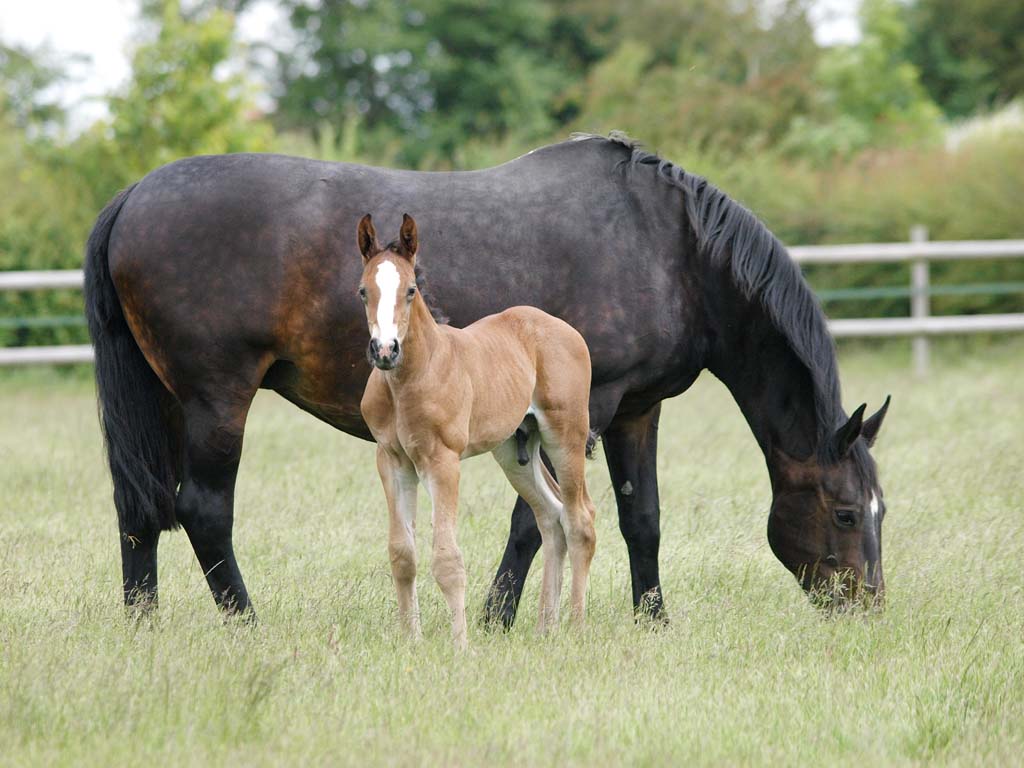
Horse Breeding
Learn to breed horses, and improve your options for work in the equine industry. With this theoretical and practical course, you will have a solid foundation to build experience in the field of horse breeding.









Why Breed Horses?
Apart from the obvious need to increase the number of animals, breeding is also undertaken to improve the quality of animals
By selecting (hence controlling) the mother and father of a new foal, a horse breeder can exercise a degree of control over the characteristics of a new animal.
Over time, breeding has allowed us to produce animals more suited to specific tasks:
- breeds with greater endurance so they can be ridden longer distances
- breeds that run faster, for racing
- breeds with greater strength to be used for heavier work
Aims
- Understand the process of selecting mares and stallions for successful breeding purposes.
- Identify and understand the anatomy and physiology of the mare’s reproductive tract and the physical characteristics, which are preferable for a successful brood mare.
- Identify and understand the anatomy and physiology of the stallion’s reproductive tract and the physical characteristics, which are preferable for a successful breeding stallion.
- Explain and compare different ways of breeding horses.
- Identify and explain the appropriate management of a pregnant mare.
- Understand and explain the foaling process.
- Describe the important care of a newborn foal.
- Discuss common fertility problems that can occur in a mare and stallion.
What You Will Do
-
Lesson 1
- Why breed horses?
- An understanding of heritability is fundamental
- Meiosis
- The Work of Gregor Mendel
- Chromsomes and Genetics in Breeding
- Selecting the mare and the stallion
- Quantitative and Qualitative Inheritance
- Inbreeding and Linebreeding
- The Genetic Effect of Inbreeding
- Line Breeding
- Advantages of Inbreeding
- Stallion and Mare Complementation
- The Industry
-
Lesson 2
- Mare Anatomy
- The Reproductive Cycle of the Mare
- Hormonal Control
- Abnormal Oestrus
- Breeding Fitness
- General Broodmare Care
- Nutrition and Feeding
- Rations
- Carbohydrates
- Fat
- Protein
- Vitamins
- Roughage
- Hay
- Pre-Season Care
-
Lesson 3
- Stallion Anatomy
- Sperm Production
- Semen Release
- Reproductive Cycle of the Stallion
- Breeding Fitness
- General Stallion Care
- Handling
- Pre-Season Care
- Stallion Management for Reproduction
- Training the young stallion
- Steps in training a novice stallion onto the phantom
- Common clinical problems with stallions
- Castration (Gelding)
-
Lesson 4
- Managing the Arrival and Departure of the horse at the stud
- Semen from the stallion
- Collection and Processing
- Evaluating the Quality of Sperm
- Breeding methods
- Natural Breeding
- Live cover – In-hand or Pasture
- Artificial insemination
- Handling Frozen Semen
- Embryo transfer
- When to breed
- Detection of Oestrus
- Teasers
- Visual Signs
- A plan for when things go wrong
- Sexually Transmitted Infections
-
Lesson 5
- Pre-natal growth
- Conception of twins
- Gestation and Methods and Detecting Pregnancy
- Methods of Diagnosis
- Palpation
- Pregnancy Tests
- Ultrasound
- Post-Natal Growth
-
Lesson 6
- Care of the Pregnant Mare
- Nutritional Requirements
- Caslicked Mares
- Preparation for foaling
- Exercise Needs
- Worming
- A deworming program for mares
- Preparation of the foaling environment
- Preparation for if things go wrong
- The Physical Environment - Bedding
- Common Bedding in the Foaling Environment
- Straw
- Wood Shavings
- Wood Pellets
- Rubber Matting
- The Parturition Process
- Stages of Labour
- Common Foaling Problems
- Dystokia
- Abnormal Presentations
- Health Problems of the post-partum mare
- Retained placenta
- Haemorrhage
- Post-Partum Metritis
- Rejection of the Foal
- Prolapsed Uterus
- Lactation (Udder edema)
- Lactation (reduced milk supply)
- Foal and foaling reports
- Example Foaling Record
- Example Foal Report
-
Lesson 7
- General newborn care
- Stabling and safe environment for newborn foals
- Lactation and suckling
- Premature Foals
- Orphan foals
- Common health problems in newborn foals
- Infections, Constipation and Diarrhoea
- Septicaemia
- Meconium Impaction
- Diarrhoea
- Congenital disorders
- Neonatal Isoerythrolysis (NI)
- Angular Limb Deformities
- Flexor and Extensor Tendon Abnormalities
- Delayed Ossification of the Cuboidal Bones
- Heart Murmurs
- Congenital Papilloma (Warts)
- Entropion
- Neurological disorders
- Neonatal Maladjustment Syndrome (NMS)
- Head Tilt
- Structural abnormalities
- Uroperitoneum
- Umbilical Hernias
- Training a foal in the earliest stages
-
Lesson 8
- Introduction to Fertility
- Understanding Fertility in Mares
- Understanding Fertility in Stallions
- Handling and Management in Stallions
- Age
- Overuse
- Nutrition
- Illness and Injury
- Other Abnormalities
- Semen problems
- Haemospermia
- Urospermia
- Oligospermia
- Structural disorders of the reproductive tract (mares)
- Pneumovagina
- 'Maiden Cervix' or Cervical Incompetence
- Vesicovaginal Reflux or Urine Pooling
- Structural disroders of the reproductive tract (stallions)
- Cryptorchidism
- Testicle Conformation
- Testicular Torsion
- Testicular Tumours
- Scrotal Hernia
- Venereal diseases (mares)
- Endometritis
- Bacterial Endometritis
- Fungal Endometritis
- Mating Induced Endometritis
- Contagious Equine Metritis (CEM)
- Equine Viral Arteritis (EVA)
- Pyometra
- Abnormal Oestrus Cycles
- Silent Heat and Post-Partum Anoestrus
- Persistant Oestrus
- Vernal Transition
- Ovarian Tumours
- Persistant Corpus Luteum
- Haemorrhagic Follicles
- Abortion
- Venereal diseases (stallions)
- Bacterial Infections
- Equine Viral Arteritis (EVA)
- Equine Coital Exanthema
- Dourine
- Contagious Equine Metritis (CEM)
- Infectious causes of abortion (mares)
- Viral Abortion
- Bacterial Abortion
- Leptospirosis
- Non-infectious causes of abortion (mares)
- Congenital Defects
- Twinning
- Umbilical Cord Torsion
- Progesterone Deficiency
Lesson Structure
There are 8 lessons in this course:
- Breeding Horses
- The Broodmare
- The Stallion
- Breeding Management
- The Pregnant Mare
- Parturition and Foaling
- Care of the New-born Foal
- Infertility in the Mare and Stallion
The Mare Must be Fertile
Peak fertility in horses occurs at approximately 6 – 7 years of age. Fertility begins to decline around 15 years of age, when often mare’s become more difficult to get into foal and experience more instances of pregnancy losses.
A young, healthy mare has an approximately 50-60% chance of getting pregnant during a given oestrus cycle, when mated with a fertile stallion. You can see that even if the mare is young and healthy and without any anatomical or pathological problems, the chance of a positive mating that ends in a live birth, is still relatively low.
There are many reasons why a mare may not conceive, and cause her to be classed as sub-fertile or infertile. Many of these problems are treatable once they have been successfully diagnosed.
As mentioned in previous lessons, a thorough breeding soundness examination is recommended to ensure that any possible fertility problems are identified and treated before excessive amounts of time and finance are used up trying to get her to conceive. It is vitally important that a mare which has undesirable or poor general conformation of the body, legs, feet or mouth should be seriously considered for breeding at all.
Structural Disorders of the Reproductive Tract
A misshaped vulva is one of the most common problems that can lead to difficulty in the mare conceiving. A misshaped vulva will not seal the reproductive tract properly, which exposes the uterus to contamination from the external environment. Defective vulvar conformation can be congenital (in rare cases) but is more likely to be acquired by the vulva stretching after repeated foalings, as a result of a mating injury or be due to the mare being in very poor overall body condition.
Pneumovagina
Poor vulvar conformation can result in a condition called pneumovagina, in which air is pulled into the vagina, along with bacterial contaminants. Poor vulvar conformation can also result in faecal bacteria getting into the vaginal area and causing a problem. Bacterial infections can then set in and can render the mare practically infertile. The most common treatment is to give the mare antibiotics to treat the infection and to prevent further reinfection by means of corrective surgery- a procedure known as a Caslick’s. In a Caslick’s procedure, the level of the mare’s pelvic floor is ascertained by inserting a hand into the reproductive tract. The external vulvar lips are then anaesthetized and stitched from just under the anus down to the pelvic floor level, leaving only a small opening that urine can escape from. This effectively seals the vagina and prevents it from becoming contaminated. Depending on the size of the stallion, the stitches may need to be removed when the mare is subsequently mated and will definitely need to be removed when foaling is imminent.
'Maiden Cervix' or Cervical Incompetence
A maiden mare (one that has not been bred before) may suffer from cervical incompetence or ‘maiden cervix’. After mating, the cervix is so tightly closed that any excess seminal fluid cannot drain away properly. The retained fluid causes an inflammatory reaction and if untreated, creates an overly acidic environment which soon evolves into a full blown infection. Mares with the condition are commonly treated with antibiotics when they are mated and a uterine lavage (internal cleanse) is also administered post mating to try to prevent the infection setting in. The vet may also administer Oxytocin, a hormone which promotes uterine contractions, which helps the mare's body clear the problematic foreign material.
Vesicovaginal Reflux or Urine Pooling
A poorly conformed reproductive tract or structural changes to the tract caused by loss of muscle tone after multiple foaling’s can result in retention of urine in the vagina. This condition can result in reduced conception rates due to an overly acidic environment, formation of scar tissue in the vagina and/or inflammation. Treatment of this condition will depend very much on the underlying cause. If the problem is mild and caught early enough the urine can be removed and the mare’s body condition improved, which will in turn help to increase muscle tone and prevent the condition occurring in the future. In other cases, uterine lavage may be necessary and the use of drugs to improve the muscle tone may also be required.
Diseases
There are a whole range of diseases that can impact upon horse breeding which you will become familiar with throughout your studies in this course.Bacterial Endometritis
Infectious endometritis can occur when the external physical barriers to the uterus are compromised, which may break down over time as part of the natural ageing process or as a result of repeated infections. The most common bacteria that cause a problem are Strep. equi zooepidemicus (the most common), E. coli, Pseudomonas aeruginosa, and Klebsiella pneumonia. Infection causes scarring of the uterine lining and adhesions to form, which prevents conception and will cause eventual infertility. This condition is treated with appropriate antibiotics both before and after mating. One of the drawbacks of regular antibiotic use is the fact that the antibiotic will kill both good and bad bacteria, leaving the mare without any natural protection against further bacterial or fungal infection.
Fungal Endometritis
The most common fungi that cause fungal endometritis include the Candida (yeast) family and the Aspergillus (mould) family. Both of these fungi proliferate when the mare’s immune system has been weakened after prolonged antibiotic use. Fungal endometritis can be passed between stallions and mares, and unfortunately there is no specific cure. Management of fungal endometritis relies primarily on reducing the numbers of fungi via uterine lavage with appropriate anti-fungal agents.
Mating Induced Endometritis
Some mares may suffer inflammation and subsequent bacterial/fungal infection as a direct result of mating. There are management issues that can help prevent breeding induced endometritis; mares that are bred on their foal heat are more likely to develop subsequent infection, perhaps due to the stress and strain of the recent foaling. Multiple attempts at breeding in a single oestrus period are also known to increase the chances of endometritis. This condition is treated in a similar way to ‘Maiden Cervix’, as fluid retention is generally thought to be the main cause of the problem.
Contagious Equine Metritis (CEM)
This type of sexually transmitted metritis is caused by the organism Taylorella equigenitalis, which can survive on the stallions external genitalia and in the vagina and clitoris of the mare for extended periods of time. Transmission is via direct sexual contact or via infected semen that is used for AI. Infected stallions often do not present any clinical signs of infection. Mares are likely to suffer from a thick vaginal discharge and inflammation of the reproductive tract approximately a week after infection. Their oestrus cycles may also be adversely affected. In many countries CEM is a notifiable disease and the appropriate authorities must be informed of any suspected or confirmed outbreaks. Infection is confirmed by swabbing the mare and then appropriate treatment can be given. Infected mares should not be used for breeding until the infection has been treated and successfully cleared up.
Equine Viral Arteritis (EVA)
EVA is an acute, contagious viral disease caused by the Equine Arteritis virus. Infection with the virus is not life threatening but it can cause spontaneous abortions in pregnant mares and sometimes death of new born foals. Other clinical signs include depression, lethargy, fever, oedema of the limbs and genitals, conjunctivitis and a nasal discharge. The virus is transmitted via the respiratory route as well as through sexual contact with infected mares/stallions. Stallions can carry the virus and appear to be free of clinical signs, but still pass the virus on when covering or teasing mares. These stallions are known as ‘shedder’ stallions. Diagnosis of infection is via a positive blood test. Stallions and mares should be routinely tested for infection and not used for breeding if positive blood test results are obtained. Similarly to CEM, in many countries EVA is a notifiable disease and the appropriate authorities must be informed of any suspected or confirmed outbreaks. Vaccination against infection is available in some countries and is carried out as part of the normal breeding routine.
Pyometra
Pyometra is characterized by an accumulation of fluid (pus) in the uterus. This fluid may also cause a persistent or intermittent discharge from the vagina. The fluid buildup can be caused by a number of different pathological organisms. Mares with pyometra do not often exhibit any other symptoms and may carry on having what appear to be normal oestrus cycles, but they will not conceive. Pyometra is often caused by an abnormality of the cervix or a breakdown of the natural uterine clearance mechanisms. Treatment of this condition is by uterine lavage and administration of drugs that cause the uterus to empty itself. In severe and prolonged cases removal of the uterus may be necessary, rendering the mare infertile.Enrol using the automated procedure on this site or contact us via phone or email to ask questions and enrol with a real person.
You can enrol at anytime and start the course when you are ready. Enrolments are accepted all year - students can commence study at any time. All study is self paced and ACS does not set assignment deadlines.
Please note that if a student is being assisted by someone else (e.g. an employer or government subsidy), the body offering the assistance may set deadlines. Students in such situations are advised to check with their sponsor prior to enrolling. The nominal duration of a course is approximately how long a course takes to complete. A course with a nominal duration of 100 hours is expected to take roughly 100 hours of study time to complete. However, this will vary from student to student. Short courses (eg. 100 hrs duration) should be completed within 12 months of enrolment. Certificates, Advanced Certificates and Awards (eg. over 500 hours duration) would normally be completed within 3 -5 years of enrolment. Additional fees may apply if a student requires an extended period to complete.
If a student cannot submit their assignments for 6 months to ACS, they should advise the school to avoid cancellation of their student
registration. Recommencement fees may apply.
Simply click on the ENROL OPTIONS button at the top of this screen and follow the prompts.
You can see the course price at the top of this page. Click 'enrolment options' to see any payment options available.
You can pay by Credit Card, PayPal, Afterpay or bank transfer.
Yes! We have payment plans for most courses. Click 'enrolment options' to see the available payment plans.
We also have Afterpay that will allow you to pay for your course or payment plans in four instalments (if you are in Australia).
There are no entry requirements that you need to meet to enrol in our courses, our courses are for everyone.
If you are under 18, we need written permission from your parent/ guardian for your enrolment to continue, we can arrange that after you have enrolled.
You don’t need to purchase any additional resources to complete our courses.
What do I need to know before I enrol?
We aim to teach you the essentials without you having to purchase any specific computer program.
We recommend that you have access to a word processing program, such as Microsoft Word or Google Docs, so that you can easily complete and submit your assignments.
You sure can. We are here to help you learn whatever your abilities.
Yes, if you are enrolling in a Certificate or Advanced Certificate, you might be eligible for credits if you have evidence of your previous studies or relevant experience. More information is here.
We recommend that you are able to browse websites, send emails and conduct online research. You will need to be able to type and submit your assignments.
If you have limited computer skills, we can make special arrangements for you.
This is possible, it depends on the institution. We recommend that if you would like to use our courses that you contact the institution first. Our Course Handbook is a good resource for this.
Our courses are written in English and we only have English speaking academic staff. If you can read and complete your assignments in English, our courses are ideal for you.
Our courses are designed to build knowledge, hands on skills and industry connections to help prepare you to work in the area, running your own business, professional development or as a base for further study.
This course has been designed to cover the fundamentals of the topic. It will take around 100 hours to complete, which includes your course reading, assignment work, research, practical tasks, watching videos and anything else that is contained in the course. Our short courses are a great way to do some professional development or to learn a new skill.
It’s up to you. The study hours listed in the course are a rough guide, however if you were to study a short course (100 hours) at 10 hours per week, you could finish the course in 10 weeks (just an example). Our courses are self-paced, so you can work through the courses in your own time. We recommend that you wait for your tutor to mark and return your assignment before your start your next one, so you get the benefits of their feedback.
The course consists of course notes, videos, set tasks for your practical work, online quizzes, an assignment for each lesson (that you receive feedback from your tutor from) and ends in an exam (which is optional, if would like to receive the formal award at the end), using our custom built Learning Management System - Login.Training.
Our courses are designed for adults to gain professional development and skills to further their careers and start businesses.
Our custom online learning portal allows you to conduct your learning online. There may be practical tasks that you can do offline. You have the option of downloading your course notes or print them to read later.
There is also the option to pay an additional fee for printed course notes and or USB (availability limited to location and deliverability).
Yes, if you don’t have access to the internet, you can receive the course as paper notes or on a USB stick for an additional fee. We can also make alternative arrangements for you to send your assignments to us.
We offer printed notes for an additional fee. Also, you can request your course notes on a USB stick for an additional fee.
Yes, your tutor is here to help you. Simply post any questions you have in your login.training portal or contact the office and we can pass on a message to your tutor.
We are more learning focussed, rather than assessment focussed. You have online quizzes to test your learning, written assignments and can complete an exam at the end of the course (if you want to receive your certificate). You will not receive a pass/ fail on your course work. If you need to add more details on your assignment, we will ask you to resubmit and direct you where you need to focus. If you need help, you can ask your tutor for advice in the student room.
Each module (short course) is completed with one exam.
Exams are optional, however you must sit an exam if you would like to receive a formal award. You will need to find someone who can supervise that you are sitting the exams under exams conditions. There is an additional cost of $60 incl. GST for each exam.
More information is here
There are practical components built into the course that have been designed to be achieved by anyone, anywhere. If you are unable to complete a task for any reason, you can ask your tutor for an alternative.
When you complete the course work and the exam and you will be able receive your course certificate- a Statement of Attainment. Otherwise, you can receive a Letter of Completion.
You can bundle the short courses to create your own customised learning bundle, Certificates or Advanced Certificates. More information is on this page.
Yes, our courses are built to be applicable for people living anywhere in any situation. We provide the fundamentals, and each student can apply their own unique flair for their own interests, region and circumstances with the one-on-one guidance of a tutor. There is also a bit of student directed research involved.
Employers value candidates with industry skills, knowledge, practical skills and formal learning. Our courses arm you with all of these things to help prepare you for a job or start your own business. The longer you study the more you will learn.
ACS has an arrangement with OAMPS (formerly AMP) who can arrange Professional Indemnity from Australian and New Zealand graduates across all disciplines. Ph: 1800 222 012 or email acs@oamps.com.au.
Who are ACS Distance Education?
ACS Distance Education have been educating people for over 40 years.
We are established and safe- we have been in education for over 40 years.
We are focused on developing innovative courses that are relevant to you now and what you will need to know in the future.
We are focused on helping you learn and make the most of your experience.
You can enrol at any time, you can work on your course when it suits you and at your own pace.
We are connected to many industry bodies and our staff participate in continuous improvement and learning activities to ensure that we are ahead of what learning is needed for the future.
Our courses are not accredited by the Australian Government. However many of our courses are recognised and held in high regard by many industry bodies.
Our courses are written by our staff, who all have many years experience and have qualifications in their speciality area. We have lots of academic staff who write and update our courses regularly.
How do I enrol my staff/ sponsored students?
Yes, you can do a request for a bulk enrolment and request an invoice on our Invoice Request Form
We can prepare an invoice, quote or proforma invoice. Simply complete your details on our Invoice Request form
We can arrange bulk discounts for your course enrolment, please get in touch with us to discuss your needs.
Yes, we have many students who are in locked facilities, such as prisons or hospitals. We can cater by also offering paper notes at an additional cost.
What if I have any more questions or need more information?
We can assist you to find the right course for your needs. Get in touch with us via email (admin@acs.edu.au) call on +61 7 5562 1088 or complete our course advice form.
What if I change my mind?
Please get in touch with studentservices@acs.edu.au if you would like to be removed from our mail list.
If you would like ACS Distance Education to delete your information at any time (whether you are a customer or a prospective customer), please contact our privacy officer and we will process this ( admin@acs.edu.au ).
If students require a reproduction of their certificate, an electronic copy can be provided at a cost of AUD$35 incl GST. Printed copies are not available.
Course Contributors
The following academics were involved in the development and/or updating of this course.

Cheryl Wilson
Cheryl has spent two decades working in agriculture, equine and education industries, across England, Scotland, Australia and New Zealand. She graduated with a B.Sc.(Hons), HND Horse Mgt, C&G Teaching Cert.
For several years, Cheryl managed the distance education courses for Warwickshire College (a large UK government institution), out of their Moreton Morrell campus. In more recent years, she has co authored several books including titles on Horse Care, Dog Care and Poultry. Along with this solid background in edication, she brings a wealth of practical experience, having held positions including: Sports Horse Stud Groom, Stable Manager, Yard Manager, Equine industrial Training Manager, FE Distance Learning Manager

Alison Pearce (Agri & Animal)
Alison brings a wealth of knowledge and experience to ACS students.
She has worked as a University Lecturer, has also run a veterinary operating theatre; responsible for animal anaesthesia, instrument preparation, and assistance with surgical techniques and procedures. She has worked in the UK, Australia and New Zealand.
She has extensive experience of handling, husbandry, and management of a wide range of both small and large animals and has a particular love for nature and wildlife.
Alison has a BSc (Hon) Animal Science.
Horse Care
This book is an accumulation of information from biology, agricultural science and veterinary medicine. It looks to explore and explain the fundamentals of appropriate horse care aims and techniques. In doing so it will consider horsemanship as a combination of art and science.

Animal Health 2nd edition
Understand health issues, disease and injury prevention, inspecting animals, differential diagnosis and common illnesses. Animals can suffer from injury, poisoning, hereditary conditions, nutritional problems and viral, bacterial and fungal infections. A book for managing pets, farm animals, or wildlife.
Event Management
Learn to plan and run events -parties, concerts, exhibitions, weddings, festivals etc. What is an event? An event is an occurrence, usually a special occasion. It can be either “a thing that just happens”; or a “planned social or public occasion”. An event is not always planned, but in the world of event management, the more planning that goes into an event, the smoother the event will run.

Farm Management
This new e-book looks at everything you need to improve your farm management skills. Learn about the farm site, production systems, managing livestock, managing pasture, crops, marketing and more.
(aud)$781.00