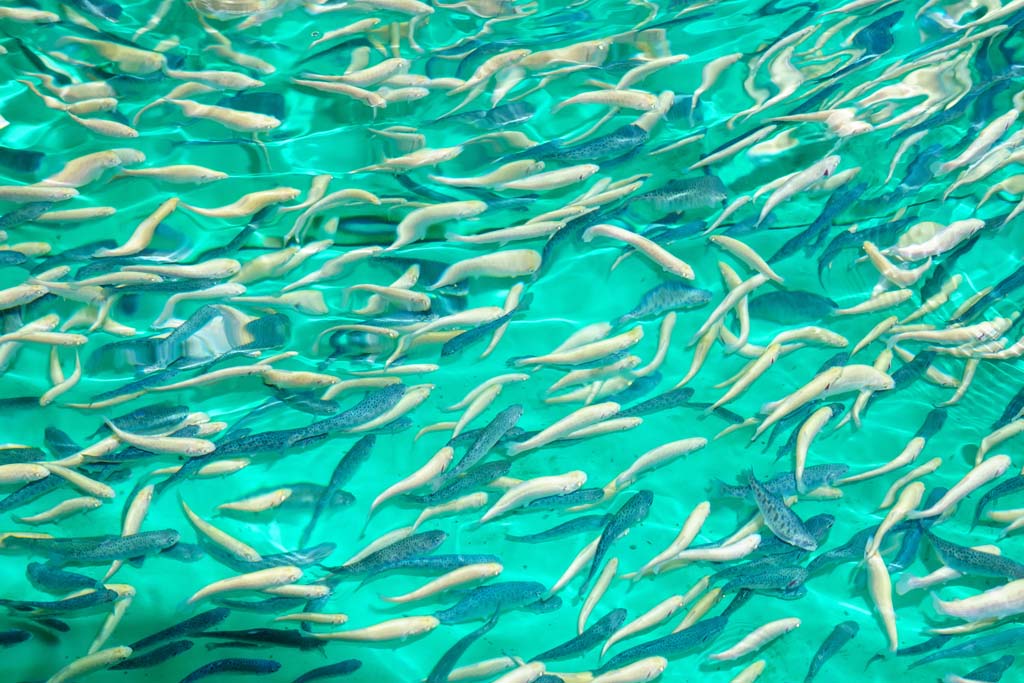
Aquaculture
Aquaculture is the farming of water creatures for human consumption. You will learn about production systems, other species, feeding, harvesting and health of fish and how to set up an aquaculture venture.









Learn to Farm fish and Crayfish in Fresh Water
- Small or large scale
- Commercial production or Sustainability Farming
- Commence study anytime; work at your own pace
- In salt water or fresh water (See our mariculture course for salt water production)
- As small as you like (Grow fish for your own food in a pond at home)
- As large as you want (Commercial enterprises might be an intensive half acre or hundreds of acres
- Combined with other farming (eg. Aquaponics)
Aims
- Explain different aquaculture production systems.
- Explain the cultural requirements of different types of fish suitable for aquaculture.
- Explain cultural practices for freshwater crayfish.
- Explain different factors affecting the vigour of animals in an aquaculture farm.
- Explain methods, including feeding and harvesting, used to manage freshwater animal populations.
- Develop informed management decisions for an aquaculture enterprise.
What You Will Do
- List the components of an aquaculture production system.
- Compare extensive production systems with intensive production systems.
- Assess the production systems used in three different aquaculture enterprises.
- Describe a successful aquaculture production system seen by the learner.
- List freshwater fish suitable for aquaculture in the learner's locality.
- List saltwater fish suitable for aquaculture in the learner's locality.
- Describe the requirements for different commonly grown freshwater fish, including: Trout, Barramundi, Bass.
- Describe the requirements of one type of salt water fish which has commercial potential for farming at a latitude the same as the learner's locality.
- Distinguish, by labelling unlabelled diagrams, between visual characteristics of different freshwater crayfish, including: Marron, Red claw, Yabbie
- Describe the cultural practices for different freshwater crayfish, including: Marron, Red claw, Yabbie.
- Explain how water quality may affect production in an aquaculture system.
- Explain different methods of treating water in aquaculture, including: Filtration, Aeration.
- Develop a list of criteria for selecting a site suitable for a specified freshwater aquaculture purpose.
- Explain how varying stocking rates can affect the condition of a specified type of animal in aquaculture.
- Compare the potential affects on aquaculture species, of different methods of containing water, including: Ponds constructed with liners, an earth dam, concrete tanks, flowing water, still water
- Compare various methods of feeding commercial species, including fish and crayfish, with reference to the type of food and the way it is delivered to the animals.
- Explain the importance of correct feed to the success of a specified aquaculture enterprise.
- Compare three different aquaculture feeds which are available commercially, with reference to: composition, appearance, appropriate applications.
- Compare different harvesting techniques with reference to: equipment required, time required, damage to animal.
- Describe how to construct different types of water storage facilities, including: ponds constructed with liners, an earth dam, concrete tanks.
- Prepare a detailed management system for one species suitable for aquaculture, including details of: breeding, rearing, feeding. harvesting, marketing.
- Compare the advantages and disadvantages of aquaculture with those of two other types of agricultural enterprises.
- Compile a list of forty different resources in the industry including: information sources, equipment suppliers, materials suppliers.
- Analyse aquaculture marketing systems, on both a national and international level.
- Evaluate the marketability of two different specified types of aquaculture produce.
- Evaluate the viability of a proposed, specified aquaculture venture.
Lesson Structure
There are 10 lessons in this course:
-
Introduction To Aquaculture
- Scope and nature of freshwater aquaculture
- Resources, references, organisations around the world
- Equipment and material suppliers
-
Production Systems - EP and IP
- Open, semi closed and closed systems
- Extensive production
- Intensive production
- Water containment: earth, concrete, wood, brick, stone, fibreglass, liners, etc.
- Dams and water storage: siting, site
-
What Species to Farm
- Selection criteria
- Climate
- Water resources
- Finance
- Scale of operation
- Other resources: manpower, knowledge, support services, etc.
- Market demand and access
- Ecological considerations
- Risk considerations
- Review of different fish: we review many fish and other species suited to farming in Australia, the UK and other countries), including:
- Trout
- Rainbow trout
- Brown trout
- Bass
- Catfish
- Carp
- Cod
- River blackfish
- Marron
- Algae
-
Trout
- Three main trout species
- Farming trout
- Water
- Determining flow in source water
- Water temperature
- Water dissolved oxygen
- Stocking rates for production pools
- Spawning trout
- Checking the fish
- Stripping technique
- Fertilisation of ova
- Hatching ova
- From hatch to free swimming stage
- Feed
- After free swim stage
-
Barramundi
- Industry perspective
- Breeding and growth rates
- Induced breeding; hormone injection
- Growth
- Fry management and after care
- Grow out
- Pond rearing for larvae
- Barramundi diseases and parasites
-
Bass
- Varieties: Australian bass, American loudmouth, Smallmouth
- Habitat requirements: temperature, dissolved oxygen, pH
- Natural spawning cycle
- Controlled spawning
- Harvesting
-
Freshwater Crayfish
- Scope and nature of crustacean aquaculture
- Marron and Yabbie
- Conditions: water, temperature, pH, salinity, dissolved oxygen, organic loading, water clarity, pod size
- Initial breeding stocks
- Production potential
- Stocking rates
- Breeding
- Growth
- Feeding
- Composts for Marron feeding
- Red Claw
- Yabbie
- Spiny Freshwater Crayfish
-
Setting Up a Fish Farm
- Land and water
- Water requirements
- Extensive production dams
- Intensive production pools and raceways
- Cages
- Biological filtration systems
- Filter efficiency
- Clearing turbid water in dams
- Protecting fish
- Improving genetic quality of fish
- Economics of establishing and running an aquaculture farm
- Financial management
- Financial institutions
- Better planning
- Economics
- What to plan for
- Production
- Marketing
-
Fish Foods & Feeding
- Scope and nature
- Pelleted feed
- Live feed
- Brine shrimp
- Daphnia
- Worms
- Night lights
- Fishmeal
- Oil meals
- Fish food production
- Beef heart
- Legumes
- Seafood and vegetable mix
- Earthworm and compost production
-
Harvesting
- Introduction
- Harvesting techniques: seine nets, gill nets, traps, long lines, funnel trap, flyke trap, etc.
- Fish pumps
- Mechanical graders
- Fish health management
- Review of diseases: salmonids, barramundi, trout, carp, etc.
Accreditations
Where to Grow Fish
Some farmers use manmade dams, ponds or tanks, while others utilise naturally occurring bodies of water.
Costs can be high if you need to build something to hold water. However, designing and building to specification can provide greater control, and production per acre can be much higher.
Farming in Cages
Intensive culture can also be done using floating or standing cages. Floating cages can be used efficiently in deep dams where there is a good flow of water through the cages to keep the water fresh. Protection against storm damage is important.
The cages used in America and Europe (particularly in the fiords of Scandinavia) are soft anchovy mesh bags held at the water surface by light metal frames on buoys. Cages are often made of a light metal frame covered with anchovy netting. Some farmers use chicken mesh covered cages.
In one case in Carolina, floating cages were efficiently used to grow on rainbow trout of 4‑6 months old to harvest size. Seven cages of 7 x7 x3 m were stocked with 5,000 trout each. The fish were fed 3% of their body weight every 24 hours. Demand feeders were used to administer the feed which reduced the labour component. It was calculated that only two farm workers would be needed to service 20 such cages.
Cages can also be standing on the substrate of a shallow dam or river impoundment. Rigid cages are necessary as netting ones will not stand vertical in the water without suitable support.
An interesting cage cleaning system was that 10% of the fish (in this case rainbow trout) in a cage were replaced with carp of about 1 kg each. These efficiently kept the cage netting clear of algae and other growths and so ensured a good circulation of water through the cage.
Aquaculture has Huge Potential
There are more people on earth today than ever, and human populations continue to grow. At the same time, available land to grow food keeps shrinking. It takes little to realize that the only way we can grow more food with less land is to either grow it more intensively, or grow it in the oceans, rivers and lakes that are largely unused for farming.
Fish farming (for food) is generally structured within 3 main categories:
- The large producing companies that are active on a national and international basis – suppliers of Multiple Retail Stores, strong link to processed products.
- The medium-size company – often family-owned – could be grouped under a cooperative structure or supplies processors/stores directly.
- The small family company that has limited production capacity and only sells locally.
Additional to this basic structure are hatcheries and farms that supply fry or juvenile fish to the above and may also supply fish for restocking. This structural diversity contributes partially to problems faced in the marketplace. Many fish farming products remain seasonally influenced - a situation that is further complicated by the geographic locations of both production and markets for different products
The vast majority of the world’s small-scale aquaculture farms are also agriculture farms. This is especially true for developing countries, where fish culturing is done to produce protein foods to feed the farmer and its family, or small country communities. This is not surprising because aquaculture requires land and water and farmers worldwide, control most of the area suitable for aquaculture.
Aquaculture has grown into a very profitable business for large operations farming salmon and trout, and a few other selected species. In Mediterranean countries and other areas with shallow water coastal lagoons, aquaculture has developed strongly, even if fisheries are not as profitable as salmon culture.
Where Might this Course Lead?
Some students are already involved in aquaculture before they start studying, and this course helps them to explore and improve their knowledge and skills.
For others, this course can be the beginning of something new and exciting in their life, opening their eyes to business or employment opportunities they may not have fully seen previously.
For people on small farms or attempting to improve their food sustainability on even an average house property, aquaculture can offer a way of reducing food bills and improving the freshness and quality of food in their family's diet.
Whatever your purpose for studying aquaculture, this course can help you.
Why Study with ACS?
Design your own learning pathway.
Study at your own pace, from anywhere, at any time.
Receive prompt, expert support from our team of committed and friendly tutors.
Your learning is our priority. We are flexible and adaptable to meet your educational needs!
Enrol using the automated procedure on this site or contact us via phone or email to ask questions and enrol with a real person.
You can enrol at anytime and start the course when you are ready. Enrolments are accepted all year - students can commence study at any time. All study is self paced and ACS does not set assignment deadlines.
Please note that if a student is being assisted by someone else (e.g. an employer or government subsidy), the body offering the assistance may set deadlines. Students in such situations are advised to check with their sponsor prior to enrolling. The nominal duration of a course is approximately how long a course takes to complete. A course with a nominal duration of 100 hours is expected to take roughly 100 hours of study time to complete. However, this will vary from student to student. Short courses (eg. 100 hrs duration) should be completed within 12 months of enrolment. Certificates, Advanced Certificates and Awards (eg. over 500 hours duration) would normally be completed within 3 -5 years of enrolment. Additional fees may apply if a student requires an extended period to complete.
If a student cannot submit their assignments for 6 months to ACS, they should advise the school to avoid cancellation of their student
registration. Recommencement fees may apply.
Simply click on the ENROL OPTIONS button at the top of this screen and follow the prompts.
You can see the course price at the top of this page. Click 'enrolment options' to see any payment options available.
You can pay by Credit Card, PayPal, Afterpay or bank transfer.
Yes! We have payment plans for most courses. Click 'enrolment options' to see the available payment plans.
We also have Afterpay that will allow you to pay for your course or payment plans in four instalments (if you are in Australia).
There are no entry requirements that you need to meet to enrol in our courses, our courses are for everyone.
If you are under 18, we need written permission from your parent/ guardian for your enrolment to continue, we can arrange that after you have enrolled.
You don’t need to purchase any additional resources to complete our courses.
What do I need to know before I enrol?
We aim to teach you the essentials without you having to purchase any specific computer program.
We recommend that you have access to a word processing program, such as Microsoft Word or Google Docs, so that you can easily complete and submit your assignments.
You sure can. We are here to help you learn whatever your abilities.
Yes, if you are enrolling in a Certificate or Advanced Certificate, you might be eligible for credits if you have evidence of your previous studies or relevant experience. More information is here.
We recommend that you are able to browse websites, send emails and conduct online research. You will need to be able to type and submit your assignments.
If you have limited computer skills, we can make special arrangements for you.
This is possible, it depends on the institution. We recommend that if you would like to use our courses that you contact the institution first. Our Course Handbook is a good resource for this.
Our courses are written in English and we only have English speaking academic staff. If you can read and complete your assignments in English, our courses are ideal for you.
Our courses are designed to build knowledge, hands on skills and industry connections to help prepare you to work in the area, running your own business, professional development or as a base for further study.
This course has been designed to cover the fundamentals of the topic. It will take around 100 hours to complete, which includes your course reading, assignment work, research, practical tasks, watching videos and anything else that is contained in the course. Our short courses are a great way to do some professional development or to learn a new skill.
It’s up to you. The study hours listed in the course are a rough guide, however if you were to study a short course (100 hours) at 10 hours per week, you could finish the course in 10 weeks (just an example). Our courses are self-paced, so you can work through the courses in your own time. We recommend that you wait for your tutor to mark and return your assignment before your start your next one, so you get the benefits of their feedback.
The course consists of course notes, videos, set tasks for your practical work, online quizzes, an assignment for each lesson (that you receive feedback from your tutor from) and ends in an exam (which is optional, if would like to receive the formal award at the end), using our custom built Learning Management System - Login.Training.
Our courses are designed for adults to gain professional development and skills to further their careers and start businesses.
Our custom online learning portal allows you to conduct your learning online. There may be practical tasks that you can do offline. You have the option of downloading your course notes or print them to read later.
There is also the option to pay an additional fee for printed course notes and or USB (availability limited to location and deliverability).
Yes, if you don’t have access to the internet, you can receive the course as paper notes or on a USB stick for an additional fee. We can also make alternative arrangements for you to send your assignments to us.
We offer printed notes for an additional fee. Also, you can request your course notes on a USB stick for an additional fee.
Yes, your tutor is here to help you. Simply post any questions you have in your login.training portal or contact the office and we can pass on a message to your tutor.
We are more learning focussed, rather than assessment focussed. You have online quizzes to test your learning, written assignments and can complete an exam at the end of the course (if you want to receive your certificate). You will not receive a pass/ fail on your course work. If you need to add more details on your assignment, we will ask you to resubmit and direct you where you need to focus. If you need help, you can ask your tutor for advice in the student room.
Each module (short course) is completed with one exam.
Exams are optional, however you must sit an exam if you would like to receive a formal award. You will need to find someone who can supervise that you are sitting the exams under exams conditions. There is an additional cost of $60 incl. GST for each exam.
More information is here
There are practical components built into the course that have been designed to be achieved by anyone, anywhere. If you are unable to complete a task for any reason, you can ask your tutor for an alternative.
When you complete the course work and the exam and you will be able receive your course certificate- a Statement of Attainment. Otherwise, you can receive a Letter of Completion.
You can bundle the short courses to create your own customised learning bundle, Certificates or Advanced Certificates. More information is on this page.
Yes, our courses are built to be applicable for people living anywhere in any situation. We provide the fundamentals, and each student can apply their own unique flair for their own interests, region and circumstances with the one-on-one guidance of a tutor. There is also a bit of student directed research involved.
Employers value candidates with industry skills, knowledge, practical skills and formal learning. Our courses arm you with all of these things to help prepare you for a job or start your own business. The longer you study the more you will learn.
ACS has an arrangement with OAMPS (formerly AMP) who can arrange Professional Indemnity from Australian and New Zealand graduates across all disciplines. Ph: 1800 222 012 or email acs@oamps.com.au.
Who are ACS Distance Education?
ACS Distance Education have been educating people for over 40 years.
We are established and safe- we have been in education for over 40 years.
We are focused on developing innovative courses that are relevant to you now and what you will need to know in the future.
We are focused on helping you learn and make the most of your experience.
You can enrol at any time, you can work on your course when it suits you and at your own pace.
We are connected to many industry bodies and our staff participate in continuous improvement and learning activities to ensure that we are ahead of what learning is needed for the future.
Our courses are not accredited by the Australian Government. However many of our courses are recognised and held in high regard by many industry bodies.
Our courses are written by our staff, who all have many years experience and have qualifications in their speciality area. We have lots of academic staff who write and update our courses regularly.
How do I enrol my staff/ sponsored students?
Yes, you can do a request for a bulk enrolment and request an invoice on our Invoice Request Form
We can prepare an invoice, quote or proforma invoice. Simply complete your details on our Invoice Request form
We can arrange bulk discounts for your course enrolment, please get in touch with us to discuss your needs.
Yes, we have many students who are in locked facilities, such as prisons or hospitals. We can cater by also offering paper notes at an additional cost.
What if I have any more questions or need more information?
We can assist you to find the right course for your needs. Get in touch with us via email (admin@acs.edu.au) call on +61 7 5562 1088 or complete our course advice form.
What if I change my mind?
Please get in touch with studentservices@acs.edu.au if you would like to be removed from our mail list.
If you would like ACS Distance Education to delete your information at any time (whether you are a customer or a prospective customer), please contact our privacy officer and we will process this ( admin@acs.edu.au ).
If students require a reproduction of their certificate, an electronic copy can be provided at a cost of AUD$35 incl GST. Printed copies are not available.
Course Contributors
The following academics were involved in the development and/or updating of this course.

Marius Erasmus
Subsequent to completing a BSc (Agric) degree in animal science, Marius completed an honours degree in wildlife management, and a masters degree in production animal physiology. Following the Masters degree, he has worked for 9 years in the UK, and South Africa in wildlife management, dairy, beef and poultry farming.
Dr. Gareth Pearce
Veterinary scientist and surgeon with expertise in agriculture and environmental science, with over 25 years of experience in teaching and research in agriculture, veterinary medicine, wildlife ecology and conservation in the UK, Australia and New Zealand. Post-graduate qualifications in Education, Wildlife Conservation Medicine, Aquatic Veterinary Studies and Wildlife Biology & Conservation.
Gareth has a B.Sc.(Hons), B.V.Sc., M.A., M.Vet.S,. PhD, Grad. Cert. Ed.(HE), Post-Grad.Cert. Aq.Vet.Sc., Post-Grad. Cert. WLBio&Cons., Dipl. ECPHM, MRCVS.
Marine Animals
With colour photos splashed throughout, this Marine Animals e-book is designed to provide a guide for some of the more common animals found in marine ecosystems around the world. Learn about the creatures hidden by the other 70% of the earth's surface. Explore more...
Poultry
Poultry are entertaining as pets and life sustaining as a commercial product! Whether you are seeking a book as a beginner poultry keeper or if you are embarking on a new career in poultry production or management, this book is for you. Easy to read, easy to understand and packed with easy to implement practical advice. Know how to care for the health and wellbeing of poultry and make production a commercially viable enterprise.
Commercial Hydroponics
Learn how to grow vegetables, fruit, cut flowers, herbs and other plants hydroponically. This classic is now re-published with new images, a new layout and revised text. A must have resource for anyone who wants to grow hydroponically.
Organic Gardening
For decades farmers have relied upon chemicals to control pests and diseases in order to produce saleable crops. In the ornamental, vegetable and fruit gardens reliance on chemical controls has also been the mainstay for many gardeners.
(aud)$836.00