Mobile phones, tablets and other digital devices have transformed the way we communicate. They allow us to stay connected with family, friends and colleagues wherever we are, making communication faster and more convenient than ever before. However, as our reliance on these technologies has grown, concerns have also emerged about their impact on face-to-face interaction and our overall wellbeing.
Eye Contact & Reduced Social Skills
Eye contact is reducing due to the frequency, and the time people spend looking at their phones. Eye contact is vital for human relationships - it is part of the complex way that we communicate. When we make eye contact with someone else, our neural activity can synchronise. This is known as interbrain synchrony.
Using eye contact helps us to develop social skills. However, if we look at our phones instead of the people we are with, we are losing an essential part of the communication process. Looking at a phone and avoiding eye contact can also suggest disrespect and rudeness in some cultures. Reduced eye contact can also reduce our emotional connections and affect our ability to influence or affect others.
Avoiding eye contact may reinforce social anxiety for some people, making social situations feel more difficult over time. Leading to greater isolation.
Protection – The Fourth Wall
For some, phones are a form of protection. Looking at a phone can be a way to avoid contact or communication. Research by Baron and Campbell suggests that some people, particularly women, use phones to avoid interacting socially with strangers.
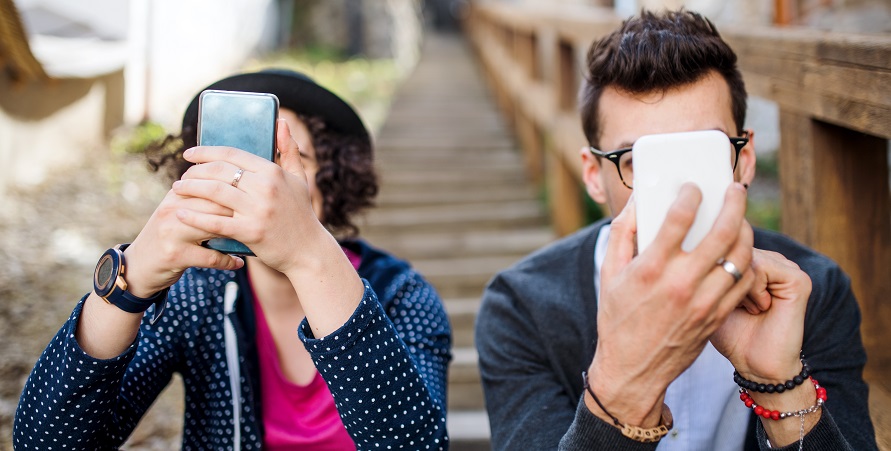
Holding a phone close to your face can make it harder to see other people around us. Research suggests that our phone can become similar to a fourth wall. The fourth wall is more like an imaginary wall. In theatre it separates the actors in a stage play from the audience. The phone works in the same way. The user will use their phone as a barrier, a way to control their face-to-face interactions.
Distractions, Phone Presence & Phubbing
Phones and notifications can also distract us. This can lead to reduced eye contact and less social engagement, which can again affect our relationships and communication with others.
Checking our phone when we hear it vibrate, ring or see it light up can also suggest that what is happening on our phone is more important that the person/people in front of us.
Research has found that simply having a mobile phone visible during a conversation can reduce feelings of closeness and trust, even if the phone is not used. People tend to have less meaningful conversations when they expect they may be interrupted.
"Phubbing" is the act of ignoring someone in favour of looking at a mobile phone. Research has linked frequent phubbing with reduced relationship satisfaction, poorer communication and increased conflict between partners, friends and family members.
Sleep Quality & Physical Wellbeing
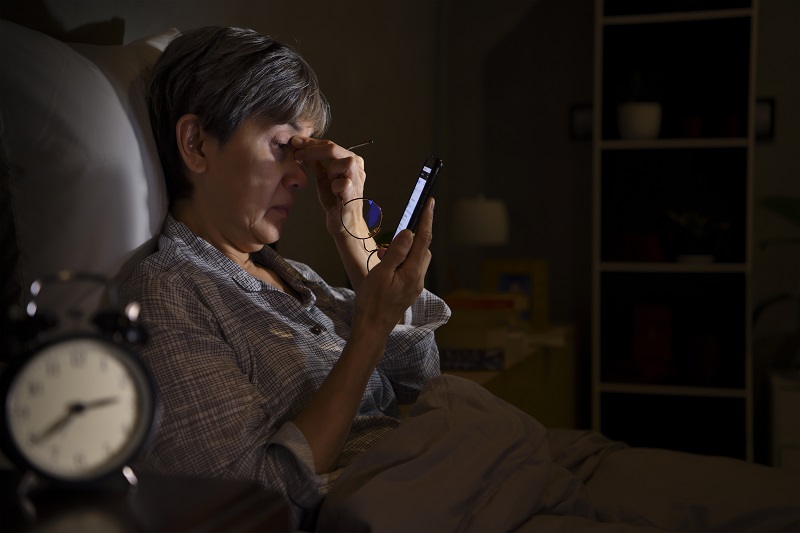
The blue-enriched light emitted by phones, tablets, computers and televisions can suppress melatonin production, making it harder to fall asleep or reducing sleep quality if devices are used close to bedtime.
Tiredness affects our communication. It can reduce our emotional control and cognitive processing. This means that we may struggle to find the right words. We may find it hard to understand what someone is saying. It can also affect our non-verbal communication, reducing our eye contact and also how warm we are in our conversations. This can result in misunderstandings with the person we are communicating with thinking we are being rude or hostile.
Headaches, blurry eyes and tiredness can also affect our communication. When we are tired and not feeling great, we are less likely to want to communicate with others in a positive way.
Looking at mobile phones and screens can cause eye strain, blurriness, headaches, dry eyes, reduced blinking and myopia (near-sightedness). Extended near work and reduced time outdoors are both thought to contribute to increasing rates of myopia in children.