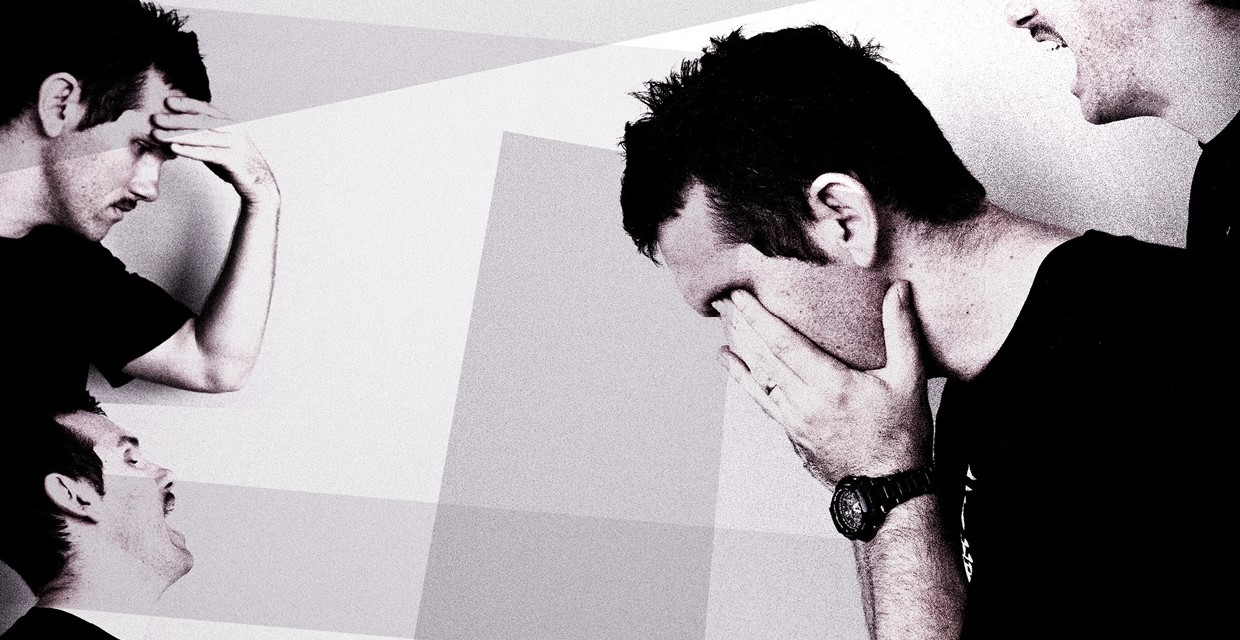
Using cell devices can affect how we communicate with others in the real world. It can seriously affect our eye contact with others.
Our eyes can be used as a social signal. I’m bored, disinterested, happy, friendly, flirty, tired etc. But eye contact is far more than that. It is essential for complex human connections. When people make eye contact, their neural activity synchronises, which improves their communication and understanding.
People who avoid eye contact often find it hard to develop and maintain interpersonal relationships.
Neurodivergent individuals who find eye contact difficult can find this a serious issue.
Have you ever sat in a café or restaurant and looked at the people around you? How many of them are looking at devices rather than talking to each other?
Walk around your local town or shopping centre, again, how many people are staring at their devices?
Firstly, they distract us. Staring at our phones takes our attention away from face-to-face conversation. It means that there is less eye contact and our engagement with the other person or people is reduced. Sitting there, trying to talk to another person while they stare at their phone can be very frustrating.
It can also show disrespect to others, or a lack of attention.
Secondly, people can hold their phone close to their face, which makes direct eye contact with other people even more difficult.
Eye contact us important for our communication with others. Looking at someone while they talk shows that we are paying attention. Staring at our phone doesn’t.
Thirdly, sometimes people do use mobile devices as a way to avoid communication. A study found that women, in particular, sometimes use mobile devices as a way to avoid eye contact with strangers.
Fourthly, staring at our phones can affect our posture. This in turn, also affects our eye contact as we tend to be more stooped.
Using mobile devices is therefore affecting our communication and social connections.
Eye contact is important for human communication and interaction. Therefore, ways must be found to address this reduction in eye contact due to the use of mobile devices. For example, limiting use of mobile devices. This is up to the individual, but also society at large.
If you would like to learn more about communication, we have courses in Social Psychology, Communication, Relationship and Communication Counselling and more.
Contact us for more information on admin@acs.edu.au
Article written by Tracey Jones - Academic Officer & Tutor (U.K.) B.Sc. (Hons) (Psychology), M.Soc.Sc (social work), Dip. SW (social work), PGCE (Education), PGD (Learning Disability Studies).
Tracey has over 20 years experience within the psychology and social work field, particularly working with people with learning disabilities. She is also qualified as a teacher and now teaches psychology and social work related subjects.
She is a book reviewer for the British Journal of Social Work. Tracey has also written a text book on Psychology and has had several short stories published.