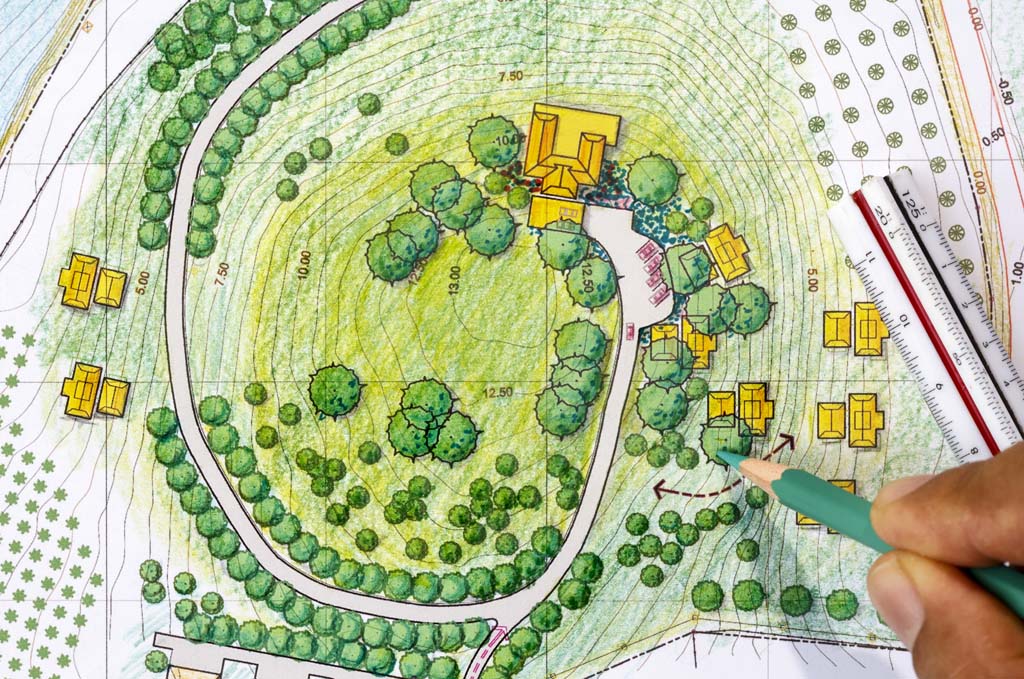
Advanced Certificate in Garden Design
Study garden and landscape design - Learn design and construction techniques for private and public gardens. Covers various garden styles plus drawing, planning, estimating, landscaping and plant knowledge.
 Become a Professional Landscape Contractor or Garden Designer
.....at the same time become an expert in Plant Identification, Garden Renovation, Landscape Assessment, Project Management, Permaculture Design and lots more.
The demand for skilled landscapers and landscape designers is booming right now! Give yourself a truly competitive edge with this unique landscaping course. It not only covers all that you need to know about landscaping; it also gives you essential and extensive training in horticulture fundamentals and workplace practices and requirements. Gain a truly solid landscaping qualification from one of the most respected schools in this field.
This course is internationally accredited through I.A.R.C
Start a business or find a landscaping job; working in the garden design or landscape architecture industries.
Course Structure
This course is made up of a number of modules. To complete this course you must study and pass all of the modules listed below.
Core Modules
- Landscaping I
- Landscaping III (Landscaping Styles)
- Planning Layout And Construction Of Ornamental Gardens
- Plant Selection And Establishment
Elective Modules
In addition to the core modules, students must also choose 5 of the following elective modules.
- Advanced Permaculture
- Australian Natives I
- Biophilic Landscaping
- Carpentry
- Computer Aided Design (CAD)
- Conifers
- Cottage Garden Design
- Deciduous Trees
- Horticultural Marketing
- Horticultural Research I
- Horticultural Research II
- Horticultural Resource Management
- Horticulture I
- Horticulture II (Plant Knowledge)
- Irrigation (Gardens)
- Landscape Construction
- Landscaping II
- Masonry (Brick, Stone and Concrete Work)
- Natural Garden Design
- Perennials
- Permaculture Systems (PDC)
- Photoshop CS - Beginner To Medium Level
- Plant Ecology
- Playground Design
- Project Management
- Restoring Established Ornamental Gardens
- Roses
- Starting A Small Business
- Trees For Rehabilitation (Landcare Reafforestation)
- Tropical Plants
- Water Gardening
- Workshop I
Accreditations
What is in each of these modules?
This course is made of 9 modules
Details of Selected Modules:
Landscaping I
The ten lessons are as follows:
-
Basic Design Procedure A - collecting pre-planning information, landscape elements, principles, etc.
-
History of Gardening ‑ garden styles and themes, famous designers, garden influences.
-
Drafting and Contracting - drawing techniques, specifications, details.
-
Basic Landscape Construction - timber, steps, retainer walls, pathways, play structures, etc.
-
Surfacing - concrete, asphalt, gravels, mulches, grasses, gradients, etc.
-
Furnishings & Features - chairs, statues, figurines, birdbaths, skateboards, safety, etc.
-
Park Design A - good/bad park design characteristics, recreational landscaping.
-
Home Garden design - good/bad garden design characteristics.
-
Design Procedure B - development of concept plans and detailed planting plans.
-
Park Design B - development of park design, fun & fitness trails.
Horticulture I
There are twelve lessons in this course, as follows:
-
Plant Identification: Naming plants; distinguishing the taxonomic divisions of plants including family, genus, species and variety or hybrid; identifying the different parts of a flower; distinguishing the morphological characteristics of leaves.
-
Planting: Planting methods used for different types of plants including annuals, perennials, evergreen and deciduous plants; influence of environmental factors on planting techniques.
-
Soils: Classifying soils; sampling and testing soils; chemical and physical properties of soils; soil improvement techniques; composting; potting mixes.
-
Nutrition: Major and micro elements necessary for plant growth; nutrient deficiencies and toxicities; fertilisers.
-
Water Management: Irrigation systems – characteristics, advantages and disadvantages; drainage systems; water-wise gardening.
-
Pruning: Pruning techniques; importance of pruning to growth, flowering and fruiting; pruning tools.
-
Weeds: Identifying common weeds; characteristics of weeds; control techniques; herbicides.
-
Pests and Diseases: Identifying common insect and disease problems; control methods; Integrated Pest Management; pesticides; hygiene procedures; chemical safety.
-
Landscaping: Stages of landscaping; design procedures; collating pre-planning information; preparing plans; selecting plants for specified sites.
-
Propagation: Asexual and sexual propagation; taking cuttings; sowing seeds; aftercare of propagated plants.
-
Lawns: Turf grass varieties; laying a new lawn; cultural techniques including watering, fertilizing, topdressing, aerating, pest and disease control.
-
Arboriculture: Tree management techniques including pruning, removal and tree surgery; identifying tree problems.
Landscaping II
There are twelve lessons in this subject as follows:
-
The Garden Environment
-
Landscape Materials
-
Using Bulbs and Annuals
-
Landscaping with Trees
-
Ground Cover Plants
-
Walls and Fences
-
Paths and Paving
-
Treatment of Slopes and Other Problem Areas
-
Garden Features
-
Designing for Low Maintenance
-
Development of a Landscape Plan
-
Management of Landscape Projects.
Landscaping III (Landscape Styles)
There are 10 lessons in this module as follows:
-
Creating the Mood
-
Historic Gardens
-
Formal Gardens
-
Oriental Gardens
-
Middle Eastern and Spanish Style
-
Mediterranean Gardens
-
Coastal Gardens
-
Modern Gardens
-
Eclectic Gardens
-
Other Styles
Plant Establishment and Selection
There are ten lessons as follows:
-
Introduction
-
Woody plants
-
Windbreaks, hedges and screens
-
Alpine and water plants
-
Annual and herbaceous plants
-
Turf
-
Maintenance
-
Pest and disease control
-
Weed control
-
Risk assessment
Landscape Construction
There are ten lessons as follows:
-
Tools and Machinery
-
Landscape Plans and Setting out a Construction Site
-
Drainage in Landscape Construction
-
Earthworks
-
Surfaces, Paths, Paving and Turf
-
Construction of Garden Structures I
-
Construction of Garden Structures II
-
Irrigation Systems
-
Establishing Hedges and Other Plants
-
Workplace Safety and Management of Landscape Construction Work
Horticulture II
There are ten lessons in this course plus one Special Assignment (see later for details). The content of each of the ten lessons is outlined below:
-
The Groups of Plants ‑ setting a framework for the whole subject.
-
Use of Plants ‑ plant selection, soils.
-
Australian Native Plants
-
Exotic Ornamental Plants
-
Indoor & Tropical Plants
-
Bedding Plants
-
Vegetables
-
Fruits, Nuts & Berries
-
Herbs
-
Alternative Growing Techniques ‑ hydroponics, container growing, terrariums. Determine appropriate applications for a range of alternative growing methods.
Horticulture & Research I
The course contains seven lessons:
1. Determining Research Needs
2. Searching for Information
3. Research Methods
4. Using Statistics
5. Conducting Statistical Research
6. Research Reports
7. Reporting on a Research Project
Water Gardening
There are eight lessons as follows:
1. Introduction: Scope and Nature of water features, water quality, plants and animals in water, etc.
2. Construction
3. Equipment: Pumps, Lights, Filters etc.
4. Ponds, watercourses, bog gardens, dams –Design & After-care.
5. Spas and Swimming Pools –Design & After care
6. Water Features –Indoor & Outdoor –Fountains, Waterfalls, Fish tanks, ponds etc
7. Water Plants
8. Aquatic Animals
- Playground Design
There are eight lessons in this unit as follows:
1. Overview of Parks & Playgrounds
2. Playground Philosophy
3. Preparing a Concept Plan
4. Materials
5. Park & Playground Structures and Materials
6. Local and Neighbourhood Parks
7. Community Participation In Park Development
8. Special Assignment.
Planning Layout and Construction of Ornamental Gardens
There are ten lessons in this unit as follows:
1. Site Appraisal, Interpretation and Risk Assessment
2. Preparing Site Plans and Specifications
3. Influence of Site Characteristics
4. The Use of Hard Landscape Features
5. Setting out a Site to Scale Plans and Drawings
6. Soil Handling and Storage
7. Land Drainage Systems
8. Ground Preparation Techniques
9. Construction of Paths and Patios
10. Construction of Steps, Ramps, Dwarf Walls and Fences.
Cottage Garden Design
There are eight lessons as follows:
1. Introduction To Cottage Gardens
2. History Of Cottage Gardens
3. Design Techniques and Drawing Plans
4. Plants For Cottage Gardens
5. Planting Design In Cottage Gardens
6. Landscape Features and Components
7. Cottage Gardens Today
8. Special Assignment - Design Of A Complete Garden.
Permaculture Systems
The course is divided into eight lessons as follows:
1. Permaculture Principles
2. Natural Systems
3. Zone and Sector Planning
4. Permaculture Techniques
5. Animals in Permaculture
6. Plants in Permaculture
7. Appropriate Technologies
8. Preparing a Permaculture Plan
Horticultural Management
There are ten lessons in this course as follows:
1. Horticultural Business Structures
2. Management Theories and Procedures
3. Horticulture and The Law
4. Supervision
5. Financial Management
6. Staff Management
7. Improving Plant Varieties
8. Productivity and Risk
9. Managing Physical Resources
10. Developing an Horticultural Business Plan
Natural Garden Design
There are 8 lessons in this course as follows:
1. Introduction to Natural Gardens.
2. History of Natural Gardens
3. Developing Concept Plans
4. Plants for Natural Gardens
5. Planting Design in Natural Gardens
6. Natural Garden Features
7. Natural Gardens Today
8. Bringing It All Together.
Project Management
There are nine lessons as follows:
1. Introduction
Understanding what project management is, and what its applications might be.
2. Project Identification
Identification and defining projects which need management.
3. Project Planning
Developing a strategy and framework for the plan.
4. Project Implementation
Managers duties during implementation, developing a Preparation Control Chart,
Regulating implementation.
5. Project Completion & Evaluation
Dangers in this stage, Steps in Project completion, Declaring a project sustainable,
Developing an evaluation method.
6. Technical Project Management Skills
Preparing a proposal, budget control/management, steps in drawing up a
post project appraisal.
7. Leadership Skills
Styles of leadership, leadership principles and methods.
8. Improving Key Personnel Skills
Listening skills, Negotiation skills, Conflict management.
9. Major Assignment
Developing full documentation for a project.
Restoring Established Ornamental Gardens
There are 8 lessons in this module as follows:
1. Landscape History & Design Styles
2. Surveying the Site
3. Assessment of Plantings and Features
4. Selecting Components for Retention
5. Work Programming and Risk Management
6. Drainage
7. Hard Landscape Feature Restoration
8. Planting Restoration and Maintenance
Horticulture & Research II
There are 7 lessons in this module as follows:
1. Identifying research issues and determining research priorities
2. Acquisition of technical information
3. Specialised research techniques
4. Research planning and designing
5. Statistics
6. Conducting research
7. Writing reports
Workshop I
This course uses PBL (problem-based learning) study projects to develop a "real world" relevance in your overall learning experience
There are 3 lessons in this module as follows:
1. Workplace Tools, Equipment and Materials: Identifying and describing the operation of tools and equipment used in the workplace; routine maintenance of tools and equipment; identifying and comparing materials used in the workplace; using different materials to perform workplace tasks.
2. Workplace Skills: Determining key practical skills in the workplace; identifying and comparing commonly-performed workplace tasks; determining acceptable standards for workplace tasks; implementing techniques for improving workplace efficiency.
3. Workplace Safety: Identifying health and safety risks in the workplace; complying with industry OH&S standards; developing safety guidelines for handling dangerous items
WHAT ABOUT PRACTICAL WORK?
There are lots of different things we do throughout a course which will take you away from sitting behind a desk or working on a computer. Despite being an online course, there are lots of practical tasks set for you and scattered through the course, ranging from visiting different types of landscapes and having discussions with various industry people about things you have encountered ; through to conducting site surveys and inspections.
We have found that the question of 'practical' learning is one that some people feel it cannot be achieved through distance learning. We understand that apprehension. We have been grappling with that problem and contriving solutions for 30 years. Over those 30 years, advances in technology has given us more tools (e.g. video, internet, teleconferencing); and experience with hundreds of past students has allowed us to develop learning strategies that really do work.
Over the same period, funding for practical work in on campus courses has become tighter. In reality, sometimes an online course with well constructed learning tasks can give you more practical learning than something operating on campus but with limited funding.
This is an excellent landscaping course, and it can be done anywhere - you do not need to attend practical sessions or workshops in any particular place at any particular time - BUT - there is a lot of work that goes well beyond just theory; and the way in which that is tackled can be extremely diverse, and also different for every student.
WHAT WILL THIS COURSE DO FOR YOU?
- You will develop the skills and knowledge required to work as a professional landscape designer and landscaper.
- You will be studying with a well-respected school with decades of experience in this field.
- You will be under the mentorship of experienced and well qualified tutors.
- This course is different to many others. It is an 'experiential based' learning program; designed to get you involved with the horticulture industry as you study. The industry is changing faster than ever; and will continue to change and for ongoing success you need to become connected, remain connected and be able to adapt to these changes.
ACS Distance Education has been delivering horticultural education since the 1970’s, and is remains prominent and well regarded in industry circles. All horticulture tutors hold at least a degree, and five years industry experience, but many also additionally bring decades of experience to ACS horticulture students. Tutors take an active interest in students’ plans for their businesses, and can offer practical advice on how to get started in industry.
Enrol using the automated procedure on this site or contact us via phone or email to ask questions and enrol with a real person.
You can enrol at anytime and start the course when you are ready. Enrolments are accepted all year - students can commence study at any time. All study is self paced and ACS does not set assignment deadlines.
Please note that if a student is being assisted by someone else (e.g. an employer or government subsidy), the body offering the assistance may set deadlines. Students in such situations are advised to check with their sponsor prior to enrolling. The nominal duration of a course is approximately how long a course takes to complete. A course with a nominal duration of 100 hours is expected to take roughly 100 hours of study time to complete. However, this will vary from student to student. Short courses (eg. 100 hrs duration) should be completed within 12 months of enrolment. Certificates, Advanced Certificates and Awards (eg. over 500 hours duration) would normally be completed within 3 -5 years of enrolment. Additional fees may apply if a student requires an extended period to complete.
If a student cannot submit their assignments for 6 months to ACS, they should advise the school to avoid cancellation of their student
registration. Recommencement fees may apply.
Simply click on the ENROL OPTIONS button at the top of this screen and follow the prompts.
You can see the course price at the top of this page. Click 'enrolment options' to see any payment options available.
You can pay by Credit Card, PayPal, Afterpay or bank transfer.
Yes! We have payment plans for most courses. Click 'enrolment options' to see the available payment plans.
We also have Afterpay that will allow you to pay for your course or payment plans in four instalments (if you are in Australia).
There are no entry requirements that you need to meet to enrol in our courses, our courses are for everyone.
If you are under 18, we need written permission from your parent/ guardian for your enrolment to continue, we can arrange that after you have enrolled.
You don’t need to purchase any additional resources to complete our courses.
What do I need to know before I enrol?
We aim to teach you the essentials without you having to purchase any specific computer program.
We recommend that you have access to a word processing program, such as Microsoft Word or Google Docs, so that you can easily complete and submit your assignments.
You sure can. We are here to help you learn whatever your abilities.
Yes, if you are enrolling in a Certificate or Advanced Certificate, you might be eligible for credits if you have evidence of your previous studies or relevant experience. More information is here.
We recommend that you are able to browse websites, send emails and conduct online research. You will need to be able to type and submit your assignments.
If you have limited computer skills, we can make special arrangements for you.
This is possible, it depends on the institution. We recommend that if you would like to use our courses that you contact the institution first. Our Course Handbook is a good resource for this.
Our courses are written in English and we only have English speaking academic staff. If you can read and complete your assignments in English, our courses are ideal for you.
Our courses are designed to build knowledge, hands on skills and industry connections to help prepare you to work in the area, running your own business, professional development or as a base for further study.
This course is aimed at providing you with a solid understanding of the subject. It has been designed to take 600 hours, which includes your course reading, assignment work, research, practical tasks, watching videos and more. When you complete the course, will have a good understanding of the area/ industry you want to work in.
It’s up to you. The study hours listed in the course are a rough guide, however if you were to study a short course (100 hours) at 10 hours per week, you could finish the course in 10 weeks (just an example). Our courses are self-paced, so you can work through the courses in your own time. We recommend that you wait for your tutor to mark and return your assignment before your start your next one, so you get the benefits of their feedback.
The course consists of course notes, videos, set tasks for your practical work, online quizzes, an assignment for each lesson (that you receive feedback from your tutor from) and ends in an exam (which is optional, if would like to receive the formal award at the end), using our custom built Learning Management System - Login.Training.
Our courses are designed for adults to gain professional development and skills to further their careers and start businesses.
Our custom online learning portal allows you to conduct your learning online. There may be practical tasks that you can do offline. You have the option of downloading your course notes or print them to read later.
There is also the option to pay an additional fee for printed course notes and or USB (availability limited to location and deliverability).
Yes, if you don’t have access to the internet, you can receive the course as paper notes or on a USB stick for an additional fee. We can also make alternative arrangements for you to send your assignments to us.
We offer printed notes for an additional fee. Also, you can request your course notes on a USB stick for an additional fee.
Yes, your tutor is here to help you. Simply post any questions you have in your login.training portal or contact the office and we can pass on a message to your tutor.
We are more learning focussed, rather than assessment focussed. You have online quizzes to test your learning, written assignments and can complete an exam at the end of the course (if you want to receive your certificate). You will not receive a pass/ fail on your course work. If you need to add more details on your assignment, we will ask you to resubmit and direct you where you need to focus. If you need help, you can ask your tutor for advice in the student room.
Each module (short course) is completed with one exam.
Exams are optional, however you must sit an exam if you would like to receive a formal award. You will need to find someone who can supervise that you are sitting the exams under exams conditions. There is an additional cost of $60 incl. GST for each exam.
More information is here
There are practical components built into the course that have been designed to be achieved by anyone, anywhere. If you are unable to complete a task for any reason, you can ask your tutor for an alternative.
When you complete the course work and the exams (8-9 exams) and you will be able receive your course certificate- an Advanced Certificate. Otherwise, you can receive a Letter of Completion.
You can bundle the short courses to create your own customised learning bundle, Certificates or Advanced Certificates. More information is on this page.
Yes, our courses are built to be applicable for people living anywhere in any situation. We provide the fundamentals, and each student can apply their own unique flair for their own interests, region and circumstances with the one-on-one guidance of a tutor. There is also a bit of student directed research involved.
Employers value candidates with industry skills, knowledge, practical skills and formal learning. Our courses arm you with all of these things to help prepare you for a job or start your own business. The longer you study the more you will learn.
ACS has an arrangement with OAMPS (formerly AMP) who can arrange Professional Indemnity from Australian and New Zealand graduates across all disciplines. Ph: 1800 222 012 or email acs@oamps.com.au.
Who are ACS Distance Education?
ACS Distance Education have been educating people for over 40 years.
We are established and safe- we have been in education for over 40 years.
We are focused on developing innovative courses that are relevant to you now and what you will need to know in the future.
We are focused on helping you learn and make the most of your experience.
You can enrol at any time, you can work on your course when it suits you and at your own pace.
We are connected to many industry bodies and our staff participate in continuous improvement and learning activities to ensure that we are ahead of what learning is needed for the future.
Our courses are not accredited by the Australian Government. However many of our courses are recognised and held in high regard by many industry bodies.
Our courses are written by our staff, who all have many years experience and have qualifications in their speciality area. We have lots of academic staff who write and update our courses regularly.
How do I enrol my staff/ sponsored students?
Yes, you can do a request for a bulk enrolment and request an invoice on our Invoice Request Form
We can prepare an invoice, quote or proforma invoice. Simply complete your details on our Invoice Request form
We can arrange bulk discounts for your course enrolment, please get in touch with us to discuss your needs.
Yes, we have many students who are in locked facilities, such as prisons or hospitals. We can cater by also offering paper notes at an additional cost.
What if I have any more questions or need more information?
We can assist you to find the right course for your needs. Get in touch with us via email (admin@acs.edu.au) call on +61 7 5562 1088 or complete our course advice form.
What if I change my mind?
Please get in touch with studentservices@acs.edu.au if you would like to be removed from our mail list.
If you would like ACS Distance Education to delete your information at any time (whether you are a customer or a prospective customer), please contact our privacy officer and we will process this ( admin@acs.edu.au ).
If students require a reproduction of their certificate, an electronic copy can be provided at a cost of AUD$35 incl GST. Printed copies are not available.
Course Contributors
The following academics were involved in the development and/or updating of this course.

Martin Powdrill
25 years working in Telecommunications, IT, Organisational Development, and Energy Conservation & Efficiency, prior to setting up his own Permaculture consulting business. Martin has a Bsc (Hons) Applied Science (Resources Option), MSc Computer Studies, Permaculture Design Certificate.
Martin volunteers with many local environmental and community groups, and facilitates discussions on climate change, peak oil, and transition towns. Martin has an allotment, and is currently enrolled in the Scottish Mountain Bike Leader Award programme.
Martin’s goal as a catalyst for sustainable change brings together his strengths and experience in his environmental, project management, and business backgrounds.

John Mason (Horticulturist)
Parks Manager, Nurseryman, Landscape Designer, Garden Writer and Consultant.
Over 40 years experience; working in Victoria, Queensland and the UK.
He is one of the most widely published garden writers in the world.

Jacinda Cole (Horticulturist)
B.Sc., Cert.Garden Design. Landscape Designer, Operations Manager, Consultant, Garden Writer.
She was operations manager for a highly reputable British Landscape firm (The Chelsea Gardener) before starting up her own landscaping firm. She spent three years working in our Gold Coast office, as a tutor and writer for Your Backyard (gardening magazine) which we produced monthly for a Sydney punlisher between 1999 and 2003. Since then, Jacinda has contributed regularly to many magazines, co authored several gardening books and is currently one of the "garden experts" writing regularly for the "green living" magazine "Home Grown".

Garden Design Part 1
This stunning full colour Garden Design ebook is full of useful tips, information and inspiration. It contains around 300 colour illustrations! It is comprised of three parts: Design, How a Garden Functions and Aesthetics (making it look good).

Garden Design Part 2
Part 2 of the Garden Design Series is an inspiring accompaniment to the first book, but works equally well in its own right. It's brimming with ideas and practical advice for designing a wide variety of different gardens. You will learn about different styles of gardens and how to create a style to suit a site or client. It contains around 300 colour photos! Written by John Mason over several decades of visiting and photographing gardens, writing, teaching and creating gardens.
Starting a Garden or Landscape Business
Expert advice on how to get started in your own garden or landscape business! Packed with valuable business advice, horticultural and landscaping knowledge, and practical ideas - this book is a must have for garden lovers. It is great for anyone thinking about (or already involved in), a horticultural, landscaping or garden business. This updated re-print is only available as an ebook.

Tropical Landscaping
Tropical Landscaping is a style that may be used more in tropical places, but can still be created in cooler climates. This book provides practical advice and inspiration over 8 chapters: “Garden Design”, “Components of a Tropical Garden”, “Building the Garden”, “Outdoor Living Areas”, “Pools, Ponds and Water Features”, “Lawns”. “Plants (to use), and “Caring for Plants”. 103 pages 69 colour photos