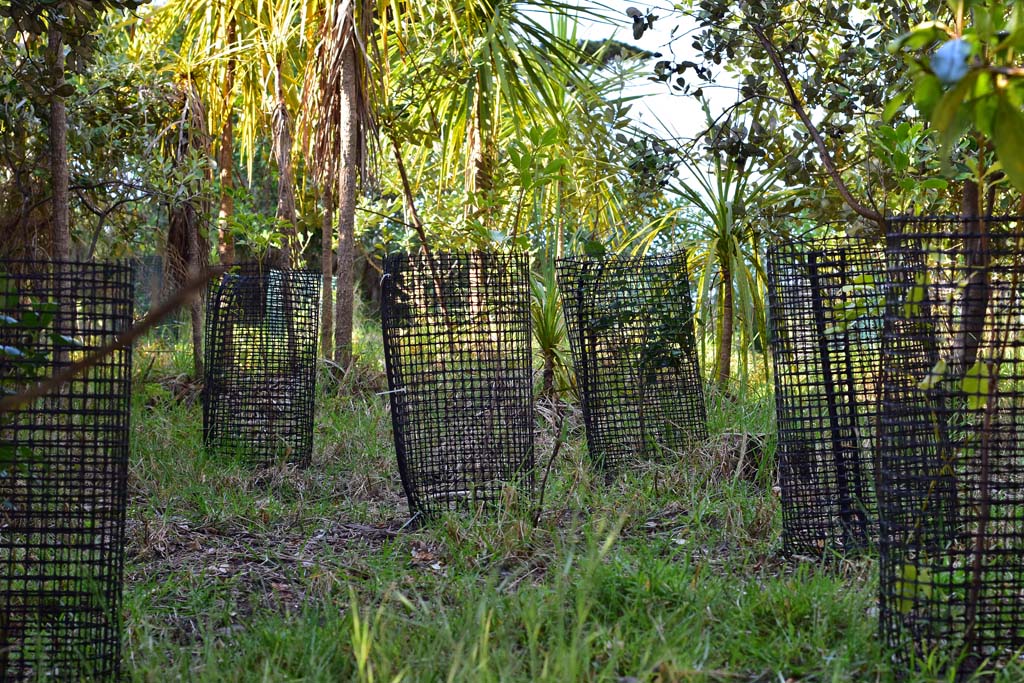
Learn to choose, grow and manage the Best Tree species for a Soil Type and Situation.
- Study from Home and work at your own pace, to save you time and money
- Learn to incorporate soil management, tree cultivation, ecology and post planting management.
- Learn to rehabilitate land systems.
- Gain confidence in practical restoration and cultivation
10 Lessons each with a Set Task, 10 assignments, online and CD courses also have self assessment tests.
This course develops an understanding of environmental systems and the rehabilitation of degraded landscapes. You learn about seed collection, storage and germination, propagation, plant selection, establishment techniques, controlling pest & disease after planting. It will give you the skills required to maintain healthy rehabilitation systems.
Land restoration is a major industry of significance to our future. Don't miss out on this unique home study course. Gain a career that you believe in.
This is a course for:
- Farmers, Landscapers, Parks Manager, Gardeners
- Students, Teachers and Academics
- Environmental Consultants
- Land Managers, Soil Scientists or anyone else interested in building their understanding of how trees can be better used to improve or sustain any property, small or large.
If you want to know about rehabilitating sites without having to do a degree, this is a good place to obtain the knowledge necessary to get you up and running. It offers hands on and practical.
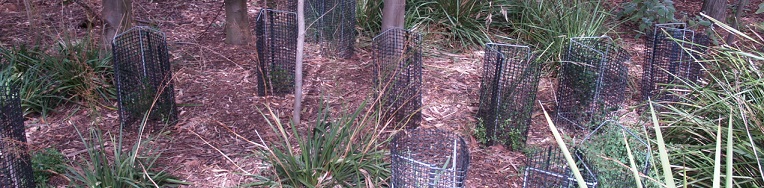
Aims
- Compare different approaches to land rehabilitation, to determine strengths and weaknesses of alternative options on a site to be rehabilitated.
- Determine techniques to maximise plant development in land rehabilitation situations.
- Explain the different ways of producing seedling trees for land rehabilitation purposes.
- Determine appropriate plant establishment programs.
- Develop procedures to care for plants, during establishment in an hostile environment.
- Manage the rehabilitation of degraded soil.
- Explain the effect of plants on improving a degraded site, both physically and chemically.
What You Will Do
- Determine different plant cultivarsgrowing on land degradation on sites.
- Explain different reasons for land requiring rehabilitation, including: * Salination * Erosion * Mining * Grazing * Vegetation harvesting * Pests * Reduction of biodiversity * Soil contamination * Urbanisation.
- Compare the effectiveness of different policy approaches to land rehabilitation by different agencies and organisation, including: * Different levels of government * Mining companies * Developers * Conservation groups (i.e. tree planting bodies, landcare groups).
- Develop a risk analysis for a specified site to be rehabilitated, by determining a variety of plant health problems which may impact on the success of plant establishment.
- Analyse the failure of plants to grow successfully on a visited land rehabilitation site.
- Develop a procedure to enhance the success rate of land rehabilitation plantings on a degraded site.
- Describe the use of mulches, to maximise plant condition in a specified land rehabilitation tree planting project.
- Explain different processes of establishing seedlings on land rehabilitation sites, including: *tubestock nursery production *direct seeding *pre-germinated bare rooted seedlings.
- Determine factors which affect the viability of establishing five different species of plant seedlings, from different plant families; on a specific degraded site.
- Compare the benefits of acquiring plants for a project by buying tubestock, with propagating and growing on, or close to, the planting site, with reference to: *costs *plant quality *local suitability *management.
-
Prepare production schedules for a plant species, using different propagation techniques,
- summarising all important tasks from collection of seed to planting out of the tubestock.
- Calculate the cost of production for a tubestock plant, according to the production schedule.
- Estimate the differences in per plant establishment costs, for tubestock, compared with direct seeding methods, for planting on a degraded site.
- Describe different methods of planting trees for rehabilitation purposes.
- Describe different plant establishment techniques, including: *wind protection *frost protection *pest control *water management *weed management.
- Describe an appropriate method for preparing soil for planting, at a proposed rehabilitation site.
- Evaluate plant establishment techniques used by two different land rehabilitation programs inspected by you at least twelve months after planting was carried out.
- Determine the needs of plants after planting, on different proposed land rehabilitation sites.
- Describe different ways to cater to the needs of large numbers of plants after planting.
- Collect pressed specimens or photographs of trees for a herbarium of suitable trees for rehabilitation, and including information on the culture and care of each tree.
- Describe different types of soil degradation.
- Determine the risk factors involved in soil degradation.
- Compare different alternative methods of treating several different soil degradation problems.
- Develop an assessment form to use for evaluating the sensitivity of a site to land degradation.
- Evaluate a site showing signs of degradation, selected by you, using the assessment form you developed.
- Plan a rehabilitation program for the degraded site you evaluated, including *a two year schedule of work to be completed; *list of quantity and type of materials required; *approximate cost estimates.
- Explain the effect different plant species may have resisting soil degradation.
- Explain how different plants can have different impacts upon the chemistry of their environment, including both air and soil.
- Evaluate the significance of a group of plants, to the nature of the microclimate in which you find them growing.
- Compare the appropriateness of twenty different plant species for different degraded sites.
- Determine plant varieties, suited to each of different degradation situations.
Lesson Structure
There are 10 lessons in this course:
-
Approaches To Land Rehabilitation
- Importance of trees
- Understanding plant identification
- Land management programs
- Biodiversity
- Soil degradation
- Types of Erosion and control methods
- Salinity and its control
- Soil Acidification
- Rehabilitation
-
Ecology Of Soils and Plant Health
- Biomass
- Constituents of the ecosystem
- Ecological concepts
- Relationship between plants and animals
- Creating habitat corner for wildlife
- Edge effects
- Soil environment and composition
- Soil characteristics
- Cation exchange capacity
- Plant Nutrition
- Organic and inorganic fertilisers
- Diagnosis of nutritional problems
- Pest and diseases
- Preventative control measures
- Biological control
-
Introduction To Seed Propagation Techniques
- Types of propagation method
- Seed sources
- Maintaining genetic identity in seed
- Guideline for collecting and harvesting seeds
- Seed storage
- Germination treatments methods
- Seed sowing
- Containers for propagation
- Pricking out or tubing seedlings
- Quality control of soil mixes
- Operation flow chart of the production system
- Seed resource guide
-
Propagation And Nursery Stock
- Asexual propagation
- Classification of cuttings
- Types of cuttings
- Stock plants
- Ways of getting roots on difficult root-cutting plants
- Hormone treatments
- Nursery hygiene practices
- Propagating mixes
- Potting media and soil mixes
- Maintaining plants in pots
- Greenhouse growing
- Environmental controls in greenhouse
- Greenhouse irrigation methods
- Other structures for growing plants
- Propagation of different plants (Conifers. Acacias. Oaks, Maples etc)
-
Dealing With Chemical Problems
- Soil contamination
- Symptoms on plants due to chemical contamination
- Rehabilitation of damaged soils
- Growing plants on contaminated sites
- Rehabilitating a building site (home garden)
- Soil chemical composition and plant growth
-
Physical Plant Effects On Degraded Sites
- Principles to rehabilitate any site
- Pioneer plants
- Windbreaks
- Designing and planting a firebreak
- Stormwater, waterlogging and drainage
- Soil compaction
-
Plant Establishment Programs
- The beneficial and detrimental impact of the program
- What to plant where
- Climate considerations
- Plant selection criteria
- Plant protection methods
-
Hostile Environments
- Planning rehabilitation strategies
- Rehabilitation techniques
- Copying with dry conditions
- Mulching
- Weed management strategies
-
Plant Establishment Care
- Planting procedure for evergreens, deciduous and bare-rooted plants
- Water and plant growth
- Transpiration
- Water requirement
- Guide to inspecting plant health
-
Rehabilitating Degraded Sites
- Environmental assessment
- An environmental audit
- Determine land objectives
- Determining a rehabilitation program
- Replanting
Accreditations
Trees on Small Properties?
Trees that might ordinarily be too big for a small garden may still be able to be grown, but you may need to use different techniques.
ROOT CONTROL
Buildings, pavement and walls may restrict where tree roots can grow; and for some tree species, that isn't an issue; but for others, the roots can cause damage. If you confine roots to a particular soil volume, they can be kept from invading unwanted areas. This technique will also tend to reduce the overall size of the tree. Toot control may be affected by any of the following methods:
- Build a concrete wall under the ground
- Woven fabrics that restrict movement of roots (eg. root control bags).
- Thin plastic or metal barriers placed vertically down into the ground to prevent roots spreading outwards from the plant into areas where the they might be a problem (e.g. pipes, water features, paved areas). If the barrier reaches deep enough (ideally at least 50 - 60cm or more) then any roots that do go beneath the barrier are usually deep enough not to cause problems for paved areas.
WEEPING TREES
Although there are many naturally weeping plants, some weeping trees are produced by grafting. Generally a tall upright growing variety will be used as the rootstock, and a spreading variety is grafted on top, at a desired height. This produces a straight upright trunk supporting outstretched and drooping branches on top. The height of weeping trees can be controlled (hence many have potential for smaller gardens). Be aware that some weeping trees can still spread a great deal, and become quite large. Weeping elms for instance might be inappropriate for a courtyard, but a weeping Acer palmatum ‘Dissectum’ may be appropriate.
Examples of plants commonly grafted as weepers include:
- Acer palmatum cultivars
- Cherries
- Flowering Peach Cultivars
- Silver Birch
- Roses
- Conifer varieties
STANDARDS
Standards are often developed by grafting an upright or bushy styled plant onto a more erect cultivar of the same plant genus.
Alternatively a normal plant can sometimes be trained, through careful pruning to achieve the same standard habit. The desired plant is allowed to grow as a single stem until the height is achieved where you desire branching (the ball shape) is to commence. At this point the plant is pruned. Pruning is continuous from this point onwards in order to achieve a bushy well-branched specimen. Any branches that develop below the desired point are removed immediately. The height of the standard and the size of the ball are purely subjective. In other words, you can select any dimension you desire.
Many small shrubs and trees are suitable for standards. The bushier the natural habit of the plant tends to be, the better suited to standard formation the plant generally is.
ESPALIERS
The spread of larger plants can often be contained by growing them as espaliers. This is the process of growing a plant up a wall or trellis, or similar structure, with the plant trained and pruned against the flat structure minimising its spread outwards. This can be a great way of utilising what might otherwise be a bare wall, and allow you to grow plants that might otherwise be to big. Trellising or wire stays might be used against the wall to provide anchorage points to train branches too.
DWARFING ROOTSTOCKS
Some trees that generally grow large can be kept smaller by grafting onto rootstocks that keep them smaller (eg. they may be less vigorous roots)
You need to Understand Degradation Before you can Start Rehabilitation
Water erosion will be evident at times of heavy rainfalls in areas where the vegetation cover is reduced. This can occur as a result of overgrazing or clean cultivation. The proportion of rainfall running off is higher, the greater the slope is. Soils low in organic matter or with poor structure are generally more prone to erosion. Soils which are more friable tend to absorb rain more quickly. How much water is absorbed before runoff occurs depends on the depth of soil.
Crusted or capped surface layers reduce water absorption considerably and cause large-scale surface flow. This generally takes place in the following order:
- Raindrop or splash erosion, which breaks up surface structure, fills soil pores and seals the surface.
- Sheet erosion, where a thin uniform layer of the topmost soil particles is removed by wide areas of shallow water.
- Rill erosion, which occurs due to the concentration of sheet surface flow into faster flowing, deeper rills, and results in more severe soil loss where runoff accumulates.
- Gully erosion, which prevails further down in the landscape where runoff water flows faster and removes large amounts of soil.
These gullies subsequently increase in length and depth.
Water erosion control is achieved by eliminating the cause as early on as possible, by minimising runoff and reducing the speed of flow.
There are two main types of water erosion control methods:
- Biological or plant-based methods
- Mechanical or earthwork methods
If the problem can be solved by an improved plant cover, expensive earthworks should be avoided.
WHO IS THIS COURSE FOR?
This is a course for:
- Farmers, Landscapers, Parks Manager, Gardeners
- Students, Teachers and Academics
- Environmental Consultants
- Land Managers, Soil Scientists or anyone else interested in building their understanding of how trees can be better used to improve or sustain any property, small or large.
Enrol using the automated procedure on this site or contact us via phone or email to ask questions and enrol with a real person.
You can enrol at anytime and start the course when you are ready. Enrolments are accepted all year - students can commence study at any time. All study is self paced and ACS does not set assignment deadlines.
Please note that if a student is being assisted by someone else (e.g. an employer or government subsidy), the body offering the assistance may set deadlines. Students in such situations are advised to check with their sponsor prior to enrolling. The nominal duration of a course is approximately how long a course takes to complete. A course with a nominal duration of 100 hours is expected to take roughly 100 hours of study time to complete. However, this will vary from student to student. Short courses (eg. 100 hrs duration) should be completed within 12 months of enrolment. Certificates, Advanced Certificates and Awards (eg. over 500 hours duration) would normally be completed within 3 -5 years of enrolment. Additional fees may apply if a student requires an extended period to complete.
If a student cannot submit their assignments for 6 months to ACS, they should advise the school to avoid cancellation of their student
registration. Recommencement fees may apply.
Simply click on the ENROL OPTIONS button at the top of this screen and follow the prompts.
You can see the course price at the top of this page. Click 'enrolment options' to see any payment options available.
You can pay by Credit Card, PayPal, Afterpay or bank transfer.
Yes! We have payment plans for most courses. Click 'enrolment options' to see the available payment plans.
We also have Afterpay that will allow you to pay for your course or payment plans in four instalments (if you are in Australia).
There are no entry requirements that you need to meet to enrol in our courses, our courses are for everyone.
If you are under 18, we need written permission from your parent/ guardian for your enrolment to continue, we can arrange that after you have enrolled.
You don’t need to purchase any additional resources to complete our courses.
What do I need to know before I enrol?
We aim to teach you the essentials without you having to purchase any specific computer program.
We recommend that you have access to a word processing program, such as Microsoft Word or Google Docs, so that you can easily complete and submit your assignments.
You sure can. We are here to help you learn whatever your abilities.
Yes, if you are enrolling in a Certificate or Advanced Certificate, you might be eligible for credits if you have evidence of your previous studies or relevant experience. More information is here.
We recommend that you are able to browse websites, send emails and conduct online research. You will need to be able to type and submit your assignments.
If you have limited computer skills, we can make special arrangements for you.
This is possible, it depends on the institution. We recommend that if you would like to use our courses that you contact the institution first. Our Course Handbook is a good resource for this.
Our courses are written in English and we only have English speaking academic staff. If you can read and complete your assignments in English, our courses are ideal for you.
Our courses are designed to build knowledge, hands on skills and industry connections to help prepare you to work in the area, running your own business, professional development or as a base for further study.
This course has been designed to cover the fundamentals of the topic. It will take around 100 hours to complete, which includes your course reading, assignment work, research, practical tasks, watching videos and anything else that is contained in the course. Our short courses are a great way to do some professional development or to learn a new skill.
It’s up to you. The study hours listed in the course are a rough guide, however if you were to study a short course (100 hours) at 10 hours per week, you could finish the course in 10 weeks (just an example). Our courses are self-paced, so you can work through the courses in your own time. We recommend that you wait for your tutor to mark and return your assignment before your start your next one, so you get the benefits of their feedback.
The course consists of course notes, videos, set tasks for your practical work, online quizzes, an assignment for each lesson (that you receive feedback from your tutor from) and ends in an exam (which is optional, if would like to receive the formal award at the end), using our custom built Learning Management System - Login.Training.
Our courses are designed for adults to gain professional development and skills to further their careers and start businesses.
Our custom online learning portal allows you to conduct your learning online. There may be practical tasks that you can do offline. You have the option of downloading your course notes or print them to read later.
There is also the option to pay an additional fee for printed course notes and or USB (availability limited to location and deliverability).
Yes, if you don’t have access to the internet, you can receive the course as paper notes or on a USB stick for an additional fee. We can also make alternative arrangements for you to send your assignments to us.
We offer printed notes for an additional fee. Also, you can request your course notes on a USB stick for an additional fee.
Yes, your tutor is here to help you. Simply post any questions you have in your login.training portal or contact the office and we can pass on a message to your tutor.
We are more learning focussed, rather than assessment focussed. You have online quizzes to test your learning, written assignments and can complete an exam at the end of the course (if you want to receive your certificate). You will not receive a pass/ fail on your course work. If you need to add more details on your assignment, we will ask you to resubmit and direct you where you need to focus. If you need help, you can ask your tutor for advice in the student room.
Each module (short course) is completed with one exam.
Exams are optional, however you must sit an exam if you would like to receive a formal award. You will need to find someone who can supervise that you are sitting the exams under exams conditions. There is an additional cost of $60 incl. GST for each exam.
More information is here
There are practical components built into the course that have been designed to be achieved by anyone, anywhere. If you are unable to complete a task for any reason, you can ask your tutor for an alternative.
When you complete the course work and the exam and you will be able receive your course certificate- a Statement of Attainment. Otherwise, you can receive a Letter of Completion.
You can bundle the short courses to create your own customised learning bundle, Certificates or Advanced Certificates. More information is on this page.
Yes, our courses are built to be applicable for people living anywhere in any situation. We provide the fundamentals, and each student can apply their own unique flair for their own interests, region and circumstances with the one-on-one guidance of a tutor. There is also a bit of student directed research involved.
Employers value candidates with industry skills, knowledge, practical skills and formal learning. Our courses arm you with all of these things to help prepare you for a job or start your own business. The longer you study the more you will learn.
ACS has an arrangement with OAMPS (formerly AMP) who can arrange Professional Indemnity from Australian and New Zealand graduates across all disciplines. Ph: 1800 222 012 or email acs@oamps.com.au.
Who are ACS Distance Education?
ACS Distance Education have been educating people for over 40 years.
We are established and safe- we have been in education for over 40 years.
We are focused on developing innovative courses that are relevant to you now and what you will need to know in the future.
We are focused on helping you learn and make the most of your experience.
You can enrol at any time, you can work on your course when it suits you and at your own pace.
We are connected to many industry bodies and our staff participate in continuous improvement and learning activities to ensure that we are ahead of what learning is needed for the future.
Our courses are not accredited by the Australian Government. However many of our courses are recognised and held in high regard by many industry bodies.
Our courses are written by our staff, who all have many years experience and have qualifications in their speciality area. We have lots of academic staff who write and update our courses regularly.
How do I enrol my staff/ sponsored students?
Yes, you can do a request for a bulk enrolment and request an invoice on our Invoice Request Form
We can prepare an invoice, quote or proforma invoice. Simply complete your details on our Invoice Request form
We can arrange bulk discounts for your course enrolment, please get in touch with us to discuss your needs.
Yes, we have many students who are in locked facilities, such as prisons or hospitals. We can cater by also offering paper notes at an additional cost.
What if I have any more questions or need more information?
We can assist you to find the right course for your needs. Get in touch with us via email (admin@acs.edu.au) call on +61 7 5562 1088 or complete our course advice form.
What if I change my mind?
Please get in touch with studentservices@acs.edu.au if you would like to be removed from our mail list.
If you would like ACS Distance Education to delete your information at any time (whether you are a customer or a prospective customer), please contact our privacy officer and we will process this ( admin@acs.edu.au ).
If students require a reproduction of their certificate, an electronic copy can be provided at a cost of AUD$35 incl GST. Printed copies are not available.
Course Contributors
The following academics were involved in the development and/or updating of this course.

John Mason
Writer, Manager, Teacher and Businessman with over 40 years interenational experience covering Education, Publishing, Leisure Management, Education, and Horticulture. He has extensive experience both as a public servant, and as a small business owner.
John is a well respected member of many professional associations, and author of over seventy books and of over two thousand magazine articles.

Rosemary Davies (Horticulturist)
Leading horticultural expert in Australia.
Rosemary trained in Horticultural Applied Science at Melbourne University. Initially she worked with Agriculture Victoria as an extension officer, taught horticulture students, worked on radio with ABC radio (clocking up over 24 years as a presenter of garden talkback programs, initially the only woman presenter on gardening in Victoria) and she simultaneously developed a career as a writer.
She then studied Education and Training, teaching TAFE apprentices and developing curriculum for TAFE, before taking up an offer as a full time columnist with the Herald and Weekly Times and its magazine department after a number of years as columnist with the Age. She has worked for a number of companies in writing and publications, PR community education and management and has led several tours to Europe.
In 1999 Rosemary was BPW Bendigo Business Woman of the Year and is one of the founders and the Patron, of the Friends of the Bendigo Botanic gardens. She has completed her 6th book this year and is working on concepts for several others.
Rosemary has a B Ed, BSc Hort, Dip Advertising & Marketing

Jacinda Cole (Horticulturist)
B.Sc., Cert.Garden Design. Landscape Designer, Operations Manager, Consultant, Garden Writer.
She was operations manager for a highly reputable British Landscape firm (The Chelsea Gardener) before starting up her own landscaping firm. She spent three years working in our Gold Coast office, as a tutor and writer for Your Backyard (gardening magazine) which we produced monthly for a Sydney punlisher between 1999 and 2003. Since then, Jacinda has contributed regularly to many magazines, co authored several gardening books and is currently one of the "garden experts" writing regularly for the "green living" magazine "Home Grown".

Growing Trees & Shrubs for Small Gardens
Turn even the smallest space into a great place. This e-book is an essential guide for any gardener who wants to make the most of a small garden, balcony, verandah or courtyard.
Trees and Shrubs
Useful for students, tradespeople already working in the field, or the home gardener who needs a quick reference when choosing plants for a garden.

Trees and Shrubs for Warm Places
A stunning book with around 300 colour photos! A comprehensive reference to thousands of tropical plant varieties (mostly different information to the Tropical Plants book) . An classic reference for nurserymen, landscapers, interior plantscapers, horticulturists and any tropical plant enthusiasts. 209 pages