
Self Sufficiency I (Be More Self Sufficient)
Study self-sufficiency online - become more self-sufficient and lead a more 'natural' way of life away from blind consumerism plaguing the world today. Learn from well-qualified, experienced tutors.
Move toward a more Sustainable Existence

- Explore how to become more Self Sufficient
- Save Money, Live Healthier, Reduce your Environmental footprint
- Learn from people who have done it in their own homes
- Start your journey to "off the grid" living
“This course covers the basics of self sufficiency - how to change your thinking to meet the demands of a self-sufficient lifestyle - from personal health through to providing your own basic daily needs. It shows you what is realistic and what is not. Self sufficiency is gaining renewed and wide interest as self-reliance and sustainability become the key to the future world.” - Adriana Fraser Cert.Hort., Cert.Child Care, Adv.Cert.App.Mgt., Cert 1V Assessment and Training, Adv.Dip.Hort., ACS Tutor.
Learn to provide yourself and your family with the basic goods and services required to live, and gain a perspective on the broad range of alternative lifestyles that you might lead.
Content
This course covers many aspects of self sufficiency, including:
- How to live with lower income
- Identification of essential and non-essential services offered by society
- Identification of services that one can become more self sufficient
- Identification of skills that can aid in self sufficiency
- Skills that can be developed to assist in self sufficiency
- Identify needs, wants and likes; and the purpose of prioritising needs
- Identify items one can provide for oneself
- Development of cost efficient meals
- Identify purpose of fitness to self sufficiency
- Plan a food garden
- Identify crops plants most suited your locality to assist in self sufficiency
- Use of bees hives, poultry and other animals for self sufficiency
- Estimating carrying capacity of a piece of land for animal stocking
- Importance of pasture
 Multipurpose animal stocking and their uses
- Energy alternative techniques such as wind, solar, water fire, etc.
- Reducing present energy usage
- Cloth and garment making processes
- Food preservation techniques
- Handicrafts techniques such as candle making or herb crafts
- Identifying criteria when planning to set up a self sufficient lifestyle in a new location
- Identifying criteria on how to improve self sufficiency in present location
Aims
- Discuss the nature and scope of self sufficiency.
- Explain the importance of good nutrition and health.
- Explain the importance of suitable clothing and clothing care.
- Explain the relevance and application of horticulture to self sufficiency.
- Explain the cultivation and use of herbs.
- Explain the main requirements for successfully raising animals.
- Explain the fundamentals of caring for grazing animals.
- Explain the available alternatives to eating meat.
- Discuss various building techniques that can be used to construct buildings.
- Discuss alternatives to conventional energy sources.
- Determine and describe accessible craft and country skills that may contribute to self sufficiency.
- Analyze potential changes in lifestyle to increase a person’s level of self-sufficiency.
Lesson Structure
There are 10 lessons in this course:
-
Understanding the possibilities
- Understanding Modern Society and the Scope and Nature of Self Sufficiency
- What is Self Sufficiency
- What is Needed to make a Change
- How to Start
- Getting the Right Attitude
- Being Realistic
-
Health, Nutrition and Clothing
- Introdyction to a Balanced Lifestyle
- Health and Fitness
- Understanding Anaerobic and Aerobic Exercise
- Mental Health
- Understanding Food and Human Nutritional Needs
- Clothing Needs
- Safety with Fabrics
- Protective Clothing
- General Care and Hygiene for Everyday Clothing
- First Aid
-
Horticulture - Fruit and Vegetables
- Scope and Nature of Horticultural Production
- Selecting and Planning for a Vegetable Crop
- No Dig Growing
- Review of Different Vegetabl;es
- Growing Fruit
- Berry Fruit
- Nuts
- What to Do with Excess Produce: Preserves, etc
- Resources for More Reliable Information
-
Horticulture - Herbs
- Introduction
- Cultivation of Herbs
- Natural Pest Control and Companion Planting
- Herbs for Different Situations
- Harvesting Herbs
- Handling Fresh Herbs, Drying Herbs
- Cooking with Herbs
- Herb baths
- Propagating Herbs
-
Animal Husbandry
- Short Cuts for Animal Rearing
- Chickens : Feeding, Watering, Housing, Health
- Turkeys
- Geese
- Ducks
- Bee Keeping
- Locating a Hive
- Honey Production
-
Animal Husbandry ‑
- Overview: Cattle, Sheep, Goats, Horses, and Pigs
- Livestock Terminology
- Feeding Animals on Pasture
- Pasture Management
- Housing, Shelter, Fencing
- Animal Health and Disease Management
- Breeding
- Keeping Pigs
-
Building
- Introduction to Earth Building
- How to Make Mud Bricks
- Building Foundations
- Laying Bricks
- Wall Finishes
- Using Fasteners : Nails, Screws, Bolts
- Building Tools
-
Energy
- Scope and Nature of alternative energy sources
- Comparing Renewable Energy Sources
- Solar Energy
- Wind Power
- Solar House Design
- Energy Conservation
- Growing and Using Wood for Fuel
- Choosing a Wood Burning Appliance
- Environmental Aspects to Burning Wood
- Care and Maintenance of Wood Stoves, Chimneys
-
Craft & Country Skills
- Scope and Nature of Crafts
- Marketing Home Crafts
- Protecting Your Work
- Painting
- Candle Making
- Other Crafts: Pot Pourri, etc
- Rustic Timber Structures
- How to Join Timbers
- Tool Maintenance
- Cleaning and Sharpening Tools
-
Making Decisions
- Scope and Nature of Decision Making
- Risk Management -Preparing for Emergencies
- Preparing for Fire
- Making Money - Small Scale Home Based Businesses
- Growing things to Sell on a Small Property
Accreditations
What Does Self Sufficiency Mean to You?:
The concept of self sufficiency is all too often bandied around without people properly understanding what it all means.
Consider the following statements:
- To be self-sufficient, is to produce the things which you need to survive without the assistance of outside people.
- You can produce some of your needs and be partly self sufficient, produce all of your needs and be completely self sufficient.
- An individual person can be self sufficient, a small group (e.g. a family) can be self sufficient, or a large group can be self sufficient (you might think in terms of a whole society, city or nation).
- To become self sufficient usually involves making certain compromises or concessions in your lifestyle. You might have to wear different types of clothing, adapt to a different level of mobility or change your diet. The degree to which you can achieve self sufficiency is usually related to the degree to which you are willing to make compromises.
- Large areas of land are not necessary to become self sufficient. Depending on what you produce and how you produce it, you can become relatively self sufficient on even a standard suburban house block.
- Bartering or swapping goods and/or services is often adopted by the person interested in pursuing a self sufficient life-style. This is not self sufficiency strictly, but like sufficiency, the barter system offers an escape from a dependence on the monetary system.
- Along with self-sufficiency comes the idea of a system of living that is self-perpetuating - the basic structure of which works with the cycles of nature. The permaculture concept, companion planting and alternative medicine are all seeking to establish a self supporting system both economically and environmentally.
Self sufficiency means different things to different people.
The one thing that all fans of self sufficiency share in common is a desire to reduce reliance on goods and services supplied by others.
In reality, we will never be totally independent for one reason: it is in our nature to be social, and we all need to interact with other humans in order to be psychologically fulfilled.
We can however take far more control of our own destiny by doing two simple things:
- Increase our capacity to independently provide the goods and services we desire
- Change our attitude and lifestyle so as to reduce the demands we place upon ourselves to provide as many goods and services.
WHY CHOOSE US?
Sustainable living has been a passion for the people at our school for decades.Our first office was a mud brick building, built from recycled materials by our founder and principal, John Mason. Along with John, several staff have been living and writing about sustainable ways of living since the 1980's.
Tutor Adriana Fraser was a regular contributor to Grass Roots Magazine for more than a decade, as was John; and along with other staff, they also contributed many articles the 'green living quarterly': Home Grown Magazine. John is the author of 'Sustainable Agriculture' published by Landlinks Press/CSIRO; as well as books on herbs, vegetables, fruit, bee keeping and food preserving.
Tutor Melissa Leistra has achieved what we all aim for living off the grid on 200 acres in northern NSW.
Our UK tutor Maggi Brown spent most of 2 decades working with Garden Organic, helping gardeners and farmers across the UK to a more sustainable organic style of land management.
Tutors Diana Cole, Bob James and Marie Beerman are all PDC qualified permaculturists. These are just some of the people who have helped develop this course and who provide support for students through our global school.
If you want to make a fundamental change and minimize risks - learn first from people who know and understand what is realistic and achievable - then move forward on an exciting journey that can really enrich both your physical and mental well-being.
Enrol using the automated procedure on this site or contact us via phone or email to ask questions and enrol with a real person.
You can enrol at anytime and start the course when you are ready. Enrolments are accepted all year - students can commence study at any time. All study is self paced and ACS does not set assignment deadlines.
Please note that if a student is being assisted by someone else (e.g. an employer or government subsidy), the body offering the assistance may set deadlines. Students in such situations are advised to check with their sponsor prior to enrolling. The nominal duration of a course is approximately how long a course takes to complete. A course with a nominal duration of 100 hours is expected to take roughly 100 hours of study time to complete. However, this will vary from student to student. Short courses (eg. 100 hrs duration) should be completed within 12 months of enrolment. Certificates, Advanced Certificates and Awards (eg. over 500 hours duration) would normally be completed within 3 -5 years of enrolment. Additional fees may apply if a student requires an extended period to complete.
If a student cannot submit their assignments for 6 months to ACS, they should advise the school to avoid cancellation of their student
registration. Recommencement fees may apply.
Simply click on the ENROL OPTIONS button at the top of this screen and follow the prompts.
You can see the course price at the top of this page. Click 'enrolment options' to see any payment options available.
You can pay by Credit Card, PayPal, Afterpay or bank transfer.
Yes! We have payment plans for most courses. Click 'enrolment options' to see the available payment plans.
We also have Afterpay that will allow you to pay for your course or payment plans in four instalments (if you are in Australia).
There are no entry requirements that you need to meet to enrol in our courses, our courses are for everyone.
If you are under 18, we need written permission from your parent/ guardian for your enrolment to continue, we can arrange that after you have enrolled.
You don’t need to purchase any additional resources to complete our courses.
What do I need to know before I enrol?
We aim to teach you the essentials without you having to purchase any specific computer program.
We recommend that you have access to a word processing program, such as Microsoft Word or Google Docs, so that you can easily complete and submit your assignments.
You sure can. We are here to help you learn whatever your abilities.
Yes, if you are enrolling in a Certificate or Advanced Certificate, you might be eligible for credits if you have evidence of your previous studies or relevant experience. More information is here.
We recommend that you are able to browse websites, send emails and conduct online research. You will need to be able to type and submit your assignments.
If you have limited computer skills, we can make special arrangements for you.
This is possible, it depends on the institution. We recommend that if you would like to use our courses that you contact the institution first. Our Course Handbook is a good resource for this.
Our courses are written in English and we only have English speaking academic staff. If you can read and complete your assignments in English, our courses are ideal for you.
Our courses are designed to build knowledge, hands on skills and industry connections to help prepare you to work in the area, running your own business, professional development or as a base for further study.
This course has been designed to cover the fundamentals of the topic. It will take around 100 hours to complete, which includes your course reading, assignment work, research, practical tasks, watching videos and anything else that is contained in the course. Our short courses are a great way to do some professional development or to learn a new skill.
It’s up to you. The study hours listed in the course are a rough guide, however if you were to study a short course (100 hours) at 10 hours per week, you could finish the course in 10 weeks (just an example). Our courses are self-paced, so you can work through the courses in your own time. We recommend that you wait for your tutor to mark and return your assignment before your start your next one, so you get the benefits of their feedback.
The course consists of course notes, videos, set tasks for your practical work, online quizzes, an assignment for each lesson (that you receive feedback from your tutor from) and ends in an exam (which is optional, if would like to receive the formal award at the end), using our custom built Learning Management System - Login.Training.
Our courses are designed for adults to gain professional development and skills to further their careers and start businesses.
Our custom online learning portal allows you to conduct your learning online. There may be practical tasks that you can do offline. You have the option of downloading your course notes or print them to read later.
There is also the option to pay an additional fee for printed course notes and or USB (availability limited to location and deliverability).
Yes, if you don’t have access to the internet, you can receive the course as paper notes or on a USB stick for an additional fee. We can also make alternative arrangements for you to send your assignments to us.
We offer printed notes for an additional fee. Also, you can request your course notes on a USB stick for an additional fee.
Yes, your tutor is here to help you. Simply post any questions you have in your login.training portal or contact the office and we can pass on a message to your tutor.
We are more learning focussed, rather than assessment focussed. You have online quizzes to test your learning, written assignments and can complete an exam at the end of the course (if you want to receive your certificate). You will not receive a pass/ fail on your course work. If you need to add more details on your assignment, we will ask you to resubmit and direct you where you need to focus. If you need help, you can ask your tutor for advice in the student room.
Each module (short course) is completed with one exam.
Exams are optional, however you must sit an exam if you would like to receive a formal award. You will need to find someone who can supervise that you are sitting the exams under exams conditions. There is an additional cost of $60 incl. GST for each exam.
More information is here
There are practical components built into the course that have been designed to be achieved by anyone, anywhere. If you are unable to complete a task for any reason, you can ask your tutor for an alternative.
When you complete the course work and the exam and you will be able receive your course certificate- a Statement of Attainment. Otherwise, you can receive a Letter of Completion.
You can bundle the short courses to create your own customised learning bundle, Certificates or Advanced Certificates. More information is on this page.
Yes, our courses are built to be applicable for people living anywhere in any situation. We provide the fundamentals, and each student can apply their own unique flair for their own interests, region and circumstances with the one-on-one guidance of a tutor. There is also a bit of student directed research involved.
Employers value candidates with industry skills, knowledge, practical skills and formal learning. Our courses arm you with all of these things to help prepare you for a job or start your own business. The longer you study the more you will learn.
ACS has an arrangement with OAMPS (formerly AMP) who can arrange Professional Indemnity from Australian and New Zealand graduates across all disciplines. Ph: 1800 222 012 or email acs@oamps.com.au.
Who are ACS Distance Education?
ACS Distance Education have been educating people for over 40 years.
We are established and safe- we have been in education for over 40 years.
We are focused on developing innovative courses that are relevant to you now and what you will need to know in the future.
We are focused on helping you learn and make the most of your experience.
You can enrol at any time, you can work on your course when it suits you and at your own pace.
We are connected to many industry bodies and our staff participate in continuous improvement and learning activities to ensure that we are ahead of what learning is needed for the future.
Our courses are not accredited by the Australian Government. However many of our courses are recognised and held in high regard by many industry bodies.
Our courses are written by our staff, who all have many years experience and have qualifications in their speciality area. We have lots of academic staff who write and update our courses regularly.
How do I enrol my staff/ sponsored students?
Yes, you can do a request for a bulk enrolment and request an invoice on our Invoice Request Form
We can prepare an invoice, quote or proforma invoice. Simply complete your details on our Invoice Request form
We can arrange bulk discounts for your course enrolment, please get in touch with us to discuss your needs.
Yes, we have many students who are in locked facilities, such as prisons or hospitals. We can cater by also offering paper notes at an additional cost.
What if I have any more questions or need more information?
We can assist you to find the right course for your needs. Get in touch with us via email (admin@acs.edu.au) call on +61 7 5562 1088 or complete our course advice form.
What if I change my mind?
Please get in touch with studentservices@acs.edu.au if you would like to be removed from our mail list.
If you would like ACS Distance Education to delete your information at any time (whether you are a customer or a prospective customer), please contact our privacy officer and we will process this ( admin@acs.edu.au ).
If students require a reproduction of their certificate, an electronic copy can be provided at a cost of AUD$35 incl GST. Printed copies are not available.
Course Contributors
The following academics were involved in the development and/or updating of this course.
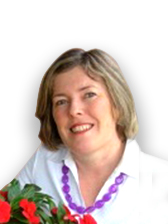
Rosemary Davies (Horticulturist)
Leading horticultural expert in Australia.
Rosemary trained in Horticultural Applied Science at Melbourne University. Initially she worked with Agriculture Victoria as an extension officer, taught horticulture students, worked on radio with ABC radio (clocking up over 24 years as a presenter of garden talkback programs, initially the only woman presenter on gardening in Victoria) and she simultaneously developed a career as a writer.
She then studied Education and Training, teaching TAFE apprentices and developing curriculum for TAFE, before taking up an offer as a full time columnist with the Herald and Weekly Times and its magazine department after a number of years as columnist with the Age. She has worked for a number of companies in writing and publications, PR community education and management and has led several tours to Europe.
In 1999 Rosemary was BPW Bendigo Business Woman of the Year and is one of the founders and the Patron, of the Friends of the Bendigo Botanic gardens. She has completed her 6th book this year and is working on concepts for several others.
Rosemary has a B Ed, BSc Hort, Dip Advertising & Marketing

Adriana Fraser
Freelance writer, businesswoman, educator and consultant for over 30 years. Adriana has written extensively for magazines including free living publications -Grass Roots and Home Grown; and has authored or co authored many books ranging from a biography to books on business and gardening. She holds formal qualifications in education, child care and horticulture and has worked with ACS Distance Education since the mid 1990's.

John Mason (Horticulturist)
Parks Manager, Nurseryman, Landscape Designer, Garden Writer and Consultant.
Over 40 years experience; working in Victoria, Queensland and the UK.
He is one of the most widely published garden writers in the world.
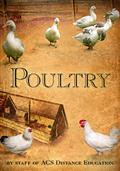
Poultry
Poultry are entertaining as pets and life sustaining as a commercial product! Whether you are seeking a book as a beginner poultry keeper or if you are embarking on a new career in poultry production or management, this book is for you. Easy to read, easy to understand and packed with easy to implement practical advice. Know how to care for the health and wellbeing of poultry and make production a commercially viable enterprise.
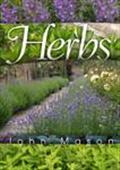
Herbs
Herbs are fascinating plants, mystical and romantic. They have a rich history dating back centuries. Used by monks, apothecaries and ‘witches’ in the past, herbs are undergoing a revival in interest. They are easy to grow, scented, culinary and medicinal plants. In a formal herb garden or peppered throughout the garden, herbs rarely fail! Find out how they are used as medicines, for cooking, perfumes and more.
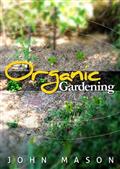
Organic Gardening
For decades farmers have relied upon chemicals to control pests and diseases in order to produce saleable crops. In the ornamental, vegetable and fruit gardens reliance on chemical controls has also been the mainstay for many gardeners.
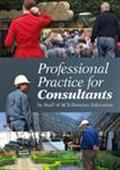
Professional Practice for Consultants
Explore becoming a consultant. This ebook contains chapters on how to be a consultant, packaging your services, delivering the services, building your resources, finding the work and getting the job, planning and ethics.