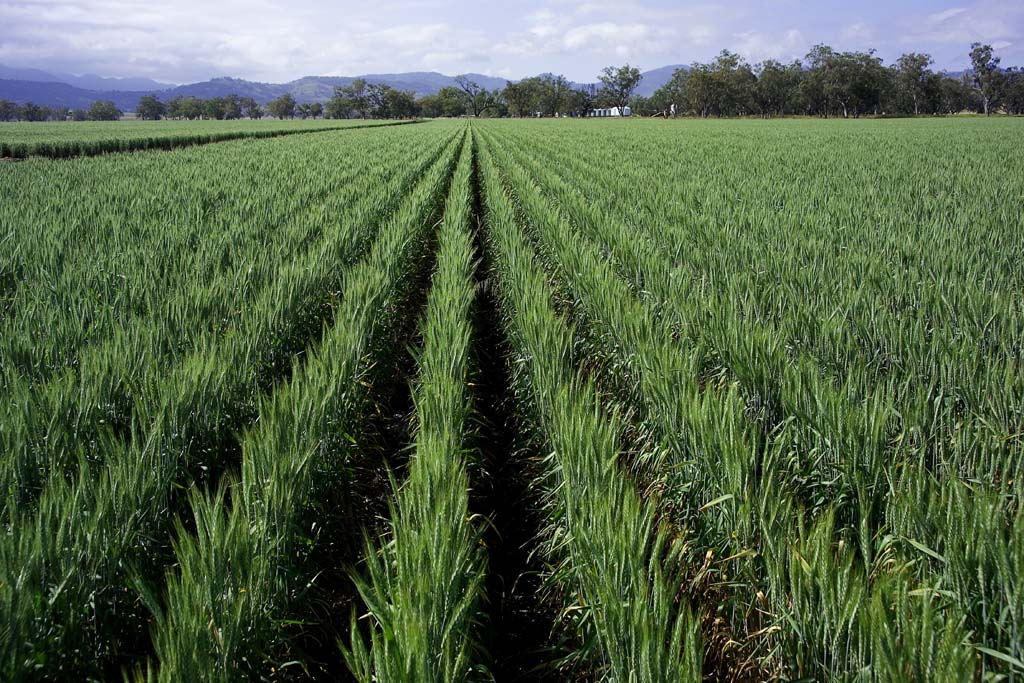
Certificate In Horticulture (Crops)
Study general horticulture plus crop production including fruit, vegetables and herbs. Start or develop a business, manage a market garden or orchard or progress your career in this field. 600 hour course.
Recognised & Endorsed By









OPEN UP YOUR POSSIBILITIES IN HORTICULTURE - THIS COURSE DOES THAT FOR YOU.
What will the Certificate in Horticulture crops teach you?
Learn the fundamentals of horticulture first - this opens up all sorts of possibilities as far as future work in concerned - you can work across broad horticulture sectors with the core units - in fact almost any sector that a horticultural trades person would work in for example gardening and nursery work, and the stream units further extend your possibilities into crop growing for example:
- Row Crops
- Plantations and orchards
- Broad acre crops
The stream units focuses you on learning how to grow a variety of crops:
- Lots of different crops
- With lots of different techniques
- In lots of different places
WHERE COULD YOU WORK?
- In a production nursery
- As a crop grower
- On a farm
- In an orchard
- At a farm supplier
- Crop processing
- Marketing, education and media
- Urban farming
Most graduates are likely to
work in cropping, but for those who change their ambitions and direction
over the duration of the course, your studies will be far from wasted as your core studies will allow you to move across industry sectors easily.
Some may use this course as a starting point to develop a career in something a little different such as urban farming, permaculture design or horticultural therapy.
For others, opportunities may arise throughout the course. Often we
hear of students who have met people in the industry through their
studies; and been offered jobs. Yet others may begin a small business in
crop production while studying. By the time they graduate, they are
already on a path to ever increasing success.
Aims
- Explain different cropping systems and their appropriate application for the production of different types of crops.
- Evaluate and explain organic plant production, and the requirements in at least two different countries, to achieve organic certification.
- Explain the function of soils and plant nutrition in outdoor cropping systems.
- Describe the commercial production of a range of nursery stock.
- Describe the commercial production of a range of tree fruit crops.
- Explain techniques used to produce a range of soft fruits.
- Explain techniques used to grow a range of vegetables.
- Explain the commercial production of outdoor-grown cut flowers.
- Describe the commercial production of herbs, nuts and other miscellaneous crops.
- Identify the risks that may occur in outdoor crop production.
- Describe and Evaluate the type and shape of modern growing structures.
- Describe and evaluate environmental controls in protected cropping.
- Explain the nature of solar radiation, transmission properties of glass and its substitutes.
- Determine the water requirements of a crop; and methods of irrigation.
- Relate horticultural principles to the production and harvesting of a range of crops.
- Evaluate the factors involved in marketing protected crops.
- Evaluate the factors involved in marketing protected crops.
- Undertake risk assessment for a protected crop.
- Describe the relevant identifying physical features of flowering ornamental plants.
- Demonstrate how to use prescribed reference books and other resources to gain relevant information.
- Dissect, draw and label two different flowers.
- Collect and identify the shapes of different leaves.
- Demonstrate how to identify between family, genus, species, variety and cultivar.
- Describe how to prune different plants.
- Demonstrate how to cut wood correctly, on the correct angle and section of the stem.
- Describe how to plant a plant.
- Demonstrate an awareness of different irrigation equipment, sprinklers, pumps and turf systems available by listing their comparative advantages and disadvantages.
- Demonstrate competence in selecting an appropriate irrigation system for a garden, explaining the reasons why that system would be preferred.
- Define water pressure and flow rate and how to calculate each.
- Explain the need for regular maintenance of garden tools and equipment.
- List factors that should be considered when comparing different types of machinery for use in garden maintenance.
- Describe the soil types commonly found in plant culture in terms of texture, structure and water holding and nutrient holding capacity.
- Describe methods of improving soil structure, infiltration rate, water holding capacity, drainage and aeration.
- List the elements essential for plant growth.
- Diagnose the major nutrient deficiencies that occur in ornamental plants and prescribe treatment practices.
- Describe soil pH and its importance in plant nutrition.
- Describe the process by which salting occurs and how to minimise its effect.
- Conduct simple inexpensive tests on three different potting mixes and report accordingly.
- Describe suitable soil mixes for container growing of five different types of plants.
- List a range of both natural and artificial fertilizers.
- Describe fertilizer programs to be used in five different situations with ornamental plants.
- Demonstrate propagation of six (6) different plants by cuttings and three from seed.
- Construct a simple inexpensive cold frame.
- Mix and use a propagation media suited to propagating both seed and cuttings.
- Describe the method and time of year used to propagate different plant varieties.
- Describe and demonstrate the steps in preparing and executing a variety of grafts and one budding technique.
- Explain the reasons why budding or grafting are sometimes preferred propagation methods.
- Explain in general terms the principles of pest, disease and weed control and the ecological (biological) approach to such control.
- Explain the host-pathogen-environment concept.
- Describe a variety of pesticides for control of pests, diseases and weeds of ornamental plants in terms of their active constituents, application methods, timing and rates, and safety procedures.
- Photograph or prepare specimens, identify and recommend control practices for at least five insect pests of ornamental plants.
- Photograph, sketch or prepare samples, identify and recommend control practices for three non-insect ornamental plant health problems (e.g. fungal, viral, bacterial).
- Describe the major ways in which diseases (fungal, viral, bacterial and nematode) affect turf, the life cycle features that cause them to become a serious problem to turf culture and the methods available for their control.
- Identify, describe and recommend treatment for three different weed problems.
- Collect, press, mount and identify a collection of ten different weeds, and recommend chemical and non-chemical treatments which may be used to control each.
- List and compare the relative advantages and disadvantages of different weed control methods.
Course Structure
This course is made up of a number of modules. To complete this course you must study and pass all of the modules listed below.
Elective Modules
In addition to the core modules, students must also choose 3 of the following elective modules.
- Agronomy
- Berry Production
- Commercial Organic Vegetable Growing
- Commercial Vegetable Production
- Cut Flower Production
- Engineering I (Machinery and Equipment)
- Fruit Production - Temperate Climate
- Fruit Production - Warm Climate
- Herb Culture
- Horticultural Resource Management
- Hydroponics I
- Irrigation - Crops
- Mushroom Production
- Nut Production
- Organic Plant Culture
- Outdoor Plant Production (Crops I)
- Permaculture Design Certificate (Permaculture Systems)
- Protected Plant Production
- Soil Management (Crops)
- Urban Farming
- Viticulture
- Warm Climate Nuts
Accreditations
AFTER YOU GRADUATE YOU WILL:
- Know a great deal more about how to grow crops.
- Have such a solid and broad based understanding of horticulture.
- Ability to adapt to and work in any sector of the horticulture industry enhanced.
Where would you work?
- In a production nursery.
- As a crop grower.
- On a farm.
- In an orchard.
- At a farm supplier.
- Crop processing.
- Marketing, education and media.
- Urban farming.
Most graduates are likely to work in cropping, but for those who change their ambitions and direction over the duration of the course, your studies will be far from wasted as your core studies will allow you to move across industry sectors easily. Some may use this course as a starting point to develop a career in something a little different such as urban farming, permaculture design or horticultural therapy.
For others, opportunities may arise throughout the course. Often we hear of students who have met people in the industry through their studies; and been offered jobs. Yet others may begin a small business in crop production while studying. By the time they graduate, they are already on a path to ever increasing success.
Crop production is an industry that is never going away. So long as people keep eating, there will always be a need for people with expertise in growing crops.
WHY CHOOSE US?
Reputation: well-known and respected.
Industry focus: courses designed to suit industry needs and expectations.
Different focus: develop problem solving skills that make you stand out from others.
Hands-on: develop practical as well as theoretical skills.
Lots of help: dedicated and knowledgeable tutors.
Efficient: prompt responses to your questions.
A long track record: established in 1979 with a solid history.
Up to date: courses under constant review.
Resources: huge wealth of constantly developing intellectual property.
Value: courses compare very favourably on a cost per study hour basis.
Student amenities: online student room, bookshop, ebooks.
Click on the link below so we can help you to choose the best course of study to suit you!
Enrol using the automated procedure on this site or contact us via phone or email to ask questions and enrol with a real person.
You can enrol at anytime and start the course when you are ready. Enrolments are accepted all year - students can commence study at any time. All study is self paced and ACS does not set assignment deadlines.
Please note that if a student is being assisted by someone else (e.g. an employer or government subsidy), the body offering the assistance may set deadlines. Students in such situations are advised to check with their sponsor prior to enrolling. The nominal duration of a course is approximately how long a course takes to complete. A course with a nominal duration of 100 hours is expected to take roughly 100 hours of study time to complete. However, this will vary from student to student. Short courses (eg. 100 hrs duration) should be completed within 12 months of enrolment. Certificates, Advanced Certificates and Awards (eg. over 500 hours duration) would normally be completed within 3 -5 years of enrolment. Additional fees may apply if a student requires an extended period to complete.
If a student cannot submit their assignments for 6 months to ACS, they should advise the school to avoid cancellation of their student
registration. Recommencement fees may apply.
Simply click on the ENROL OPTIONS button at the top of this screen and follow the prompts.
You can see the course price at the top of this page. Click 'enrolment options' to see any payment options available.
You can pay by Credit Card, PayPal, Afterpay or bank transfer.
Yes! We have payment plans for most courses. Click 'enrolment options' to see the available payment plans.
We also have Afterpay that will allow you to pay for your course or payment plans in four instalments (if you are in Australia).
There are no entry requirements that you need to meet to enrol in our courses, our courses are for everyone.
If you are under 18, we need written permission from your parent/ guardian for your enrolment to continue, we can arrange that after you have enrolled.
You don’t need to purchase any additional resources to complete our courses.
What do I need to know before I enrol?
We aim to teach you the essentials without you having to purchase any specific computer program.
We recommend that you have access to a word processing program, such as Microsoft Word or Google Docs, so that you can easily complete and submit your assignments.
You sure can. We are here to help you learn whatever your abilities.
Yes, if you are enrolling in a Certificate or Advanced Certificate, you might be eligible for credits if you have evidence of your previous studies or relevant experience. More information is here.
We recommend that you are able to browse websites, send emails and conduct online research. You will need to be able to type and submit your assignments.
If you have limited computer skills, we can make special arrangements for you.
This is possible, it depends on the institution. We recommend that if you would like to use our courses that you contact the institution first. Our Course Handbook is a good resource for this.
Our courses are written in English and we only have English speaking academic staff. If you can read and complete your assignments in English, our courses are ideal for you.
Our courses are designed to build knowledge, hands on skills and industry connections to help prepare you to work in the area, running your own business, professional development or as a base for further study.
This course is aimed at providing you with a solid understanding in your selected discipline. It has been designed to take 600 hours, which includes your course reading, assignment work, research, practical tasks, watching videos and more. When you complete the course, will have a good understanding of the area/ industry you want to work in.
It’s up to you. The study hours listed in the course are a rough guide, however if you were to study a short course (100 hours) at 10 hours per week, you could finish the course in 10 weeks (just an example). Our courses are self-paced, so you can work through the courses in your own time. We recommend that you wait for your tutor to mark and return your assignment before your start your next one, so you get the benefits of their feedback.
The course consists of course notes, videos, set tasks for your practical work, online quizzes, an assignment for each lesson (that you receive feedback from your tutor from) and ends in an exam (which is optional, if would like to receive the formal award at the end), using our custom built Learning Management System - Login.Training.
Our courses are designed for adults to gain professional development and skills to further their careers and start businesses.
Our custom online learning portal allows you to conduct your learning online. There may be practical tasks that you can do offline. You have the option of downloading your course notes or print them to read later.
There is also the option to pay an additional fee for printed course notes and or USB (availability limited to location and deliverability).
Yes, if you don’t have access to the internet, you can receive the course as paper notes or on a USB stick for an additional fee. We can also make alternative arrangements for you to send your assignments to us.
We offer printed notes for an additional fee. Also, you can request your course notes on a USB stick for an additional fee.
Yes, your tutor is here to help you. Simply post any questions you have in your login.training portal or contact the office and we can pass on a message to your tutor.
We are more learning focussed, rather than assessment focussed. You have online quizzes to test your learning, written assignments and can complete an exam at the end of the course (if you want to receive your certificate). You will not receive a pass/ fail on your course work. If you need to add more details on your assignment, we will ask you to resubmit and direct you where you need to focus. If you need help, you can ask your tutor for advice in the student room.
Each module (short course) is completed with one exam.
Exams are optional, however you must sit an exam if you would like to receive a formal award. You will need to find someone who can supervise that you are sitting the exams under exams conditions. There is an additional cost of $60 incl. GST for each exam.
More information is here
There are practical components built into the course that have been designed to be achieved by anyone, anywhere. If you are unable to complete a task for any reason, you can ask your tutor for an alternative.
When you complete the course work and the exams (6 exams) and you will be able receive your course certificate- a Certificate. Otherwise, you can receive a Letter of Completion.
You can bundle the short courses to create your own customised learning bundle, Certificates or Advanced Certificates. More information is on this page.
Yes, our courses are built to be applicable for people living anywhere in any situation. We provide the fundamentals, and each student can apply their own unique flair for their own interests, region and circumstances with the one-on-one guidance of a tutor. There is also a bit of student directed research involved.
Employers value candidates with industry skills, knowledge, practical skills and formal learning. Our courses arm you with all of these things to help prepare you for a job or start your own business. The longer you study the more you will learn.
ACS has an arrangement with OAMPS (formerly AMP) who can arrange Professional Indemnity from Australian and New Zealand graduates across all disciplines. Ph: 1800 222 012 or email acs@oamps.com.au.
Who are ACS Distance Education?
ACS Distance Education have been educating people for over 40 years.
We are established and safe- we have been in education for over 40 years.
We are focused on developing innovative courses that are relevant to you now and what you will need to know in the future.
We are focused on helping you learn and make the most of your experience.
You can enrol at any time, you can work on your course when it suits you and at your own pace.
We are connected to many industry bodies and our staff participate in continuous improvement and learning activities to ensure that we are ahead of what learning is needed for the future.
Our courses are not accredited by the Australian Government. However many of our courses are recognised and held in high regard by many industry bodies.
Our courses are written by our staff, who all have many years experience and have qualifications in their speciality area. We have lots of academic staff who write and update our courses regularly.
How do I enrol my staff/ sponsored students?
Yes, you can do a request for a bulk enrolment and request an invoice on our Invoice Request Form
We can prepare an invoice, quote or proforma invoice. Simply complete your details on our Invoice Request form
We can arrange bulk discounts for your course enrolment, please get in touch with us to discuss your needs.
Yes, we have many students who are in locked facilities, such as prisons or hospitals. We can cater by also offering paper notes at an additional cost.
What if I have any more questions or need more information?
We can assist you to find the right course for your needs. Get in touch with us via email (admin@acs.edu.au) call on +61 7 5562 1088 or complete our course advice form.
What if I change my mind?
Please get in touch with studentservices@acs.edu.au if you would like to be removed from our mail list.
If you would like ACS Distance Education to delete your information at any time (whether you are a customer or a prospective customer), please contact our privacy officer and we will process this ( admin@acs.edu.au ).
If students require a reproduction of their certificate, an electronic copy can be provided at a cost of AUD$35 incl GST. Printed copies are not available.
Course Contributors
The following academics were involved in the development and/or updating of this course.

Rosemary Davies (Horticulturist)
Leading horticultural expert in Australia.
Rosemary trained in Horticultural Applied Science at Melbourne University. Initially she worked with Agriculture Victoria as an extension officer, taught horticulture students, worked on radio with ABC radio (clocking up over 24 years as a presenter of garden talkback programs, initially the only woman presenter on gardening in Victoria) and she simultaneously developed a career as a writer.
She then studied Education and Training, teaching TAFE apprentices and developing curriculum for TAFE, before taking up an offer as a full time columnist with the Herald and Weekly Times and its magazine department after a number of years as columnist with the Age. She has worked for a number of companies in writing and publications, PR community education and management and has led several tours to Europe.
In 1999 Rosemary was BPW Bendigo Business Woman of the Year and is one of the founders and the Patron, of the Friends of the Bendigo Botanic gardens. She has completed her 6th book this year and is working on concepts for several others.
Rosemary has a B Ed, BSc Hort, Dip Advertising & Marketing

Adriana Fraser (Horticulturist)
Over 30 years working in horticulture, as a gardener, propagator, landscape designer
, teacher and consultant. Adriana has spent much of her life living on large properties, developing and maintaining her own gardens, and living a semi self sufficient lifestyle. She has decades of practical experience growing her own fruit, vegetables and herbs, and making her own preserves. She is well connected with horticulture professionals across Australia, and amongst other things, for a period, looked after Australia's national collection of Thymus. Advanced Diploma in Horticulture, Advanced Certificate in Horticulture.
Herbs
Herbs are fascinating plants, mystical and romantic. They have a rich history dating back centuries. Used by monks, apothecaries and ‘witches’ in the past, herbs are undergoing a revival in interest. They are easy to grow, scented, culinary and medicinal plants. In a formal herb garden or peppered throughout the garden, herbs rarely fail! Find out how they are used as medicines, for cooking, perfumes and more.

Weeds
A good cross section of of common weeds are illustrated and reviewed. These are plants that occur in many parts of the world, and some are not always weeds.
Fruit, Vegetables and Herbs
Home grown produce somehow has a special quality. Some say it tastes better, others believe it is just healthier. And there is no doubt it is cheaper! Watching plants grow from seed to harvest and knowing that the armful of vegies and herbs you have just gathered for the evening meal will be on the table within an hour or two of harvest, can be an exciting and satisfying experience.
Plant Pests & Diseases
Are you one of those people that kill every plant you touch? Perhaps it's not you. Perhaps it's a pest or disease. A little bit of reading might just turn your garden into an oasis. Learn how to identify pests and diseases and bring the spring back into your plant...visit the bookshop to find out more...
(aud)$3421.00