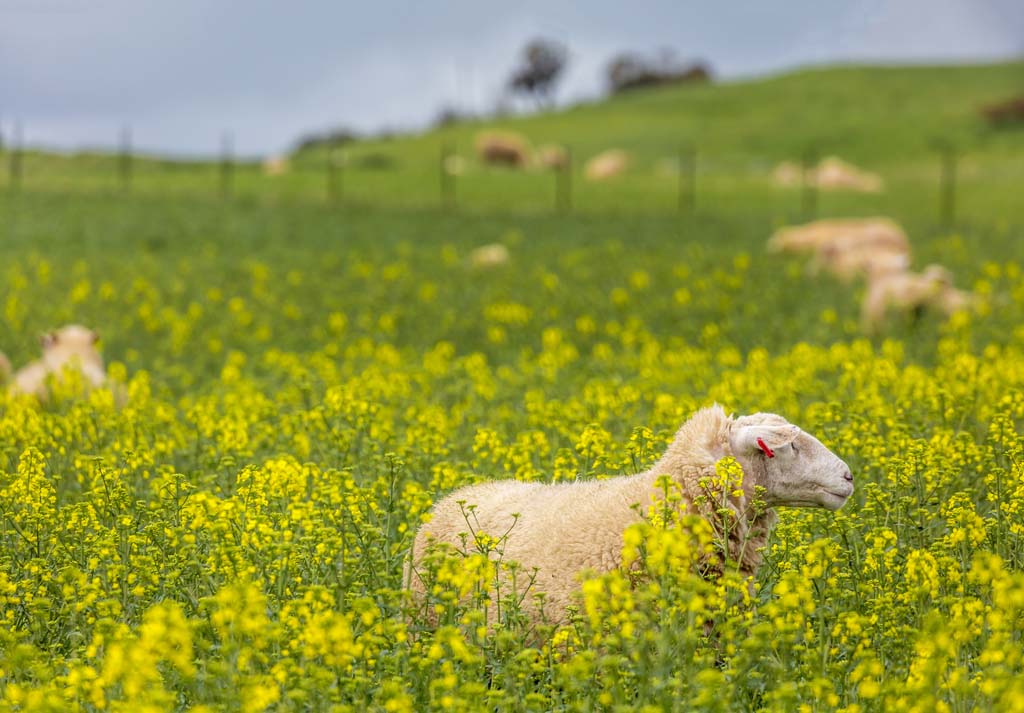
Pasture Management
Learn more about pasture management with ACS. Pastures are critical to many types of farms. Farmers have been known to turn unprofitable farms into commercial successes by simply improving pasture.
 Improve pasture and make a farm more productive
Pastures are critical to many types of farms. Farmers have been known to turn unprofitable farms into commercial successes by simply improving pasture. Whether dealing with small or large properties, pasture management is an important part of many types of farm enterprises. This course is designed to be useful to those already managing existing pastures and those who wish to establish successful new pastures.
They may make use of the natural grasses or he may improve his pastures by planting special grasses or legumes. A good farmer recognises the different grasses and legumes, and understands how to get the best out of them. He will be able to distinguish between desirable and undesirable plants and he will know the grazing habits of his stock.
Aims
- Determine criteria for selecting appropriate varieties of plants for a pasture.
- Identify characteristics of a pasture plant which are relevant to both making an identification, and to considering its value as a pasture species.
- Evaluate the potential of given sites for pasture development programs.
- Explain the procedures used in managing the establishment of pasture.
- Explain the techniques used in managing pasture which is already been established.
- Assess the commercial and nutritional value of pasture species in the context of farm.
- Develop an appropriate work program for the management of a pasture by a farmer.
What You Will Do
-
Prepare a catalogued resource collection of items including pamphlets, brochures and contact addresses for information relevant to pasture varieties.
- Identify different species of plants growing in an established pasture in your locality, by labelling a pressed specimen of each.
- Assess climatic and edaphic data for a specific pasture site.
- Compare the appropriateness of different soil cultivation techniques for pasture establishment on a specified site in your locality.
- Establish production targets for a specified pasture, explaining how those targets are determined.
- Select suitable machinery for pasture management including establishment and harvest, explaining the selection.
- Write a plan for the establishment of new pasture on a specified site, which lists all important tasks in chronological order.
- Determine sustainable stocking rates of a specified type of animal for different pastures.
- Analyse the food value of different pastures.
- Compare the grazing behaviour of different farm animals.
- Determine grazing capacity of a specified paddock.
- Specify the crop and all other variables.
- Evaluate the production performance of two different specified pastures.
- Identify different weeds that are significant problems in pasture.
- Quantify materials and supply requirements for pasture management.
- Develop management plan for pasture in a specified situation, including a program of tasks to be carried out over a 12 month period.
Lesson Structure
There are 8 lessons in this course:
-
Introduction to Pastures
- Pasture Improvement
- Choosing a Pasture Mix
- Seed Coating
- Variety Selection
- Sustainability
- Definitions
-
The Pasture Plant
- Grasses
- The grass plant
- Growth and development
- Phases of development
- Annual and perennial grasses
- Carbohydrate sinks
- The physiology of grasses
- The structure of grasses
- Growth habits
- Legumes
-
Pasture Varieties
- Introduction to common pasture grasses
- Identifying grasses
- Legumes
- The Importance of Legumes in Pasture
- Nitrogen Fixation in Legumes
- The Rhizobium bacteria
- Common legumes
- Grasses to Grow with Clovers
-
Site Considerations
- Managing pastures
- Choosing the Correct Site for a Pasture
- Choosing the correct seed mix
- Seed quality
-
Establishing New Pastures
- Preparation of the land for pasture
- Prepared seedbed
- Sowing
- Germination
- Direct drilling
- Weed control
- Seeders
- Grazing new pastures
-
Managing Existing Pastures
- Native Grasses versus Pasture
- Carrying Capacity of Native Grasses
- Stocking Rate of Native Grass Areas
- The Establishment of the Native Grasslands
- The developing grasslands
- How grasslands deteriorate
- Factors promoting succession or retrogression
- Limiting factors and terminal plant communities
- Allogenic Factors
- Autogenic Factors
- Rests To Promote Rapid Growth
- Rests to change the composition of the community
- Rests designed to eliminate or control bush encroachment
- Rests to accumulate grazing material
- Rests to provide out of season fodder
- Physiological aspects
-
Managing Stock on Pasture
- Factors affecting food intake by animals
- Animal factors
- Feed factors
- Grazing factors
- Grazing behaviour
- Complementary Grazing
- Rank Order of Dominance
- Selective Grazing
- Ruminant Time
- Herd group behaviour
- Grazing Time
- Pasture management principles - rest, grazing period, stocking, carrying capacity
- Equal Utilisation or the Removal of the Top Hamper, paddock size, number in herd etc
- Grassland management principles - Split - season Systems, Continuous Light Stocking, One Herd, Four Paddock System, Intensive systems
- Horse pastures
- Food trees and shrubs
-
Pasture Management Work Tasks
- Fertilizer
- Pest and weed control
- Biological control
- Advantages of Biological Methods
- Disadvantages of Biological Methods
- Irrigation
- Fallowing
- Cultivation
- Pasture renovation
- Managing pasture after drought
- Managing pasture after fire
Accreditations
Improve Your Pasture Management Skills
Every livestock farmer is first and foremost a pasture farmer. A good farmer recognises the different grass types and understands how to get the best out of them. They will be able to distinguish between desirable and undesirable plants and will know the grazing habits of his stock.
Understanding and managing pasture is highly complex. There are many parts to it, with each of these constantly changing. For example, there are many varieties of plants used for grazing in any one area. Each plant has its own rhythm and will react differently to environmental conditions and treatment.
Livestock species graze in a variety of ways. Sheep graze close but cannot handle long grass, goats browse on bushes, while cattle eat long grass and are not as fussy as sheep.
Natural pasture is also constantly changing and developing according to the environment and the number and types of animals which graze it. These changes can be good or bad. They are not always noticeable as they can take place very slowly. There is no doubt that man and animals have the ability to make rapid and bad changes to our native pastures.
A further problem is that farmers rarely have one sort of pasture. Most farms will have some natural pasture and some improved pastures. The natural pasture is often a mix of grasses with some grasses suiting one type of animal and others that suit a different type of stock. The improved pastures on a farm are specially planted to provide grazing at various times of the year and so need quite different management.
By understanding all the different parts that affect grassland, a farmer can begin to effectively manage their most important resource - livestock grazing.
Choosing a Pasture
Pastures are all different. They differ in terms of both the mix of plants which they are composed of, and in the way those plants grow (i.e., general plant health and vigour). For effective grazing, the pasture needs to match its use. That is, the number and type of animals being grazed should be appropriate to the pasture type and characteristics.
Seed Coating
A new development available to farmers is coated seed. Grass seeds face many hazards before and during germination. They are light and can be blown away. They need precise amounts of moisture and nutrients to germinate and grow. If the seed is a legume, it requires a specific type of Rhizobium bacteria to enable it to fix nitrogen. (Note: Fixing nitrogen is a term used to describe a process by which bacteria living on the roots of these legumes, extract nitrogen from the air and convert it into a form which is able to be used by plants).
A coating around the seed affords a great deal of protection at no extra cost. The coat protects the seed from stresses like acid or infertile soil, sun, wind and low moisture. Rodents and birds avoid coated seed. The coat can include a pesticide if necessary.
Coated seed flows easily making sowing by machine smoother. Even the light, woolly seeds like "Digit Grass" are more evenly distributed when coated. The coating makes all the seeds the same weight and size for precision drilling.
Why Study this Course?
This course strengthens your knowledge and ability to effectively choose the most appropriate plant species for a pasture, to meet property and environmental needs, and optimise the regimes of the animals being grazed. As you move through this course, your understanding of pasture ecosystems will grow, and you will become increasingly aware of what might be done to improve pasture, and hence improve the health, wellbeing and productivity of animals grazing on it.
Following the completion of this course, you will have strengthened your capacity to work in a wide range of agricultural jobs, including:
- Farm Manager
- Farm Hand
- Agricultural Consultant
- Farm Supplies Manager/ Pasture Seed Company Officer
- Agricultural Researcher, Writer, Broadcaster
- Agriculture Teacher
- Produce or Land Agent
Why Study with ACS?
Design your own learning pathway.
Study at your own pace, from anywhere, at any time.
Receive prompt, expert support from our team of committed and friendly tutors.
Your learning is our priority. We are flexible and adaptable to meet your educational needs!
Enrol using the automated procedure on this site or contact us via phone or email to ask questions and enrol with a real person.
You can enrol at anytime and start the course when you are ready. Enrolments are accepted all year - students can commence study at any time. All study is self paced and ACS does not set assignment deadlines.
Please note that if a student is being assisted by someone else (e.g. an employer or government subsidy), the body offering the assistance may set deadlines. Students in such situations are advised to check with their sponsor prior to enrolling. The nominal duration of a course is approximately how long a course takes to complete. A course with a nominal duration of 100 hours is expected to take roughly 100 hours of study time to complete. However, this will vary from student to student. Short courses (eg. 100 hrs duration) should be completed within 12 months of enrolment. Certificates, Advanced Certificates and Awards (eg. over 500 hours duration) would normally be completed within 3 -5 years of enrolment. Additional fees may apply if a student requires an extended period to complete.
If a student cannot submit their assignments for 6 months to ACS, they should advise the school to avoid cancellation of their student
registration. Recommencement fees may apply.
Simply click on the ENROL OPTIONS button at the top of this screen and follow the prompts.
You can see the course price at the top of this page. Click 'enrolment options' to see any payment options available.
You can pay by Credit Card, PayPal, Afterpay or bank transfer.
Yes! We have payment plans for most courses. Click 'enrolment options' to see the available payment plans.
We also have Afterpay that will allow you to pay for your course or payment plans in four instalments (if you are in Australia).
There are no entry requirements that you need to meet to enrol in our courses, our courses are for everyone.
If you are under 18, we need written permission from your parent/ guardian for your enrolment to continue, we can arrange that after you have enrolled.
You don’t need to purchase any additional resources to complete our courses.
What do I need to know before I enrol?
We aim to teach you the essentials without you having to purchase any specific computer program.
We recommend that you have access to a word processing program, such as Microsoft Word or Google Docs, so that you can easily complete and submit your assignments.
You sure can. We are here to help you learn whatever your abilities.
Yes, if you are enrolling in a Certificate or Advanced Certificate, you might be eligible for credits if you have evidence of your previous studies or relevant experience. More information is here.
We recommend that you are able to browse websites, send emails and conduct online research. You will need to be able to type and submit your assignments.
If you have limited computer skills, we can make special arrangements for you.
This is possible, it depends on the institution. We recommend that if you would like to use our courses that you contact the institution first. Our Course Handbook is a good resource for this.
Our courses are written in English and we only have English speaking academic staff. If you can read and complete your assignments in English, our courses are ideal for you.
Our courses are designed to build knowledge, hands on skills and industry connections to help prepare you to work in the area, running your own business, professional development or as a base for further study.
This course has been designed to cover the fundamentals of the topic. It will take around 100 hours to complete, which includes your course reading, assignment work, research, practical tasks, watching videos and anything else that is contained in the course. Our short courses are a great way to do some professional development or to learn a new skill.
It’s up to you. The study hours listed in the course are a rough guide, however if you were to study a short course (100 hours) at 10 hours per week, you could finish the course in 10 weeks (just an example). Our courses are self-paced, so you can work through the courses in your own time. We recommend that you wait for your tutor to mark and return your assignment before your start your next one, so you get the benefits of their feedback.
The course consists of course notes, videos, set tasks for your practical work, online quizzes, an assignment for each lesson (that you receive feedback from your tutor from) and ends in an exam (which is optional, if would like to receive the formal award at the end), using our custom built Learning Management System - Login.Training.
Our courses are designed for adults to gain professional development and skills to further their careers and start businesses.
Our custom online learning portal allows you to conduct your learning online. There may be practical tasks that you can do offline. You have the option of downloading your course notes or print them to read later.
There is also the option to pay an additional fee for printed course notes and or USB (availability limited to location and deliverability).
Yes, if you don’t have access to the internet, you can receive the course as paper notes or on a USB stick for an additional fee. We can also make alternative arrangements for you to send your assignments to us.
We offer printed notes for an additional fee. Also, you can request your course notes on a USB stick for an additional fee.
Yes, your tutor is here to help you. Simply post any questions you have in your login.training portal or contact the office and we can pass on a message to your tutor.
We are more learning focussed, rather than assessment focussed. You have online quizzes to test your learning, written assignments and can complete an exam at the end of the course (if you want to receive your certificate). You will not receive a pass/ fail on your course work. If you need to add more details on your assignment, we will ask you to resubmit and direct you where you need to focus. If you need help, you can ask your tutor for advice in the student room.
Each module (short course) is completed with one exam.
Exams are optional, however you must sit an exam if you would like to receive a formal award. You will need to find someone who can supervise that you are sitting the exams under exams conditions. There is an additional cost of $60 incl. GST for each exam.
More information is here
There are practical components built into the course that have been designed to be achieved by anyone, anywhere. If you are unable to complete a task for any reason, you can ask your tutor for an alternative.
When you complete the course work and the exam and you will be able receive your course certificate- a Statement of Attainment. Otherwise, you can receive a Letter of Completion.
You can bundle the short courses to create your own customised learning bundle, Certificates or Advanced Certificates. More information is on this page.
Yes, our courses are built to be applicable for people living anywhere in any situation. We provide the fundamentals, and each student can apply their own unique flair for their own interests, region and circumstances with the one-on-one guidance of a tutor. There is also a bit of student directed research involved.
Employers value candidates with industry skills, knowledge, practical skills and formal learning. Our courses arm you with all of these things to help prepare you for a job or start your own business. The longer you study the more you will learn.
ACS has an arrangement with OAMPS (formerly AMP) who can arrange Professional Indemnity from Australian and New Zealand graduates across all disciplines. Ph: 1800 222 012 or email acs@oamps.com.au.
Who are ACS Distance Education?
ACS Distance Education have been educating people for over 40 years.
We are established and safe- we have been in education for over 40 years.
We are focused on developing innovative courses that are relevant to you now and what you will need to know in the future.
We are focused on helping you learn and make the most of your experience.
You can enrol at any time, you can work on your course when it suits you and at your own pace.
We are connected to many industry bodies and our staff participate in continuous improvement and learning activities to ensure that we are ahead of what learning is needed for the future.
Our courses are not accredited by the Australian Government. However many of our courses are recognised and held in high regard by many industry bodies.
Our courses are written by our staff, who all have many years experience and have qualifications in their speciality area. We have lots of academic staff who write and update our courses regularly.
How do I enrol my staff/ sponsored students?
Yes, you can do a request for a bulk enrolment and request an invoice on our Invoice Request Form
We can prepare an invoice, quote or proforma invoice. Simply complete your details on our Invoice Request form
We can arrange bulk discounts for your course enrolment, please get in touch with us to discuss your needs.
Yes, we have many students who are in locked facilities, such as prisons or hospitals. We can cater by also offering paper notes at an additional cost.
What if I have any more questions or need more information?
We can assist you to find the right course for your needs. Get in touch with us via email (admin@acs.edu.au) call on +61 7 5562 1088 or complete our course advice form.
What if I change my mind?
Please get in touch with studentservices@acs.edu.au if you would like to be removed from our mail list.
If you would like ACS Distance Education to delete your information at any time (whether you are a customer or a prospective customer), please contact our privacy officer and we will process this ( admin@acs.edu.au ).
If students require a reproduction of their certificate, an electronic copy can be provided at a cost of AUD$35 incl GST. Printed copies are not available.
Course Contributors
The following academics were involved in the development and/or updating of this course.

Marius Erasmus
Subsequent to completing a BSc (Agric) degree in animal science, Marius completed an honours degree in wildlife management, and a masters degree in production animal physiology. Following the Masters degree, he has worked for 9 years in the UK, and South Africa in wildlife management, dairy, beef and poultry farming.

Cheryl Wilson
Cheryl has spent two decades working in agriculture, equine and education industries, across England, Scotland, Australia and New Zealand. She graduated with a B.Sc.(Hons), HND Horse Mgt, C&G Teaching Cert.
For several years, Cheryl managed the distance education courses for Warwickshire College (a large UK government institution), out of their Moreton Morrell campus. In more recent years, she has co authored several books including titles on Horse Care, Dog Care and Poultry. Along with this solid background in edication, she brings a wealth of practical experience, having held positions including: Sports Horse Stud Groom, Stable Manager, Yard Manager, Equine industrial Training Manager, FE Distance Learning Manager
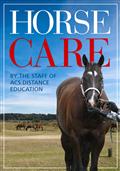
Horse Care
This book is an accumulation of information from biology, agricultural science and veterinary medicine. It looks to explore and explain the fundamentals of appropriate horse care aims and techniques. In doing so it will consider horsemanship as a combination of art and science.
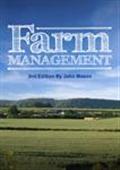
Farm Management
This new e-book looks at everything you need to improve your farm management skills. Learn about the farm site, production systems, managing livestock, managing pasture, crops, marketing and more.

Photographic Techniques
Explore how to take better photos. This is a book packed full of practical tips, from the authors own experience, coupled with a solid introduction to well established and widely practiced photographic techniques. This is a well illustrated, excellent reference for students of photography; and an equally useful source of inspiration to the amateur photographer.

Profitable Farming
Discover new ways to make money from your farm and broaden your perspective on the farming industry. A few things in life are certain; change is inevitable and people need to eat. Learn to embrace change as an opportunity and improve your ability to forge a sustainable career in farming.