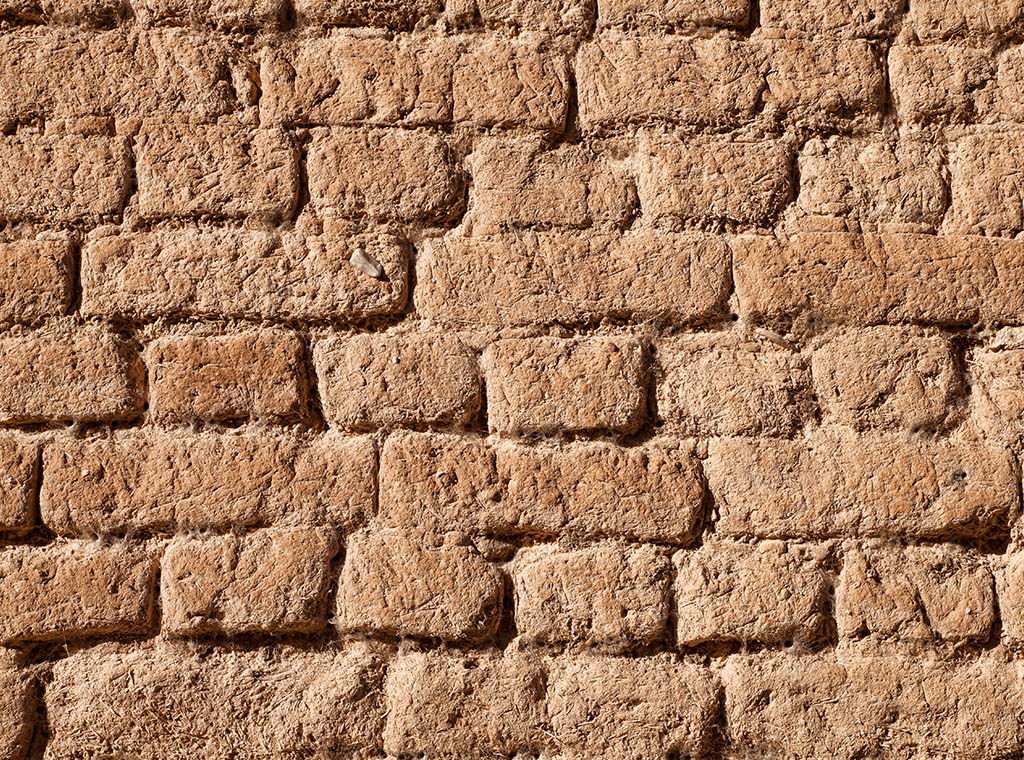
Mud Brick Construction
Learn online to create a home, using mud bricks, build your own home, learn how to live in a mud brick home. Create other buildings using mud bricks. Learn from the experts at ACS.
 LEARN TO BUILD WITH MUD
-
Learn to build a home, a shed, a garden room, a wall, a community building
Study from home, any time -100 hour self paced course -
Course developed by people who have actually built earth construction buildings
-
ACS has been teaching earth construction since the early 1980's
Mud Brick Construction aims to develop an understanding of how to approach building with mud bricks. Mud brick building is also known by the alternative name 'adobe'. There are other ways of building with mud brick apart from 'adobe'. These will be covered briefly in this course. For the novice, there is not a lot which can go wrong if you choose to build with mud brick.
Our Story
John Mason, our principal first encountered earth building in the early 70's; in the Yarra Valley (near Melbourne), where he lived. He was encouraged by John Archer (founder of Owner Builder magazine) in the early 80's to develop this course, and in 1983 he built his first mud brick building -which was the first office for this school. Since that time, we have continued to collect resources and learn increasingly more about earth building, through our own experiences and that of our students. Let us help you learn too.

Aims
- Discuss the nature and scope of Mud Brick construction
- Identify the legal considerations which need to be met when building in mud.
- Determine the requirement for foundations for a mud construction.
- Determine options for building doors, windows and roofs into a mud building
- Analyze options for coating or finishing the surface of a mud wall or other mud construction.
- Compare options for providing water, electricity or any other required services in a mud building.
- Describe a variety of mud construction techniques other than mud brick.
What You Will Do
- Get together a sample of earth which you might like to use to make mud bricks. This earth might be on a property where you wish to build a mud brick house, or it might be from a friend's property. Collect earth from at least a few inches below the soil.
- Find different types of soil. Give your assessment on the suitability of each for making mud bricks. Send a sample of each soil type along with your assessment of it's suitability for making mud bricks.
- Using different types of soil make test mud bricks. One mud brick should be made with each type of soil plus straw. Make another brick out of each type of soil without straw.
- Visit or contact your local council's building department. Find out from them where you can obtain a copy of `Standard Specifications' from.
- Explain step by step how you would go about putting down a concrete strip foundation for a small single story mud brick workshop.
- Lots more (These are just some examples of what you may do)
Lesson Structure
There are 10 lessons in this course:
-
Scope of Mud Brick
- What is Mud Construction (Adobe, Pise)
- Advantages of Earth Construction (Cost savings, Self satisfaction, Aesthetics, Eco friendliness, Health benefits)
- History of earth construction
- Pise (Rammed Earth)
- Mud Brick
- Wattle and Daub
- Cob
- Cinva Ram
- Cement Stabilisation
- Bituminous stabilisation
- Mortar
- Variations in Earth Building Techniques
- Appropriate Soils for Earth Construction
- Finding Resources
-
How to make a mud brick
- Testing and working with different soils
- Soil Tests
- Steps in making a brick
- Plasticity Soil Test
- Cake Soil Test
- Compression Tests
- Brick Size
- Brick Weights
- Moulds
- Binding Materials
- Mixing Mud
- Treating Bricks after they are Cast
- Stacking Bricks
- Troubleshooting
-
Planning and Site Works
- Choosing Building Materials
- Timber (Characteristics, Selection)
- Adhesives
- Plastics
- Masonry, Bricks and Concrete
- Insulation Materials
- Selecting a Building Site
- Solar House Design
- General Principles of Building Design
- Impact of Buildings on Health
- Dangerous Building Materials (Awareness and factors)
-
Legal Considerations
- Building Regulations (Variations between jurisdictions)
- What might be regulated
- Types of Permits
- Building Codes
-
Foundations
- Strip Foundations
- Slab Foundations
- Specialist Engineering Advice
- Rock and Rubble Foundations
- Problems to Avoid
- Sealing Foundations
- Other Options (Masonry pillars, timber pylons)
- Earth Floors
-
Laying Bricks
- Damp Proof Course
- Methods for laying bricks
- Making mud mortar
- Laying mortar
- Bonding
- Reinforcing Walls
-
Doors, Windows and Roofs
- Roofing Options
- Thatching
- Bark (for sheds)
- Tiles
- Fibreglass sheet
- Shingles (timber or slate)
- Mud brick domes
- Steel sheet
- Hessian soaked in concrete
- Earth/sod
- Roof Pitch
- Roof Weight
- Roof Gardens
- Doors and Windows
- Lintels
- Fixing, Joinery and Plugs
- Ceilings
- Timber Finishes
- Slab Floors
- Supported Floors
- Floor Surfaces
-
Finishes
- Wall Finishes
- Whitewash
- Bondcrete
- Dagga
- Linseed Oil
- House Paints
- Natural Loam Render
- Cement Render (Plaster)
- Latex Paint Render
- Other Options
- Floor Finishes
- Applying Paints and Renders
- Natural Healthy Paints
- Making Lime Wash Paints
- Problems with Lime Wash
- Aly’s Clay Paint
- Tallow and Lime Based Coating
- Using Commercial Paints
- Timber Treatments
-
Services
- Electricity
- Water
- Gas
- Toilet
- Working with Eartyh Walls
- Plumbing
- Electricity Supply Systems (Turbines, generators, batteries, Solar Cells, etc)
- Safety with Electricity
- Electro Magnetic Radiation (Managing EMR)
- Terminology
-
Other types of Earth Building
- Making Rammed Earth Walls
- How to Build Forms
- Tampers (Hand and air)
- Rammed Earth Construction
- Wattle and Daub
- Sod Buildings
- Cob
Accreditations
ADVANTAGES OF MUD BRICK CONSTRUCTIONS
There are several major attractions associated with earth buildings:
Cost Savings
Earth building can be a very cheap way of building. This is not necessarily always the case however. If you become too ambitious in your plans and design a building full of cathedral ceilings and stained glass, you are likely to find that any savings you might make by using mud are offset in the added expense of these features).
Self Satisfaction
Earth building can be so very simple that (with adobe at least) a beginner can attempt and successfully build his own home. The self satisfaction to be obtained from building your own home should not be underrated.
Aesthetics
Earth buildings have an appearance which is very unique. Many people build out of mud simply because they like the look of it.
ECO Friendliness
Earth is a natural material that can create a more environmentally friendly building. If done properly it can place less demand on planetary resources than other types of construction both in the actual building and in the running costs (eg. You are not chopping down trees to build, or burning fuel to create bricks. Thick earth walls are great for insulation, reducing heating and cooling costs).
Human Health
If done properly an earth building can be constructed with less use of toxins. You may not need pesticides to control termites. You may not need so many plastics, adhesives and other building materials that emit toxins into the air. An earth building can however be dusty if not constructed properly; and that can lead to problems with dust mites, allergies etc.
When it comes to making an earth building people friendly, you do need to pay attention to how things are constructed. Just because it’s an earth building does not mean it is automatically going to be a healthier place for you to live in.
Two of the most common types of `earth building' are:
- Adobe (i.e. mud brick) involves making bricks (i.e. blocks) out of mud; allowing them to dry and then laying them to form a wall; the same way that any other type of brick would be laid.
- Pise (i.e. rammed earth) involves forming a framework to encase the earth (i.e. two timber walls are built perhaps 300 mm or so apart) with the ramming earth between these two boards. Once one section of wall is completed, the framework can be moved higher and another section of wall built.
WHAT CAN BE BUILT
Earth building can be on any scale from small to massive. Anything that can be built with normal bricks can be built with mud: it just looks different, needs to be built a little differently, and can be a lot less costly to build.
Often people start out by building nothing more than garden walls, a wood fired oven, outdoor seating, or other small projects.
Some people build gazebos, sheds, workshops or other small buildings and others construct entire houses.
Entire towns (e.g. Timbuktu) in some parts of the world are built with mud. Mud buildings can last a very long time.
Properly maintained mud buildings have been known to last for over a thousand years.
AFTER YOUR STUDIES
Be more confident in handling and building with mud bricks.
Apply your knowledge to a range of projects - small or large.
Enrol using the automated procedure on this site or contact us via phone or email to ask questions and enrol with a real person.
You can enrol at anytime and start the course when you are ready. Enrolments are accepted all year - students can commence study at any time. All study is self paced and ACS does not set assignment deadlines.
Please note that if a student is being assisted by someone else (e.g. an employer or government subsidy), the body offering the assistance may set deadlines. Students in such situations are advised to check with their sponsor prior to enrolling. The nominal duration of a course is approximately how long a course takes to complete. A course with a nominal duration of 100 hours is expected to take roughly 100 hours of study time to complete. However, this will vary from student to student. Short courses (eg. 100 hrs duration) should be completed within 12 months of enrolment. Certificates, Advanced Certificates and Awards (eg. over 500 hours duration) would normally be completed within 3 -5 years of enrolment. Additional fees may apply if a student requires an extended period to complete.
If a student cannot submit their assignments for 6 months to ACS, they should advise the school to avoid cancellation of their student
registration. Recommencement fees may apply.
Simply click on the ENROL OPTIONS button at the top of this screen and follow the prompts.
You can see the course price at the top of this page. Click 'enrolment options' to see any payment options available.
You can pay by Credit Card, PayPal, Afterpay or bank transfer.
Yes! We have payment plans for most courses. Click 'enrolment options' to see the available payment plans.
We also have Afterpay that will allow you to pay for your course or payment plans in four instalments (if you are in Australia).
There are no entry requirements that you need to meet to enrol in our courses, our courses are for everyone.
If you are under 18, we need written permission from your parent/ guardian for your enrolment to continue, we can arrange that after you have enrolled.
You don’t need to purchase any additional resources to complete our courses.
What do I need to know before I enrol?
We aim to teach you the essentials without you having to purchase any specific computer program.
We recommend that you have access to a word processing program, such as Microsoft Word or Google Docs, so that you can easily complete and submit your assignments.
You sure can. We are here to help you learn whatever your abilities.
Yes, if you are enrolling in a Certificate or Advanced Certificate, you might be eligible for credits if you have evidence of your previous studies or relevant experience. More information is here.
We recommend that you are able to browse websites, send emails and conduct online research. You will need to be able to type and submit your assignments.
If you have limited computer skills, we can make special arrangements for you.
This is possible, it depends on the institution. We recommend that if you would like to use our courses that you contact the institution first. Our Course Handbook is a good resource for this.
Our courses are written in English and we only have English speaking academic staff. If you can read and complete your assignments in English, our courses are ideal for you.
Our courses are designed to build knowledge, hands on skills and industry connections to help prepare you to work in the area, running your own business, professional development or as a base for further study.
This course has been designed to cover the fundamentals of the topic. It will take around 100 hours to complete, which includes your course reading, assignment work, research, practical tasks, watching videos and anything else that is contained in the course. Our short courses are a great way to do some professional development or to learn a new skill.
It’s up to you. The study hours listed in the course are a rough guide, however if you were to study a short course (100 hours) at 10 hours per week, you could finish the course in 10 weeks (just an example). Our courses are self-paced, so you can work through the courses in your own time. We recommend that you wait for your tutor to mark and return your assignment before your start your next one, so you get the benefits of their feedback.
The course consists of course notes, videos, set tasks for your practical work, online quizzes, an assignment for each lesson (that you receive feedback from your tutor from) and ends in an exam (which is optional, if would like to receive the formal award at the end), using our custom built Learning Management System - Login.Training.
Our courses are designed for adults to gain professional development and skills to further their careers and start businesses.
Our custom online learning portal allows you to conduct your learning online. There may be practical tasks that you can do offline. You have the option of downloading your course notes or print them to read later.
There is also the option to pay an additional fee for printed course notes and or USB (availability limited to location and deliverability).
Yes, if you don’t have access to the internet, you can receive the course as paper notes or on a USB stick for an additional fee. We can also make alternative arrangements for you to send your assignments to us.
We offer printed notes for an additional fee. Also, you can request your course notes on a USB stick for an additional fee.
Yes, your tutor is here to help you. Simply post any questions you have in your login.training portal or contact the office and we can pass on a message to your tutor.
We are more learning focussed, rather than assessment focussed. You have online quizzes to test your learning, written assignments and can complete an exam at the end of the course (if you want to receive your certificate). You will not receive a pass/ fail on your course work. If you need to add more details on your assignment, we will ask you to resubmit and direct you where you need to focus. If you need help, you can ask your tutor for advice in the student room.
Each module (short course) is completed with one exam.
Exams are optional, however you must sit an exam if you would like to receive a formal award. You will need to find someone who can supervise that you are sitting the exams under exams conditions. There is an additional cost of $60 incl. GST for each exam.
More information is here
There are practical components built into the course that have been designed to be achieved by anyone, anywhere. If you are unable to complete a task for any reason, you can ask your tutor for an alternative.
When you complete the course work and the exam and you will be able receive your course certificate- a Statement of Attainment. Otherwise, you can receive a Letter of Completion.
You can bundle the short courses to create your own customised learning bundle, Certificates or Advanced Certificates. More information is on this page.
Yes, our courses are built to be applicable for people living anywhere in any situation. We provide the fundamentals, and each student can apply their own unique flair for their own interests, region and circumstances with the one-on-one guidance of a tutor. There is also a bit of student directed research involved.
Employers value candidates with industry skills, knowledge, practical skills and formal learning. Our courses arm you with all of these things to help prepare you for a job or start your own business. The longer you study the more you will learn.
ACS has an arrangement with OAMPS (formerly AMP) who can arrange Professional Indemnity from Australian and New Zealand graduates across all disciplines. Ph: 1800 222 012 or email acs@oamps.com.au.
Who are ACS Distance Education?
ACS Distance Education have been educating people for over 40 years.
We are established and safe- we have been in education for over 40 years.
We are focused on developing innovative courses that are relevant to you now and what you will need to know in the future.
We are focused on helping you learn and make the most of your experience.
You can enrol at any time, you can work on your course when it suits you and at your own pace.
We are connected to many industry bodies and our staff participate in continuous improvement and learning activities to ensure that we are ahead of what learning is needed for the future.
Our courses are not accredited by the Australian Government. However many of our courses are recognised and held in high regard by many industry bodies.
Our courses are written by our staff, who all have many years experience and have qualifications in their speciality area. We have lots of academic staff who write and update our courses regularly.
How do I enrol my staff/ sponsored students?
Yes, you can do a request for a bulk enrolment and request an invoice on our Invoice Request Form
We can prepare an invoice, quote or proforma invoice. Simply complete your details on our Invoice Request form
We can arrange bulk discounts for your course enrolment, please get in touch with us to discuss your needs.
Yes, we have many students who are in locked facilities, such as prisons or hospitals. We can cater by also offering paper notes at an additional cost.
What if I have any more questions or need more information?
We can assist you to find the right course for your needs. Get in touch with us via email (admin@acs.edu.au) call on +61 7 5562 1088 or complete our course advice form.
What if I change my mind?
Please get in touch with studentservices@acs.edu.au if you would like to be removed from our mail list.
If you would like ACS Distance Education to delete your information at any time (whether you are a customer or a prospective customer), please contact our privacy officer and we will process this ( admin@acs.edu.au ).
If students require a reproduction of their certificate, an electronic copy can be provided at a cost of AUD$35 incl GST. Printed copies are not available.
Course Contributors
The following academics were involved in the development and/or updating of this course.

John Mason
Writer, Manager, Teacher and Businessman with over 40 years interenational experience covering Education, Publishing, Leisure Management, Education, and Horticulture. He has extensive experience both as a public servant, and as a small business owner.
John is a well respected member of many professional associations, and author of over seventy books and of over two thousand magazine articles.

Maggi Brown
Maggi is regarded as an expert in organic growing throughout the UK, having worked for two decades as Education Officer at the world renowned Henry Doubleday Research Association. She has been active in education, environmental management and horticulture across the UK for more than three decades.
Some of Maggi's qualifications include RHS Cert. Hort. Cert. Ed. Member RHS Life Member Garden Organic (HDRA) .

Jacinda Cole
Former operations manager for highly reputable Landscape firm, The Chelsea Gardener, before starting her own firm. Jacinda has over 20 years of industry experience in Psychology, Landscaping, Publishing, Writing and Education. Jacinda has a B.Sc., Psych.Cert., M. Psych. Cert.Garden Design, MACA.

Martin Powdrill
25 years working in Telecommunications, IT, Organisational Development, and Energy Conservation & Efficiency, prior to setting up his own Permaculture consulting business. Martin has a Bsc (Hons) Applied Science (Resources Option), MSc Computer Studies, Permaculture Design Certificate.
Martin volunteers with many local environmental and community groups, and facilitates discussions on climate change, peak oil, and transition towns. Martin has an allotment, and is currently enrolled in the Scottish Mountain Bike Leader Award programme.
Martin’s goal as a catalyst for sustainable change brings together his strengths and experience in his environmental, project management, and business backgrounds.

Garden Design Part 1
This stunning full colour Garden Design ebook is full of useful tips, information and inspiration. It contains around 300 colour illustrations! It is comprised of three parts: Design, How a Garden Functions and Aesthetics (making it look good).
Getting Work in a Modern World
A realistic guide to getting a job or starting out in business. This is a must read; for students, parents, the unemployed, careers advisors or anyone interested in changing or forging a sustainable career.
Professional Practice for Consultants
Explore becoming a consultant. This ebook contains chapters on how to be a consultant, packaging your services, delivering the services, building your resources, finding the work and getting the job, planning and ethics.
Project Management
This ebook is designed to help improve your capacity to manage any type of project in any type of industry. It may be read as a stand- alone book; used as something to refer to during the process of managing projects, or used as a complementary reference to help enhance the overall learning experience when studying a project management course.