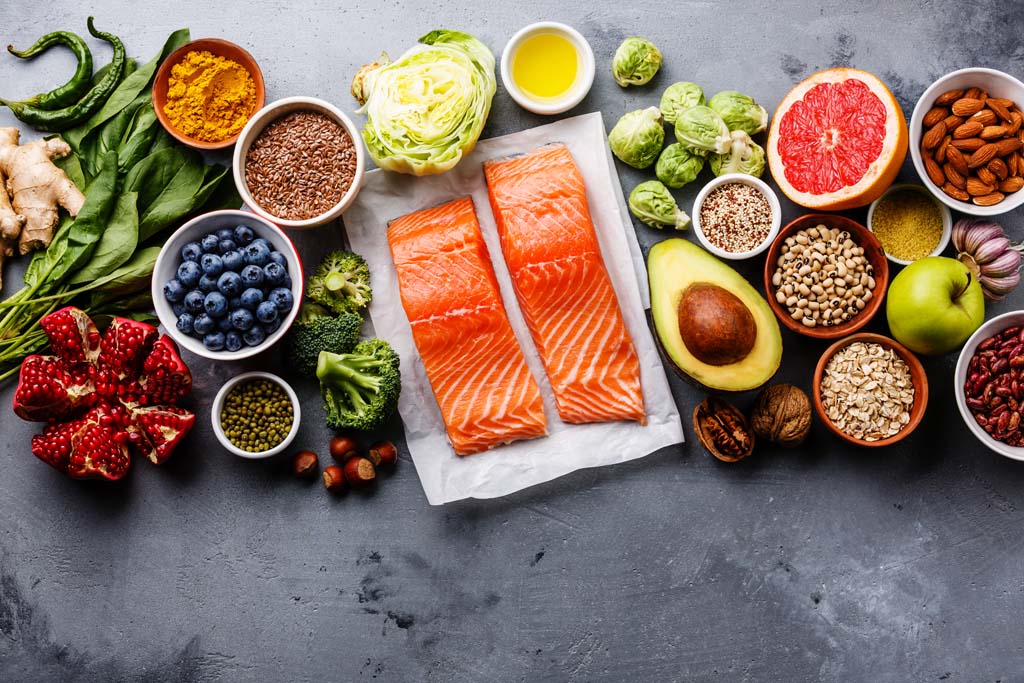
Human Nutrition I
Improve your own health and help others by learning the science of food and nutrition. A great starting point for understanding human nutrition. A course for anyone wanting to help people to discover the benefits of eating well.
 Nutrition Course Online
- The quality of food
- The variety of food
- The type of food
- Our body's ability to absorb nutrients
- The way we eat food
- Our emotional relationship to food
 This distance learning course is your first step toward an in depth understanding of human nutrition, covering:
- Major food groups - carbohydrates, fats, proteins, vitamins and minerals
- Digestion - what happens in your body
- How your body uses food for energy
- The role of water
- ... and more
It provides complimentary skills for people involved with food and health across a very wide range of contexts - health or fitness professionals, mothers, chef's, food sales staff, carers ...
This course should be viewed as a starting point for persons wanting to work more specifically in the field of nutrition and also provides the individual with the knowledge needed to better manage their own diet, as well as the diets of those around them.
- Learn about nutrition
- Improve your diet, improve your families diet
- Work in nutrition - lay the foundation for further studies
- 100 hour self paced course, with options to upgrade to a certificate or diploma
Important: To work as a nutritionist or prescribe food supplements in most developed countries you will be required to do more study than the 100 hours in this course. This 100 hour short course is often used as part of Certificates and Diplomas in Nutrition.
Aims
- Explain the role of different food types in human health.
- Explain the physiology of digestive processes.
- Recommend appropriate intake of vitamins.
- Recommend appropriate intake of minerals.
- Recommend appropriate food intake to meet an individual's energy needs.
- Recommend appropriate carbohydrate intake.
- Recommend appropriate fat intake.
- Recommend appropriate protein intake.
- Recommend appropriate water intake in different situations.
- Recognise signs and symptoms of the major nutrient disorders.
What You Will Do
- Distinguish between nutrition terms including: food, nutrition and diet
- Distinguish between characteristics and explain the significance of all major food groups,
- Label on unlabelled illustrations, parts of the digestive system and clearly explain their structure and function
- Distinguish between digestion and absorption of food and explain how different hormones control the digestive process, including: Gastrin, Gastric Inhibitory Peptide, Secretin and Cholecystokinin.
- Explain the meaning of basal metabolic rate (BMR) and describe how the intake of different types of food may affect metabolic rate.
- Explain how different factors other than food intake can affect digestion, including stress and disease and explain possible implications of mismatching food intake to individual's energy needs, through over or under intake of energy requirements.
- Develop guidelines to determining appropriate carbohydrate intake, in accordance with an individuals specific requirements.
- Distinguish between saturated and unsaturated fats in the diet of a specific person.
- Explain the role of fat in the body, including an explanation of different physiological processes involving fat. Distinguish between saturated and unsaturated fats.
- Explain the role of protein in the body, including examples of different physiological processes involving protein and explain factors which affect the bodies demand for protein.
- List different sources for each of several different minerals considered essential to human health and explain the role of different minerals in the body. Consider the relative values of different sources of minerals in your own diet, to determine minerals which may be supplied in inappropriate quantities.
- Distinguish between sources of different types of vitamins which are important to human health, including:Retinol, Vitamin D, Vitamin E, Vitamin K, Ascorbic acid, Thiamine, Riboflavin, Nicotinamide, Pyridoxine, Pantothenic, acid, Biotin, Cyanocobalamin, Folacin.
- Explain the proliferation of vitamin supplement usage in modern society and describe symptoms of five different vitamin disorders including deficiencies and toxicities.
- Explain the role of water in the body, for different physiological processes and list factors which affect the bodies requirement for water. Also, explain the physiology of dehydration, at different levels.
- Distinguish between the signs and symptoms of forty common problems associated with nutritional disorders, including: deficiencies, sensitivities and diseases. Also look at different techniques used by health practitioners for determining food/nutrition disorders.
- Explain the importance of obtaining a recommendation from a medical practitioner, when a nutritional disorder is suspected and the significance of obtaining a "second opinion", when diagnosing nutrient disorders.
Lesson Structure
There are 9 lessons in this course:
-
Introduction to Nutrition
- Important factors in nutrition
- Ingredients and cooking methods
- Understanding eating
- Major food groups
- Food allergies and Intolerance introduction
-
The Digestive System
- The Alimentary Canal- Muscular Structures
- Accessory Digestive Organs
- Digestive Tract Linings
-
Absorption and Enzymes
- Physical and Mechanical breakdown
- Understanding biochemical breakdown
- Biological breakdown
- Digestive Hormones
- Digestive Enzymes
- Absorption - anatomical adaptations for absorption
- Absorption (general)
- Detoxification mechanisms
- The Urinary System
- Physiology of the urinary system
- Skin and sweat glands
-
Energy Value of Foods
- The science of nutrition
- Diet
- Energy Value in Foods
- Nutrients
- Energy Production
- Basal Metabolic Rate
-
Carbohydrates and Fats
- Types of Carbohydrates - Monosaccharides, Oligosaccharides and Polysaccharides
- Carbohydrates in the diet
- Carbohydrates in the body
- Alcohol
- Fats and fat biochemistry
- Fats in the diet
- Fats in the body
-
Proteins
- Uses in the body
- Recommended protein intakes
- Grains
- Vegetables
- Nuts and Seeds
- Beef, Poultry and Fish (meat structure)
- Meat Quality
- Eggs and Dairy
- Proteins in the diet
- Proteins in the body
-
Vitamins and Minerals
- The Recommended Daily Allowance
- The Dietary Reference Intake
- Summary of Vitamins
- Fat soluble vitamins
- Water soluble vitamins
- Common minerals
- Inorganic elements
- The Calcium Debate
-
Water
- Water in the body (function)
- Water retention
- Water loss and chronic dehydration
-
Nutrient Disorders
- Selected digestive system disorders
- Vomiting
- Peptic ulcer
- Jaundice
- Lactose intolerance
- Haemorrhoids
- Cirrhosis
- Allergies
- Cholesterol, heart disease and atherosclerosis
- Bowel Cancer
- Problems with nutrition
Accreditations
Is a toned body a healthy body?
The answer is a resounding 'maybe'. It is common to associate a healthy body with strong, toned muscles. Even without an agreed definition of 'healthy' and 'toned' it may be enough to remember that musculature is only part of what makes up highly complex, interrelated processes that effect optimised functionality.
Protein is often touted as a 'muscle building' nutrient and for good reason. In isolation though, this statement could be misleading as there are many processes involved in repairing and building muscle. Protein also has a range of other important health giving roles in the human body relating to the immune system, hormone production, enzyme function and energy. The contribution to health of any nutrient should be understood in the context of the bigger picture.
What are Proteins?
Proteins are very complex substances which like carbohydrates and fats contain hydrogen, oxygen and carbon, however they also contain a fourth element, nitrogen. Proteins are large molecules made up of different combinations of smaller units called amino acids. Different proteins are different combinations of different amino acids.
The body needs eight "essential" different amino acids throughout all stages of life. They are:
- Tryptophan
- Methionine
- Valine
- Threonine
- Phenylalanine
- Leucine
- Isoleucine
- Lysine
As well as the standard four chemical elements, many proteins also contain sulphur and some phosphorus. Every cell in the body is partly composed of proteins. Protein is a structural material required for growth and repair and replacement of damaged tissues. Proteins are involved in the regulation of numerous cellular processes and are also the end product of many. They are crucial for vital processes such as glandular secretions, enzymatic and hormonal actions. As a result of proteins requirement in numerous vital functions, protein is the least favoured energy source and is only used as such when absolutely required.
Plants manufacture their own protein from their basic components, carbon, hydrogen, oxygen and nitrogen, but humans and other animals cannot do this. People and animals must obtain theirs from plant foods. Humans and other carnivorous animals can obtain their protein supply eating animals that in turn get their protein from plants.
Proteins consist of a chain of hundreds, or more, amino acid units. There are 20 different amino acids found in food and body proteins. By being linked together in different combinations and proportions an almost endless variety of different proteins can be formed. Every species of plant or animal has its own characteristic proteins. Beef proteins are different to lamb proteins and both are different to pea proteins, etc. In humans, the protein in bone is different from the protein in skeletal tissue, or heart, blood or skin.
Proteins are needed in the body for:
1. Body growth and repair: building and maintenance muscles and other soft tissues
2. Regulation: proteins and amino acids are or are part of compounds that regulate or modulate the processes in the body, such as enzymes, hormones, antibodies and neurotransmitters.
3. Energy: to burn as fuel (i.e. to provide a source of energy).
Proteins are found in all active tissues of the body (e.g. muscle cells, the liver, glands, etc). Though one gram of protein can yield 4 calories, the most important functions of the protein are tissue building, and repair and provision of the ingredients for the formation of enzymes, hormones and antibodies.
Protein use depends on the following:
The all or none rule
An appropriate amount of all necessary amino acids must be present to make a particular protein, or the protein will not be made. Any essential amino acids not used to make proteins will soon be oxidised for energy, or converted to produce carbohydrates or fats.
Calorie intake adequacy
If a diet doesn't contain adequate carbohydrates or fats for calories in energy production as ATP, tissue proteins are then used for energy. (NB: ATP is a chemical involved in the process of storage and release of energy, allowing work and movement to occur in the body).
Body nitrogen balance
In healthy adults, the rate at which proteins are synthesised should be the same as the rate at which they are being broken down in the body. This balance is reflected by the nitrogen balance in the body based on the fact that all protein average approximately 16% nitrogen.
The body is considered in balance when the amount of nitrogen ingested in protein is equal to the amount excreted in urine. Under physical or emotional stress, the protein breakdown can be affected and exceed by the amount of protein being synthesised: this is called a "negative nitrogen balance".
Hormone activity
Anabolic hormones can cause acceleration of protein synthesis and growth. The effect of these hormones may continuously change (affected by things such as age, stress, growth rate etc), hence growth rates and protein synthesis rates can be continuously changing.
RECOMMENDED PROTEIN INTAKE
As a general guide: approximately 0.8-1g per kilogram of body weight per day. Typically a small serve of fish and an egg would be adequate for an average person, per day. Protein needs vary much among different people, depending on their metabolism, physical activity and health conditions. A sports person will need to rebuild muscles more often that a sedentary one. They will also have higher metabolic rates. So their protein consumption will need to adapt to higher requirements, and can be as high as 1.2-1.4g of protein per kg of body weight.
People with kidney stones will have to be careful about their nitrogen intake, as in concentrated proteins sources, as a high intake will tend to stress the kidney in an attempt to increase urea elimination. According to the theories behind Metabolic Typing, some people may require more proteins in their diet, as much as 55%, and others may require less protein and more carbohydrates, as much as 70%. This is due to genetic differences in the way biochemistry cycles occur in our bodies, if people are fast or slow oxidisers.
Proteins sources are very varied, they can be supplied with plant or animal sources, and both of them lead to good health provided the essential amino acids are supplied and an adequate total quantity of protein is ingested. Too much protein is as bad too little. Moderation is the key. Too many proteins can lead to blood pH unbalances, which will put stress on other bodily systems in order to equilibrate the pH. Also, protein degradation will produce residues that will need to be eliminated from the body.
Animal sources of proteins are animal meats, poultry, fish, dairy and eggs. Plant sources of proteins include seeds, nuts and beans, grains, leafy greens, other vegetables and fruits.
GRAIN
Grains are a good source of protein, complex carbohydrates, fibre and many different minerals and vitamins. Different grains have different food values. Typically they consist of 65-75% carbohydrates (sugars and starches), 7 to 12 % proteins, 2 to 6% lipids and the rest is water. Whole grains are generally better nutritionally than processed grains, particularly with respect to dietary fibre, minerals and vitamins. Grains are a staple component of many diets in many cultures around the world, including Western countries. They are a basic component of daily protein intake in Western and Asian vegetarian and vegan diets, together with beans, nuts and seeds.
Who Should Study This Course?
This course is aimed at many people including:
- Food coaches
- Nutritionists
- Dieticians
- Meal planners
- Chefs
- Cooks
- Health & wellness coaches
- Life coaches
- Food writers
- Marketers
- Researchers
- Food scientists
Enrol to kickstart your human nutrition knowledge.
Enrol using the automated procedure on this site or contact us via phone or email to ask questions and enrol with a real person.
You can enrol at anytime and start the course when you are ready. Enrolments are accepted all year - students can commence study at any time. All study is self paced and ACS does not set assignment deadlines.
Please note that if a student is being assisted by someone else (e.g. an employer or government subsidy), the body offering the assistance may set deadlines. Students in such situations are advised to check with their sponsor prior to enrolling. The nominal duration of a course is approximately how long a course takes to complete. A course with a nominal duration of 100 hours is expected to take roughly 100 hours of study time to complete. However, this will vary from student to student. Short courses (eg. 100 hrs duration) should be completed within 12 months of enrolment. Certificates, Advanced Certificates and Awards (eg. over 500 hours duration) would normally be completed within 3 -5 years of enrolment. Additional fees may apply if a student requires an extended period to complete.
If a student cannot submit their assignments for 6 months to ACS, they should advise the school to avoid cancellation of their student
registration. Recommencement fees may apply.
Simply click on the ENROL OPTIONS button at the top of this screen and follow the prompts.
You can see the course price at the top of this page. Click 'enrolment options' to see any payment options available.
You can pay by Credit Card, PayPal, Afterpay or bank transfer.
Yes! We have payment plans for most courses. Click 'enrolment options' to see the available payment plans.
We also have Afterpay that will allow you to pay for your course or payment plans in four instalments (if you are in Australia).
There are no entry requirements that you need to meet to enrol in our courses, our courses are for everyone.
If you are under 18, we need written permission from your parent/ guardian for your enrolment to continue, we can arrange that after you have enrolled.
You don’t need to purchase any additional resources to complete our courses.
What do I need to know before I enrol?
We aim to teach you the essentials without you having to purchase any specific computer program.
We recommend that you have access to a word processing program, such as Microsoft Word or Google Docs, so that you can easily complete and submit your assignments.
You sure can. We are here to help you learn whatever your abilities.
Yes, if you are enrolling in a Certificate or Advanced Certificate, you might be eligible for credits if you have evidence of your previous studies or relevant experience. More information is here.
We recommend that you are able to browse websites, send emails and conduct online research. You will need to be able to type and submit your assignments.
If you have limited computer skills, we can make special arrangements for you.
This is possible, it depends on the institution. We recommend that if you would like to use our courses that you contact the institution first. Our Course Handbook is a good resource for this.
Our courses are written in English and we only have English speaking academic staff. If you can read and complete your assignments in English, our courses are ideal for you.
Our courses are designed to build knowledge, hands on skills and industry connections to help prepare you to work in the area, running your own business, professional development or as a base for further study.
This course has been designed to cover the fundamentals of the topic. It will take around 100 hours to complete, which includes your course reading, assignment work, research, practical tasks, watching videos and anything else that is contained in the course. Our short courses are a great way to do some professional development or to learn a new skill.
It’s up to you. The study hours listed in the course are a rough guide, however if you were to study a short course (100 hours) at 10 hours per week, you could finish the course in 10 weeks (just an example). Our courses are self-paced, so you can work through the courses in your own time. We recommend that you wait for your tutor to mark and return your assignment before your start your next one, so you get the benefits of their feedback.
The course consists of course notes, videos, set tasks for your practical work, online quizzes, an assignment for each lesson (that you receive feedback from your tutor from) and ends in an exam (which is optional, if would like to receive the formal award at the end), using our custom built Learning Management System - Login.Training.
Our courses are designed for adults to gain professional development and skills to further their careers and start businesses.
Our custom online learning portal allows you to conduct your learning online. There may be practical tasks that you can do offline. You have the option of downloading your course notes or print them to read later.
There is also the option to pay an additional fee for printed course notes and or USB (availability limited to location and deliverability).
Yes, if you don’t have access to the internet, you can receive the course as paper notes or on a USB stick for an additional fee. We can also make alternative arrangements for you to send your assignments to us.
We offer printed notes for an additional fee. Also, you can request your course notes on a USB stick for an additional fee.
Yes, your tutor is here to help you. Simply post any questions you have in your login.training portal or contact the office and we can pass on a message to your tutor.
We are more learning focussed, rather than assessment focussed. You have online quizzes to test your learning, written assignments and can complete an exam at the end of the course (if you want to receive your certificate). You will not receive a pass/ fail on your course work. If you need to add more details on your assignment, we will ask you to resubmit and direct you where you need to focus. If you need help, you can ask your tutor for advice in the student room.
Each module (short course) is completed with one exam.
Exams are optional, however you must sit an exam if you would like to receive a formal award. You will need to find someone who can supervise that you are sitting the exams under exams conditions. There is an additional cost of $60 incl. GST for each exam.
More information is here
There are practical components built into the course that have been designed to be achieved by anyone, anywhere. If you are unable to complete a task for any reason, you can ask your tutor for an alternative.
When you complete the course work and the exam and you will be able receive your course certificate- a Statement of Attainment. Otherwise, you can receive a Letter of Completion.
You can bundle the short courses to create your own customised learning bundle, Certificates or Advanced Certificates. More information is on this page.
Yes, our courses are built to be applicable for people living anywhere in any situation. We provide the fundamentals, and each student can apply their own unique flair for their own interests, region and circumstances with the one-on-one guidance of a tutor. There is also a bit of student directed research involved.
Employers value candidates with industry skills, knowledge, practical skills and formal learning. Our courses arm you with all of these things to help prepare you for a job or start your own business. The longer you study the more you will learn.
ACS has an arrangement with OAMPS (formerly AMP) who can arrange Professional Indemnity from Australian and New Zealand graduates across all disciplines. Ph: 1800 222 012 or email acs@oamps.com.au.
Who are ACS Distance Education?
ACS Distance Education have been educating people for over 40 years.
We are established and safe- we have been in education for over 40 years.
We are focused on developing innovative courses that are relevant to you now and what you will need to know in the future.
We are focused on helping you learn and make the most of your experience.
You can enrol at any time, you can work on your course when it suits you and at your own pace.
We are connected to many industry bodies and our staff participate in continuous improvement and learning activities to ensure that we are ahead of what learning is needed for the future.
Our courses are not accredited by the Australian Government. However many of our courses are recognised and held in high regard by many industry bodies.
Our courses are written by our staff, who all have many years experience and have qualifications in their speciality area. We have lots of academic staff who write and update our courses regularly.
How do I enrol my staff/ sponsored students?
Yes, you can do a request for a bulk enrolment and request an invoice on our Invoice Request Form
We can prepare an invoice, quote or proforma invoice. Simply complete your details on our Invoice Request form
We can arrange bulk discounts for your course enrolment, please get in touch with us to discuss your needs.
Yes, we have many students who are in locked facilities, such as prisons or hospitals. We can cater by also offering paper notes at an additional cost.
What if I have any more questions or need more information?
We can assist you to find the right course for your needs. Get in touch with us via email (admin@acs.edu.au) call on +61 7 5562 1088 or complete our course advice form.
What if I change my mind?
Please get in touch with studentservices@acs.edu.au if you would like to be removed from our mail list.
If you would like ACS Distance Education to delete your information at any time (whether you are a customer or a prospective customer), please contact our privacy officer and we will process this ( admin@acs.edu.au ).
If students require a reproduction of their certificate, an electronic copy can be provided at a cost of AUD$35 incl GST. Printed copies are not available.
Course Contributors
The following academics were involved in the development and/or updating of this course.

Karen Lee
Nutritional Scientist, Dietician, Teacher and Author.
BSc. Hons. (Biological Sciences), Postgraduate Diploma Nutrition and Dietetics.
Registered dietitian in the UK, with over 15 years working in the NHS. Karen has undertaken a number of research projects and has lectured to undergraduate university students. Has co authored two books on nutrition and several other books in health sciences.

Lyn Quirk
M.Prof.Ed.; Adv.Dip.Compl.Med (Naturopathy); Adv.Dip.Sports Therapy
Over 30 years as Health Club Manager, Fitness Professional, Teacher, Coach and Business manager in health, fitness and leisure industries. As business owner and former department head for TAFE, she brings a wealth of skills and experience to her role as a tutor for ACS.

Jade Sciascia
Biologist, Business Coordinator, Government Environmental Dept, Secondary School teacher (Biology); Recruitment Consultant, Senior Supervisor in Youth Welfare, Horse Riding Instructor (part-completed) and Boarding Kennel Manager.
Jade has a B.Sc.Biol, Dip.Professional Education, Cert IV TESOL, Cert Food Hygiene.
Human Biology
For any new student of human biology, being confronted with thousands of unfamiliar words can be overwhelming. It can also be difficult to identify which words you need to learn first. This book presents words that have been carefully selected as the most important for new biology students to learn and understand. It also provides more information about each word than is often found in traditional dictionaries, giving students a more in-depth understanding of the word's meaning. The book is intended as an aid to all new students of human biology.
Human Nutrition
Both a text for students, or an informative read for anyone who wants to eat better. While covering the basics, the book approaches nutrition a little differently here to some other books, with sections covering ”Modifying diet according to Genetic Disposition or Lifestyle”, “How to find Reliable Information on Nutrition” and “Understanding how Diet relates to Different Parts of the Body” (including Urinary, Digestive, Respiratory and Circulatory System, the Brain, etc). This ebook was written to complement the ACS Nutrition I course, and provides a solid foundation for anyone wanting to grasp a fundamental understanding of Human Nutrition.
Nutritional Therapy
Discover how the way you eat can impact upon the affects of an illness. This book is unique, written by our health and nutritional scientists. Chapters cover: “Scope and Nature of Nutritional Therapy”, “How different factors Interact with Nutrition”, “Different Ways” and “Appropriate Therapeutic Responses for Different Health Issues” Thirty different conditions are covered from Mental Illness and Gastritis to Coeliac Disease and Osteoporosis.