
Child Psychology
Study this in-depth course in child psychology, discover how infants and children develop (socially, cognitively, sexually, morally), how they acquire language, and different types of learning. Develop knowledge towards a career working with children.







Want to increase your understanding of children?
Study this Child Psychology course to learn how children develop psychologically and what factors (such as learning, parenting styles, reinforcement, and genetic makeup) influence their behaviour and thinking. Anyone who lives or works with children will gain valuable insights into child behaviour. Students of counselling or psychology will be better prepared to understand childhood influences on later adult behaviour.
This course is beneficial for:
- Counsellors
- Social Workers
- Childcare Workers
- Teachers and School Staff
- Workers in the Medical Field
- People who work in Children's Services
- Psychology Students wishing to broaden their knowledge
- Parents who would like to understand their children better
- Foster carers and guardians
- Those who are interested in becoming involved in a career working with children
Particular benefits for parents, guardians and foster carers who take this course may be to:
- Gain insights to help you be a better parent.
- Learn skills to help your child grow and develop.
- Better understand your child's thoughts, feelings, and behaviour.
- Learn how to interact with children better.
- Learn to identify what is 'normal' behaviour and what is not.
- Learn more about yourself - how has your childhood shaped the person you are now?
An awareness of how children develop can help parents, teachers, and childcare workers to provide the kind of environment that nurtures children's emotional, cognitive and moral development.
ACS Student feedback: "It's very interesting. I am always fascinated by children's behaviour. Helps in my work and with my own children, to have a clear understanding of their nature/nurture. I made the right choice (in choosing) my course. The credit goes to ACS." Judy Augustine, Childcare Worker, Child Psychology course, Australia.
Aims
- Identify environmental and social aspects required for the ideal environment for a developing child.
- Explain how genetic and environmental factors operate together in influencing the child's personality development.
- Provide evidence that a particular personality characteristic may be genetically determined.
- Explain how genetic and environmental factors operate together in influencing the child's personality development.
- Identify the type of learning in which a stimulus which usually produces an unconditioned response is manipulated to produce a conditioned response, and give an example.
- Discuss exactly how you would use operant conditioning to encourage a child to socialise.
- Apply the perceptual recognition approach to explain smiling and fear in infants.
- Evaluate how Freud’s, Harlow’s and Bowlby’s explanations of the formation of mother-child attachments differ.
- Explain reflection-impulsivity and its significance in cognitive development.
- Explain the strengths and weakness of social learning theory in explaining language acquisition.
- Explain why you think that intelligence is or is not overall genetically determined.
Lesson Structure
There are 12 lessons in this course:
-
Introduction to Child Psychology
- Levels of development, nature or nurture, isolating hereditary characteristics, cause versus correlation, continuity versus discontinuity, cross sectional and longitudinal studies, reliability of verbal reports
-
The Newborn Infant
- The interactionist approach, range of reaction, niche picking, temperament, stimulus seeking, emotional disturbances during pregnancy
-
States and Senses of the Infant
- Sensory discrimination, infant states (sleep, inactivity, waking, crying, etc.), why psychologists are concerned with defining and describing infant states, habituation, soothing a distressed baby, sensory discrimination, depth perception, oral sensitivity
-
Learning
- Habituation, vicarious learning, classical conditioning, operant conditioning, reinforcement, the importance of learning control, etc.
-
Emotions and Socialisation
- Producing and recognising emotional expression, smiling, biological explanation, perceptual recognition, mother-child attachments, Freudian approach, Bowlby's approach, social learning approach, Harlow's approach, role of cognition in attachment formation, day care
-
Cognitive Development
- Developing the ability to reason
-
Language Development
- Is language ability learned or innate? Social learning approach, hypothesis testing approach, under-extending and over-extending
-
Intelligence
- Measuring intelligence, cultural bias, IQ, testing intelligence as a tool
-
Socialisation ... Part A
- Social cognition, self-awareness, awareness of others, development of empathy, taking turns, having a point of view/perspective, social scripts, pretend play
-
Morality
- Moral development, aggression and altruism, Freud, Piaget and Kohlberg on moral development
-
Sexuality
- Freud's psychosexual stages of development (oral phase, anal phase, phallic phase, latent phase, genital phase), gender and role identity, psychosocial development
-
Socialisation ... Part B
- Family influence, discipline, siblings, family structures, school influence, peer influence, acceptance and rejection, modelling, reinforcement.
Accreditations
About Child Psychology
Child psychology is a fascinating area of study. In fact, it has
consistently ranked as one of the most popular subjects of enquiry at
colleges and universities around the world for some time. This is
perhaps because learning about children's behaviour can also help us to
understand ourselves. After all, we were all children once.
Child psychology is concerned with how children grow and develop from
infancy through to adolescence. Whilst some of these developments are
associated with physiological changes, others are brought about by
experiences and environmental influences. Although children are all
unique, research has helped us to recognise mechanisms of development
which influence all children.
In this course you will learn to examine and understand normal patterns
of childhood growth and how they are applied to areas such as language
development, learning, and cognitive development. You'll encounter the
theories of some of the great thinkers who have worked in this field
like Piaget, Freud and Bowlby. Upon completion you will have a
much broader understanding of why children of different ages behave the
way they do, and how you might expect them to behave.
For convenience, a distinction is often made between the cognitive,
emotional and social aspects of behaviour. However, this distinction is
simply to help us learn and understand. In reality, the different causes
of behaviour interact with each other. When problems develop in any
area of development they usually become rapidly evident in other areas
as well. The study of child psychology is partly concerned with
identifying such interrelationships.
Child psychology is not just something which appeals to psychologists
but impacts in the daily work of a range of different professionals, as
well as anyone who has children or who cares for them. Many people find
themselves in situations where they would like to have a better
understanding of the thoughts and behaviours of children so they can be
of greater help to them.
The area of child psychology is an evolving and multi-faceted one.
Temperament - Nature or Nurture
The effect of 'nature' and/or 'nurture' on development is something which has been debated in the study of psychology for decades.
Most adults have witnessed the considerable differences in temperament between different new born babies. Some babies seem to cry or become irritable at the slightest provocation, causing many sleepless nights for parents. Others seem much more amiable, always smiling and hardly ever crying. Many mothers tell you that they have raised both types. Is this evidence of an inborn hereditary personality trait; or is it merely coincidence?
If such personality tendencies are stable - that is, they continue to exist throughout the child's development - then it is often assumed that the characteristic is hereditary. Investigations have found that 70 per cent of adults with behaviour disorders were described as difficult babies by their parents. This can be interpreted in two ways:
- A difficult temperament is inborn and remains stable throughout life, eventually leading to behavioural problems (nature).
- Difficult babies are treated differently by their parents, who perhaps elicit negative responses, which cause these to children have socially related difficulties later. The later behavioural disorders are a response to negative treatments which in turn resulted from the difficulty they caused as babies.
It has been found that mothers do not generally rear difficult babies very differently to others, but as children get older, parents do often respond more with negative behaviours such as shame, anxiety, or guilt, if these difficulties persist. The temperament of difficult babies has been found to be relatively easy to modify under appeasing parental care and conditions. Children’s temperaments moreover, were found to often change considerably during their early years. It can be concluded that while temperament may be genetically influenced, it is easily modified by environmental factors.
There has been evidence however that certain personality traits may be largely influenced by genetic factors. These are sociability, stimulus seeking and activity.
Benefits of Studying This Course
Through mastering child psychology you can learn how children develop psychologically as they mature from infancy through to adolescence, and what factors (such as learning, parenting styles, reinforcement and genetic makeup) influence their behaviour and thinking.
If you work with children you will gain valuable insights into child behaviour and be able to apply your knowledge to real-life situations.
Career Pathways
Knowledge of child psychology is most relevant to careers in psychology, counselling and teaching. However, professionals in many other fields benefit from a deeper understanding of childhood development.
The Child Psychology course is aimed at people working in, or aspiring to work in, the following fields:
Youth work
Child and adolescent counselling
School counselling
Teaching, teacher aides & school employees
Child psychology
Social work
Child care
Children's services
Medical and health professions
The Child Psychology course can be used as a foundation towards further study and qualifications, or for personal development.
This course may also be a useful stepping stone for those who are considering becoming involved in working with children - whether as a first career or as a career change. Studying this course could give you the headstart you need, and fill you with the inspiration you desire to push on with your future plans.
Enrol using the automated procedure on this site or contact us via phone or email to ask questions and enrol with a real person.
You can enrol at anytime and start the course when you are ready. Enrolments are accepted all year - students can commence study at any time. All study is self paced and ACS does not set assignment deadlines.
Please note that if a student is being assisted by someone else (e.g. an employer or government subsidy), the body offering the assistance may set deadlines. Students in such situations are advised to check with their sponsor prior to enrolling. The nominal duration of a course is approximately how long a course takes to complete. A course with a nominal duration of 100 hours is expected to take roughly 100 hours of study time to complete. However, this will vary from student to student. Short courses (eg. 100 hrs duration) should be completed within 12 months of enrolment. Certificates, Advanced Certificates and Awards (eg. over 500 hours duration) would normally be completed within 3 -5 years of enrolment. Additional fees may apply if a student requires an extended period to complete.
If a student cannot submit their assignments for 6 months to ACS, they should advise the school to avoid cancellation of their student
registration. Recommencement fees may apply.
Simply click on the ENROL OPTIONS button at the top of this screen and follow the prompts.
You can see the course price at the top of this page. Click 'enrolment options' to see any payment options available.
You can pay by Credit Card, PayPal, Afterpay or bank transfer.
Yes! We have payment plans for most courses. Click 'enrolment options' to see the available payment plans.
We also have Afterpay that will allow you to pay for your course or payment plans in four instalments (if you are in Australia).
There are no entry requirements that you need to meet to enrol in our courses, our courses are for everyone.
If you are under 18, we need written permission from your parent/ guardian for your enrolment to continue, we can arrange that after you have enrolled.
You don’t need to purchase any additional resources to complete our courses.
What do I need to know before I enrol?
We aim to teach you the essentials without you having to purchase any specific computer program.
We recommend that you have access to a word processing program, such as Microsoft Word or Google Docs, so that you can easily complete and submit your assignments.
You sure can. We are here to help you learn whatever your abilities.
Yes, if you are enrolling in a Certificate or Advanced Certificate, you might be eligible for credits if you have evidence of your previous studies or relevant experience. More information is here.
We recommend that you are able to browse websites, send emails and conduct online research. You will need to be able to type and submit your assignments.
If you have limited computer skills, we can make special arrangements for you.
This is possible, it depends on the institution. We recommend that if you would like to use our courses that you contact the institution first. Our Course Handbook is a good resource for this.
Our courses are written in English and we only have English speaking academic staff. If you can read and complete your assignments in English, our courses are ideal for you.
Our courses are designed to build knowledge, hands on skills and industry connections to help prepare you to work in the area, running your own business, professional development or as a base for further study.
This course has been designed to cover the fundamentals of the topic. It will take around 100 hours to complete, which includes your course reading, assignment work, research, practical tasks, watching videos and anything else that is contained in the course. Our short courses are a great way to do some professional development or to learn a new skill.
It’s up to you. The study hours listed in the course are a rough guide, however if you were to study a short course (100 hours) at 10 hours per week, you could finish the course in 10 weeks (just an example). Our courses are self-paced, so you can work through the courses in your own time. We recommend that you wait for your tutor to mark and return your assignment before your start your next one, so you get the benefits of their feedback.
The course consists of course notes, videos, set tasks for your practical work, online quizzes, an assignment for each lesson (that you receive feedback from your tutor from) and ends in an exam (which is optional, if would like to receive the formal award at the end), using our custom built Learning Management System - Login.Training.
Our courses are designed for adults to gain professional development and skills to further their careers and start businesses.
Our custom online learning portal allows you to conduct your learning online. There may be practical tasks that you can do offline. You have the option of downloading your course notes or print them to read later.
There is also the option to pay an additional fee for printed course notes and or USB (availability limited to location and deliverability).
Yes, if you don’t have access to the internet, you can receive the course as paper notes or on a USB stick for an additional fee. We can also make alternative arrangements for you to send your assignments to us.
We offer printed notes for an additional fee. Also, you can request your course notes on a USB stick for an additional fee.
Yes, your tutor is here to help you. Simply post any questions you have in your login.training portal or contact the office and we can pass on a message to your tutor.
We are more learning focussed, rather than assessment focussed. You have online quizzes to test your learning, written assignments and can complete an exam at the end of the course (if you want to receive your certificate). You will not receive a pass/ fail on your course work. If you need to add more details on your assignment, we will ask you to resubmit and direct you where you need to focus. If you need help, you can ask your tutor for advice in the student room.
Each module (short course) is completed with one exam.
Exams are optional, however you must sit an exam if you would like to receive a formal award. You will need to find someone who can supervise that you are sitting the exams under exams conditions. There is an additional cost of $60 incl. GST for each exam.
More information is here
There are practical components built into the course that have been designed to be achieved by anyone, anywhere. If you are unable to complete a task for any reason, you can ask your tutor for an alternative.
When you complete the course work and the exam and you will be able receive your course certificate- a Statement of Attainment. Otherwise, you can receive a Letter of Completion.
You can bundle the short courses to create your own customised learning bundle, Certificates or Advanced Certificates. More information is on this page.
Yes, our courses are built to be applicable for people living anywhere in any situation. We provide the fundamentals, and each student can apply their own unique flair for their own interests, region and circumstances with the one-on-one guidance of a tutor. There is also a bit of student directed research involved.
Employers value candidates with industry skills, knowledge, practical skills and formal learning. Our courses arm you with all of these things to help prepare you for a job or start your own business. The longer you study the more you will learn.
ACS has an arrangement with OAMPS (formerly AMP) who can arrange Professional Indemnity from Australian and New Zealand graduates across all disciplines. Ph: 1800 222 012 or email acs@oamps.com.au.
Who are ACS Distance Education?
ACS Distance Education have been educating people for over 40 years.
We are established and safe- we have been in education for over 40 years.
We are focused on developing innovative courses that are relevant to you now and what you will need to know in the future.
We are focused on helping you learn and make the most of your experience.
You can enrol at any time, you can work on your course when it suits you and at your own pace.
We are connected to many industry bodies and our staff participate in continuous improvement and learning activities to ensure that we are ahead of what learning is needed for the future.
Our courses are not accredited by the Australian Government. However many of our courses are recognised and held in high regard by many industry bodies.
Our courses are written by our staff, who all have many years experience and have qualifications in their speciality area. We have lots of academic staff who write and update our courses regularly.
How do I enrol my staff/ sponsored students?
Yes, you can do a request for a bulk enrolment and request an invoice on our Invoice Request Form
We can prepare an invoice, quote or proforma invoice. Simply complete your details on our Invoice Request form
We can arrange bulk discounts for your course enrolment, please get in touch with us to discuss your needs.
Yes, we have many students who are in locked facilities, such as prisons or hospitals. We can cater by also offering paper notes at an additional cost.
What if I have any more questions or need more information?
We can assist you to find the right course for your needs. Get in touch with us via email (admin@acs.edu.au) call on +61 7 5562 1088 or complete our course advice form.
What if I change my mind?
Please get in touch with studentservices@acs.edu.au if you would like to be removed from our mail list.
If you would like ACS Distance Education to delete your information at any time (whether you are a customer or a prospective customer), please contact our privacy officer and we will process this ( admin@acs.edu.au ).
If students require a reproduction of their certificate, an electronic copy can be provided at a cost of AUD$35 incl GST. Printed copies are not available.
Course Contributors
The following academics were involved in the development and/or updating of this course.

Lyn Quirk
M.Prof.Ed.; Adv.Dip.Compl.Med (Naturopathy); Adv.Dip.Sports Therapy
Over 30 years as Health Club Manager, Fitness Professional, Teacher, Coach and Business manager in health, fitness and leisure industries. As business owner and former department head for TAFE, she brings a wealth of skills and experience to her role as a tutor for ACS.
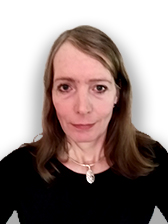
Jacinda Cole (Psychologist)
Psychologist, Educator, Author, Psychotherapist.
B.Sc., Psych.Cert., M. Psych. Cert.Garden Design, MACA
Jacinda has over 25 years of experience in psychology, in both Australia and England. She holds a BSc (Hons) in Psychology and a Masters in Psychology (Clinical) and also trained in psychoanalytic psychotherapy at the London Centre for Psychotherapy. She has co-authored several psychology text books and many courses including diploma and degree level courses in psychology and counselling. Jacinda has worked for ACS for over 10 years.

Tracey Jones (Psychologist)
B.Sc. (Psych), M.Soc.Sc., Dip.Social Work, P.G.Dip Learning Disability, Cert Editing, Cert Creative Writing, PGCE.
Member British Psychological Society, Member Assoc. for Coaching, Member British Learning Assoc.
25 years industry experience in writing, editing, education, psychology, and business. Tracey has several books and hundreds of articles published; in both fiction and non fiction.

Counselling Handbook
Discover: Where can counselling be used? How to see behind the mask. Emotions and attitudes. How to communicate better when all you have is words. Theory versus practice. Diffusing difficult situations. Golden rules or tips.

How Children Think
Anyone who has ever tried to make a child do anything (clean up their mess, desist from throwing mud, stop drawing on the walls) knows that children think differently to adults. This book attempts to provide the skills and knowledge to develop a greater understanding of children.

Psychological Profiling
Psychological profiling is used to assess anyone from potential new staff and school children to serial killers. It helps you to determine someone’s personality, neuroses, mental health and career suitability. This book provides an excellent overview of psychological profiling techniques and pitfalls.

The Environment of Play
Full of inspiring colour images of playgrounds around the world, this book is ideal for designers, park managers, schools and parents! First published in the USA in 1982. Used in the past as a university text (in landscaping and education degrees). Completely revised in 2012. Full of inspiring colour images of playgrounds around the world, this book is ideal for designers, park managers, schools and parents! Play is the most important and effective method of learning for adults as well as children. It can be active or passive, planned or spontaneous. If you want to learn about the relationship between PLAY and the ENVIRONMENT, this is the ebook for you.
(aud)$781.00