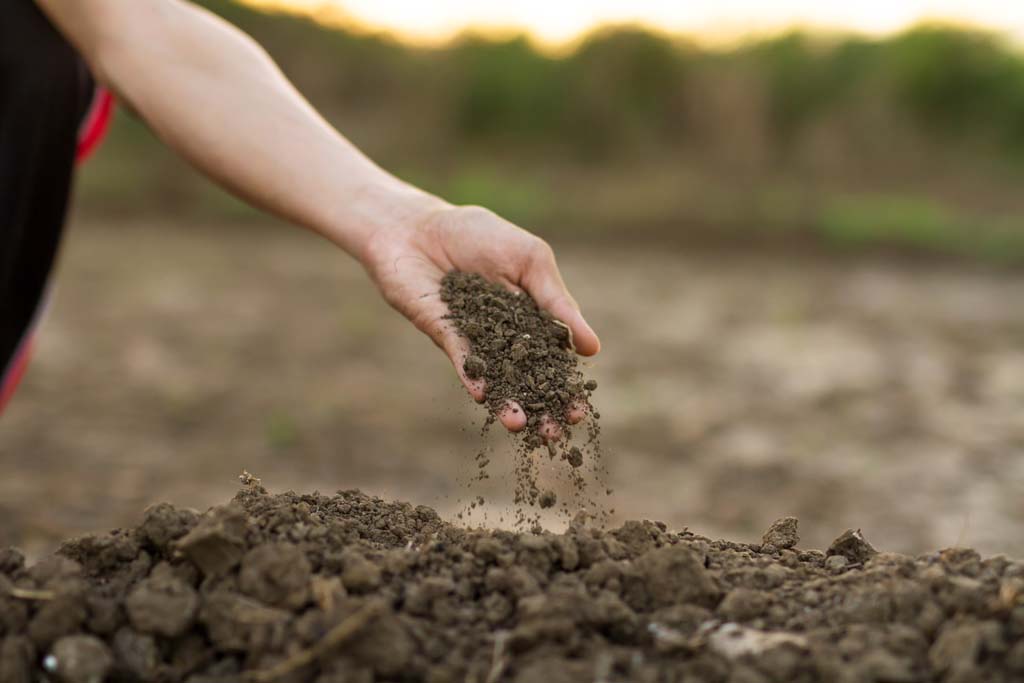
Soil Management (Horticulture)
Learn good soil management as a basis of successful horticulture. Understand the physical and chemical characteristics of soils and how to evaluate, manage and improve soils.









SOIL MANAGEMENT COURSE
Good soil conditions are critical to the healthy growth of most plants. Over eight lessons this course will develop an understanding of physical and chemical properties of soils, the ability to carry out simple tests and determine soil characteristics, and to decide ways of treating a soil to improve its ability to grow plants.
Aims
- Describe the significance of different physical and chemical properties of soil, in relation to the growing of plants.
- Extract samples of soil, appropriate to different situations; and then conduct a range of simple tests to determine varying characteristics of the sample taken.
- Explain characteristics of a soil, scientifically; and relate those characteristics to the capacity of a soil to grow plants.
- Recommend appropriate selection and management of potting and other alternative media for growing plants in containers.
- Diagnose and recommend the treatment of a variety of soil degradation problems.
- Understanding of the principles of sustainable soil management.
- Determine appropriate management programs for different soils in horticultural situations.
- Recommend soil management practices which are not going to cause a degradation of soil quality.
- Explain the methods used in managing earthworks in a way which is sensitive to soil condition.
What You Will Do
- Identify evaluate soil structural problems in the field.
- Build a compost heap and monitor its decomposition process.
- Perform simple experiments to evaluate fertilisation rates and methods.
- Define and describe soil properties and processes.
- Perform simple tests and field analyses on soil.
- Identify nutrient deficiencies.
- Evaluate the attributes of various mulches.
- Analyse the impacts of earthworks and earth working machinery on soil and landscape.
- Analyse the effects of different soil management methods.
- Identify soil and land degradation.
- Propagate and grow plants in containers.
- Identify and evaluate soil degradation minimisation programs and methods.
Lesson Structure
There are 8 lessons in this course:
-
Physical and Chemical Properties of Soils
- How soils develop
- The main rock forming minerals: silicates, carbonates, oxides and sulphates
- Types of rock: igneous, sedimentary, metamorphic
- Denitrification, immobilisation, mineralisation and ammonium fixation
- Understanding soil function: plant nutrition, support, water and air supply
- Naming a soil
- Improving soils for plant culture
- Organic matter
- Plant nutrition
- Nutrient availability and pH
- Cation exchange capacity
- Conductivity
- Salinity build up
- The nutrient elements
- Major elements and minor elements
- Total salts
- Diagnosing nutrient problems
- Fertilisers
- Composting
-
Soil and Plant Tissue Test Methods
- Soil sampling
- Common soil tests: pH, texture, structure, etc
- Tissue analysis
- Different methods od measuring pH
- Water content of soil
- Fertiliser solubility
- Testing the effect of lime
- Laboratory testing of soils
- Measuring salinity
- Colorimeters
- Bulk density
- Understanding soil analysis
- Deciding when and how to test
-
Soil Science and Health
- Organic carbon
- Available phosphorus
- Soil colour
- Texture and its effect on plant growth
- Structure and its effect on plant growth
- Consistence: effect on plant growth
- Depth of profile, pH, porosity and other things affecting plant growth
- Soil classification and description: different horizons
- Factors affecting soil formation: parent material, climate, ecosystem, etc
- Weathering processes in soil formation: physical, chemical, geochemical
- Pedochemical weathering
-
Container Growing
- Introduction
- What to grow
- Problems with containers
- Care of containers
- Comparing materials: plastics, terracotta, fibreglass, etc
- Aesthetics of containers
- Potting up
- Potting mixes
- Ideas for container gardens
- History of potting mixes
- UC mixes
- Soilless mixes
- Testing for toxins in potting media
- Propagating media
- Problems with Organic materials in media
- Coir
- Rockwool
- Components of potting media
- Cleanliness with soils and potting media
- Hydroponics
-
Land Degradation and Other Soil Problems
- Chemical damage to soil
- Builders rubbish in soils
- Salinity
- Dogs or cats urinating
- Growing plants in dry areas
- Soil degradation
- Erosion
- Salinity
- Acidification
- Compaction
- Chemical residues
-
Soil Management Applications
- Aims of soil management
- Soil management in orchards
- Fertilizer application
- Soil covers
- Soil management for Vegetables
-
Organic Techniques and Soil Management
- What is organic growing
- Organic principles for overcoming soil problems
- Natural plant nutrition
- Trace elements
- Earthworms
- Types of mulch and its use
- Nutrition management in a plant nursery
- Applying liquid fertilizers
- Organic fertilizers
- Natural fertilizers
- Mineral rock fertilizers and soil conditioners
- Apatite phosphate rock
- Dolomite
- Gypsum
- Soil management in market gardens
- Crop rotation
- Determining kind and quantity of fertilizer to use
- Cover crops
-
Soils and Managing Earthworks
- Eath forming
- Machinery
- Creating mounds
- Sources of "fill"
- Drainage
- Improving drainage
- Improving surface drainage after construction
- Designing a drainage system
- Improving permeability during construction
- Layout of drains
- Types of drains
Accreditations
Why Study Soils?
Soils are the foundation of all horticulture.
Plants get nutrition and water from the soil, and the better the soil, the more able they are to grow.
Soils are a mixture of components; different types of particles (e.g. sand, clay, organic matter), air pockets, water and living organisms (eg.bacteria, earthworms). The roots of plants then grow in amongst all of these components. The world below the soil surface is a complex ecosystem, that sometimes helps plants grow at their very best; and at other times can inhibit plant growth, cause disease to flourish, and even cause the decline and death of plants.
The more that you are able to understand all of this, the more you will be able to cultivate plants effectively.
|
Ameliorant |
soil improvers i.e. lime, dolomite, gypsum, trace elements etc. |
|
Acid soil |
Soil with a reaction below pH7 (having more hydrogen ions over hydroxyl ions). |
|
Aeration |
When air in the soil is replaced by air from the atmosphere. |
|
Aggregates |
groups of particles of sand, silt clay and humus within the soil held in a single unit as a clod, crumb, block or prism. |
|
Agronomy |
The science of soil management and crop production. |
|
Air-dry |
When the soil is as dry as the surrounding air making it impervious to water. |
|
Alkaline soil |
soil that has a pH value of greater then pH7. |
|
Alluvial soils |
Soils of a recent geological age made up of sand, silt and mud that have been deposited by rivers or floods. |
|
Clay soils |
Soil material containing more than 40% clay less than 45% sand and less than 40% silt. |
|
Clay pan |
Compacted area which is slowly permeable to water can be of variable thickness with a sub-soil of vastly higher clay content then the soil above it; usually hard when dry and sticky when wet. |
|
Clod |
A compact, easily broken up mass of soil that has usually been created through the use of tillage on overly wet or dry soil. |
|
Crumbs |
soft, porous structures of soil that are naturally occurring and about 1 to 5mm in diameter. |
|
Crust |
a surface layer on soil that can vary in thickness from a few millimetres to several centimetres and is harder and more brittle when dry then the underlying soil. |
|
Dolomite |
a limestone source having significant magnesium content. |
|
Erosion |
the removal of the land surface by wind, water, corrosion or gravity. |
|
Friable |
refers to the a soil moisture consistency that crumbles when handled. |
|
Green Manure |
a crop that is ploughed into the ground while still green to improve the soil. |
|
Heavy Soil |
A soil with a high content of clay or one that is difficult to cultivate without high powered equipment. |
|
Light Soil |
Sandy soils which are easy to cultivate. |
|
Loam |
Refers to a specific textural class of soils that have prescribed amounts of clay, silt and sand. |
|
Organic soil |
A soil that contains a high (more than 20%) amount of organic matter. |
|
Ped |
A unit of soil structure such as a crumb, block, aggregate prism or granule that has been formed by natural processes. |
|
Particles |
Sand, silt, clay and humus are all individual particles within the soil. |
|
Percolation |
The movement, downwards of water through the soil. |
|
pH |
Measure of alkalinity or acidity of the soil. |
|
Porosity |
The amount of air passages (pores) in the soil. |
|
Saline soils |
soil containing soluble salts in a concentration sufficient to weaken (or impair) plant growth. |
|
Sod |
The top 3-7cm of soil held together by grass or legume roots. |
|
Soil Structure |
The arrangement of primary soil particles into peds etc. within the soil, (the manner in which the smaller particles i.e. sand, silt, clay are aggregated. |
|
Soil Texture |
The relative percentages of sand, silt and clay in the soil. |
|
Subsoil |
that part of the soil that lies below the topsoil but above the bedrock. |
|
Tension, soil moisture |
The attraction with which water is held to soil particles; negative pressure of water in soil. |
This course will help you to understand not only what these words mean, but also their relevance to plant growth.
After Completing Your Course
If you already work in farming, horticulture or land management; this course will have obvious advantages.
For anyone new to these fields though, this course may prove to be one of the most useful studies you ever undertake. It can help you make far better informed choices about land you buy (or lease); and better decisions about how that land is managed. If you seek employment in horticulture, it will enhance your value to employers. If you encounter soil problems in the future, it will put you in a much better position to solve such problems before they get out of hand.
This course may be suitable for different people including:
- Horticulturists
- Landscapers
- Gardeners
- Garden designers
- Nursery staff
- Garden centre staff
- Soil & compost makers
- Agriculturists
- Agronomists
- Landowners
Study with ACS to develop your soil managements skills.
Enrol using the automated procedure on this site or contact us via phone or email to ask questions and enrol with a real person.
You can enrol at anytime and start the course when you are ready. Enrolments are accepted all year - students can commence study at any time. All study is self paced and ACS does not set assignment deadlines.
Please note that if a student is being assisted by someone else (e.g. an employer or government subsidy), the body offering the assistance may set deadlines. Students in such situations are advised to check with their sponsor prior to enrolling. The nominal duration of a course is approximately how long a course takes to complete. A course with a nominal duration of 100 hours is expected to take roughly 100 hours of study time to complete. However, this will vary from student to student. Short courses (eg. 100 hrs duration) should be completed within 12 months of enrolment. Certificates, Advanced Certificates and Awards (eg. over 500 hours duration) would normally be completed within 3 -5 years of enrolment. Additional fees may apply if a student requires an extended period to complete.
If a student cannot submit their assignments for 6 months to ACS, they should advise the school to avoid cancellation of their student
registration. Recommencement fees may apply.
Simply click on the ENROL OPTIONS button at the top of this screen and follow the prompts.
You can see the course price at the top of this page. Click 'enrolment options' to see any payment options available.
You can pay by Credit Card, PayPal, Afterpay or bank transfer.
Yes! We have payment plans for most courses. Click 'enrolment options' to see the available payment plans.
We also have Afterpay that will allow you to pay for your course or payment plans in four instalments (if you are in Australia).
There are no entry requirements that you need to meet to enrol in our courses, our courses are for everyone.
If you are under 18, we need written permission from your parent/ guardian for your enrolment to continue, we can arrange that after you have enrolled.
You don’t need to purchase any additional resources to complete our courses.
What do I need to know before I enrol?
We aim to teach you the essentials without you having to purchase any specific computer program.
We recommend that you have access to a word processing program, such as Microsoft Word or Google Docs, so that you can easily complete and submit your assignments.
You sure can. We are here to help you learn whatever your abilities.
Yes, if you are enrolling in a Certificate or Advanced Certificate, you might be eligible for credits if you have evidence of your previous studies or relevant experience. More information is here.
We recommend that you are able to browse websites, send emails and conduct online research. You will need to be able to type and submit your assignments.
If you have limited computer skills, we can make special arrangements for you.
This is possible, it depends on the institution. We recommend that if you would like to use our courses that you contact the institution first. Our Course Handbook is a good resource for this.
Our courses are written in English and we only have English speaking academic staff. If you can read and complete your assignments in English, our courses are ideal for you.
Our courses are designed to build knowledge, hands on skills and industry connections to help prepare you to work in the area, running your own business, professional development or as a base for further study.
This course has been designed to cover the fundamentals of the topic. It will take around 100 hours to complete, which includes your course reading, assignment work, research, practical tasks, watching videos and anything else that is contained in the course. Our short courses are a great way to do some professional development or to learn a new skill.
It’s up to you. The study hours listed in the course are a rough guide, however if you were to study a short course (100 hours) at 10 hours per week, you could finish the course in 10 weeks (just an example). Our courses are self-paced, so you can work through the courses in your own time. We recommend that you wait for your tutor to mark and return your assignment before your start your next one, so you get the benefits of their feedback.
The course consists of course notes, videos, set tasks for your practical work, online quizzes, an assignment for each lesson (that you receive feedback from your tutor from) and ends in an exam (which is optional, if would like to receive the formal award at the end), using our custom built Learning Management System - Login.Training.
Our courses are designed for adults to gain professional development and skills to further their careers and start businesses.
Our custom online learning portal allows you to conduct your learning online. There may be practical tasks that you can do offline. You have the option of downloading your course notes or print them to read later.
There is also the option to pay an additional fee for printed course notes and or USB (availability limited to location and deliverability).
Yes, if you don’t have access to the internet, you can receive the course as paper notes or on a USB stick for an additional fee. We can also make alternative arrangements for you to send your assignments to us.
We offer printed notes for an additional fee. Also, you can request your course notes on a USB stick for an additional fee.
Yes, your tutor is here to help you. Simply post any questions you have in your login.training portal or contact the office and we can pass on a message to your tutor.
We are more learning focussed, rather than assessment focussed. You have online quizzes to test your learning, written assignments and can complete an exam at the end of the course (if you want to receive your certificate). You will not receive a pass/ fail on your course work. If you need to add more details on your assignment, we will ask you to resubmit and direct you where you need to focus. If you need help, you can ask your tutor for advice in the student room.
Each module (short course) is completed with one exam.
Exams are optional, however you must sit an exam if you would like to receive a formal award. You will need to find someone who can supervise that you are sitting the exams under exams conditions. There is an additional cost of $60 incl. GST for each exam.
More information is here
There are practical components built into the course that have been designed to be achieved by anyone, anywhere. If you are unable to complete a task for any reason, you can ask your tutor for an alternative.
When you complete the course work and the exam and you will be able receive your course certificate- a Statement of Attainment. Otherwise, you can receive a Letter of Completion.
You can bundle the short courses to create your own customised learning bundle, Certificates or Advanced Certificates. More information is on this page.
Yes, our courses are built to be applicable for people living anywhere in any situation. We provide the fundamentals, and each student can apply their own unique flair for their own interests, region and circumstances with the one-on-one guidance of a tutor. There is also a bit of student directed research involved.
Employers value candidates with industry skills, knowledge, practical skills and formal learning. Our courses arm you with all of these things to help prepare you for a job or start your own business. The longer you study the more you will learn.
ACS has an arrangement with OAMPS (formerly AMP) who can arrange Professional Indemnity from Australian and New Zealand graduates across all disciplines. Ph: 1800 222 012 or email acs@oamps.com.au.
Who are ACS Distance Education?
ACS Distance Education have been educating people for over 40 years.
We are established and safe- we have been in education for over 40 years.
We are focused on developing innovative courses that are relevant to you now and what you will need to know in the future.
We are focused on helping you learn and make the most of your experience.
You can enrol at any time, you can work on your course when it suits you and at your own pace.
We are connected to many industry bodies and our staff participate in continuous improvement and learning activities to ensure that we are ahead of what learning is needed for the future.
Our courses are not accredited by the Australian Government. However many of our courses are recognised and held in high regard by many industry bodies.
Our courses are written by our staff, who all have many years experience and have qualifications in their speciality area. We have lots of academic staff who write and update our courses regularly.
How do I enrol my staff/ sponsored students?
Yes, you can do a request for a bulk enrolment and request an invoice on our Invoice Request Form
We can prepare an invoice, quote or proforma invoice. Simply complete your details on our Invoice Request form
We can arrange bulk discounts for your course enrolment, please get in touch with us to discuss your needs.
Yes, we have many students who are in locked facilities, such as prisons or hospitals. We can cater by also offering paper notes at an additional cost.
What if I have any more questions or need more information?
We can assist you to find the right course for your needs. Get in touch with us via email (admin@acs.edu.au) call on +61 7 5562 1088 or complete our course advice form.
What if I change my mind?
Please get in touch with studentservices@acs.edu.au if you would like to be removed from our mail list.
If you would like ACS Distance Education to delete your information at any time (whether you are a customer or a prospective customer), please contact our privacy officer and we will process this ( admin@acs.edu.au ).
If students require a reproduction of their certificate, an electronic copy can be provided at a cost of AUD$35 incl GST. Printed copies are not available.
Course Contributors
The following academics were involved in the development and/or updating of this course.

Diana Cole
B.A. (Hons), Dip. Horticulture, BTEC Dip. Garden Design, Diploma Chartered Institute of Personnel & Development, PTLLS (Preparing to Teach in the Life Long Learning Sector), P.D.C.
In addition to the qualifications listed above, Diana holds City & Guild construction qualifications and an NPTC pesticide spraying licence (PA1/PA6). Diana runs her own landscape gardening business (Arbella Gardens). Active in many organisations including the British Trust for Conservation Volunteers.

John Mason (Horticulturist)
Parks Manager, Nurseryman, Landscape Designer, Garden Writer and Consultant.
Over 40 years experience; working in Victoria, Queensland and the UK.
He is one of the most widely published garden writers in the world.

Jacinda Cole (Horticulturist)
B.Sc., Cert.Garden Design. Landscape Designer, Operations Manager, Consultant, Garden Writer.
She was operations manager for a highly reputable British Landscape firm (The Chelsea Gardener) before starting up her own landscaping firm. She spent three years working in our Gold Coast office, as a tutor and writer for Your Backyard (gardening magazine) which we produced monthly for a Sydney punlisher between 1999 and 2003. Since then, Jacinda has contributed regularly to many magazines, co authored several gardening books and is currently one of the "garden experts" writing regularly for the "green living" magazine "Home Grown".
Organic Gardening
For decades farmers have relied upon chemicals to control pests and diseases in order to produce saleable crops. In the ornamental, vegetable and fruit gardens reliance on chemical controls has also been the mainstay for many gardeners.
Starting a Garden or Landscape Business
Expert advice on how to get started in your own garden or landscape business! Packed with valuable business advice, horticultural and landscaping knowledge, and practical ideas - this book is a must have for garden lovers. It is great for anyone thinking about (or already involved in), a horticultural, landscaping or garden business. This updated re-print is only available as an ebook.

Profitable Farming
Discover new ways to make money from your farm and broaden your perspective on the farming industry. A few things in life are certain; change is inevitable and people need to eat. Learn to embrace change as an opportunity and improve your ability to forge a sustainable career in farming.
What to Plant Where
A great guide for choosing the right plant for a particular position in the garden. Thirteen chapters cover: plant selection, establishment, problems, and plants for wet areas. Shade, hedges and screens, dry gardens, coastal areas, small gardens, trees and shrubs, lawns and garden art.
(aud)$781.00



Need Help?
Take advantage of our personalised, expert course counselling service to ensure you're making the best course choices for your situation.