

Distance Learning Course for a Computer Technician Career
COURSE STRUCTURE
To attain a proficiency award, you need to:
A/ Complete assignments and pass exams for three 100 hour modules/subjects Computer Servicing I
Computer Servicing II
Computer Servicing III
B/ 200 hrs work experience or an workplace project
You can satisfy this by either submitting a reference from an employer or reputable colleague; or by undertaking a major study of a workplace issue and writing a document such as a management report or business plan (under guidance from a tutor).
COURSE CONTENT
NOTE: The Proficiency Award is made up of Computer Servicing I, II & II plus a major workplace project.
INDUSTRY PROJECT OR WORK EXPERIENCE
This is the final requirement that you must satisfy before receiving your award.
There are two options available to you to satisfy this requirement:
Alternative 1.
If you work in the computer industry (eg. as a tecnician, traineee technician or in some form of tech support); you may submit a reference from your employer, in an effort to satisfy this industry (ie. workplace project) requirement; on the basis of RPL (ie. recognition for prior learning), achieved through your current and past work experience.
The reference must indicate that you have skills and an awareness of your industry, which is sufficient for you to work in a position of responsibility.
Alternative 2.
If you do not work in the Information Technology industry, you need to undertake a project as follows.
Procedure for a Workplace Project
This project is a major part of the course involving the number of hours relevant to the course (see above). Although the course does not contain mandatory work requirements, work experience is seen as highly desirable.
This project is based on applications in the work place and specifically aims to provide you with the opportunity to apply and integrate skills and knowledge developed through various areas of this course.
You will design this project in consultation with a tutor to involve industry based activities in the area of specialized study which they select to follow in the course. The project outcomes may take the form of a written report, folio, visuals or a mixture of forms. Participants with relevant, current or past work experience will be given exemption from this project if they can provide suitable references from employers that show they have already fulfilled the requirements of this project.
Your 200 hours may be split into two projects each of 100 hours. This will offer the student better scope to fulfill the needs of their course and to meet the number of hours required. Alternatively, you may wish to do one large project with a duration of 200 hours.
You will be assessed on how well they achieve the goals and outcomes they originally set as part of their negotiations with their tutor. During each 100 hours of the project, you present three short progress reports. These progress reports will be taken into account when evaluating the final submission. The tutor must be satisfied that the work submitted is original.
If you wish to do one large 200 hour report, then only three progressive reports will be needed (however the length of each report will be longer).
Course Structure
This course is made up of a number of modules. To complete this course you must study and pass all of the modules listed below.
Core Modules
Elective Modules
In addition to the core modules, students must also choose 2 of the following elective modules.
Accreditations
WHY CHOOSE US?
- Reputation: we have been using I.T. for all courses since 1982, on the internet since 1992, teaching courses online since 1995, developing our own software with in-house programmers since 1998
- Our courses are unique. We don't follow standard curriculum set down by governments or universities; and this is a particular advantage where being "different" is critical to being successful.
- We put a strong emphasis on being guided through interaction with I.T. professionals who are working in the real world. They mark your papers, give you constructive feedback and answer your questions; in effect mentoring your development as an IT professional.
- Our courses are industry focused -you learn by doing things and interacting with the real world. Reading and doing assignments is only part of the overall learning process.
- We strive to provide efficient: prompt responses to your questions
- ACS is a solid school, around since 1979; and with a diversified income stream that is not dependent upon government; it is far less likely to close down when you are part way through a course; than many other institutions (many colleges in Australia and elsewhere have closed in recent times, while we have continued to expand).
Enrol using the automated procedure on this site or contact us via phone or email to ask questions and enrol with a real person.
You can enrol at anytime and start the course when you are ready. Enrolments are accepted all year - students can commence study at any time. All study is self paced and ACS does not set assignment deadlines.
Please note that if a student is being assisted by someone else (e.g. an employer or government subsidy), the body offering the assistance may set deadlines. Students in such situations are advised to check with their sponsor prior to enrolling. The nominal duration of a course is approximately how long a course takes to complete. A course with a nominal duration of 100 hours is expected to take roughly 100 hours of study time to complete. However, this will vary from student to student. Short courses (eg. 100 hrs duration) should be completed within 12 months of enrolment. Certificates, Advanced Certificates and Awards (eg. over 500 hours duration) would normally be completed within 3 -5 years of enrolment. Additional fees may apply if a student requires an extended period to complete.
If a student cannot submit their assignments for 6 months to ACS, they should advise the school to avoid cancellation of their student
registration. Recommencement fees may apply.
Simply click on the ENROL OPTIONS button at the top of this screen and follow the prompts.
You can see the course price at the top of this page. Click 'enrolment options' to see any payment options available.
You can pay by Credit Card, PayPal, Afterpay or bank transfer.
Yes! We have payment plans for most courses. Click 'enrolment options' to see the available payment plans.
We also have Afterpay that will allow you to pay for your course or payment plans in four instalments (if you are in Australia).
There are no entry requirements that you need to meet to enrol in our courses, our courses are for everyone.
If you are under 18, we need written permission from your parent/ guardian for your enrolment to continue, we can arrange that after you have enrolled.
You don’t need to purchase any additional resources to complete our courses.
What do I need to know before I enrol?
We aim to teach you the essentials without you having to purchase any specific computer program.
We recommend that you have access to a word processing program, such as Microsoft Word or Google Docs, so that you can easily complete and submit your assignments.
You sure can. We are here to help you learn whatever your abilities.
Yes, if you are enrolling in a Certificate or Advanced Certificate, you might be eligible for credits if you have evidence of your previous studies or relevant experience. More information is here.
We recommend that you are able to browse websites, send emails and conduct online research. You will need to be able to type and submit your assignments.
If you have limited computer skills, we can make special arrangements for you.
This is possible, it depends on the institution. We recommend that if you would like to use our courses that you contact the institution first. Our Course Handbook is a good resource for this.
Our courses are written in English and we only have English speaking academic staff. If you can read and complete your assignments in English, our courses are ideal for you.
Our courses are designed to build knowledge, hands on skills and industry connections to help prepare you to work in the area, running your own business, professional development or as a base for further study.
This course is aimed at providing you with a solid understanding in your selected discipline. It has been designed to take 600 hours, which includes your course reading, assignment work, research, practical tasks, watching videos and more. When you complete the course, will have a good understanding of the area/ industry you want to work in.
It’s up to you. The study hours listed in the course are a rough guide, however if you were to study a short course (100 hours) at 10 hours per week, you could finish the course in 10 weeks (just an example). Our courses are self-paced, so you can work through the courses in your own time. We recommend that you wait for your tutor to mark and return your assignment before your start your next one, so you get the benefits of their feedback.
The course consists of course notes, videos, set tasks for your practical work, online quizzes, an assignment for each lesson (that you receive feedback from your tutor from) and ends in an exam (which is optional, if would like to receive the formal award at the end), using our custom built Learning Management System - Login.Training.
Our courses are designed for adults to gain professional development and skills to further their careers and start businesses.
Our custom online learning portal allows you to conduct your learning online. There may be practical tasks that you can do offline. You have the option of downloading your course notes or print them to read later.
There is also the option to pay an additional fee for printed course notes and or USB (availability limited to location and deliverability).
Yes, if you don’t have access to the internet, you can receive the course as paper notes or on a USB stick for an additional fee. We can also make alternative arrangements for you to send your assignments to us.
We offer printed notes for an additional fee. Also, you can request your course notes on a USB stick for an additional fee.
Yes, your tutor is here to help you. Simply post any questions you have in your login.training portal or contact the office and we can pass on a message to your tutor.
We are more learning focussed, rather than assessment focussed. You have online quizzes to test your learning, written assignments and can complete an exam at the end of the course (if you want to receive your certificate). You will not receive a pass/ fail on your course work. If you need to add more details on your assignment, we will ask you to resubmit and direct you where you need to focus. If you need help, you can ask your tutor for advice in the student room.
Each module (short course) is completed with one exam.
Exams are optional, however you must sit an exam if you would like to receive a formal award. You will need to find someone who can supervise that you are sitting the exams under exams conditions. There is an additional cost of $60 incl. GST for each exam.
More information is here
There are practical components built into the course that have been designed to be achieved by anyone, anywhere. If you are unable to complete a task for any reason, you can ask your tutor for an alternative.
When you complete the course work and the exams (6 exams) and you will be able receive your course certificate- a Certificate. Otherwise, you can receive a Letter of Completion.
You can bundle the short courses to create your own customised learning bundle, Certificates or Advanced Certificates. More information is on this page.
Yes, our courses are built to be applicable for people living anywhere in any situation. We provide the fundamentals, and each student can apply their own unique flair for their own interests, region and circumstances with the one-on-one guidance of a tutor. There is also a bit of student directed research involved.
Employers value candidates with industry skills, knowledge, practical skills and formal learning. Our courses arm you with all of these things to help prepare you for a job or start your own business. The longer you study the more you will learn.
ACS has an arrangement with OAMPS (formerly AMP) who can arrange Professional Indemnity from Australian and New Zealand graduates across all disciplines. Ph: 1800 222 012 or email acs@oamps.com.au.
Who are ACS Distance Education?
ACS Distance Education have been educating people for over 40 years.
We are established and safe- we have been in education for over 40 years.
We are focused on developing innovative courses that are relevant to you now and what you will need to know in the future.
We are focused on helping you learn and make the most of your experience.
You can enrol at any time, you can work on your course when it suits you and at your own pace.
We are connected to many industry bodies and our staff participate in continuous improvement and learning activities to ensure that we are ahead of what learning is needed for the future.
Our courses are not accredited by the Australian Government. However many of our courses are recognised and held in high regard by many industry bodies.
Our courses are written by our staff, who all have many years experience and have qualifications in their speciality area. We have lots of academic staff who write and update our courses regularly.
How do I enrol my staff/ sponsored students?
Yes, you can do a request for a bulk enrolment and request an invoice on our Invoice Request Form
We can prepare an invoice, quote or proforma invoice. Simply complete your details on our Invoice Request form
We can arrange bulk discounts for your course enrolment, please get in touch with us to discuss your needs.
Yes, we have many students who are in locked facilities, such as prisons or hospitals. We can cater by also offering paper notes at an additional cost.
What if I have any more questions or need more information?
We can assist you to find the right course for your needs. Get in touch with us via email (admin@acs.edu.au) call on +61 7 5562 1088 or complete our course advice form.
What if I change my mind?
Please get in touch with studentservices@acs.edu.au if you would like to be removed from our mail list.
If you would like ACS Distance Education to delete your information at any time (whether you are a customer or a prospective customer), please contact our privacy officer and we will process this ( admin@acs.edu.au ).
If students require a reproduction of their certificate, an electronic copy can be provided at a cost of AUD$35 incl GST. Printed copies are not available.
Course Contributors
The following academics were involved in the development and/or updating of this course.

Dr. Sherif Sakr
Research Scientist and University Lecturer in Computer Science and Engineering. Sherif has a PhD in Computer Science, MSc, BSc.

Josiane Joubran
CSC consultant with IBM, Software QA Engineer, Course Writer and Tutor. Josiane is an I.T professional with extensive experience with computer hardware and engineering in Lebanon and Australia. Josiane has a B.Eng., Grad.Dip.I.T., Master Info.Tech., MCP, MCSE.

Sarah Jury
Over 15 years working in small business, I.T., education and science. Sarah has a PGCE(Post Compulsory Education), BSc(Hons) (Genetics), DipComp(Open), CertWebApps(Open).
She has designed and created several Web sites for different organisations.
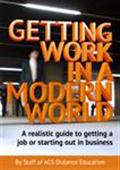
Getting Work in a Modern World
A realistic guide to getting a job or starting out in business. This is a must read; for students, parents, the unemployed, careers advisors or anyone interested in changing or forging a sustainable career.
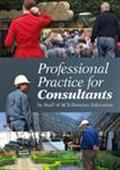
Professional Practice for Consultants
Explore becoming a consultant. This ebook contains chapters on how to be a consultant, packaging your services, delivering the services, building your resources, finding the work and getting the job, planning and ethics.
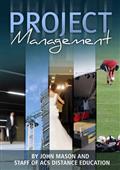
Project Management
This ebook is designed to help improve your capacity to manage any type of project in any type of industry. It may be read as a stand- alone book; used as something to refer to during the process of managing projects, or used as a complementary reference to help enhance the overall learning experience when studying a project management course.

Starting a Business
Businesses don't need to fail! This is concise, easy to read, and alerts you to all of the things that commonly make a difference to business success or failure. Seven chapters are: “A Reality Check”, “The Product or service”, “Managing a Business”, “How to Find Customers”, “How to Make a Sale”, “Delivering the Product or Service”, “Pitfalls to Avoid”.