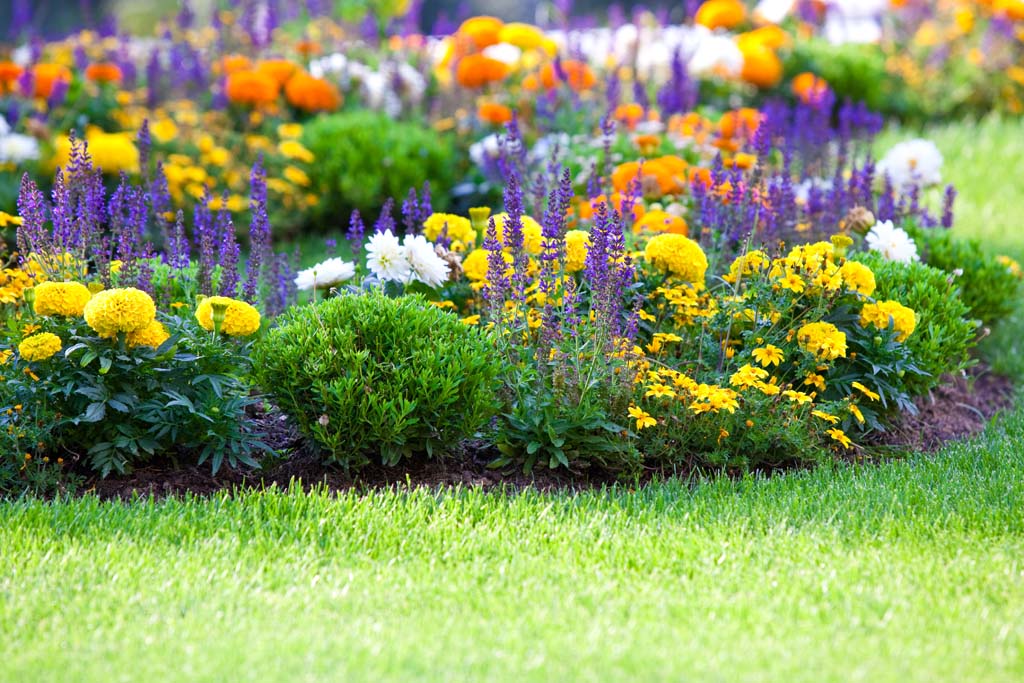
Growing Annuals
Learn how to identify, grow and use annual plants. A useful course for passionate home gardeners, professional horticulturists, cut flower growers. Annuals are great filler plants and useful for wildflower gardens and as cut flowers. Study online.
Learn to Identify and Grow Flowering Annuals
-
Become an expert with Herbaceous Annual Flowering Plants

-
Learn to identify and cultivate annual flowers, for bedding displays, potted colour or cut flowers
-
Work in a nursery, garden or cut flower farm
-
Start a business or indulge a passion
Aims
- Discuss the classification of annual flowering plants through the plant naming system.
- Discuss culture requirements of annuals.
- Propagate annuals.
- Explain methods of hydroponic culture in relation to annuals.
- Identify pest and diseases of annuals.
- Describe various types of irrigation systems and the water requirements of annuals.
- Describe various greenhouses and related equipment available.
- Determine procedures for the handling of annuals during and after harvest.
- Design annual flower beds.
Lesson Structure
There are 8 lessons in this course:
-
Introduction
- Review of the system of plant identification, physiology, information sources
- Types of Inflorescence
- Choosing Flowers for an occasion
- What flowers last longest as cut flowers
- Care of cut flowers
-
Culture
- Planting, staking, mulching, watering, feeding, pruning, etc
- Review of more commonly cultivated annuals
-
Propagation
- Methods of propagating annuals.
- Seed sources
- Sowing Seed
- Greenhouses and other propagation aids
-
Hydroponic growing of selected varieties of annuals.
- Annuals in hydroponics
- Understanding hydroponic systems
- Culture of selected annuals in hydroponics -Aster, Carnation, Gerbera, Stock etc
- Pest & Disease
- Irrigation
-
How to Grow Annuals
- Growing in Greenhouses (shade houses or other controlled environments)
- Growing in Flower Beds
- Types of bedding systems
- Judging flowers
-
Harvest, Post Harvest & Quality.
- Harvesting
- Deterioration of flowers
- Shelf life
- Post harvest treatment
Accreditations
Growing Tips for Selected Annual Flowers
Ageratum (Ageratum sp.)
Plant winter or early spring, space at 15-25 cm, varieties vary in height from 15 to 45 cm (A.
Alyssum (Lobularia maritima)
Excellent edging plants, 5-15 cm tall, space 10-20 cm apart, masses of tiny blue or lilac to white flowers completely cover foliage. It is very quick growing and produces excellent specimens within a few weeks. This plant prefers full sun and good drainage.
Amaranthus
Young plants susceptible to fungus, need full sun, rich soil but don't feed too heavily (liquid fertilizers can burn), avoid disturbing roots (e.g. by cultivation).
|
Species |
Size |
Description |
|
A. |
To 60 cm tall |
Green leaves, long drooping red flowers |
|
A. |
0.9-1.2 m tall |
Purple-red foliage, purple flowers |
|
A. |
To 45 cm tall, |
Grown mainly for colourful leaves, 15 cm between plants - makes a good background plant. |
Antirrhinum (Snapdragon)
Seedlings susceptible to damping off and insects, best in milder weather (can die in heat), prefers alkaline soil (add lime if adding compost or organic mulch). They are particularly susceptible to rust diseases (detected by small pale spots underneath leaves which become redder eventually erupting into brown
Humidity in tropical zones may cause
Chinese Aster
Best planted late spring or summer for autumn/winter flowers, fungal wilt and viral disease a problem in hot weather (burn affected plants and don't replant asters into a bed previously affected by wilt). Asters prefer alkaline soil.
- Callistephus chinensis 'Ostrich Plume' is an old favourite which displays very good resistance to the wilt disease. It is early flowering.
- C.
chinensis 'Dwarf Queen' is another early flowering annual aster but only reaches 25cm.
Begonia (Bedding)
This is B.
Calendula(Pot Marigold)
Yellow to orange flowers, 20 to 50 cm tall, excellent cut flower; it does well in poor soils and full to part sun. Pinch out growing tips of seedlings to encourage bushy growth. Calendula does well in most climates including
Celosia
Hardy, disease resistant, brightly coloured annuals. Celosia must have a
- C.
cristata (syn. C.argentea var.cristata ) (cockscomb) - flower heads vary in size and shape making uniform displays difficult. - C.
cristata "Thompson's Magnifica" (Prince of Wales feather) - flowers deep red to yellow, space 25 cm apart. - C.
cristata var.pyramidalis (flame of fire) - medium height.
Cosmos
Fine foliage, brilliant coloured flowers, adapt to most soils, prefer sunny slightly sheltered site and dry soil, overfeeding can make plants too tall and leggy risking breaking in
- C.
bipinnatus - varieties vary from 1-2 m tall, very hardy graceful plant, may be damaged by strong winds, flower colours white or pink to shades of red, purple and orange. - C.
sulphureus - yellow, orange or scarlet flowers; generally smaller plants than C.bipinnatus
Helianthus (Sunflower)
Adapts to most conditions if
|
Species |
Size |
Description |
|
H. |
1-3 m tall |
Very large yellow to orange daisy flowers. This is the source of sunflower seeds used for cooking and oil distillation. |
|
H. |
1-2 m tall |
Highly branched with deep red discs. |
|
H. |
To 1 m. |
Cucumber leaf sunflower) |
Helichrysum (Strawflowers or Everlastings)
Hardy plants for full or filtered sun need
There are a number of helichrysums, both perennials and annuals, which will grow in warm climates.
H.
Lathyrus (Sweet Pea)
Needs full sun, protect from wind, fertile moist soil. Sow seed in autumn or winter.
Limonium (Statice)
Plant autumn for winter/spring flowers - flowers can be used cut or dried, flower colours mainly blue to pink and yellow; they prefer full sun and moist soil, few pests.
Lobelia
Sun or
- L.
cardinalis - to 1 m tall,tall spike of red flowers. Two forms available - green or red foliage. - L.
erinus - to 15 cm tall, creeping plant, blue, pink or white flowers, good in baskets or as a border.
Marigold (Tagetes spp.)
Marigolds may grow and flower most of the ear in tropics and
- T.
erecta (African Marigold) - to 1 m tall, brittle plants, need wind protection, large yellow to orange flowers, best in autumn. - T.
patula (French Marigold) - dwarf varieties 15-30 cm tall; smaller flowers yellow to orange/brown, plant in summer.
Petunia
Grow and flower well all year in tropics and
Phlox
Phlox needs rich moist
Portulaca
Very hardy, low creeping plants,
Schizanthus
S.
Viola
Viola requires the roots to be kept cool and moist. Mulching the soil will help the roots cool and moist. Viola is relatively hardy but prefers moist fertile and alkaline loam. Aphids may sometimes be a problem. They can be grown successfully in the
|
Species |
Size |
Description |
|
V. |
To 30 cm, |
With variable flower colour |
|
V. |
Perennial to 10 cm |
Purple flowers |
|
V. |
Annual to 30 cm |
Bright multicoloured flowers |
|
V. X Wittrockiana (pansy) |
Annual to 25 cm |
Flowers variable in colour 5-10 cm across |
Zinnia
Plant in winter or spring; zinnia prefers fertile alkaline soil out of the wind. They come in a large variety of flower colours; Zinnias are very heat tolerant if well watered.
-
Z.
angustifolia (syn. Z.elegans ) to 30 cm tall, long flowering. -
Z.
elegans "Lilliput" varieties excellent cut flowers. -
Z. haageana (Mexican zinnia) to 60 cm tall -flowers yellow shades.
WHY STUDY ANNUALS?
- Annuals are grown mostly because they are quick to establish and very colourful.
- These are plants that can sometimes be criticised as being expensive to maintain
, because they can beshort lived and may need replanting every six to twelve months. They are nevertheless grown widely because the benefits largely outweigh the costs. - When you study this course your knowledge and understanding of annuals will multiply.
- You will see possibilities for using them that may not have occurred to you before; as container plants, in garden beds, for vertical or roof gardens or as indoor plants.
- You will learn to select the best annual for each situation you encounter; and your knowledge of how they can be used will expand - for potted colour that can be moved around the garden; as a cut flower to be taken indoors or as a stunning bedding display in any situation from full sun to shade and dry soil to wet.
Enrol using the automated procedure on this site or contact us via phone or email to ask questions and enrol with a real person.
You can enrol at anytime and start the course when you are ready. Enrolments are accepted all year - students can commence study at any time. All study is self paced and ACS does not set assignment deadlines.
Please note that if a student is being assisted by someone else (e.g. an employer or government subsidy), the body offering the assistance may set deadlines. Students in such situations are advised to check with their sponsor prior to enrolling. The nominal duration of a course is approximately how long a course takes to complete. A course with a nominal duration of 100 hours is expected to take roughly 100 hours of study time to complete. However, this will vary from student to student. Short courses (eg. 100 hrs duration) should be completed within 12 months of enrolment. Certificates, Advanced Certificates and Awards (eg. over 500 hours duration) would normally be completed within 3 -5 years of enrolment. Additional fees may apply if a student requires an extended period to complete.
If a student cannot submit their assignments for 6 months to ACS, they should advise the school to avoid cancellation of their student
registration. Recommencement fees may apply.
Simply click on the ENROL OPTIONS button at the top of this screen and follow the prompts.
You can see the course price at the top of this page. Click 'enrolment options' to see any payment options available.
You can pay by Credit Card, PayPal, Afterpay or bank transfer.
Yes! We have payment plans for most courses. Click 'enrolment options' to see the available payment plans.
We also have Afterpay that will allow you to pay for your course or payment plans in four instalments (if you are in Australia).
There are no entry requirements that you need to meet to enrol in our courses, our courses are for everyone.
If you are under 18, we need written permission from your parent/ guardian for your enrolment to continue, we can arrange that after you have enrolled.
You don’t need to purchase any additional resources to complete our courses.
What do I need to know before I enrol?
We aim to teach you the essentials without you having to purchase any specific computer program.
We recommend that you have access to a word processing program, such as Microsoft Word or Google Docs, so that you can easily complete and submit your assignments.
You sure can. We are here to help you learn whatever your abilities.
Yes, if you are enrolling in a Certificate or Advanced Certificate, you might be eligible for credits if you have evidence of your previous studies or relevant experience. More information is here.
We recommend that you are able to browse websites, send emails and conduct online research. You will need to be able to type and submit your assignments.
If you have limited computer skills, we can make special arrangements for you.
This is possible, it depends on the institution. We recommend that if you would like to use our courses that you contact the institution first. Our Course Handbook is a good resource for this.
Our courses are written in English and we only have English speaking academic staff. If you can read and complete your assignments in English, our courses are ideal for you.
Our courses are designed to build knowledge, hands on skills and industry connections to help prepare you to work in the area, running your own business, professional development or as a base for further study.
This course has been designed to cover the fundamentals of the topic. It will take around 100 hours to complete, which includes your course reading, assignment work, research, practical tasks, watching videos and anything else that is contained in the course. Our short courses are a great way to do some professional development or to learn a new skill.
It’s up to you. The study hours listed in the course are a rough guide, however if you were to study a short course (100 hours) at 10 hours per week, you could finish the course in 10 weeks (just an example). Our courses are self-paced, so you can work through the courses in your own time. We recommend that you wait for your tutor to mark and return your assignment before your start your next one, so you get the benefits of their feedback.
The course consists of course notes, videos, set tasks for your practical work, online quizzes, an assignment for each lesson (that you receive feedback from your tutor from) and ends in an exam (which is optional, if would like to receive the formal award at the end), using our custom built Learning Management System - Login.Training.
Our courses are designed for adults to gain professional development and skills to further their careers and start businesses.
Our custom online learning portal allows you to conduct your learning online. There may be practical tasks that you can do offline. You have the option of downloading your course notes or print them to read later.
There is also the option to pay an additional fee for printed course notes and or USB (availability limited to location and deliverability).
Yes, if you don’t have access to the internet, you can receive the course as paper notes or on a USB stick for an additional fee. We can also make alternative arrangements for you to send your assignments to us.
We offer printed notes for an additional fee. Also, you can request your course notes on a USB stick for an additional fee.
Yes, your tutor is here to help you. Simply post any questions you have in your login.training portal or contact the office and we can pass on a message to your tutor.
We are more learning focussed, rather than assessment focussed. You have online quizzes to test your learning, written assignments and can complete an exam at the end of the course (if you want to receive your certificate). You will not receive a pass/ fail on your course work. If you need to add more details on your assignment, we will ask you to resubmit and direct you where you need to focus. If you need help, you can ask your tutor for advice in the student room.
Each module (short course) is completed with one exam.
Exams are optional, however you must sit an exam if you would like to receive a formal award. You will need to find someone who can supervise that you are sitting the exams under exams conditions. There is an additional cost of $60 incl. GST for each exam.
More information is here
There are practical components built into the course that have been designed to be achieved by anyone, anywhere. If you are unable to complete a task for any reason, you can ask your tutor for an alternative.
When you complete the course work and the exam and you will be able receive your course certificate- a Statement of Attainment. Otherwise, you can receive a Letter of Completion.
You can bundle the short courses to create your own customised learning bundle, Certificates or Advanced Certificates. More information is on this page.
Yes, our courses are built to be applicable for people living anywhere in any situation. We provide the fundamentals, and each student can apply their own unique flair for their own interests, region and circumstances with the one-on-one guidance of a tutor. There is also a bit of student directed research involved.
Employers value candidates with industry skills, knowledge, practical skills and formal learning. Our courses arm you with all of these things to help prepare you for a job or start your own business. The longer you study the more you will learn.
ACS has an arrangement with OAMPS (formerly AMP) who can arrange Professional Indemnity from Australian and New Zealand graduates across all disciplines. Ph: 1800 222 012 or email acs@oamps.com.au.
Who are ACS Distance Education?
ACS Distance Education have been educating people for over 40 years.
We are established and safe- we have been in education for over 40 years.
We are focused on developing innovative courses that are relevant to you now and what you will need to know in the future.
We are focused on helping you learn and make the most of your experience.
You can enrol at any time, you can work on your course when it suits you and at your own pace.
We are connected to many industry bodies and our staff participate in continuous improvement and learning activities to ensure that we are ahead of what learning is needed for the future.
Our courses are not accredited by the Australian Government. However many of our courses are recognised and held in high regard by many industry bodies.
Our courses are written by our staff, who all have many years experience and have qualifications in their speciality area. We have lots of academic staff who write and update our courses regularly.
How do I enrol my staff/ sponsored students?
Yes, you can do a request for a bulk enrolment and request an invoice on our Invoice Request Form
We can prepare an invoice, quote or proforma invoice. Simply complete your details on our Invoice Request form
We can arrange bulk discounts for your course enrolment, please get in touch with us to discuss your needs.
Yes, we have many students who are in locked facilities, such as prisons or hospitals. We can cater by also offering paper notes at an additional cost.
What if I have any more questions or need more information?
We can assist you to find the right course for your needs. Get in touch with us via email (admin@acs.edu.au) call on +61 7 5562 1088 or complete our course advice form.
What if I change my mind?
Please get in touch with studentservices@acs.edu.au if you would like to be removed from our mail list.
If you would like ACS Distance Education to delete your information at any time (whether you are a customer or a prospective customer), please contact our privacy officer and we will process this ( admin@acs.edu.au ).
If students require a reproduction of their certificate, an electronic copy can be provided at a cost of AUD$35 incl GST. Printed copies are not available.
Course Contributors
The following academics were involved in the development and/or updating of this course.

Diana Cole
B.A. (Hons), Dip. Horticulture, BTEC Dip. Garden Design, Diploma Chartered Institute of Personnel & Development, PTLLS (Preparing to Teach in the Life Long Learning Sector), P.D.C.
In addition to the qualifications listed above, Diana holds City & Guild construction qualifications and an NPTC pesticide spraying licence (PA1/PA6). Diana runs her own landscape gardening business (Arbella Gardens). Active in many organisations including the British Trust for Conservation Volunteers.

Rosemary Davies (Horticulturist)
Leading horticultural expert in Australia.
Rosemary trained in Horticultural Applied Science at Melbourne University. Initially she worked with Agriculture Victoria as an extension officer, taught horticulture students, worked on radio with ABC radio (clocking up over 24 years as a presenter of garden talkback programs, initially the only woman presenter on gardening in Victoria) and she simultaneously developed a career as a writer.
She then studied Education and Training, teaching TAFE apprentices and developing curriculum for TAFE, before taking up an offer as a full time columnist with the Herald and Weekly Times and its magazine department after a number of years as columnist with the Age. She has worked for a number of companies in writing and publications, PR community education and management and has led several tours to Europe.
In 1999 Rosemary was BPW Bendigo Business Woman of the Year and is one of the founders and the Patron, of the Friends of the Bendigo Botanic gardens. She has completed her 6th book this year and is working on concepts for several others.
Rosemary has a B Ed, BSc Hort, Dip Advertising & Marketing

Yvonne Sharpe
RHS Cert.Hort, Dip.Hort, M.Hort, Cert.Ed., Dip.Mgt. Over 30 years experience in business, education, management and horticulture. Former department head at a UK government vocational college. Yvonne has traveled widely within and beyond Europe, and has worked in many areas of horticulture from garden centres to horticultural therapy. She has served on industry committees and been actively involved with amateur garden clubs for decades.

John Mason (Horticulturist)
Parks Manager, Nurseryman, Landscape Designer, Garden Writer and Consultant.
Over 40 years experience; working in Victoria, Queensland and the UK.
He is one of the most widely published garden writers in the world.
Plant Pests & Diseases
Are you one of those people that kill every plant you touch? Perhaps it's not you. Perhaps it's a pest or disease. A little bit of reading might just turn your garden into an oasis. Learn how to identify pests and diseases and bring the spring back into your plant...visit the bookshop to find out more...

Scented Plants
Scented plants can be either a delight or a curse. For many people, there is nothing more pleasing than a garden filled with fragrance, but for others who suffer allergies, certain plants can make them physically ill; sometimes very seriously.
What to Plant Where
A great guide for choosing the right plant for a particular position in the garden. Thirteen chapters cover: plant selection, establishment, problems, and plants for wet areas. Shade, hedges and screens, dry gardens, coastal areas, small gardens, trees and shrubs, lawns and garden art.

Growing & Knowing Annuals
Growing and Knowing Annuals ebook will help you identify and become more knowledgeable on all things related to Annuals.
Ideal for students, home gardeners, nurserymen and professional horticulturalists, this ebook is 141 pages and full of stunning colour photographs.