
Esl Writing Fundamentals
Is English your second language? Improve your ESL skills. Learn better writing and communication, improve your grammar and increase your vocabulary, guided by our specialist tutors.
IMPROVE YOUR WRITTEN ENGLISH SKILLS - AN IDEAL COURSE FOR ANYONE WITH ENGLISH AS A SECOND LANGUAGE
"Studying with ACS was a wonderful experience. I have learnt a lot and will take a new course soon"
M. Khaovong
This course is written for those with English as a Second Language. This course will develop your knowledge of English grammar and your ability to write in English for business and study. The course is aimed at students who can write and speak basic English and wish to strengthen their English language skills, in particular their writing skills. Students will learn by reading the course notes, completing written and spoken exercises for each lesson, and submitting them for comment and correction.
This course is suitable for ESL speakers who need to improve their written english skills.
Aims
- Understand the basic rules of grammar.
- Apply rules of grammar to construct correct sentences.
- Identify word parts - word roots, prefixes and suffixes.
- Use word parts to develop vocabulary.
- Name the parts of speech.
- Understand basic principles of correct sentence construction.
- Understand the nature and purpose of a paragraph.
- Identify different kinds of language - formal/informal, direct/indirect.
- Identify appropriate language for different writing contexts.
- Use correct formats for business writing.
- Use correct formats for writing for study.
- Improve pronunciation.
What You Will Do
- Learn basic principles and terms of English grammar.
- Learn what are the parts of speech in English, and the forms in which they can be used.
- Learn how to correctly use parts of speech, including as adverbs and pronouns.
- Learn what are the basic building blocks of English sentences.
- Learn how to construct correct sentences.
- Learn how to vary sentence structure.
- Learn what is a paragraph, and how to construct one.
- Learn common work roots and how they are used to create different English words.
- Learn the role and meanings of suffixes and prefixes.
- Learn when and how to use direct (denotative) and indirect (connotative) language in business or study.
- Learn how to write correctly for different purposes.
- Learn correct forms of business writing.
- Learn how to respond appropriately to different study tasks.
- Learn different writing formats for workplace and study.
- Learn how and why to reference.
- Learn how to edit a piece of writing to improve its organisation and readability.
- Learn how to proof read a piece of writing to eliminate errors.
- Learn what to consider when planning a piece of writing.
Lesson Structure
There are 12 lessons in this course:
-
Parts of speech
- Parts of speech
- Singular & plural forms
- Subject-verb agreement
-
Verbs
- Verb tense
- Infinitives
- Participles, phrasal verbs
-
Parts of a sentence
- Subject & predicate
- Object
- Clauses and phrases
-
Building and combining sentences
- Structure and meaning
- Sentence variety
- Linking words
-
Vocabulary
- Related words
- Word origins
- Prefixes
- Suffixes
- Word combinations
-
Developing vocabulary
- Context
- Formal & informal language
- Connotative & denotative language
-
Writing for different purposes Part 1
- Writing to obtain and clarify information
-
Writing for different purposes Part 2
- Writing to provide information
-
Writing for business
- Writing letters
- Short reports
- Submissions
-
Study skills
- Understanding concepts
- Essay structure
- Addressing all parts of a topic
- Understanding what is required
- Referencing
-
Proof reading and editing
- Correcting and refining your document
- Targeting the intended reader
-
Special project
- Reading
- Researching and writing for three different contexts (work, study, business).
Accreditations
Start by Understanding the English Mindset
To write or speak English well requires an understanding of English language structure - which will be learnt from early childhood by anyone who speaks English as their first language. These grammatical rules include things such as intonation and the order in which subject (i.e. noun or pronoun) and the verb are placed in the sentence. Other languages will reverse this order.
Often, someone who speaks English as a second language may use the same words, but put those words in a different order to the person who learnt English as their first language.
The following example shows two ways of saying the same thing:
The sky is blue, or
blue is the sky.
Many languages also assign genders to different nouns, for example, a table might be feminine or masculine. The very act of giving an inanimate object a gender can create many layers of meaning, not often found in English.
Imagine we are talking about a table. In English, a sentence might be:
She dragged it into the centre of the room under the spotlight, and sat on it.
But if table were masculine or feminine, as it would be in many other languages, it would read like this:
She dragged him into the centre of the room under the spotlight, and sat on him.
Or
She dragged her into the centre of the room under the spotlight, and sat on her.
These variations in gender classification obviously have quite a different impact on the reader than the English version. You can see how, by assigning things a gender, one’s whole comprehension may be slightly altered. It is interesting to think about the effect this may have on a society, particularly in relation to feminist theory.
A typical example of an object having a gender is that of a car. Cars are often referred to as female, as are ships and aeroplanes.
In English ‘gender’ usually refers more to issues of sexuality and social identity than a classification system.
Do You Understand Adjectives?
Adjectives are words that identify or give more information about nouns. They usually precede the noun.
There are different kinds of adjectives, listed below. It is not important to remember what they are called. However, it is important to understand what different kinds of adjectives do.
-
Adjectives that describe: Examples: blue, happy, unconscious, excellent, confused, large, beautiful.
The boy was happy with his bright kite as it sailed high in the cloudless sky.
-
Adjectives that identify things: Examples: this, that, these, those.
I want those plums, and can you put them into this box?.
-
Adjectives that indicate amounts or quantity: Examples: some, no, several, many, twenty, few, little.
Some doctors have little understanding of psychology.
-
Adjectives that show possession or ownership: Examples: my, your, its, their, his, our, my mother’s, John’s, India’s.
I have your book but its cover is slightly damaged.
-
Adjectives that indicate distribution: Examples: each, every, all, most, either, neither.
Each person that I interviewed was most helpful and answered every question fully.
-
Adjectives that ask a question: Examples: which, what, whose.
Which house did you buy and in what area is it?
Some of these adjectives can take on other roles, also. For instance, in the above sentence, the word ‘which’ is an adjective that modifies a noun (which house). In the following sentences, however, it acts as a pronoun:
Two good movies are playing. Which would you like to see? (Interrogative pronoun).
We missed the plane, which caused us a lot of trouble (relative pronoun).
Remember that an adjective always tells more about a noun.
Who can benefit from taking this course?
English as a second language speakers, particularly those wishing to improve their written skills.
Primary and secondary school English teachers wanting to refresh or update their knowledge of specific terminology.
At the end of this course you will:
-
Understand how to use many parts of English to communicate effectively.
-
Know the technical names and definitions for several structures within the English language, such as parts of speech.
-
Know what is involved in print media vs. digital media, and have an understanding of some of the software involved.
Student Comment
"Studying with ACS was a wonderful experience. I have learnt a lot and will take a new course soon"
M. Khaovong
Enrol using the automated procedure on this site or contact us via phone or email to ask questions and enrol with a real person.
You can enrol at anytime and start the course when you are ready. Enrolments are accepted all year - students can commence study at any time. All study is self paced and ACS does not set assignment deadlines.
Please note that if a student is being assisted by someone else (e.g. an employer or government subsidy), the body offering the assistance may set deadlines. Students in such situations are advised to check with their sponsor prior to enrolling. The nominal duration of a course is approximately how long a course takes to complete. A course with a nominal duration of 100 hours is expected to take roughly 100 hours of study time to complete. However, this will vary from student to student. Short courses (eg. 100 hrs duration) should be completed within 12 months of enrolment. Certificates, Advanced Certificates and Awards (eg. over 500 hours duration) would normally be completed within 3 -5 years of enrolment. Additional fees may apply if a student requires an extended period to complete.
If a student cannot submit their assignments for 6 months to ACS, they should advise the school to avoid cancellation of their student
registration. Recommencement fees may apply.
Simply click on the ENROL OPTIONS button at the top of this screen and follow the prompts.
You can see the course price at the top of this page. Click 'enrolment options' to see any payment options available.
You can pay by Credit Card, PayPal, Afterpay or bank transfer.
Yes! We have payment plans for most courses. Click 'enrolment options' to see the available payment plans.
We also have Afterpay that will allow you to pay for your course or payment plans in four instalments (if you are in Australia).
There are no entry requirements that you need to meet to enrol in our courses, our courses are for everyone.
If you are under 18, we need written permission from your parent/ guardian for your enrolment to continue, we can arrange that after you have enrolled.
You don’t need to purchase any additional resources to complete our courses.
What do I need to know before I enrol?
We aim to teach you the essentials without you having to purchase any specific computer program.
We recommend that you have access to a word processing program, such as Microsoft Word or Google Docs, so that you can easily complete and submit your assignments.
You sure can. We are here to help you learn whatever your abilities.
Yes, if you are enrolling in a Certificate or Advanced Certificate, you might be eligible for credits if you have evidence of your previous studies or relevant experience. More information is here.
We recommend that you are able to browse websites, send emails and conduct online research. You will need to be able to type and submit your assignments.
If you have limited computer skills, we can make special arrangements for you.
This is possible, it depends on the institution. We recommend that if you would like to use our courses that you contact the institution first. Our Course Handbook is a good resource for this.
Our courses are written in English and we only have English speaking academic staff. If you can read and complete your assignments in English, our courses are ideal for you.
Our courses are designed to build knowledge, hands on skills and industry connections to help prepare you to work in the area, running your own business, professional development or as a base for further study.
This course has been designed to cover the fundamentals of the topic. It will take around 100 hours to complete, which includes your course reading, assignment work, research, practical tasks, watching videos and anything else that is contained in the course. Our short courses are a great way to do some professional development or to learn a new skill.
It’s up to you. The study hours listed in the course are a rough guide, however if you were to study a short course (100 hours) at 10 hours per week, you could finish the course in 10 weeks (just an example). Our courses are self-paced, so you can work through the courses in your own time. We recommend that you wait for your tutor to mark and return your assignment before your start your next one, so you get the benefits of their feedback.
The course consists of course notes, videos, set tasks for your practical work, online quizzes, an assignment for each lesson (that you receive feedback from your tutor from) and ends in an exam (which is optional, if would like to receive the formal award at the end), using our custom built Learning Management System - Login.Training.
Our courses are designed for adults to gain professional development and skills to further their careers and start businesses.
Our custom online learning portal allows you to conduct your learning online. There may be practical tasks that you can do offline. You have the option of downloading your course notes or print them to read later.
There is also the option to pay an additional fee for printed course notes and or USB (availability limited to location and deliverability).
Yes, if you don’t have access to the internet, you can receive the course as paper notes or on a USB stick for an additional fee. We can also make alternative arrangements for you to send your assignments to us.
We offer printed notes for an additional fee. Also, you can request your course notes on a USB stick for an additional fee.
Yes, your tutor is here to help you. Simply post any questions you have in your login.training portal or contact the office and we can pass on a message to your tutor.
We are more learning focussed, rather than assessment focussed. You have online quizzes to test your learning, written assignments and can complete an exam at the end of the course (if you want to receive your certificate). You will not receive a pass/ fail on your course work. If you need to add more details on your assignment, we will ask you to resubmit and direct you where you need to focus. If you need help, you can ask your tutor for advice in the student room.
Each module (short course) is completed with one exam.
Exams are optional, however you must sit an exam if you would like to receive a formal award. You will need to find someone who can supervise that you are sitting the exams under exams conditions. There is an additional cost of $60 incl. GST for each exam.
More information is here
There are practical components built into the course that have been designed to be achieved by anyone, anywhere. If you are unable to complete a task for any reason, you can ask your tutor for an alternative.
When you complete the course work and the exam and you will be able receive your course certificate- a Statement of Attainment. Otherwise, you can receive a Letter of Completion.
You can bundle the short courses to create your own customised learning bundle, Certificates or Advanced Certificates. More information is on this page.
Yes, our courses are built to be applicable for people living anywhere in any situation. We provide the fundamentals, and each student can apply their own unique flair for their own interests, region and circumstances with the one-on-one guidance of a tutor. There is also a bit of student directed research involved.
Employers value candidates with industry skills, knowledge, practical skills and formal learning. Our courses arm you with all of these things to help prepare you for a job or start your own business. The longer you study the more you will learn.
ACS has an arrangement with OAMPS (formerly AMP) who can arrange Professional Indemnity from Australian and New Zealand graduates across all disciplines. Ph: 1800 222 012 or email acs@oamps.com.au.
Who are ACS Distance Education?
ACS Distance Education have been educating people for over 40 years.
We are established and safe- we have been in education for over 40 years.
We are focused on developing innovative courses that are relevant to you now and what you will need to know in the future.
We are focused on helping you learn and make the most of your experience.
You can enrol at any time, you can work on your course when it suits you and at your own pace.
We are connected to many industry bodies and our staff participate in continuous improvement and learning activities to ensure that we are ahead of what learning is needed for the future.
Our courses are not accredited by the Australian Government. However many of our courses are recognised and held in high regard by many industry bodies.
Our courses are written by our staff, who all have many years experience and have qualifications in their speciality area. We have lots of academic staff who write and update our courses regularly.
How do I enrol my staff/ sponsored students?
Yes, you can do a request for a bulk enrolment and request an invoice on our Invoice Request Form
We can prepare an invoice, quote or proforma invoice. Simply complete your details on our Invoice Request form
We can arrange bulk discounts for your course enrolment, please get in touch with us to discuss your needs.
Yes, we have many students who are in locked facilities, such as prisons or hospitals. We can cater by also offering paper notes at an additional cost.
What if I have any more questions or need more information?
We can assist you to find the right course for your needs. Get in touch with us via email (admin@acs.edu.au) call on +61 7 5562 1088 or complete our course advice form.
What if I change my mind?
Please get in touch with studentservices@acs.edu.au if you would like to be removed from our mail list.
If you would like ACS Distance Education to delete your information at any time (whether you are a customer or a prospective customer), please contact our privacy officer and we will process this ( admin@acs.edu.au ).
If students require a reproduction of their certificate, an electronic copy can be provided at a cost of AUD$35 incl GST. Printed copies are not available.
Course Contributors
The following academics were involved in the development and/or updating of this course.

John Mason
Writer, Manager, Teacher and Businessman with over 40 years interenational experience covering Education, Publishing, Leisure Management, Education, and Horticulture. He has extensive experience both as a public servant, and as a small business owner.
John is a well respected member of many professional associations, and author of over seventy books and of over two thousand magazine articles.
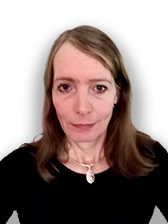
Jacinda Cole
Former operations manager for highly reputable Landscape firm, The Chelsea Gardener, before starting her own firm. Jacinda has over 20 years of industry experience in Psychology, Landscaping, Publishing, Writing and Education. Jacinda has a B.Sc., Psych.Cert., M. Psych. Cert.Garden Design, MACA.

Adriana Fraser
Freelance writer, businesswoman, educator and consultant for over 30 years. Adriana has written extensively for magazines including free living publications -Grass Roots and Home Grown; and has authored or co authored many books ranging from a biography to books on business and gardening. She holds formal qualifications in education, child care and horticulture and has worked with ACS Distance Education since the mid 1990's.
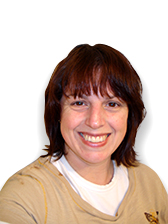
Tracey Jones
Widely published author, Psychologist, Manager and Lecturer. Over 10 years working with ACS and 25 years of industry experience.
Qualifications include: B.Sc. (Hons) (Psychology), M.Soc.Sc (social work), Dip. SW (social work), PGCE (Education), PGD (Learning Disability Studies).
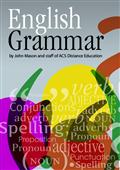
English Grammar
Grammar demystified -Learn the rules of grammar, punctuation, sentence construction; etc, for writing or editing. Grammar provides a coherent structure for the expression of thoughts and ideas. By following grammatical rules we are able to construct logical sentences that make sense to the receiver.
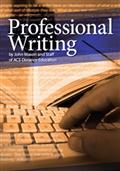
Professional Writing
Professional writing is any writing that you are being paid for. It can include fiction writing, a best-selling book, articles in a magazine, articles in a newspaper, blogs for companies, technical manuals or procedure manuals, copy for catalogues, newsletters, text books and other academic material and so on.

Working with People
Are you a people person? Some people enjoy working with others, some do not, but if you do then this is the book for you. Ideal for those considering a new career but who are not sure where they should start.

How to be a Successful Editor
Successful editors need to be across so many different writing styles, publishing media and audiences. Gain a competitive advantage in editing and discover what is required to be a successful and productive editor.