
Editing II
Take your editing skills to the next level - learn about the legalities of editing, different types of editing, graphic, charts, and apply your skills with a problem-based learning project. Study online and learn from experts.

Learn to become a better editor or proof reader.
This course builds on skills obtained in our editing I course; or through experience you may have already had.There are Different Types of Editors
Some editors do almost everything, others have more limited briefs. At the outset of a project, liaise with the publisher and production staff to find out what your role in the project is.
Editors can be used to edit books, newsletters, advertising material, correspondence or any other writing, and the focus of what they are editing may vary between different types of editors.
Aims
- Review the current state of editing, determining its scope, nature and trends
- Identify and edit text errors that commonly occur in a variety of publishing situations.
- Write and edit a variety of different headings and captions.
- Select, edit and mark up graphic illustrations.
- Edit the layout or design of a publication.
- Identify an appropriate style for the context of a publication, and edit the text to match the determined style.
- Edit text in order to remove legal and/or ethical risks
- Apply a broad range of skills to editing of a lengthy manuscript in a balanced way.
What You Will Do
- Discuss differences in spelling and grammar in different areas
- Discover common editing traps and their solutions
- Analyse, edit, and rework texts
- Create dummy copies of work
- Discuss copyright, legal issues, and editorial ethics
- Edit a manuscript
Lesson Structure
There are 8 lessons in this course:
-
Introduction to Editing
- State of the Art
- Scope and nature of the work
- Traditional and modern editing
- Editing terminology
- Writing job specifications.
-
Refining Text Editing
- Common traps
- Proofing documents
- How much editing is appropriate
- Who does what
- More terminology.
-
Editing Headings in something
- Headlines and Captions
- Heading
- Captions
- Supporting material
- Headings
- Headlines
- More terminology
-
Proofing Graphics
- Line drawings
- Technical illustrations
- Half tones
- Maps
- Charts
- Tables
- Diagrams
- Electronic processing of graphic images
- Bits and colour depth
- Pixels and resolution
- Colour and black and white
- Image formats
- Types of files
- Processing graphics
- Choosing and designing with photos
- What does the editor need to do with graphics
- Electronic publishing
- Terminology.
-
Editing and Design
- Layout and design
- Page layout
- Desktop publishing software
- What is desktop publishing
- Image manipulation.
-
Matching Style and Context
- Targeting the reader
- Style
- Terminology.
-
Legal and Ethical Issues
- Legal and ethical issues in publishing
- Copyright
- Copyright free materials
- Copyright misconceptions
- Defamation
- Libel
- Contract law
- Right to privacy
- Reporting restrictions
- Law and the internet
- CD/film and other electronic publishing
- Terminology.
-
Editing Project
- A practical editing project to end the course and utilise your new skills.
Accreditations
What Type of Editing are You Doing?
-
Perhaps you have studied the subject before.
-
Maybe you have experience.
-
You might have even been trained on the job at work or elsewhere
Editing may just be a minor part of what is involved in some jobs; but in other jobs editing is most of what that job is all about.
Developmental editing
The developmental editor usually consults with the writer before commencement of the project then helps to plan the features as well as the organisation of the work. At this stage the editor will also review and analyse the work as well as suggest communication formats. The following processes are usually incorporated:
- Rewriting and restructuring the text to fit the format.
- Improving flow of sentences and paragraphs.
- Ensuring consistent structure by adding or deleting headings.
- Identifying gaps in content, and forwarding this information to the author to allow changes.
- Deleting content that is outdated or that does not achieve the desired marketing focus or tone.
- Developing an effective system for handling trademarks and notes.
- Altering content if needed after recommendation.
- Passing the manuscript on for copy-editing.
Production editing
Production editing involves managing the entire production process from manuscript to finished product. This involves the following:
- Planning, scheduling and tracking the entire production process.
- Obtaining quotes and choosing printers.
- Supervising copy editors and designers.
- Ensuring that the author’s changes are implemented.
- Overseeing quality control of printing and typography.
- Implementing procedures of administration, e.g. copyright, ISBN.
Project editing
A project editor manages the entire project and this will include the following duties:
- Reviewing all aspects of the editorial and production process and ensuring that standards are consistent throughout the project;
- Ensuring that the editorial and design team communicates effectively.
Acquisitions editing
The role of the acquisitions editor is to find new business and authors for the company. This involves the following:
- Analysing and researching marketing data within an identified market, taking into account current events and trends as well the output of other publishers;.
- Finding publishable material for a given market.
- Finding and signing on authors.
- Ensuring that the editorial team understands the marketing strategy organised for the project.
Proofreading
A proofreader checks typeset copy for errors. This involves the following:
- Marking typeset copy word for word against a manuscript.
- Identifying deviations for correction.
- Querying editorial errors.
- Checking copy for conformity to type specifications.
- Creating a style sheet.
- Ensuring attractive and consistent typography by checking kerning, margins, word spacing, repetitive word breaks.
Where Editing is Part of Your Job
Anyone who contributes to reports, newsletters, marketing material or any other writing may well be called upon to use editing skills in their job. Editing might not be the most important part of the job; but to be able to edit can often help you to be more effective as an employer, manager or business owner.
WHY DO YOU NEED TO LEARN MORE ABOUT EDITING?
Some people understand everything they read. Others understand only some of what they read.
Some are so distracted in our modern world that they don't absorb anything they read unless it jumps up and bites them!",
When you learn more about editing, you get better at 'grabbing the attention' of even people who might have otherwise not even noticed your writing.
This course will give you the knowledge and understanding to avoid pitfalls in writing which could lead to problems of all sorts. It will help you to make life easier for the people who use what you have written; and give you deeper insights into how and why things should be changed in a peace of writing before it is used.
Editing may involve correcting grammar, spelling and clarity; but it also involves ensuring a piece of writing has been made appropriate to the situation in which it is to be used.
This course will deepen your capacity to ensure writing is appropriate for its purpose.
Who can benefit from taking this course?
Existing editors wanting to improve their skill set or up-skill. This course is well-suited to editors wanting to move into fields with a greater focus on technical writing and layout, including academic editing.
Freelance writers seeking to offer editorial services to their existing clients, or bring in new business. It is also helpful for writers wanting to expand into technical writing or cover new fields like data science, which may require more specialist detail regarding charts and other diagrams.
In house agency designers or writers across a variety of B2B and B2C companies. Improving readability scoring and general grammar and punctuation helps staff create better material, from white papers and pitch decks to client-side briefs and press releases.
Students at a tertiary level wanting to improve their academic writing, editing, and layout skills to achieve better grades.
At the end of this course you will:
- Understand the differences between headings, captions, and other style-sheet and layout technicalities.
- Possess a deeper understanding of types of editing.
- Understand how to work with technical illustrations, diagrams, and other specialist pieces of copy.
- Know how to revise and polish existing copy to a high standard.
Enrol using the automated procedure on this site or contact us via phone or email to ask questions and enrol with a real person.
You can enrol at anytime and start the course when you are ready. Enrolments are accepted all year - students can commence study at any time. All study is self paced and ACS does not set assignment deadlines.
Please note that if a student is being assisted by someone else (e.g. an employer or government subsidy), the body offering the assistance may set deadlines. Students in such situations are advised to check with their sponsor prior to enrolling. The nominal duration of a course is approximately how long a course takes to complete. A course with a nominal duration of 100 hours is expected to take roughly 100 hours of study time to complete. However, this will vary from student to student. Short courses (eg. 100 hrs duration) should be completed within 12 months of enrolment. Certificates, Advanced Certificates and Awards (eg. over 500 hours duration) would normally be completed within 3 -5 years of enrolment. Additional fees may apply if a student requires an extended period to complete.
If a student cannot submit their assignments for 6 months to ACS, they should advise the school to avoid cancellation of their student
registration. Recommencement fees may apply.
Simply click on the ENROL OPTIONS button at the top of this screen and follow the prompts.
You can see the course price at the top of this page. Click 'enrolment options' to see any payment options available.
You can pay by Credit Card, PayPal, Afterpay or bank transfer.
Yes! We have payment plans for most courses. Click 'enrolment options' to see the available payment plans.
We also have Afterpay that will allow you to pay for your course or payment plans in four instalments (if you are in Australia).
There are no entry requirements that you need to meet to enrol in our courses, our courses are for everyone.
If you are under 18, we need written permission from your parent/ guardian for your enrolment to continue, we can arrange that after you have enrolled.
You don’t need to purchase any additional resources to complete our courses.
What do I need to know before I enrol?
We aim to teach you the essentials without you having to purchase any specific computer program.
We recommend that you have access to a word processing program, such as Microsoft Word or Google Docs, so that you can easily complete and submit your assignments.
You sure can. We are here to help you learn whatever your abilities.
Yes, if you are enrolling in a Certificate or Advanced Certificate, you might be eligible for credits if you have evidence of your previous studies or relevant experience. More information is here.
We recommend that you are able to browse websites, send emails and conduct online research. You will need to be able to type and submit your assignments.
If you have limited computer skills, we can make special arrangements for you.
This is possible, it depends on the institution. We recommend that if you would like to use our courses that you contact the institution first. Our Course Handbook is a good resource for this.
Our courses are written in English and we only have English speaking academic staff. If you can read and complete your assignments in English, our courses are ideal for you.
Our courses are designed to build knowledge, hands on skills and industry connections to help prepare you to work in the area, running your own business, professional development or as a base for further study.
This course has been designed to cover the fundamentals of the topic. It will take around 100 hours to complete, which includes your course reading, assignment work, research, practical tasks, watching videos and anything else that is contained in the course. Our short courses are a great way to do some professional development or to learn a new skill.
It’s up to you. The study hours listed in the course are a rough guide, however if you were to study a short course (100 hours) at 10 hours per week, you could finish the course in 10 weeks (just an example). Our courses are self-paced, so you can work through the courses in your own time. We recommend that you wait for your tutor to mark and return your assignment before your start your next one, so you get the benefits of their feedback.
The course consists of course notes, videos, set tasks for your practical work, online quizzes, an assignment for each lesson (that you receive feedback from your tutor from) and ends in an exam (which is optional, if would like to receive the formal award at the end), using our custom built Learning Management System - Login.Training.
Our courses are designed for adults to gain professional development and skills to further their careers and start businesses.
Our custom online learning portal allows you to conduct your learning online. There may be practical tasks that you can do offline. You have the option of downloading your course notes or print them to read later.
There is also the option to pay an additional fee for printed course notes and or USB (availability limited to location and deliverability).
Yes, if you don’t have access to the internet, you can receive the course as paper notes or on a USB stick for an additional fee. We can also make alternative arrangements for you to send your assignments to us.
We offer printed notes for an additional fee. Also, you can request your course notes on a USB stick for an additional fee.
Yes, your tutor is here to help you. Simply post any questions you have in your login.training portal or contact the office and we can pass on a message to your tutor.
We are more learning focussed, rather than assessment focussed. You have online quizzes to test your learning, written assignments and can complete an exam at the end of the course (if you want to receive your certificate). You will not receive a pass/ fail on your course work. If you need to add more details on your assignment, we will ask you to resubmit and direct you where you need to focus. If you need help, you can ask your tutor for advice in the student room.
Each module (short course) is completed with one exam.
Exams are optional, however you must sit an exam if you would like to receive a formal award. You will need to find someone who can supervise that you are sitting the exams under exams conditions. There is an additional cost of $60 incl. GST for each exam.
More information is here
There are practical components built into the course that have been designed to be achieved by anyone, anywhere. If you are unable to complete a task for any reason, you can ask your tutor for an alternative.
When you complete the course work and the exam and you will be able receive your course certificate- a Statement of Attainment. Otherwise, you can receive a Letter of Completion.
You can bundle the short courses to create your own customised learning bundle, Certificates or Advanced Certificates. More information is on this page.
Yes, our courses are built to be applicable for people living anywhere in any situation. We provide the fundamentals, and each student can apply their own unique flair for their own interests, region and circumstances with the one-on-one guidance of a tutor. There is also a bit of student directed research involved.
Employers value candidates with industry skills, knowledge, practical skills and formal learning. Our courses arm you with all of these things to help prepare you for a job or start your own business. The longer you study the more you will learn.
ACS has an arrangement with OAMPS (formerly AMP) who can arrange Professional Indemnity from Australian and New Zealand graduates across all disciplines. Ph: 1800 222 012 or email acs@oamps.com.au.
Who are ACS Distance Education?
ACS Distance Education have been educating people for over 40 years.
We are established and safe- we have been in education for over 40 years.
We are focused on developing innovative courses that are relevant to you now and what you will need to know in the future.
We are focused on helping you learn and make the most of your experience.
You can enrol at any time, you can work on your course when it suits you and at your own pace.
We are connected to many industry bodies and our staff participate in continuous improvement and learning activities to ensure that we are ahead of what learning is needed for the future.
Our courses are not accredited by the Australian Government. However many of our courses are recognised and held in high regard by many industry bodies.
Our courses are written by our staff, who all have many years experience and have qualifications in their speciality area. We have lots of academic staff who write and update our courses regularly.
How do I enrol my staff/ sponsored students?
Yes, you can do a request for a bulk enrolment and request an invoice on our Invoice Request Form
We can prepare an invoice, quote or proforma invoice. Simply complete your details on our Invoice Request form
We can arrange bulk discounts for your course enrolment, please get in touch with us to discuss your needs.
Yes, we have many students who are in locked facilities, such as prisons or hospitals. We can cater by also offering paper notes at an additional cost.
What if I have any more questions or need more information?
We can assist you to find the right course for your needs. Get in touch with us via email (admin@acs.edu.au) call on +61 7 5562 1088 or complete our course advice form.
What if I change my mind?
Please get in touch with studentservices@acs.edu.au if you would like to be removed from our mail list.
If you would like ACS Distance Education to delete your information at any time (whether you are a customer or a prospective customer), please contact our privacy officer and we will process this ( admin@acs.edu.au ).
If students require a reproduction of their certificate, an electronic copy can be provided at a cost of AUD$35 incl GST. Printed copies are not available.
Course Contributors
The following academics were involved in the development and/or updating of this course.

John Mason
Writer, Manager, Teacher and Businessman with over 40 years interenational experience covering Education, Publishing, Leisure Management, Education, and Horticulture. He has extensive experience both as a public servant, and as a small business owner.
John is a well respected member of many professional associations, and author of over seventy books and of over two thousand magazine articles.

Rachel Syers
Rachel has worked as a newspaper journalist for the past 15 years in a range of roles from sub-editor and social columnist to news reporter, covering rounds such as education, health, council, music, television, court, police, Aboriginal and Islander affairs, and agriculture.
Her current role is Fashion Editor, features writer and features sub-editor with The Gold Coast Bulletin. She has co-authored a successful biography "Roma: From Prison to Paradise" about former prisoner-of-war turned yoga guru, Roma Blair, as well as freelanced as a writer, reviewer and researcher for Australian music and celebrity magazines such as WHO Weekly, Rave, Australasian Post and New Idea.
Rachel has a B.Journalism.
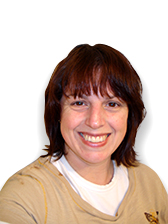
Tracey Jones
Widely published author, Psychologist, Manager and Lecturer. Over 10 years working with ACS and 25 years of industry experience.
Qualifications include: B.Sc. (Hons) (Psychology), M.Soc.Sc (social work), Dip. SW (social work), PGCE (Education), PGD (Learning Disability Studies).
English Grammar
Grammar demystified -Learn the rules of grammar, punctuation, sentence construction; etc, for writing or editing. Grammar provides a coherent structure for the expression of thoughts and ideas. By following grammatical rules we are able to construct logical sentences that make sense to the receiver.
Management
Management is the process of planning, organising, leading, and controlling an organisation’s human and other resources to achieve business goals. More importantly though, effective management needs to be a process of human interaction and compassion. Most bad managers don’t know they are bad. They may well admit that they are a bit erratic, or they are sometimes late to appointments, but it is rare that they will recognise that they are ineffective as managers. Never fear...read here. This book has something to offer even the best of managers.
Professional Writing
Professional writing is any writing that you are being paid for. It can include fiction writing, a best-selling book, articles in a magazine, articles in a newspaper, blogs for companies, technical manuals or procedure manuals, copy for catalogues, newsletters, text books and other academic material and so on.
Project Management
This ebook is designed to help improve your capacity to manage any type of project in any type of industry. It may be read as a stand- alone book; used as something to refer to during the process of managing projects, or used as a complementary reference to help enhance the overall learning experience when studying a project management course.