
Conservation and Environmental Management
Study environmental issues and sustainability. Learn what is impacting the environment and how negative impacts can be better managed for improved conservation.







STUDY ENVIRONMENTAL PROTECTION ONLINE
-
Learn to manage conservation in different environments.
Explore conservation issues and strengthen your knowledge of the environment.
- Self paced 100 hr course, flexible, practical learning developed and tutored by expert professionals. For people working in conservation or environmental areas, or anyone with a passion for sustainability.
- This course reviews basic ecology including topics in water and soil conservation, and places these topics in historical perspective by considering the impact humankind has had on the environment in modern times. Environmental problems such as pollution and land degradation are explored, followed by a more in-depth look at issues of animal, marine and vegetation conservation..
ACS Student comment: I am finding it interesting and educational - it covers the primary facts and then encourages you to learn the details through the assignments and contacting numerous organisations involved in environmental issues. Jasmine Dungey, Aust - Conservation and Environmental Management course.
Aims
- Describe the nature and scope of ecology.
- Describe environmental problems and their causes.
- Develop a brief introduction to pollution and its effect on the environment and conservation.
- Discuss relationships between water and soil and their effects on conservation and the environment, and how they can be used and managed.
- Investigate the techniques of vegetation management used in a range of situations.
- Identify the methods used to monitor and manage natural animal populations and land areas for sustainable species continuance.
- Identify the methods used to monitor and manage natural marine populations for sustainable species continuance.
- Describe the role of Ecologically Sustainable Development policies in future environment management.
What You Will Do
- Describe ecological processes and associated sustainable management techniques.
- Investigate a specific environmental problem and provide possible solutions.
- Evaluate the relationship between industry and pollution.
- Discuss principles of water and soil management.
- Select a specific type of plant that is endangered or an environmental problem and submit a case study.
- Explain animal conservation strategies, including protection legislation, breeding programs and habitat conservation.
- Discuss a specific issue that applies to marine conservation.
- Develop profiles of three different conservation and/or environment lobby group organisations and procedures used in promoting their cause.
Lesson Structure
There are 8 lessons in this course:
-
An Introduction To Ecology
- Spaceship Earth
- Conservation; Use of Resources, ecological value, economic value, genetic diversity
- Overkill
- Urbanisation
- Basic Ecology
- The Ecosystem
- Constituents for the Ecosystem
- Ecological Concepts
- The Web of Life; climate, producers, consumers, decomposers The Food Web
- Habitat and Niche
- Humans in the Environment
- Energy Flow
- Imbalances
- The Greenhouse Effect and Global Warming
- Climate Change
- El Nino
- International Efforts to Counter Climate Change; IPCC, UNFCC, Kyoto Protocol, Copenhagen Summit, Worldwatch Institute, etc
- Terminology
-
A Perspective On Environmental Problems
- History of Conservation
- Natural Resources; Renewable, Non Renewable
- Goals of Conservation
- History from Industrial Revolution to WWII
- WW2 and Post War Period
- International Conservation
- Deforestation
- Loss of Agricultural Land
- Loss of Biodiversity Endangered Water Supplies
- Exhaustion of Non Renewable Resources
- Political and Economic Issues of Conservation
- Environmental Damage in Free Economies
- Pollution in Planned Economies Supply of Resources
- Limits to Growth
-
Pollution and Industry Effects On The Environment
- Nature and Scope of Pollution
- Industrial Pollution
- Types of Pollutants
- Effects of Pollution
- Nuclear Pollution
- Sick Building Syndrome
- Asbestos Fibre
- Urbanisation
- Energy Alternatives
- Deforestation
- Nuclear Energy, Hydro Power, Solar Energy, Wind, Waste Power
-
Water and Soil
- Introduction
- Dams
- River Catchments
- Wetlands
- Water Pollution
- Recycling
- Desalination
- Water Environments
- The Hydrological Cycle; Infiltration, Rainfall, Evaporation, Effective Rainfall, etc
- Water and Plant Growth
- Keeping Water Clean
- Sewerage Treatment
- Soil; pH, texture, structure
- Land and Soil Degradation;
- Loss of soil fertility
- Erosion
- Salinity
- Soil compaction
- Soil acidification
- Build up of dangerous chemicals
-
Vegetation Conservation and Management
- Value of Trees
- Commercial Value of Trees
- Rainforests
- Forest Systems and Biomass
- Forest Conservation
- Trees and the Environment
- Environmental consequences of Deforestation
- Afforestation
- Classification of Forests
- Desertification
- Acid Rain
- Environmental Weeds
- Strategies for Preservation of Native Grasslands
-
Animal Conservation & Management
- The Human Animal
- Urbanisation
- Wildlife
- Threatened Species
- Invasive Species
- Wildlife Management; approaches, preservation, conservation, goals
- Wildlife Habitats
- Water Management for Wildlife
- Wildlife Surveys
-
Marine Conservation and Management
- Estuaries
- Fisheries; stock management, assessment, biomass, stock management methods
- Conservation of Sandy Shores
-
The Future
- Tourism and the Environment
- Ecotourism
- Ecologically Sustainable Development (ESD)
- Framework for ESD
Accreditations
The Renewable Resource Challenge
Nonrenewable Resources
Resources such as minerals, fossil and nuclear fuels. These resources are present in fixed amounts; once they have been used, they do not regenerate.
Natural resources are not limited to the land, they include other elements of the environment, such as oceans, tidal lands, and even the air and the atmosphere.
Resources and their use are very intimately interrelated. For example, a forest contains timber, a valuable economic commodity. However, in its natural state, a forest can:
-
Serve as a watershed,
-
Stop or reduce the erosion of soil,
-
Provide a habitat for wildlife,
-
Provide a recreational area,
-
Help lower regional water tables (which can help reduce the likelihood of salinity problems occurring), and
-
Affect the local climate, e.g., some tall trees literally have their heads in the clouds – moisture condenses onto their foliage dripping to the ground, thereby increasing the amount of moisture reaching the ground.
The obvious effect of cutting a forest is to destroy the forest, but there are other, often more serious effects that can follow on from that forest destruction, e.g., loss of habitat for wildlife, erosion, etc.
A paramount principle of conservation is that the use of any resource requires consideration of what the impact will be on other resources and the entire environment.
The Goals of Conservation
-
Maintenance of the essential ecological processes and life support systems. This ranges from the global cycle of nitrogen, carbon dioxide and water, to the localised regeneration of soil, the recycling of nutrients, and the cleansing of waters and the air.
-
Preservation of genetic diversity.
-
Assurance that the use of the ecosystems such as grazing lands and forests is sustainable.
-
Use of non-renewable resources should ensure that minerals are used conservatively, and where possible recycled. In addition, mineral mining should have the least possible adverse impact on the quality of the environment and other resources.
Where Can This Study Take Me?
Job opportunities in Conservation and Environment will be highly varied in the future so current students need to "think outside the box". This course may deliver different things to different graduates. Environmental skills and knowledge are in demand across a huge range of industries, worldwide, including:
- Land regeneration
- Environmental impact assessment
- Energy activity (wind farms, energy from waste)
- Oil and gas and minerals
- Infrastructure
- Contaminated land (remediation, site investigation)
- Water
- Waste management
- Drought management
- Flood risk
- Environmental security
- Nuclear
- Fracking
- Biogas
- Supply chain management
- Energy management
- Energy auditors
- Resource management
- Climate change
- Climate adaptation
- Compliance management
- Reputational risk
- Training
Conservation and Environment at the Forefront of Businesses
At last the world is waking up to the preciousness of our natural resources!
With the ever-increasing trend to reduce waste and emissions, increase energy efficiency and minimise practices that may threaten our natural resources, more and more organisations are realising the importance of environmental management and implementing environmental initiatives as core values into their business plans.
In Order to Protect It, You Need to Understand It!
Businesses, Institutions, Industry and Community Groups are crying out for guidance on environmental conservation and the best way to care for precious and limited natural resources. They could be getting that guidance from you!
Take the first step with us towards a career that really makes a difference. Whether it's advising community groups on land care issues, educating youth on environmentally conscious living, or lobbying industry to clean up pollution practices, your voice can make a difference!
There are many keen and well meaning people who care for the environment, but lack the knowledge to be heard by those in power.
Take this first step. Study Conservation and Environmental Management and you'll be powering-up your passion with the practical skills and knowledge you need to make a difference.
Study with us, make a difference, and make your voice heard!
Why Study with ACS?
Design your own learning pathway.
Study at your own pace, from anywhere, at any time.
Receive prompt, expert support from our team of committed and friendly tutors.
Your learning is our priority. We are flexible and adaptable to meet your educational needs!
ACS Student comment:
"I am finding it interesting and educational - it covers the primary facts and then encourages you to learn the details through the assignments and contacting numerous organisations involved in environmental issues". -- Jasmine Dungey, Australia - Conservation and Environmental Management course.
Enrol using the automated procedure on this site or contact us via phone or email to ask questions and enrol with a real person.
You can enrol at anytime and start the course when you are ready. Enrolments are accepted all year - students can commence study at any time. All study is self paced and ACS does not set assignment deadlines.
Please note that if a student is being assisted by someone else (e.g. an employer or government subsidy), the body offering the assistance may set deadlines. Students in such situations are advised to check with their sponsor prior to enrolling. The nominal duration of a course is approximately how long a course takes to complete. A course with a nominal duration of 100 hours is expected to take roughly 100 hours of study time to complete. However, this will vary from student to student. Short courses (eg. 100 hrs duration) should be completed within 12 months of enrolment. Certificates, Advanced Certificates and Awards (eg. over 500 hours duration) would normally be completed within 3 -5 years of enrolment. Additional fees may apply if a student requires an extended period to complete.
If a student cannot submit their assignments for 6 months to ACS, they should advise the school to avoid cancellation of their student
registration. Recommencement fees may apply.
Simply click on the ENROL OPTIONS button at the top of this screen and follow the prompts.
You can see the course price at the top of this page. Click 'enrolment options' to see any payment options available.
You can pay by Credit Card, PayPal, Afterpay or bank transfer.
Yes! We have payment plans for most courses. Click 'enrolment options' to see the available payment plans.
We also have Afterpay that will allow you to pay for your course or payment plans in four instalments (if you are in Australia).
There are no entry requirements that you need to meet to enrol in our courses, our courses are for everyone.
If you are under 18, we need written permission from your parent/ guardian for your enrolment to continue, we can arrange that after you have enrolled.
You don’t need to purchase any additional resources to complete our courses.
What do I need to know before I enrol?
We aim to teach you the essentials without you having to purchase any specific computer program.
We recommend that you have access to a word processing program, such as Microsoft Word or Google Docs, so that you can easily complete and submit your assignments.
You sure can. We are here to help you learn whatever your abilities.
Yes, if you are enrolling in a Certificate or Advanced Certificate, you might be eligible for credits if you have evidence of your previous studies or relevant experience. More information is here.
We recommend that you are able to browse websites, send emails and conduct online research. You will need to be able to type and submit your assignments.
If you have limited computer skills, we can make special arrangements for you.
This is possible, it depends on the institution. We recommend that if you would like to use our courses that you contact the institution first. Our Course Handbook is a good resource for this.
Our courses are written in English and we only have English speaking academic staff. If you can read and complete your assignments in English, our courses are ideal for you.
Our courses are designed to build knowledge, hands on skills and industry connections to help prepare you to work in the area, running your own business, professional development or as a base for further study.
This course has been designed to cover the fundamentals of the topic. It will take around 100 hours to complete, which includes your course reading, assignment work, research, practical tasks, watching videos and anything else that is contained in the course. Our short courses are a great way to do some professional development or to learn a new skill.
It’s up to you. The study hours listed in the course are a rough guide, however if you were to study a short course (100 hours) at 10 hours per week, you could finish the course in 10 weeks (just an example). Our courses are self-paced, so you can work through the courses in your own time. We recommend that you wait for your tutor to mark and return your assignment before your start your next one, so you get the benefits of their feedback.
The course consists of course notes, videos, set tasks for your practical work, online quizzes, an assignment for each lesson (that you receive feedback from your tutor from) and ends in an exam (which is optional, if would like to receive the formal award at the end), using our custom built Learning Management System - Login.Training.
Our courses are designed for adults to gain professional development and skills to further their careers and start businesses.
Our custom online learning portal allows you to conduct your learning online. There may be practical tasks that you can do offline. You have the option of downloading your course notes or print them to read later.
There is also the option to pay an additional fee for printed course notes and or USB (availability limited to location and deliverability).
Yes, if you don’t have access to the internet, you can receive the course as paper notes or on a USB stick for an additional fee. We can also make alternative arrangements for you to send your assignments to us.
We offer printed notes for an additional fee. Also, you can request your course notes on a USB stick for an additional fee.
Yes, your tutor is here to help you. Simply post any questions you have in your login.training portal or contact the office and we can pass on a message to your tutor.
We are more learning focussed, rather than assessment focussed. You have online quizzes to test your learning, written assignments and can complete an exam at the end of the course (if you want to receive your certificate). You will not receive a pass/ fail on your course work. If you need to add more details on your assignment, we will ask you to resubmit and direct you where you need to focus. If you need help, you can ask your tutor for advice in the student room.
Each module (short course) is completed with one exam.
Exams are optional, however you must sit an exam if you would like to receive a formal award. You will need to find someone who can supervise that you are sitting the exams under exams conditions. There is an additional cost of $60 incl. GST for each exam.
More information is here
There are practical components built into the course that have been designed to be achieved by anyone, anywhere. If you are unable to complete a task for any reason, you can ask your tutor for an alternative.
When you complete the course work and the exam and you will be able receive your course certificate- a Statement of Attainment. Otherwise, you can receive a Letter of Completion.
You can bundle the short courses to create your own customised learning bundle, Certificates or Advanced Certificates. More information is on this page.
Yes, our courses are built to be applicable for people living anywhere in any situation. We provide the fundamentals, and each student can apply their own unique flair for their own interests, region and circumstances with the one-on-one guidance of a tutor. There is also a bit of student directed research involved.
Employers value candidates with industry skills, knowledge, practical skills and formal learning. Our courses arm you with all of these things to help prepare you for a job or start your own business. The longer you study the more you will learn.
ACS has an arrangement with OAMPS (formerly AMP) who can arrange Professional Indemnity from Australian and New Zealand graduates across all disciplines. Ph: 1800 222 012 or email acs@oamps.com.au.
Who are ACS Distance Education?
ACS Distance Education have been educating people for over 40 years.
We are established and safe- we have been in education for over 40 years.
We are focused on developing innovative courses that are relevant to you now and what you will need to know in the future.
We are focused on helping you learn and make the most of your experience.
You can enrol at any time, you can work on your course when it suits you and at your own pace.
We are connected to many industry bodies and our staff participate in continuous improvement and learning activities to ensure that we are ahead of what learning is needed for the future.
Our courses are not accredited by the Australian Government. However many of our courses are recognised and held in high regard by many industry bodies.
Our courses are written by our staff, who all have many years experience and have qualifications in their speciality area. We have lots of academic staff who write and update our courses regularly.
How do I enrol my staff/ sponsored students?
Yes, you can do a request for a bulk enrolment and request an invoice on our Invoice Request Form
We can prepare an invoice, quote or proforma invoice. Simply complete your details on our Invoice Request form
We can arrange bulk discounts for your course enrolment, please get in touch with us to discuss your needs.
Yes, we have many students who are in locked facilities, such as prisons or hospitals. We can cater by also offering paper notes at an additional cost.
What if I have any more questions or need more information?
We can assist you to find the right course for your needs. Get in touch with us via email (admin@acs.edu.au) call on +61 7 5562 1088 or complete our course advice form.
What if I change my mind?
Please get in touch with studentservices@acs.edu.au if you would like to be removed from our mail list.
If you would like ACS Distance Education to delete your information at any time (whether you are a customer or a prospective customer), please contact our privacy officer and we will process this ( admin@acs.edu.au ).
If students require a reproduction of their certificate, an electronic copy can be provided at a cost of AUD$35 incl GST. Printed copies are not available.
Course Contributors
The following academics were involved in the development and/or updating of this course.

Dr Robert Browne
Zoologist, Environmental Scientist and Sustainability, science based consultancy with biotechnology corporations. Work focused on conservation and sustainability.
Robert has published work in the fields of nutrition, pathology, larval growth and development, husbandry, thermo-biology, reproduction technologies, and facility design.Robert has B.Sc., Ph, D.

Martin Powdrill
25 years working in Telecommunications, IT, Organisational Development, and Energy Conservation & Efficiency, prior to setting up his own Permaculture consulting business. Martin has a Bsc (Hons) Applied Science (Resources Option), MSc Computer Studies, Permaculture Design Certificate.
Martin volunteers with many local environmental and community groups, and facilitates discussions on climate change, peak oil, and transition towns. Martin has an allotment, and is currently enrolled in the Scottish Mountain Bike Leader Award programme.
Martin’s goal as a catalyst for sustainable change brings together his strengths and experience in his environmental, project management, and business backgrounds.
Professional Practice for Consultants
Explore becoming a consultant. This ebook contains chapters on how to be a consultant, packaging your services, delivering the services, building your resources, finding the work and getting the job, planning and ethics.

Weeds
A good cross section of of common weeds are illustrated and reviewed. These are plants that occur in many parts of the world, and some are not always weeds.
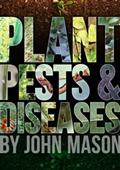
Plant Pests & Diseases
Are you one of those people that kill every plant you touch? Perhaps it's not you. Perhaps it's a pest or disease. A little bit of reading might just turn your garden into an oasis. Learn how to identify pests and diseases and bring the spring back into your plant...visit the bookshop to find out more...
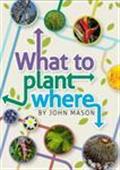
What to Plant Where
A great guide for choosing the right plant for a particular position in the garden. Thirteen chapters cover: plant selection, establishment, problems, and plants for wet areas. Shade, hedges and screens, dry gardens, coastal areas, small gardens, trees and shrubs, lawns and garden art.
(aud)$781.00