
Bookkeeping Foundations (Bookkeeping I)
Gain vital business skills in bookkeeping. Brush up on your skills or study to improve your work opportunities in an accounting or administrative department or learn to keep the books of your own business.









Study Bookkeeping
An in depth entry level course - online - self paced - developed by university trained, industry experienced business professionals.
-
Regularly revised and updated (at least yearly) to maintain global relevance.
Internationally applicable – many countries participate in standardised bookkeeping principles and practice; this course is based on current international standards.
- Re-entering the workforce
- owning or managing a business
- brushing up on rusty skills
- enhancing your work in administration or accounts departments
- bolstering your CV
Aims
- Outline the uses of financial information; accounting standards and conventions and the basic functions of bookkeeping for service businesses.
- Describe the use of balance sheets and their function.
- Outline setting procedures for a bookkeeping system; steps in its use; the flow of information and use of other business documents.
- Formulate procedures for the setting up of a double entry bookkeeping system
- Outline the functions and specific uses of ‘special journals’.
- Outline methods used to set up credit sales journal and credit purchases journals.
- Outline the setting up procedures for a general journal and its use.
- Describe methods used to close ledger accounts at the end of an accounting period.
- Describe profit and loss statement preparation methods.
- Outline the use of appropriate methods for the depreciation of non-current assets.
- Outline the fundamentals of cash and accrual accounting; the ‘matching process’; the necessity for balance day adjustments.
- Describe the cash cycle; the importance of cash control and its various methods including petty cash systems and bank reconciliation processes.
- Outline the role of budgets and their importance to business.
What You Will Do
- Explain the role of accounting in service businesses and the principles, conventions and doctrines that underpin accounting practice.
- Understand taxation concepts, including GST and comparisons with other taxation systems.
- Prepare and interpret balance sheets, profit and loss statements, trial balances and other financial reports.
- Apply the accounting equation and understand the classification of assets, liabilities and owner’s equity.
- Use source documents, journals, ledgers, charts of accounts and statements of account within an accounting system.
- Apply double-entry bookkeeping principles and process accounting transactions accurately.
- Prepare and maintain cash receipts, cash payments, sales, purchases and general journals.
- Understand debtors, creditors, subsidiary ledgers, control accounts, discounts, contra entries and bad debts.
- Record and adjust accounting entries, including balance day adjustments, prepaid expenses and reversing entries.
- Complete end-of-period procedures, including closing entries, trial balances and financial statements.
- Maintain cash books, petty cash records and bank reconciliation statements.
- Monitor cash flow, liquidity and financial performance using key accounting ratios.
- Develop and interpret budgets, cash budgets, variances and budget reviews to support business decision-making.
Lesson Structure
There are 13 lessons in this course:
-
Introduction – Nature, Scope and Function of Bookkeeping
- What is bookkeeping
- Difference between accountants and bookkeepers
- History of bookkeeping
- Bookkeeping Terminology
- Understanding language
- Why do we need bookkeeping
- Bookkeeping as a management tool
- Business structures
- Business structures vary internationally
- Financial information
- Accounting conventions and doctrines
- Accounting standards
- Australian accounting standards
- UK accounting standards
- International cooperation on standards
-
The Balance Sheet
- What is a balance sheet
- Assets and liabilities
- Components of a balance sheet
- What items do not appear on the balance sheet
- Example of a Balance Sheet
- Tracking business performance
- T format balance sheet
- Balance sheet allocations
- What is working capital
-
Analysing and Designing Accounting Systems
- What is an accounting system
- Understanding the flow of information in bookkeeping
- Other business documents -statements, order forms, quotations
- Steps in the bookkeeping process
- Designing the System
- Analyzing business needs
- Designing the accounting system
- Designing the chart of accounts
- Writing a chart of accounts
- Designing the type of journals needed
-
The Double Entry Recording Process
- Ledgers
- Opening up the general ledger
- Ledger accounts/ sub ledger
- The general ledger
- Entries resulting from transactions
- Recording transactions
- Different types of accounts
- A trial balance
- Ledger accounts and double entry bookkeeping
- Recording entries
- Rules to follow
- Analysis chart
- Footing ledger accounts
- Balancing ledger accounts
- The trial balance
- Accounting for drawings
- Revision of definitions and processes
-
The Cash Receipts and Cash Payments Journal
- Recording cash transactions in journals
- Multi column receipts journal
- Cash payments journal
- Multi column cash payment journal
- What discounts are allowed
- Accounting discounts allowed and received
-
The Credit Fees and Purchases Journal
- Credit sales and credit purchases
- Credit sales journal
- Debtors subsidiary journal and control account
- Using a debtors schedule
- The credit purchases journal
- Creating a creditors Subsidiary Ledger and schedule
- The cash payments journal and creditors control account
-
The General Journal
- Recording non standard transactions
- Designing the general journal
- Posting to a general journal
- General journal entries and ledgers
- Anomalies
- Recording credit purchases of non current assets
- Recording owners contributions or withdrawals
- Recording debts that are written off
- Recording contra entries
- Recording purchase returns
- Other uses for a journal
-
Closing the Ledger
- Closing at the end of the accounting period
- Preparing for the new accounting period
- Transferring balance day closing entries
- Profit and loss account
- Determining gross profit
- Simple profit and loss account
- Balance sheet
- Businesses making a loss rather than profit
- Owner withdrawing revenue
- The end results
-
The Profit and Loss Statement
- Introduction
- The balance sheet and how it relates to Profit and Loss Statement
- Using net profit figure to evaluate business performance
- What is profitability?
- Gross Profit
- Net Profit
- Cash flow margin
- Return on assets margin
- Gearing ratio and how it relates to cash flow
- Return on owners equity margin
- Informative profit and loss presentation
- Segmentation
- Functional classification- Grouping expenses
- Showing extraordinary expenses and revenue
- Accounting for unused materials or stock
- Why do we need to calculate the cost of materials used
-
Depreciation on Non-current Assets
- Intangible assets
- Depreciation methods
- Depreciation calculation methods
- Calculating depreciation with the straight line method
- What if there is no residual value
- How to enter depreciation into the books
- Declining balance method of depreciation
- Calculating percentage rate of depreciation
- Production units method of depreciation
- What about intangible assets
- Keeping track of assets and depreciation
- Asset register
- End of Useful life for assets
- Loss disposal of asset account
-
Profit Determination and Balance Day Adjustments
- Cash and accrual accounting
- Cash accounting
- Accruals accounting
- Balance day adjustments to final accounts
- How to record prepaid expenses
- Showing in the general ledger
- What about if we actually owe unpaid expenses on balance day
- Receiving income in advance
- Other balance day adjustments –stock, bad debts, depreciation, discounts
- A more comprehensive treatment of trial balance
- Partnerships
- Companies
- Clubs and non profit organisations
- Using a ten column worksheet or spreadsheet
-
Cash Control: Bank Reconciliation and Petty Cash
- Ways of handling money
- Outgoing monies (payments)
- Methods of controlling cash
- Recording cash transactions
- The cash book
- Bank transactions and the cash book
- Bank reconciliation statements
- The cash cycle –cash flow and liquidity
- Account receivable turnover ratio
- Operating cash flow ratio
- Inventory turnover ratio
- Professional journals
-
Cash Control: Budgeting
- Introduction
- Budget types
- The cash budget
- Factoring in safety margins
- Variable costs
- Budget reviews
- Taxes and budgets
- GST or VAT taxes
- Tax input credits
- Taxable supplies
Accreditations
Bookkeeping Makes Business Management So Much Easier
Bookkeeping provides a framework for the collection, preparation and recording of financial data from which information can be drawn, so that informed decisions can be made, implemented and evaluated.
The bookkeeping system can be tailored to the needs of any individual, non-profit organisation, small or large business. This course will concentrate on the needs of small business. A business is an economic entity created for the purpose of increasing the wealth of its owner or owners by generating profits from the provision of goods and/or services. A small business is one where all major decisions are the responsibility of one, two or a few people who are usually the owners.
A business can help control its financial future through its bookkeeping system. Information relating to financial transactions can be used to prepare budgets and set future financial goals. Businesses need this information to help answer a number of questions, such as:
- Will the business have enough cash to pay its bills?
- How much are the assets of the business worth?
- Can the business afford to borrow money?
- Is the business financial enough to expand its operation?
- Should the selling price be changed?
Using Bookkeeping as a Management Tool
When a manager has access to well-kept books they can use these as a tool for future business planning and in order to make timely and considered decisions. They can see at a glance whether the business is making a profit or a loss, how much money is owed to creditors and how much is owed to the company by debtors. The can determine by using this information whether all is going to plan and decisions can then be made around that information. For example if sales are down should prices be dropped? Can the wage bill be met? Is downsizing an option to consider? Conversely, if sales are up decisions to expand the business may need consideration. How much would it cost to expand? How much extra money would it take to cover expansion costs? And so on.
Accounting conventions (accounting standards) and doctrines (principles) influence accounting and (therefore bookkeeping) practices. If you understand accounting conventions (i.e. the basic rules and principles) you it will give a greater and clearer understanding of why statements are prepared in a certain way.
Accounting standards were commonly accepted accounting practices many of which have now become laws which accountants must follow.
Due to international cooperation (spanning decades of work) accounting standards i.e. the rules which govern the ways in which books are kept and reports are presented, have become standardised (i.e. can be easily recognised through similarities in approach and presentation) throughout many countries.
What are These Conventions?
There are many conventions (rules) which cover a range of situations using accepted accounting methods (conventions). The most important used by bookkeepers include the following:
The historical cost convention
As with all basic accounting this rule deals with what has happened in the past (within a business). It is possibly the most commonly used accounting convention. Transactions for assets within the business must be recorded at their original cost i.e. the amount paid at the time of purchase less depreciation (if applicable). With some exceptions, for example land which commonly (but not always) appreciates with time, the value of an asset cannot increase - i.e. Inflation or the amount an item could potentially be sold for, are not taken into account. This can have the effect of distorting the true value of a business on the balance sheet – for example a business may buy a warehouse for $150,000. 10 years later the business owner may have an offer of $300,000 for the same building. On the balance sheet however it still has to appear at its original cost. This is because values are nebulous i.e. you can’t really predict the future value of anything and it is deemed a better approach to record historical value then it would be to guess at a market value. Assets however can from time to time be re-valued to reflect their current worth and appear on the balance sheet with the new value (noted on the balance sheet).
The business entity convention
This separates the business owner (of any type of business entities) from the business, in accounting terms. So any transactions within the business, relate to the business and not to the owner (e.g. when a business owner invests money into the business, it is recorded as a liability that the business has to the owner. If the owner buys withdraws cash (or takes home goods) it is not recorded as a business expense. The owner can’t use the purchase of goods (for private use) as a business expense. This rule ensures that the personal and the business dealings of the owners are always separated.
The going concern convention
This assumes that the business will continue its activities indefinitely and are therefore able to meet its current and future commitments. Because of this assumption, a business can classify assets and also liabilities as short, medium or long term and report them as such on the balance sheet; this prevents the write-off as costs of long term assets, within one accounting period, instead of over many years. This convention also allows assets to appear at book value (at purchase) rather than market value.
The accounting period convention
In order to compare past to present business performance we need to produce accounting reports for a business at meaningful intervals. The length of an accounting period may be a week, a month, a quarter, or a full year, but must not be any longer due to taxation requirements. It may be set to start and end on a certain date for example the 1st of July each year and end on the 30th of June each year – known as the ‘financial year’. Note: in some countries ‘financial years’ differ.
A business’s profit and loss account should show the expenses or the income relating to the period in which they were incurred or generated rather than when an account was paid or income was received. This system is sometimes also referred to as the accruals concept (see the definition given earlier this lesson. The net profit a business makes is therefore more realistic to a given period of time. Accruals are part of the bookkeeping process.
Monetary entity convention
This states that the monetary unit that is used is relevant to the country the business is operating in. In other words in the USA it is the US dollar and Australia the Aust. dollar in the UK the pound and so on.
Recognition of Law
Financial reporting in a business is accountable by law. Books must be kept correctly reports must be accurate and correctly reflect the financial transactions of a business.
Accounting Doctrines
Accounting is based on accounting conventions. The following are some generally used accounting doctrines. They differ from conventions in that they do not have to be adopted - but most companies choose to do so.
Consistency
This states that the way accounting information is presented (for a business) must remain the same for all accounting periods from the present and into the future. This ensures that performance comparisons are valid and equitable and there is less likelihood that financial information is manipulated or biased towards the user.
Relevance
All business transactions within the books and financial reports of a business must be relevant to that business only.
Materiality
All items that are of importance to a business (in a financial sense) must appear in a business’s financial reports. Conversely this means that small items that are of little significance to financial outcomes may be omitted. The way to test the importance of an item is to decide whether or not its omission with affect the reporting outcome and influence the reader’s or users perception of the true financial standing of a business. The omission of cents for example in a financial report would have negligible effect on ascertaining the true financial standing of a business.
Verifiability convention
A business (or anyone auditing the business) should always be able to confirm its figures. Any person should be able to look at the figures and use the data to come to the same conclusions. In order to do this a business needs to produce evidence of its business transactions in the form of receipts, invoices, bank statements, EFT (Electronic Funds Transfer) receipts and payments and cheque butts i.e. any documentation that was used to record transactions in the books.
WHY SHOULD YOU LEARN BOOKKEEPING
Some people study bookkeeping to do it at work, and others to simply understand finance better.
- You might want to become a bookkeeper (or better bookkeeper).
- You may want to be able to understand financial records better, and communicate with those who manage your accounts.
- Anyone who needs to manage money and be more aware of how it is managed, can benefit from this course.
Bookkeeping involves keeping records of the incoming and outgoing monies relating to a business or legal entity.
A legal entity can be a person or organisation that is recognised by law – as such they can legally enter into a contract; if they fail to meet the legal requirements of the contract, they can be open to litigation (be sued).
Bookkeeping allows us to track the ownership of money, property or even intangible things such as services.
It involves collecting, preparing and recording of financial data so that informed decisions can be made, implemented, and evaluated.
Keeping accurate financial records allows a business to manage and control assets, liabilities and incoming and outgoing money. A business can help control its financial future by utilising its bookkeeping system to make informed business decisions. Information relating to financial transactions can be used to prepare budgets, set financial goals and make essential business decisions about the running of the business. Businesses need this information to help answer a number of questions, such as:
- Will the business have enough cash to pay its bills and wages?
- How much are the assets of the business worth?
- Can the business afford to borrow money?
- Is the business financial enough to expand its operation?
- Should the selling price be changed? Are the price points being charged suitable for maximum profit and financial gains, or does it need to be adjusted?
- Does the company have too much stock it needs to sell to make more money?
- Are there any ways in which the company can cut costs?
- How does the business make plans to grow or contract in the future based on the current profit or losses it is making?
- Are sales goals and business goals and targets being met?
The purpose of a better financial management is to make a profit ultimately, bookkeeping helps businesses keep track of their money to make informed decisions in order to make a profit.
Whether dealing with business finance, public finances or personal finances; improving your bookkeeping knowledge and skill can be a massive advantage.
Enrol using the automated procedure on this site or contact us via phone or email to ask questions and enrol with a real person.
You can enrol at anytime and start the course when you are ready. Enrolments are accepted all year - students can commence study at any time. All study is self paced and ACS does not set assignment deadlines.
Please note that if a student is being assisted by someone else (e.g. an employer or government subsidy), the body offering the assistance may set deadlines. Students in such situations are advised to check with their sponsor prior to enrolling. The nominal duration of a course is approximately how long a course takes to complete. A course with a nominal duration of 100 hours is expected to take roughly 100 hours of study time to complete. However, this will vary from student to student. Short courses (eg. 100 hrs duration) should be completed within 12 months of enrolment. Certificates, Advanced Certificates and Awards (eg. over 500 hours duration) would normally be completed within 3 -5 years of enrolment. Additional fees may apply if a student requires an extended period to complete.
If a student cannot submit their assignments for 6 months to ACS, they should advise the school to avoid cancellation of their student
registration. Recommencement fees may apply.
Simply click on the ENROL OPTIONS button at the top of this screen and follow the prompts.
You can see the course price at the top of this page. Click 'enrolment options' to see any payment options available.
You can pay by Credit Card, PayPal, Afterpay or bank transfer.
Yes! We have payment plans for most courses. Click 'enrolment options' to see the available payment plans.
We also have Afterpay that will allow you to pay for your course or payment plans in four instalments (if you are in Australia).
There are no entry requirements that you need to meet to enrol in our courses, our courses are for everyone.
If you are under 18, we need written permission from your parent/ guardian for your enrolment to continue, we can arrange that after you have enrolled.
You don’t need to purchase any additional resources to complete our courses.
What do I need to know before I enrol?
We aim to teach you the essentials without you having to purchase any specific computer program.
We recommend that you have access to a word processing program, such as Microsoft Word or Google Docs, so that you can easily complete and submit your assignments.
You sure can. We are here to help you learn whatever your abilities.
Yes, if you are enrolling in a Certificate or Advanced Certificate, you might be eligible for credits if you have evidence of your previous studies or relevant experience. More information is here.
We recommend that you are able to browse websites, send emails and conduct online research. You will need to be able to type and submit your assignments.
If you have limited computer skills, we can make special arrangements for you.
This is possible, it depends on the institution. We recommend that if you would like to use our courses that you contact the institution first. Our Course Handbook is a good resource for this.
Our courses are written in English and we only have English speaking academic staff. If you can read and complete your assignments in English, our courses are ideal for you.
Our courses are designed to build knowledge, hands on skills and industry connections to help prepare you to work in the area, running your own business, professional development or as a base for further study.
This course has been designed to cover the fundamentals of the topic. It will take around 100 hours to complete, which includes your course reading, assignment work, research, practical tasks, watching videos and anything else that is contained in the course. Our short courses are a great way to do some professional development or to learn a new skill.
It’s up to you. The study hours listed in the course are a rough guide, however if you were to study a short course (100 hours) at 10 hours per week, you could finish the course in 10 weeks (just an example). Our courses are self-paced, so you can work through the courses in your own time. We recommend that you wait for your tutor to mark and return your assignment before your start your next one, so you get the benefits of their feedback.
The course consists of course notes, videos, set tasks for your practical work, online quizzes, an assignment for each lesson (that you receive feedback from your tutor from) and ends in an exam (which is optional, if would like to receive the formal award at the end), using our custom built Learning Management System - Login.Training.
Our courses are designed for adults to gain professional development and skills to further their careers and start businesses.
Our custom online learning portal allows you to conduct your learning online. There may be practical tasks that you can do offline. You have the option of downloading your course notes or print them to read later.
There is also the option to pay an additional fee for printed course notes and or USB (availability limited to location and deliverability).
Yes, if you don’t have access to the internet, you can receive the course as paper notes or on a USB stick for an additional fee. We can also make alternative arrangements for you to send your assignments to us.
We offer printed notes for an additional fee. Also, you can request your course notes on a USB stick for an additional fee.
Yes, your tutor is here to help you. Simply post any questions you have in your login.training portal or contact the office and we can pass on a message to your tutor.
We are more learning focussed, rather than assessment focussed. You have online quizzes to test your learning, written assignments and can complete an exam at the end of the course (if you want to receive your certificate). You will not receive a pass/ fail on your course work. If you need to add more details on your assignment, we will ask you to resubmit and direct you where you need to focus. If you need help, you can ask your tutor for advice in the student room.
Each module (short course) is completed with one exam.
Exams are optional, however you must sit an exam if you would like to receive a formal award. You will need to find someone who can supervise that you are sitting the exams under exams conditions. There is an additional cost of $60 incl. GST for each exam.
More information is here
There are practical components built into the course that have been designed to be achieved by anyone, anywhere. If you are unable to complete a task for any reason, you can ask your tutor for an alternative.
When you complete the course work and the exam and you will be able receive your course certificate- a Statement of Attainment. Otherwise, you can receive a Letter of Completion.
You can bundle the short courses to create your own customised learning bundle, Certificates or Advanced Certificates. More information is on this page.
Yes, our courses are built to be applicable for people living anywhere in any situation. We provide the fundamentals, and each student can apply their own unique flair for their own interests, region and circumstances with the one-on-one guidance of a tutor. There is also a bit of student directed research involved.
Employers value candidates with industry skills, knowledge, practical skills and formal learning. Our courses arm you with all of these things to help prepare you for a job or start your own business. The longer you study the more you will learn.
ACS has an arrangement with OAMPS (formerly AMP) who can arrange Professional Indemnity from Australian and New Zealand graduates across all disciplines. Ph: 1800 222 012 or email acs@oamps.com.au.
Who are ACS Distance Education?
ACS Distance Education have been educating people for over 40 years.
We are established and safe- we have been in education for over 40 years.
We are focused on developing innovative courses that are relevant to you now and what you will need to know in the future.
We are focused on helping you learn and make the most of your experience.
You can enrol at any time, you can work on your course when it suits you and at your own pace.
We are connected to many industry bodies and our staff participate in continuous improvement and learning activities to ensure that we are ahead of what learning is needed for the future.
Our courses are not accredited by the Australian Government. However many of our courses are recognised and held in high regard by many industry bodies.
Our courses are written by our staff, who all have many years experience and have qualifications in their speciality area. We have lots of academic staff who write and update our courses regularly.
How do I enrol my staff/ sponsored students?
Yes, you can do a request for a bulk enrolment and request an invoice on our Invoice Request Form
We can prepare an invoice, quote or proforma invoice. Simply complete your details on our Invoice Request form
We can arrange bulk discounts for your course enrolment, please get in touch with us to discuss your needs.
Yes, we have many students who are in locked facilities, such as prisons or hospitals. We can cater by also offering paper notes at an additional cost.
What if I have any more questions or need more information?
We can assist you to find the right course for your needs. Get in touch with us via email (admin@acs.edu.au) call on +61 7 5562 1088 or complete our course advice form.
What if I change my mind?
Please get in touch with studentservices@acs.edu.au if you would like to be removed from our mail list.
If you would like ACS Distance Education to delete your information at any time (whether you are a customer or a prospective customer), please contact our privacy officer and we will process this ( admin@acs.edu.au ).
If students require a reproduction of their certificate, an electronic copy can be provided at a cost of AUD$35 incl GST. Printed copies are not available.
Course Contributors
The following academics were involved in the development and/or updating of this course.

David Crothers
Extensive international experience in business and finance. Chartered Accountant with 20 years experience in corporate and financial roles. David has a FCA, GAICD, B.Sc.Econ (Hons), Cert IV TAA.

Sonia Andrews
15 years experience in business, bookkeping and accounting.

Denise Hodges
Promotions Manager for ABC retail, Fitness Programmer/Instructor, Small Business Owner, Marketing Coordinator (Laserpoint). Over 20 years varied experienced in business and marketing. More recently Denise studied naturopathy to share her passion for health and wellness. Denise has an Adv.Dip.Bus., Dip. Clothing Design, Adv.Dip.Naturopathy (completing).

Sarah Edwards
Over 15 years industry experience covering marketing, PR, administration, event management and training, both in private enterprise and government; in Australia and the UK.
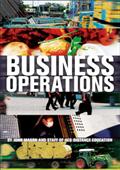
Business Operations
Covers things from running a business from finance and forecasting to staffing changes and legal issues. Chapters include: People, Law, Finance, Risk, Product Management, and Daily challenges.
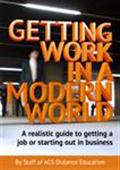
Getting Work in a Modern World
A realistic guide to getting a job or starting out in business. This is a must read; for students, parents, the unemployed, careers advisors or anyone interested in changing or forging a sustainable career.
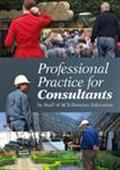
Professional Practice for Consultants
Explore becoming a consultant. This ebook contains chapters on how to be a consultant, packaging your services, delivering the services, building your resources, finding the work and getting the job, planning and ethics.

Starting a Business
Businesses don't need to fail! This is concise, easy to read, and alerts you to all of the things that commonly make a difference to business success or failure. Seven chapters are: “A Reality Check”, “The Product or service”, “Managing a Business”, “How to Find Customers”, “How to Make a Sale”, “Delivering the Product or Service”, “Pitfalls to Avoid”.
(aud)$726.00