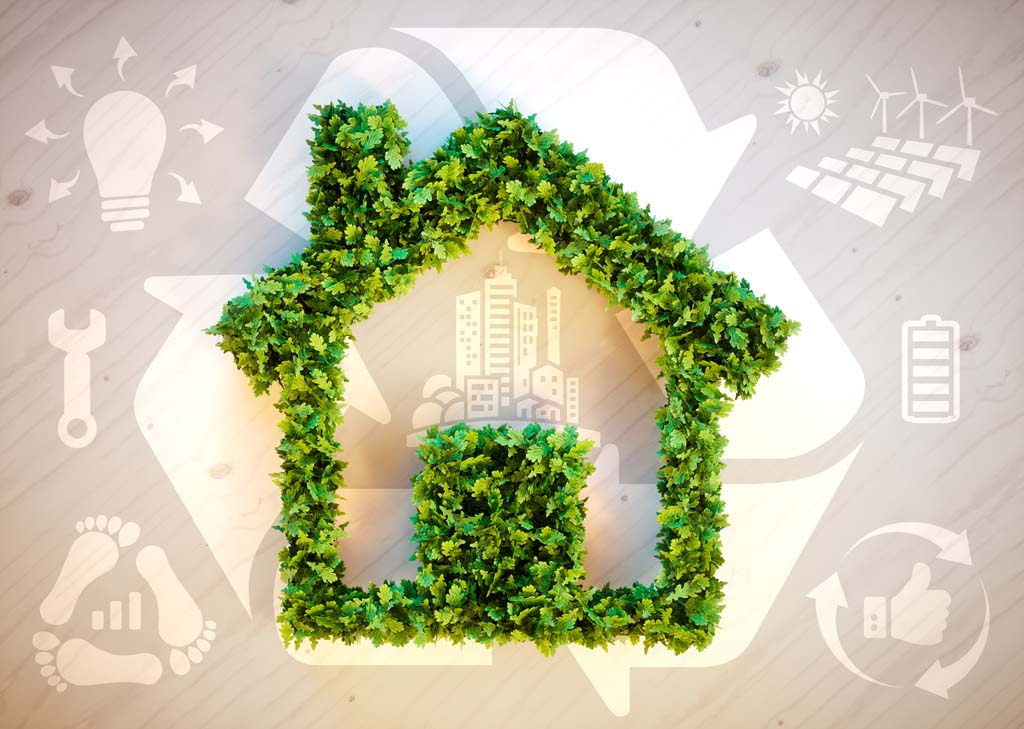
Healthy Buildings II (Building Environment & Health)
This building biology course complements our Healthy Buildings I course but considers the impact of location, surroundings and interior finishes and materials on human health. Learn to protect occupants from the potential harm of indoor environments.
CREATE A HEALTHY INDOOR ENVIRONMENT
 Explain and evaluate the impact of physical characteristics of a building, other than construction characteristics, upon human health, and to recommend innovative ways to improve the habitability of a building.
Aims
- Explain the impact of the macro-environment (location) on health.
- Explain the impact of building surrounds, including a garden, on the interior environmental conditions.
- Choose interior furnishings which are not likely to damage human health.
- Explain the health implications of using different types of finishes, including sealers, paints, preservatives and stains.
- Explain the health implications of using alternative methods of pest control inside buildings.
- Plan health conscious management systems of interior environments.
What You Will Do
- Explain how proximity to different bodies of water can affect human health, including: *Sea/Ocean *Freshwater lakes *River *Ground water.
- Explain how different aspects of prevailing weather patterns may influence house design in different regions, including: *temperature *rainfall *winds *day length.
- Explain in a summary, how proximity to electromagnetic radiation may impact on health.
- Explain in a summary, how proximity to different types of pollution can impact on health inside a dwelling.
- Compare the impact of different garden treatments upon temperature inside buildings, including: -tall trees -lawn -paving -mulched surfaces -climbers on walls.
- Explain how different garden design decisions can affect ventilation in a house, including: *earth shaping *planting *constructions *water features.
- Compare the affect different garden components on light inside a building, including: *Plant types *How plants are grouped *Walls *Topography *Pergolas.
- Explain how the visual characteristics of two different gardens influence the inside environment of a building.
- Analyse two different gardens for the impact they have on buildings they surround.
- Compare health aspects of different materials used for furnishings including: -metals -plastics -timbers -upholstery -curtains.
- Compare health aspects of different floor coverings including: -tiles -carpets -vinyl -cork -slate -timber.
- Explain health aspects of different electrical appliances including: -televisions -computers -refrigerators -microwaves -heaters -air conditioners -ovens.
- Evaluate the furnishings in a building inspected by the learner, to determine recommended changes to improve building habitability.
- Compare the health affects of different types of finishes including: sealers, paints, stains, preservatives and varnishes.
- Compile a resource directory of ten sources of healthy alternatives to traditional finishes.
- Describe the characteristics of three different specific products which are healthy alternatives to traditional paints and finishes.
- Explain the toxic affects of ten different pesticides commonly used in buildings, both during and after construction.
- List alternative "healthier" methods of controlling pests in buildings, including: -rodents -ants -termites -flies -cockroaches.
-
Develop a detailed pest control strategy for a building, in the learners locality, which includes: -structural treatments during and post construction
- -preventative measures for anticipated problems
- -eradication measures for existing problems.
- Explain issues of building usage which can impact on health with respect to different factors including: -number of people -electricity -windows and doors -cooking -smoking -curtains -hygiene.
- Analyse the way two specific buildings including a home and a workplace are used; to determine health risk factors in that use.
- Recommend guidelines to the way in which different buildings, including an office, and a workplace, are used, to minimise negative impacts upon health.
Lesson Structure
There are 8 lessons in this course:
-
Environmental Impacts On Buildings
- Scope, nature and principles of building biology
- Environmental impacts on buildings
- Climate, building location, radon, air quality, allergies, temperature, humidity, light, EMR
- Creation of electric fields
-
Chemicals
- Air pollutants
- Cleaning chemicals
- Chemical breakdowns
- Leakages and spills
- Pesticides -household, industrial, agricultural
- Solid Waste pollutants
- Persistent organic pollutants (POP's)
- Formaldehydes
- Heavy Metals
- Ammonia
- Resins
- Where different chemicals originate in a building
-
Building Surrounds
- Creating a buffer zone
- Windbreaks, hedges, screens
- Creating Shade
- Designing a healthy home garden
- Going natural in the garden
- Avoiding problem materials
- Disposing of waste
- Making compost
- Working with rather than against nature
- Energy conservation
- Solar House Design
- Green principles for house design
-
Furnishings
- Gas appliances, heaters and fireplaces
- Furniture
- Materials characteristics
- Floor Coverings
- Cane
- Metals
- Fabrics
- Flame retardation treatments
- Mattresses
- Dry cleaning and mothballing
- Temperature and acoustic properties of fabrics
-
Finishes
- Chemical reactions
- Lung disease, cancer, skin disease
- Paint
- Repainting
- Timber finishes against decay
- Varnishes and oils
-
Pesticides & Alternatives
- Types of insecticides -inorganic and biological (organophosphates, carbamates etc)
- Rodenticides
- Miticides, Bactericides, Algaecides, Termite treatments
- Understanding pesticide characteristics -toxicity, persistence, volatility, etc
- Common chemicals used in buildings, and natural alternatives
- Common garden chemicals and natural pest/weed management
- Understanding Insect Pest Management options
-
Managing Interior Environments
- Assessing air quality
- Ventilation
- Temperature control
- Cleaning
- Acoustics
- Electricity
- Domestic pets
- Light
- Colour
- Indoor Plants
- Other hazards
-
Consulting
- Services that can be offered to a client
- Checklist of building hazards
- Procedures and business practice for a consultant
- Setting up costs
- Operating a business
- Developing a business plan
- Determining fees to charge
Accreditations
What is involved in the Study of Healthy Buildings?
Building biology, bio-house design, biological architecture, and ecological building all refer to the construction of a building along lines of more natural, renewable resources and health of the occupants. In other words, buildings which are more people-friendly. It aims to establish a balance between technology, culture, and biology. To a human-being, the walls of a building can be regarded as a third skin (the first is our own skin, the second is our clothing).Most buildings do not breathe like our natural skin and unfortunately in the United States this has been shown to lead to a build-up in radioactive radon gas and reduce the benefits of passive solar energy in spring and autumn. If a building is to be sealed (which most are) then it needs to be well ventilated to remove unhealthy pollutants.
Many buildings contain hazardous materials or substances without the owner's knowledge. Freshly constructed cement homes have high levels of moisture, homes built in the 1960's contain asbestos cement which is known to be carcinogenic and old piping systems are frequently painted with lead paints. In addition, household disinfectant, fly sprays, paints, varnishes, and fumes released from a large range of furnishings and commodities are of no benefit to the occupant's health. Environmental costs are considered from the very first stage of planning. If products need to be transported a long distance, then they are usually rejected due to pollution, energy and costs for transportation. Even non-renewable resources are avoided.
Building Diseases can be related to many factors including:
- Chemical - fumes.
- Electrical - the human body is sensitive to electrical frequencies. Wiring should be minimal, not placed closer than 1 metre to the sleeping bed, and the use of TV and other appliances should be reduced. Even static electricity from synthetic floor coverings can cause problems.
- Cage - this occurs when concrete and steel buildings screen out natural radiations which help regulate life systems.
- Location - this covers geo-biology which is concerned with natural radiation that originates within the earth. It is a new science based on traditional principles.
Building biology also deals with the environment in general and the climate of living. The climate of living can be determined by things such as:
- Installations and furnishings
- Noise and acoustics
- Lighting and colours
- Radiation, avoiding disturbed areas
- Radioactivity
- Space, form and proportion
- Physiology and psychology of living and working
- City planning with biological, ecological, and sociological aspects.
Bio-houses and bio-settlements have been sprouting up throughout Europe over the years. They frequently contain solar temperature-control systems or insulated winter gardens for heating. Sites are surveyed with divining rods to ensure the area is free of ground water veins and other electromagnetic disturbances.
Biotechture utilises vegetation to reverse the harsh processes caused by buildings. Plants usually intercept between 70% and 90% of incoming solar radiation. Deciduous trees can provide a 5º C reduction in heat in the summer but allow the sun through in winter thereby reducing energy loss by up to 30%.
Many plants have characteristics that can be used for the benefit of construction. Leaves defoliate and remove air pollution, foliage that closes and opens can act like a ventilator, etc. It is advisable to use plants as much as possible to complement the house not only aesthetically but also functionally.
Consider Climate and Location
The climate is essentially a set of environmental conditions that interact with the building by means of transfer (energy). Buildings by their very nature provide protection from environmental factors such as temperature, precipitation and exposure. Climate type should, but does not always, inform the design and siting of a building. Climate type should influence:
- Building location
- Building orientation
- Location and design of windows for light and temperature control
- Type of ground surfaces used in and around the building
- Type of garden/plantings around the building for shade and temperature control
Consideration of these factors can enhance the interaction of the building and surrounding climate to maximise efficiency and comfort of the building. The decisions made when considering the above factors would all be influenced by climate aspects such as:
- Temperature
- Humidity
- Pollution
- Latitude
- Aspect
- Winds
- Precipitation
Building Location
The location of a building greatly influences the health of the building. If located in the middle of the city it is fair to assume the building is more at risk of becoming unhealthy. Surrounding enterprises and businesses may affect the health of the building you work in.
For example, in areas with a high level of processing plants, noise, or noxious fumes and gases may be a problem. In large cities, tall buildings may block out natural sunlight for part or even much of the day. Even in rural/agricultural areas certain businesses (such as a cement factory for example) in the district are likely to reduce your building's health, due to high levels of airborne particles or chemicals.
Topographical location can also have an influence on the health of a building. Consideration should be given to the placement of a building. For example, placement in an area such as in a depression or on reclaimed swamp would result in damp conditions.
CONSIDER CLEANING PRODUCTS
Cleaning products are one of the easiest ways to bring chemicals inside a building. Luckily it also makes them easily removed. Cleaning products are amon some of the most hazardous chemicals you will find inside most buildings; this is why many carry hazardous warnings. Slow exposure over years and years can lead to excessive exposure. Because we are accustomed to using or seeing these products it is easy to forget that they are hazardous chemicals.
Most manufactures are not required to list full ingredient lists nor are they required to include warnings against use for those at high risk of reacting. The best way to avoid long term exposure to these products is by simply not using them. A simple cleaning kit comprising baking soda (sodium bi-carbonate), white vinegar, salt, lemon juice, borax and liquid soap will suffice to clean most areas as effectively as other chemical cleaners.
Detailed information on chemicals found in particular cleaning products can be found at the US Departments of Health & Human Service’s Household Products Database:
Detailed information on toxicity of particular chemicals can be found at the United States National Library of Medicine ToxNet (Toxicology Data Network). You can search the HSDB (Hazardous Substances Data Bank).
Some common toxic chemicals used in cleaning products (nb: some of these chemicals may be banned in specific countries)
|
Chemical |
Use |
|
2-butoxyethanaol |
Carpet cleaners and speciality cleaners. |
|
Methylene chloride |
Paint stripper |
|
Ethooxylated nonyl phenols (NPE’s) |
General cleaning products |
|
Naphthalene |
Moth balls and crystals - carcinogen |
|
Toluene |
Solvent – reproductive toxin |
|
Silica |
Abrasive cleaners – respiratory dust |
|
Trisoldium nitrilotriacetate (NTA) |
Laundry detergents – possible carcinogen |
|
Xylene |
Spray paints, paint cleaners (graffiti removal), air fresheners. Affects CNS. |
|
Bleach |
Highly toxic if mixed with ammonia. Can bind with organic materials in water to form Organo-chlorides. |
|
Phosphates |
Environmental danger. |
|
Nitrobenzene |
Used in furniture and shoe polish |
|
Formaldehyde |
Plywood, carpeting, paper products, glues, air fresheners (see table below) |
|
Cresol |
Household Cleaners, disinfectants, air fresheners |
|
Ammonia |
Household Cleaners, oven & glass. |
The above table is by no means inclusive and is given to demonstrate the astonishing range of toxic chemicals frequently used in cleaning products. Many chemicals used in cleaners are not only detrimental to human health but also have significant environmental impacts such as Chlorine.
After Your Course
Graduates will have a stronger knowledge and awareness of both construction and environmental industries; and should be seeing all sorts of ways to apply that learning, which may not have even occurred to them before taking this course.
If you already work in construction or environmental management; this may significantly enhance your career or business prospects.
Learning never just stops upon graduation though -not if your course was as good as this one. What you learn here will become a solid foundation, helping you discover, notice and understand new things about building health well into the future.
This course may be suitable for various people including:
- Construction workers
- Building designers
- Architects
- Town planners
- People with an interest in green architecture
- Building biologists
- Biophilic designers
- Environmental officers
- Home owners
- Developers
- Builders
- Building renovators
- Building consultants
Enrol to take your knowledge of healthy building practices to the next level.
Enrol using the automated procedure on this site or contact us via phone or email to ask questions and enrol with a real person.
You can enrol at anytime and start the course when you are ready. Enrolments are accepted all year - students can commence study at any time. All study is self paced and ACS does not set assignment deadlines.
Please note that if a student is being assisted by someone else (e.g. an employer or government subsidy), the body offering the assistance may set deadlines. Students in such situations are advised to check with their sponsor prior to enrolling. The nominal duration of a course is approximately how long a course takes to complete. A course with a nominal duration of 100 hours is expected to take roughly 100 hours of study time to complete. However, this will vary from student to student. Short courses (eg. 100 hrs duration) should be completed within 12 months of enrolment. Certificates, Advanced Certificates and Awards (eg. over 500 hours duration) would normally be completed within 3 -5 years of enrolment. Additional fees may apply if a student requires an extended period to complete.
If a student cannot submit their assignments for 6 months to ACS, they should advise the school to avoid cancellation of their student
registration. Recommencement fees may apply.
Simply click on the ENROL OPTIONS button at the top of this screen and follow the prompts.
You can see the course price at the top of this page. Click 'enrolment options' to see any payment options available.
You can pay by Credit Card, PayPal, Afterpay or bank transfer.
Yes! We have payment plans for most courses. Click 'enrolment options' to see the available payment plans.
We also have Afterpay that will allow you to pay for your course or payment plans in four instalments (if you are in Australia).
There are no entry requirements that you need to meet to enrol in our courses, our courses are for everyone.
If you are under 18, we need written permission from your parent/ guardian for your enrolment to continue, we can arrange that after you have enrolled.
You don’t need to purchase any additional resources to complete our courses.
What do I need to know before I enrol?
We aim to teach you the essentials without you having to purchase any specific computer program.
We recommend that you have access to a word processing program, such as Microsoft Word or Google Docs, so that you can easily complete and submit your assignments.
You sure can. We are here to help you learn whatever your abilities.
Yes, if you are enrolling in a Certificate or Advanced Certificate, you might be eligible for credits if you have evidence of your previous studies or relevant experience. More information is here.
We recommend that you are able to browse websites, send emails and conduct online research. You will need to be able to type and submit your assignments.
If you have limited computer skills, we can make special arrangements for you.
This is possible, it depends on the institution. We recommend that if you would like to use our courses that you contact the institution first. Our Course Handbook is a good resource for this.
Our courses are written in English and we only have English speaking academic staff. If you can read and complete your assignments in English, our courses are ideal for you.
Our courses are designed to build knowledge, hands on skills and industry connections to help prepare you to work in the area, running your own business, professional development or as a base for further study.
This course has been designed to cover the fundamentals of the topic. It will take around 100 hours to complete, which includes your course reading, assignment work, research, practical tasks, watching videos and anything else that is contained in the course. Our short courses are a great way to do some professional development or to learn a new skill.
It’s up to you. The study hours listed in the course are a rough guide, however if you were to study a short course (100 hours) at 10 hours per week, you could finish the course in 10 weeks (just an example). Our courses are self-paced, so you can work through the courses in your own time. We recommend that you wait for your tutor to mark and return your assignment before your start your next one, so you get the benefits of their feedback.
The course consists of course notes, videos, set tasks for your practical work, online quizzes, an assignment for each lesson (that you receive feedback from your tutor from) and ends in an exam (which is optional, if would like to receive the formal award at the end), using our custom built Learning Management System - Login.Training.
Our courses are designed for adults to gain professional development and skills to further their careers and start businesses.
Our custom online learning portal allows you to conduct your learning online. There may be practical tasks that you can do offline. You have the option of downloading your course notes or print them to read later.
There is also the option to pay an additional fee for printed course notes and or USB (availability limited to location and deliverability).
Yes, if you don’t have access to the internet, you can receive the course as paper notes or on a USB stick for an additional fee. We can also make alternative arrangements for you to send your assignments to us.
We offer printed notes for an additional fee. Also, you can request your course notes on a USB stick for an additional fee.
Yes, your tutor is here to help you. Simply post any questions you have in your login.training portal or contact the office and we can pass on a message to your tutor.
We are more learning focussed, rather than assessment focussed. You have online quizzes to test your learning, written assignments and can complete an exam at the end of the course (if you want to receive your certificate). You will not receive a pass/ fail on your course work. If you need to add more details on your assignment, we will ask you to resubmit and direct you where you need to focus. If you need help, you can ask your tutor for advice in the student room.
Each module (short course) is completed with one exam.
Exams are optional, however you must sit an exam if you would like to receive a formal award. You will need to find someone who can supervise that you are sitting the exams under exams conditions. There is an additional cost of $60 incl. GST for each exam.
More information is here
There are practical components built into the course that have been designed to be achieved by anyone, anywhere. If you are unable to complete a task for any reason, you can ask your tutor for an alternative.
When you complete the course work and the exam and you will be able receive your course certificate- a Statement of Attainment. Otherwise, you can receive a Letter of Completion.
You can bundle the short courses to create your own customised learning bundle, Certificates or Advanced Certificates. More information is on this page.
Yes, our courses are built to be applicable for people living anywhere in any situation. We provide the fundamentals, and each student can apply their own unique flair for their own interests, region and circumstances with the one-on-one guidance of a tutor. There is also a bit of student directed research involved.
Employers value candidates with industry skills, knowledge, practical skills and formal learning. Our courses arm you with all of these things to help prepare you for a job or start your own business. The longer you study the more you will learn.
ACS has an arrangement with OAMPS (formerly AMP) who can arrange Professional Indemnity from Australian and New Zealand graduates across all disciplines. Ph: 1800 222 012 or email acs@oamps.com.au.
Who are ACS Distance Education?
ACS Distance Education have been educating people for over 40 years.
We are established and safe- we have been in education for over 40 years.
We are focused on developing innovative courses that are relevant to you now and what you will need to know in the future.
We are focused on helping you learn and make the most of your experience.
You can enrol at any time, you can work on your course when it suits you and at your own pace.
We are connected to many industry bodies and our staff participate in continuous improvement and learning activities to ensure that we are ahead of what learning is needed for the future.
Our courses are not accredited by the Australian Government. However many of our courses are recognised and held in high regard by many industry bodies.
Our courses are written by our staff, who all have many years experience and have qualifications in their speciality area. We have lots of academic staff who write and update our courses regularly.
How do I enrol my staff/ sponsored students?
Yes, you can do a request for a bulk enrolment and request an invoice on our Invoice Request Form
We can prepare an invoice, quote or proforma invoice. Simply complete your details on our Invoice Request form
We can arrange bulk discounts for your course enrolment, please get in touch with us to discuss your needs.
Yes, we have many students who are in locked facilities, such as prisons or hospitals. We can cater by also offering paper notes at an additional cost.
What if I have any more questions or need more information?
We can assist you to find the right course for your needs. Get in touch with us via email (admin@acs.edu.au) call on +61 7 5562 1088 or complete our course advice form.
What if I change my mind?
Please get in touch with studentservices@acs.edu.au if you would like to be removed from our mail list.
If you would like ACS Distance Education to delete your information at any time (whether you are a customer or a prospective customer), please contact our privacy officer and we will process this ( admin@acs.edu.au ).
If students require a reproduction of their certificate, an electronic copy can be provided at a cost of AUD$35 incl GST. Printed copies are not available.
Course Contributors
The following academics were involved in the development and/or updating of this course.

John Mason
Writer, Manager, Teacher and Businessman with over 40 years interenational experience covering Education, Publishing, Leisure Management, Education, and Horticulture. He has extensive experience both as a public servant, and as a small business owner.
John is a well respected member of many professional associations, and author of over seventy books and of over two thousand magazine articles.

Jacinda Cole
Former operations manager for highly reputable Landscape firm, The Chelsea Gardener, before starting her own firm. Jacinda has over 20 years of industry experience in Psychology, Landscaping, Publishing, Writing and Education. Jacinda has a B.Sc., Psych.Cert., M. Psych. Cert.Garden Design, MACA.

Adriana Fraser
Freelance writer, businesswoman, educator and consultant for over 30 years. Adriana has written extensively for magazines including free living publications -Grass Roots and Home Grown; and has authored or co authored many books ranging from a biography to books on business and gardening. She holds formal qualifications in education, child care and horticulture and has worked with ACS Distance Education since the mid 1990's.

Garden Design Part 1
This stunning full colour Garden Design ebook is full of useful tips, information and inspiration. It contains around 300 colour illustrations! It is comprised of three parts: Design, How a Garden Functions and Aesthetics (making it look good).
Management
Management is the process of planning, organising, leading, and controlling an organisation’s human and other resources to achieve business goals. More importantly though, effective management needs to be a process of human interaction and compassion. Most bad managers don’t know they are bad. They may well admit that they are a bit erratic, or they are sometimes late to appointments, but it is rare that they will recognise that they are ineffective as managers. Never fear...read here. This book has something to offer even the best of managers.
Organic Gardening
For decades farmers have relied upon chemicals to control pests and diseases in order to produce saleable crops. In the ornamental, vegetable and fruit gardens reliance on chemical controls has also been the mainstay for many gardeners.
Medical Terminology
When studying and using medical terminology it's important to understand the basic structure of medical terms and their meanings.