
Advanced Certificate in Management
Management Certificate. Develop the knowledge and skills that you will need for a successful career in management. These skills are always in high demand - in private business and public institutions, sports, clubs and other organisations.
Learn to be a Professional Manager

Course Structure
This course is made up of a number of modules. To complete this course you must study and pass all of the modules listed below.
Core Modules
- Financial (Money) Management
- Industry Project I
- Management
- Personnel Management
- Project Management
- Workplace Health & Safety
Elective Modules
In addition to the core modules, students must also choose 3 of the following elective modules.
- Advertising and Promotions
- Bookkeeping Foundations (Bookkeeping I)
- Business Coaching
- Business Planning
- Business Studies
- Computer Servicing I
- Computer Servicing II legacy course
- Conservation and Environmental Management
- Developmental Psychology
- Industrial Psychology
- Instructional Skills
- Introduction to Psychology
- Leadership
- Legal Terminology
- Managing Innovation
- Managing Remote Work
- Marketing Foundations
- Marketing Systems
- Professional Practice For Consultants
- Relationships & Communication Counselling
- Research Project I
- Research Project II
- Sales Management
- Sales Skills
- Stress Management
- Supervision
- Time Management
Accreditations
Management Theories
There are many different ways of looking at management. Understanding the various management theories can provide some very real insights into how a manager might approach their job.
The Main Schools of Management Theory
The following section examines the three main schools of management theory.
The Classical School
Under The Classical School, the manager is responsible for planning, directing, controlling and staffing. This school of thought involves a rational, organisation focused approach which might not always take into account the situation of the individual employee.
Management has occurred since prehistoric times. Classical management can be divided into two schools the classic organisation theory and the scientific school. Scientific management has been said to depend on four basic principles as follows:
-
Development of a "Science of Management" so that the best method of performing each task can be determined.
-
Scientific Selection of Workers...so each employee is given tasks to which they are most suited.
-
Scientific development of the employee....so they are educated and trained to achieve continuing improvements in performance.
-
Friendly relations between management and workers.
Henri Fayol was a leader in the development of the classical organisation theory. Fayol divided business operation into the following six activities.
-
Technical production or manufacture of commodities.
-
Commercial buying raw materials and selling products.
-
Financial Obtaining and using capital.
-
Security protection of employees and property.
-
Accounting recording and taking stock of money and keeping statistics.
-
Management
Fayol listed the functions of management as: planning, organising, commanding, coordinating and controlling. Fayol listed 14 principles of management as follows:
-
Division of labour
-
Authority
-
Discipline
-
Unity of Command
-
Unity of Direction
-
Individual interest comes second to interest of the common good.
-
Remuneration
-
Centralization
-
The hierarchy
-
Order
-
Equity
-
Stability of staff
-
Initiative
-
Team Spirit
All of the above need to be achieved.
The Behavioural School (Also Called the Human Relations Approach)
The Behavioural or Humanistic approach to management is more focused on the individual and social groups; attempting to achieve organisational goals through applying an understanding and sensitivity to the people who are involved.
This approach aims to balance the needs of the individuals and social groups those individuals belong to, with the needs of the enterprise or organisation in which they are working. This was developed primarily because managers found that the classic approach did not achieve complete harmony in the workplace. However, this method still has difficulties because people do not always follow predicted paths of behaviour.
The behavioural approach concentrates on managing through understanding and application of sociology and psychology. A behavioural approach might be:
-
Finding the best person for a job with the best mental attitude towards their work.
-
Creating the best work the ultimate environment and conditions for the worker.
-
Utilising psychological influence to achieve the best affect from the manager/worker relationship.
The Management Science School
The third main school of thought is defined in different ways and given different titles (depends on the text or authority you refer to). All variations share common ground in that this school is more complex, aiming to apply and balance thinking from both other schools. This way of thinking may be referred to as “Contingency Theory”, Situational Approach” or “Management Science”.
This involves a team of specialists with different backgrounds pooling their knowledge and opinions to analyse a problem and suggest a solution.
Statistics and computer technology are common tools in this process.
Other Management Theorists
There have been many theorists in the field of management. Each one has provided a new perspective on how to think about the subject, and through a study of their varying thoughts we are able to extend our understanding of the different ways we can manage a workplace or organisation.
Do not allow your thinking to be limited by any of these ideas; but take the best from them, and save the thoughts. They will provide you with an extended repertoire of possible solutions which you can consider whenever faced with a management decision in the future.
Max Weber (1864-1920)
A German sociologist and economist who developed what he considered an ideal form of “organisation”, labelling it the “bureaucracy”.
Weber’s bureaucracy is characterized by the following:
-
Division of labour to optimise efficiency (i.e. different people are allocated different work tasks. In theory, by being able to concentrate on a smaller range of tasks, they become better at doing what they do).
-
Well defined organisational hierarchy.
-
Each work unit (e.g. office) has a differentiated and defined range of responsibilities.
-
Employment and advancement is based upon merit; and clearly defined career paths are in place for those who merit promotion, to be able to achieve promotion.
-
Personal and work lives are kept separate.
-
Management is kept impersonal (the theory being this avoids conflict due to personality conflicts). This impersonality might be achieved by orders being delivered by supervisors who have not been involved in developing those orders (ie. Senior management determines an order, junior management then delivers and implements the order).
Charles Barnard (1886-1961)
A statistician and manager, best known for his “Acceptance Theory”, which states that authority and power does not rest solely with management, but is also heavily dependant upon the acceptance of orders by the subordinate.
Mary Parker Follett (1868-1933)
Follet recognised that groups (e.g. Work groups, groups of friends, etc) within an organisation are very influential. This might be described in another context as recognising the affect of peer group pressure.
Follet suggested that power in any organisation should be held cooperatively by employees and managers, rather than just managers. She believed that by sharing power with work groups, management would achieve improved cooperation, and better productivity.
Abraham Maslow (1908-1970)
Maslow is well known for the “Hierarchy of Needs Theory” which considers the basis for motivation and behaviour to be the needs of the individual. His work emphasised the fact that each worker is an individual, different to the rest.
Frederick Herzberg (1923-)
Herzberg undertook research to determine how different things in the workplace motivate workers; and based on results developed his “Two Factor Theory of Motivation”. This theory encourages a management approach which removes “negative” elements and increases “positive” motivating elements. Positive elements might be such things as remuneration and quality supervision (which should be strengthened). Negative elements might be such things as conflict with fellow workers and safety hazards.
WHY CHOOSE US?
-
Distance education doesn't mean you're going it alone - you have tutor support every step of the way.
-
Don't follow the crowd - develop uniqueness and skills unlike others in your field.
-
Resources are extensive and under continuous revision.
-
Study to suit your commitments - your education doesn't need to stop as life make demands.
-
Our program design has less focus on assessment and more on your lifelong learning.
-
Affordable study and payment options available.
-
Our independence from government means we can offer courses suited exactly to employer needs and wants chance of business success.
WHAT WILL THIS COURSE DO FOR YOU?
This course is different to many others. It is an 'experiential based' learning program. The industry is changing faster than ever; and will continue to change; and for ongoing success you need to become 'connected' and remain 'connected', so that you see and adapt to recent changes, and ongoing changes as your career moves forward.
Enrol using the automated procedure on this site or contact us via phone or email to ask questions and enrol with a real person.
You can enrol at anytime and start the course when you are ready. Enrolments are accepted all year - students can commence study at any time. All study is self paced and ACS does not set assignment deadlines.
Please note that if a student is being assisted by someone else (e.g. an employer or government subsidy), the body offering the assistance may set deadlines. Students in such situations are advised to check with their sponsor prior to enrolling. The nominal duration of a course is approximately how long a course takes to complete. A course with a nominal duration of 100 hours is expected to take roughly 100 hours of study time to complete. However, this will vary from student to student. Short courses (eg. 100 hrs duration) should be completed within 12 months of enrolment. Certificates, Advanced Certificates and Awards (eg. over 500 hours duration) would normally be completed within 3 -5 years of enrolment. Additional fees may apply if a student requires an extended period to complete.
If a student cannot submit their assignments for 6 months to ACS, they should advise the school to avoid cancellation of their student
registration. Recommencement fees may apply.
Simply click on the ENROL OPTIONS button at the top of this screen and follow the prompts.
You can see the course price at the top of this page. Click 'enrolment options' to see any payment options available.
You can pay by Credit Card, PayPal, Afterpay or bank transfer.
Yes! We have payment plans for most courses. Click 'enrolment options' to see the available payment plans.
We also have Afterpay that will allow you to pay for your course or payment plans in four instalments (if you are in Australia).
There are no entry requirements that you need to meet to enrol in our courses, our courses are for everyone.
If you are under 18, we need written permission from your parent/ guardian for your enrolment to continue, we can arrange that after you have enrolled.
You don’t need to purchase any additional resources to complete our courses.
What do I need to know before I enrol?
We aim to teach you the essentials without you having to purchase any specific computer program.
We recommend that you have access to a word processing program, such as Microsoft Word or Google Docs, so that you can easily complete and submit your assignments.
You sure can. We are here to help you learn whatever your abilities.
Yes, if you are enrolling in a Certificate or Advanced Certificate, you might be eligible for credits if you have evidence of your previous studies or relevant experience. More information is here.
We recommend that you are able to browse websites, send emails and conduct online research. You will need to be able to type and submit your assignments.
If you have limited computer skills, we can make special arrangements for you.
This is possible, it depends on the institution. We recommend that if you would like to use our courses that you contact the institution first. Our Course Handbook is a good resource for this.
Our courses are written in English and we only have English speaking academic staff. If you can read and complete your assignments in English, our courses are ideal for you.
Our courses are designed to build knowledge, hands on skills and industry connections to help prepare you to work in the area, running your own business, professional development or as a base for further study.
This course is aimed at providing you with a solid understanding of the subject. It has been designed to take 600 hours, which includes your course reading, assignment work, research, practical tasks, watching videos and more. When you complete the course, will have a good understanding of the area/ industry you want to work in.
It’s up to you. The study hours listed in the course are a rough guide, however if you were to study a short course (100 hours) at 10 hours per week, you could finish the course in 10 weeks (just an example). Our courses are self-paced, so you can work through the courses in your own time. We recommend that you wait for your tutor to mark and return your assignment before your start your next one, so you get the benefits of their feedback.
The course consists of course notes, videos, set tasks for your practical work, online quizzes, an assignment for each lesson (that you receive feedback from your tutor from) and ends in an exam (which is optional, if would like to receive the formal award at the end), using our custom built Learning Management System - Login.Training.
Our courses are designed for adults to gain professional development and skills to further their careers and start businesses.
Our custom online learning portal allows you to conduct your learning online. There may be practical tasks that you can do offline. You have the option of downloading your course notes or print them to read later.
There is also the option to pay an additional fee for printed course notes and or USB (availability limited to location and deliverability).
Yes, if you don’t have access to the internet, you can receive the course as paper notes or on a USB stick for an additional fee. We can also make alternative arrangements for you to send your assignments to us.
We offer printed notes for an additional fee. Also, you can request your course notes on a USB stick for an additional fee.
Yes, your tutor is here to help you. Simply post any questions you have in your login.training portal or contact the office and we can pass on a message to your tutor.
We are more learning focussed, rather than assessment focussed. You have online quizzes to test your learning, written assignments and can complete an exam at the end of the course (if you want to receive your certificate). You will not receive a pass/ fail on your course work. If you need to add more details on your assignment, we will ask you to resubmit and direct you where you need to focus. If you need help, you can ask your tutor for advice in the student room.
Each module (short course) is completed with one exam.
Exams are optional, however you must sit an exam if you would like to receive a formal award. You will need to find someone who can supervise that you are sitting the exams under exams conditions. There is an additional cost of $60 incl. GST for each exam.
More information is here
There are practical components built into the course that have been designed to be achieved by anyone, anywhere. If you are unable to complete a task for any reason, you can ask your tutor for an alternative.
When you complete the course work and the exams (8-9 exams) and you will be able receive your course certificate- an Advanced Certificate. Otherwise, you can receive a Letter of Completion.
You can bundle the short courses to create your own customised learning bundle, Certificates or Advanced Certificates. More information is on this page.
Yes, our courses are built to be applicable for people living anywhere in any situation. We provide the fundamentals, and each student can apply their own unique flair for their own interests, region and circumstances with the one-on-one guidance of a tutor. There is also a bit of student directed research involved.
Employers value candidates with industry skills, knowledge, practical skills and formal learning. Our courses arm you with all of these things to help prepare you for a job or start your own business. The longer you study the more you will learn.
ACS has an arrangement with OAMPS (formerly AMP) who can arrange Professional Indemnity from Australian and New Zealand graduates across all disciplines. Ph: 1800 222 012 or email acs@oamps.com.au.
Who are ACS Distance Education?
ACS Distance Education have been educating people for over 40 years.
We are established and safe- we have been in education for over 40 years.
We are focused on developing innovative courses that are relevant to you now and what you will need to know in the future.
We are focused on helping you learn and make the most of your experience.
You can enrol at any time, you can work on your course when it suits you and at your own pace.
We are connected to many industry bodies and our staff participate in continuous improvement and learning activities to ensure that we are ahead of what learning is needed for the future.
Our courses are not accredited by the Australian Government. However many of our courses are recognised and held in high regard by many industry bodies.
Our courses are written by our staff, who all have many years experience and have qualifications in their speciality area. We have lots of academic staff who write and update our courses regularly.
How do I enrol my staff/ sponsored students?
Yes, you can do a request for a bulk enrolment and request an invoice on our Invoice Request Form
We can prepare an invoice, quote or proforma invoice. Simply complete your details on our Invoice Request form
We can arrange bulk discounts for your course enrolment, please get in touch with us to discuss your needs.
Yes, we have many students who are in locked facilities, such as prisons or hospitals. We can cater by also offering paper notes at an additional cost.
What if I have any more questions or need more information?
We can assist you to find the right course for your needs. Get in touch with us via email (admin@acs.edu.au) call on +61 7 5562 1088 or complete our course advice form.
What if I change my mind?
Please get in touch with studentservices@acs.edu.au if you would like to be removed from our mail list.
If you would like ACS Distance Education to delete your information at any time (whether you are a customer or a prospective customer), please contact our privacy officer and we will process this ( admin@acs.edu.au ).
If students require a reproduction of their certificate, an electronic copy can be provided at a cost of AUD$35 incl GST. Printed copies are not available.
Course Contributors
The following academics were involved in the development and/or updating of this course.

Kate Gibson
Kate has 12 years experience as a marketing advisor and experience as a project manager. Kate has traveled and worked in a variety of locations including London, New Zealand and Australia. Kate has a B.Soc.Sc, Post-Grad. Dip. Org Behaviour (HR).

Lyn Quirk
M.Prof.Ed.; Adv.Dip.Compl.Med (Naturopathy); Adv.Dip.Sports Therapy
Over 30 years as Health Club Manager, Fitness Professional, Teacher, Coach and Business manager in health, fitness and leisure industries. As business owner and former department head for TAFE, she brings a wealth of skills and experience to her role as a tutor for ACS.

Sarah Jury
Over 15 years working in small business, I.T., education and science. Sarah has a PGCE(Post Compulsory Education), BSc(Hons) (Genetics), DipComp(Open), CertWebApps(Open).
She has designed and created several Web sites for different organisations.

Christine Todd
University lecturer, businesswoman, photographer, consultant and sustainability expert; with over 40 years industry experience
B.A., M.Plan.Prac., M.A.(Social).
An expert in planning, with years of practical experience in permaculture.
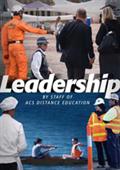
Leadership
What makes a good leader? Is it an innate personality trait or a skill that can be acquired? This book is an excellent guide to the theories and practice of leadership. It is full of interesting facts about social dynamics and examples of leadership styles. For those who are curious or in need of some leadership skills, this book will provide both entertainment and advice.

Management
Management is the process of planning, organising, leading, and controlling an organisation’s human and other resources to achieve business goals. More importantly though, effective management needs to be a process of human interaction and compassion. Most bad managers don’t know they are bad. They may well admit that they are a bit erratic, or they are sometimes late to appointments, but it is rare that they will recognise that they are ineffective as managers. Never fear...read here. This book has something to offer even the best of managers.

Modern Marketing
This book explores new approaches to marketing, how to adapt to a continually changing world both through online marketing, and more. Some aspects of marketing never change; but many of the well established approaches used in the past simply do not work any more. This book lays a foundation for thinking about marketing in a different way
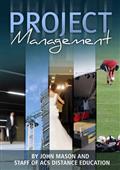
Project Management
This ebook is designed to help improve your capacity to manage any type of project in any type of industry. It may be read as a stand- alone book; used as something to refer to during the process of managing projects, or used as a complementary reference to help enhance the overall learning experience when studying a project management course.