
Start a Business at Home
- Not just a course!

- Unlike other small business courses!
- Our principal, John Mason, started this school as a small part time business. Decades later our courses are turning over millions of dollars annually.
- Our other tutors include a diverse mix of others who have successfully started and run small businesses, from craft businesses to consultancies, and garden to accommodation businesses.
Aims
- Discuss the nature of small business and the skills required to run one successfully.
- Explain the legal requirements, restrictions and the costs of running a small business.
- Describe the different aspects and considerations associated with starting a new or buying an existing business.
- Explain the marketing process.
- Explain the importance of planning in the running of a successful business.
- Explain the importance of record keeping and the principles of bookkeeping.
- Determine sales and promotions strategies in small business.
- Explain the importance of budgets.
- Develop a business plan.
- Implement a business plan.
- Identify factors that affect profitability.
Lesson Structure
There are 12 lessons in this course:
-
Introduction to Small Businesses
- Nature and success factors
- Primary, Secondary or Tertiary business
- Scope and Types of Businesses
- Options –size, products, positioning, legal structure, specialisation, type of industry
- What makes it a “small” business
- Key Success factors –entrepreneurship, market niche, information, reputation, flexibility
- Understanding Risk of Failure
- Set task
- Assignment
-
The World of Business
- Business structures –sole trader, partnership, companies (public and proprietary)
- Advantages and disadvantages of different types of ownership
- Small Business and the Law
- Importance of record keeping
- Regulations affecting site and operations
- Components of a legal system –lawmakers, interpreters, enforcers, administrators, advisors
- Common law rights and obligations
- Protection of Consumers
- Trade practices, trademarks, brands, business, IP.
- Business Registration
- Employment Law –employment contracts
- Business disputes –negotiation, arbitration, mediation, etc.
- Contract Types –employment, lease, sale of goods or services, insurance, etc.
- Prerequisites of a contract –what comprises a contract?
- Taxation and small business
- Insurance –private, property damage, life insurance, business insurances for risk management
- Business Case Study
- Set Tasks –researching local issues
- Assignment
-
Considering the Alternatives
- Goods manufacturing, or services
- Factors to consider -market niche, location, goodwill, personal factors, etc
- Business terminology
- Establishing a new small business
- Considering options of buying into a franchise, buying an established business or starting up from nothing.
- What to look for when buying an established business
- Understanding franchising
- Guidelines for starting something new
- Assignment
-
Understanding Marketing
- Nature and scope of marketing
- Purpose of Advertising
- Managing the marketing process
- The marketing concept
- Marketing goals
- Marketing plans
- Strategic marketing planning
- Marketing objectives and strategies
- Target markets
- Developing a marketing mix
- Organising the Planning Process
- Reviewing a Business Situation
- Business Mission Statement
- Establishing marketing objectives
- Broadening geographical representation
- Maximizing customer service
- Developing strategies to achieve objectives
- Increasing market share –geographical expansion, market penetration, price factors
- Analyzing market opportunities –external influences and internal influences
- General economic conditions
- Government policies and regulations
- Marketplace laws
- International influences
- Demographics
- Technology
- Changing Customer attitudes and values
- Activity of competitors
- Alternative marketing methods
- Analyzing business resources, market share, product characteristics, advertising, price, innovation potential financial capacity.
- Selecting Target markets
- Mass marketing, niche marketing, differentiated marketing, etc
- Physical basis for market segmentation
- Behavioural basis for market segmentation
- Developing the Marketing Mix
- Branding and packaging
- Understanding the price element
- Pricing methods
- Understanding the promotion element
- Public relations, advertising, sales
- Distribution
- Product life cycle
- Analyzing costs and benefits
- Managing a marketing plan
- Structuring advertising or promotions
- Publicity Marketing
- Set task
- Assignment
-
Planning
- Scope and nature of planning
- Developing a business plan
- The planning process
- Checklist for a business plan
- Market research
- Business plan pro forma –a template for you to follow for creating a very detailed business plan
-
Record Keeping and Bookkeeping
- What records are essential?
- The simplest approach to financial bookkeeping
- The value of financial records
- Source documents
- Cash book
- Credit sales and credit purchases
- Bank reconciliation
- Petty Cash
- The Balance Sheet
- Classification of the balance sheet
- Working capital
- Profit and loss statement
- Preparing a profit and loss statement
- The link between profit and the balance sheet
- Assignment
-
Sales Methods
- Personal Selling
- Rules of Selling
- Types of Selling
- Types of customers
- The Salesperson -characteristics and knowledge needed
- Using the telephone
- Set task
- Assignment
-
Budgeting
- Scope and nature of budgets
- Types of budgets
- Assignment
-
Developing a 12 month Business Plan
- Planning for manpower needs
- Planning where to work from initially (eg. home, leased or purchased property)
- You will create a simple plan within the following framework, submit, and recive feedback from our academic staff on what you propose.
- Description of the Business
- Motives for Entering Business
- The Opportunity and Strategy
- The Target Market
- Relevant Experience and Skills
- Financial Assistance Required
- Financial Projections
- Financial Summary
-
Implementing a Business Plan
- This lesson considers how the plan you developed might be implemented.
- Consider who is going to do the work: how will you manage to get things implemented
- Motivating employees
- Delegating work tasks
- Assignment
-
Reviewing Progress in a New Business
- Monitoring performance
- Evaluating Performance
- Modifying performance
- Assignment
-
Improving Profitability
- How can profits be increased
- Business expansion and sources of finance
- Overdraft facility
- Equity Credit
- Fully Drawn Advances / Term Loans
- Bills of Exchange
- Leasing
- Inventory Financing
- Sources of Funds
- Information required when sourcing funds
- Good Management Practices
- Set Task
- Assignment
Accreditations
Small Businesses Succeed if You Do it Right
Anyone starting a business for the first time will probably experience a whole range of emotions, from excitement to apprehension. The anticipation of success is commonly high; but the reality of running a small business can also take you to emotional lows, if you don't fully plan and prepare before launching.
Doing this course can raise your awareness of many things:
- Make better decisions about what sort of business to develop, how to best develop it.
- Identify risks so you can avoid problems before they overtake you.
- Recognise your assets and liabilities and utilize your resources to best effect.
Small Owner Operated Businesses are Critical to Economic Development
Small businesses are the main source of most innovation and invention.
An invention is the development of something new. Innovation occurs when something already established is improved upon. Many successful businesses are built on these two forces, especially on innovation. Research and development (R&D), however, can be rather costly. Small business faced with having to undertake R&D often finds difficulty is obtaining adequate finance. Traditional sources of finance, especially banks, perceive this type of finance request as high risk. One possible source of finance for R&D is venture capital. Venture capital is money that is invested in small and sometimes struggling businesses that have the potential to become very successful. The investors take an equity position in the business (own part of it) and provide supplementary finance. When venture capital is used in the initial feasibility stage, that is, when determining whether a potential idea can lead to a profitable product and business, it is referred to as seed capital.
TIPS FOR SUCCESS IN A SMALL BUSINESS
All small business owners start off optimistically, believing that their business venture will lead to financial success and security. Many may have read some multitude of books available about being successful in small business. These books usually highlight five common ‘keys’ to small business success.
1. Entrepreneurial abilities. The people in small business are crucial to the success of the enterprise. Attitudes and personalities of owners will vary enormously. Some will have drive and enthusiasm, many will have set targets and some will take big risks. Some will thrive on the challenge of a potential failure, enjoying the process of solving problems. The majority will be highly motivated and optimistic.
2. Access to information. As a bare minimum the small business operator must have information regarding profitability, the quality of products and services and the performance of employees. Accurate and up to date information will allow the small business owner to make the best decisions.
3. Flexibility. The small size of the business allows the owner to adapt quickly to changes in the external environment. Because there are fewer levels of management, decisions can be made quickly. In addition, the close contact between owners and customers allows the establishment of personal relationships, helping owners to respond quickly to their customer’s changing tastes and preferences.
4. Focus on market niche. Small businesses can concentrate their efforts on a few key customers or a specific segment of the market. This provides the opportunity for the small business to become more specialised and able to deliver a high level of service.
5. Reputation. Because the small business is servicing a narrow market niche, it can develop enviable reputations for quality and service.
These five ‘keys’ above have been identified as major success factors.
HOW CAN THIS COURSE HELP ME?
TAKE THINGS ONE STEP AT A TIME
Studying this course is an excellent starting point; but study alone doesn't ensure success in business or a career.
- Who you know can be just as important as what you know - so we make a point throughout this course of helping you build contacts. We show you how to network, we encourage you to network, and we build networking into your assignments and set tasks.
- Knowing how to find information and solve problems is also critical to the success of any business; and again, we have designed this course to nurture these skills.
- Studying is about more than just accumulating information - you need to learn what to do with the information you gather.
Some schools emphasise the learning of factual information and assessing your retention of that information. At ACS, we feel that approach is very little different to buying and using a book. If that is all you want, this is not the course for you. This course is for people who want something more; something that will make a difference to you.
Enrol using the automated procedure on this site or contact us via phone or email to ask questions and enrol with a real person.
You can enrol at anytime and start the course when you are ready. Enrolments are accepted all year - students can commence study at any time. All study is self paced and ACS does not set assignment deadlines.
Please note that if a student is being assisted by someone else (e.g. an employer or government subsidy), the body offering the assistance may set deadlines. Students in such situations are advised to check with their sponsor prior to enrolling. The nominal duration of a course is approximately how long a course takes to complete. A course with a nominal duration of 100 hours is expected to take roughly 100 hours of study time to complete. However, this will vary from student to student. Short courses (eg. 100 hrs duration) should be completed within 12 months of enrolment. Certificates, Advanced Certificates and Awards (eg. over 500 hours duration) would normally be completed within 3 -5 years of enrolment. Additional fees may apply if a student requires an extended period to complete.
If a student cannot submit their assignments for 6 months to ACS, they should advise the school to avoid cancellation of their student
registration. Recommencement fees may apply.
Simply click on the ENROL OPTIONS button at the top of this screen and follow the prompts.
You can see the course price at the top of this page. Click 'enrolment options' to see any payment options available.
You can pay by Credit Card, PayPal, Afterpay or bank transfer.
Yes! We have payment plans for most courses. Click 'enrolment options' to see the available payment plans.
We also have Afterpay that will allow you to pay for your course or payment plans in four instalments (if you are in Australia).
There are no entry requirements that you need to meet to enrol in our courses, our courses are for everyone.
If you are under 18, we need written permission from your parent/ guardian for your enrolment to continue, we can arrange that after you have enrolled.
You don’t need to purchase any additional resources to complete our courses.
What do I need to know before I enrol?
We aim to teach you the essentials without you having to purchase any specific computer program.
We recommend that you have access to a word processing program, such as Microsoft Word or Google Docs, so that you can easily complete and submit your assignments.
You sure can. We are here to help you learn whatever your abilities.
Yes, if you are enrolling in a Certificate or Advanced Certificate, you might be eligible for credits if you have evidence of your previous studies or relevant experience. More information is here.
We recommend that you are able to browse websites, send emails and conduct online research. You will need to be able to type and submit your assignments.
If you have limited computer skills, we can make special arrangements for you.
This is possible, it depends on the institution. We recommend that if you would like to use our courses that you contact the institution first. Our Course Handbook is a good resource for this.
Our courses are written in English and we only have English speaking academic staff. If you can read and complete your assignments in English, our courses are ideal for you.
Our courses are designed to build knowledge, hands on skills and industry connections to help prepare you to work in the area, running your own business, professional development or as a base for further study.
This course has been designed to cover the fundamentals of the topic. It will take around 100 hours to complete, which includes your course reading, assignment work, research, practical tasks, watching videos and anything else that is contained in the course. Our short courses are a great way to do some professional development or to learn a new skill.
It’s up to you. The study hours listed in the course are a rough guide, however if you were to study a short course (100 hours) at 10 hours per week, you could finish the course in 10 weeks (just an example). Our courses are self-paced, so you can work through the courses in your own time. We recommend that you wait for your tutor to mark and return your assignment before your start your next one, so you get the benefits of their feedback.
The course consists of course notes, videos, set tasks for your practical work, online quizzes, an assignment for each lesson (that you receive feedback from your tutor from) and ends in an exam (which is optional, if would like to receive the formal award at the end), using our custom built Learning Management System - Login.Training.
Our courses are designed for adults to gain professional development and skills to further their careers and start businesses.
Our custom online learning portal allows you to conduct your learning online. There may be practical tasks that you can do offline. You have the option of downloading your course notes or print them to read later.
There is also the option to pay an additional fee for printed course notes and or USB (availability limited to location and deliverability).
Yes, if you don’t have access to the internet, you can receive the course as paper notes or on a USB stick for an additional fee. We can also make alternative arrangements for you to send your assignments to us.
We offer printed notes for an additional fee. Also, you can request your course notes on a USB stick for an additional fee.
Yes, your tutor is here to help you. Simply post any questions you have in your login.training portal or contact the office and we can pass on a message to your tutor.
We are more learning focussed, rather than assessment focussed. You have online quizzes to test your learning, written assignments and can complete an exam at the end of the course (if you want to receive your certificate). You will not receive a pass/ fail on your course work. If you need to add more details on your assignment, we will ask you to resubmit and direct you where you need to focus. If you need help, you can ask your tutor for advice in the student room.
Each module (short course) is completed with one exam.
Exams are optional, however you must sit an exam if you would like to receive a formal award. You will need to find someone who can supervise that you are sitting the exams under exams conditions. There is an additional cost of $60 incl. GST for each exam.
More information is here
There are practical components built into the course that have been designed to be achieved by anyone, anywhere. If you are unable to complete a task for any reason, you can ask your tutor for an alternative.
When you complete the course work and the exam and you will be able receive your course certificate- a Statement of Attainment. Otherwise, you can receive a Letter of Completion.
You can bundle the short courses to create your own customised learning bundle, Certificates or Advanced Certificates. More information is on this page.
Yes, our courses are built to be applicable for people living anywhere in any situation. We provide the fundamentals, and each student can apply their own unique flair for their own interests, region and circumstances with the one-on-one guidance of a tutor. There is also a bit of student directed research involved.
Employers value candidates with industry skills, knowledge, practical skills and formal learning. Our courses arm you with all of these things to help prepare you for a job or start your own business. The longer you study the more you will learn.
ACS has an arrangement with OAMPS (formerly AMP) who can arrange Professional Indemnity from Australian and New Zealand graduates across all disciplines. Ph: 1800 222 012 or email acs@oamps.com.au.
Who are ACS Distance Education?
ACS Distance Education have been educating people for over 40 years.
We are established and safe- we have been in education for over 40 years.
We are focused on developing innovative courses that are relevant to you now and what you will need to know in the future.
We are focused on helping you learn and make the most of your experience.
You can enrol at any time, you can work on your course when it suits you and at your own pace.
We are connected to many industry bodies and our staff participate in continuous improvement and learning activities to ensure that we are ahead of what learning is needed for the future.
Our courses are not accredited by the Australian Government. However many of our courses are recognised and held in high regard by many industry bodies.
Our courses are written by our staff, who all have many years experience and have qualifications in their speciality area. We have lots of academic staff who write and update our courses regularly.
How do I enrol my staff/ sponsored students?
Yes, you can do a request for a bulk enrolment and request an invoice on our Invoice Request Form
We can prepare an invoice, quote or proforma invoice. Simply complete your details on our Invoice Request form
We can arrange bulk discounts for your course enrolment, please get in touch with us to discuss your needs.
Yes, we have many students who are in locked facilities, such as prisons or hospitals. We can cater by also offering paper notes at an additional cost.
What if I have any more questions or need more information?
We can assist you to find the right course for your needs. Get in touch with us via email (admin@acs.edu.au) call on +61 7 5562 1088 or complete our course advice form.
What if I change my mind?
Please get in touch with studentservices@acs.edu.au if you would like to be removed from our mail list.
If you would like ACS Distance Education to delete your information at any time (whether you are a customer or a prospective customer), please contact our privacy officer and we will process this ( admin@acs.edu.au ).
If students require a reproduction of their certificate, an electronic copy can be provided at a cost of AUD$35 incl GST. Printed copies are not available.
Course Contributors
The following academics were involved in the development and/or updating of this course.

John Mason
Writer, Manager, Teacher and Businessman with over 40 years interenational experience covering Education, Publishing, Leisure Management, Education, and Horticulture. He has extensive experience both as a public servant, and as a small business owner.
John is a well respected member of many professional associations, and author of over seventy books and of over two thousand magazine articles.

David Crothers
Extensive international experience in business and finance. Chartered Accountant with 20 years experience in corporate and financial roles. David has a FCA, GAICD, B.Sc.Econ (Hons), Cert IV TAA.

Kate Gibson
Kate has 12 years experience as a marketing advisor and experience as a project manager. Kate has traveled and worked in a variety of locations including London, New Zealand and Australia. Kate has a B.Soc.Sc, Post-Grad. Dip. Org Behaviour (HR).

Christine Todd
University lecturer, businesswoman, photographer, consultant and sustainability expert; with over 40 years industry experience
B.A., M.Plan.Prac., M.A.(Social).
An expert in planning, with years of practical experience in permaculture.
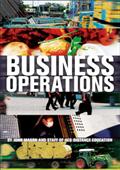
Business Operations
Covers things from running a business from finance and forecasting to staffing changes and legal issues. Chapters include: People, Law, Finance, Risk, Product Management, and Daily challenges.

Modern Marketing
This book explores new approaches to marketing, how to adapt to a continually changing world both through online marketing, and more. Some aspects of marketing never change; but many of the well established approaches used in the past simply do not work any more. This book lays a foundation for thinking about marketing in a different way
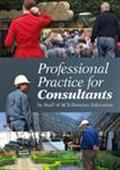
Professional Practice for Consultants
Explore becoming a consultant. This ebook contains chapters on how to be a consultant, packaging your services, delivering the services, building your resources, finding the work and getting the job, planning and ethics.

Starting a Business
Businesses don't need to fail! This is concise, easy to read, and alerts you to all of the things that commonly make a difference to business success or failure. Seven chapters are: “A Reality Check”, “The Product or service”, “Managing a Business”, “How to Find Customers”, “How to Make a Sale”, “Delivering the Product or Service”, “Pitfalls to Avoid”.