
Develop Industry Skills to Manage Projects
 Become a Project Manager. Learn established and well trusted project management processes to ensure successful project outcomes.
- Plan, Manage and (on completion) Review Projects
- Understand technical and human resources, marketing, and other aspects of a project
- Apply these skills to property development, mining, agricultural, engineering, events or other projects
- Enhance your employability across a wide range of industries
This is a compressed version of a much longer course, so it is highly informative, and great value for money. It was developed by highly qualified professionals, with years of experience in their respective fields.
Almost everything we do in society can be described as a project, from organising a party or constructing a building, to developing a new business or introducing a new social welfare project. Project management as a skill and field of study is essential for successful organisational management. As a formal management function, project management is found in government, industry, and almost all other organisations. Project Management may be called any of a number of other names such as: Program Management, Product Management, Construction Management, and so on.
Project management as a field of action can often be seen in self help schemes or outreach programs. Whatever the objectives, project management involves a number of phases and skills which are essential to a projects completion. To get a better understanding of this process, the term "project management" can be further broken into "project" and "management".



Aims
- Explain what project management is, and what its applications might be.
- Identify and define projects which need management.
- Plan a project.
- Implement a project.
- Evaluate a project following completion.
- Describe technical skills required to manage projects.
- Demonstrate project leadership skills.
- Identify and solve common project problems.
- Consolidate all of the skills and information from throughout the past 8 lessons, and manage a project effectively.
Lesson Structure
There are 9 lessons in this course:
-
Introduction
- Scope and Value of Project Management
- Understanding what project management is
- The Need for Project Management
- The Project Lifecycle
- Project Identification and Initiating Process
- Project Planning
- Project Implementation,Execution and Control
- Project Completion and Evaluation
-
Project Identification
- Scope and Nature
- Formulating Project Objectives
- Developing a Project Outline
- Assessing a Projects Feasibility
- Feasibility Checklist
- The Identification Test
- Three Types of Risk
-
Planning Projects
- Planning Heirachy
- Planning Parameters
- Planning Quality
- Developing a Strategy Framework
- Project Breakdown Structure
- Planning Time
- The Gantt Chart
- PERT Charts
- Planning Expense
- Delegating Responsibilities
-
Implementing a Project
- Introduction
- Implementation
- Controlling Process
- Applying Standards
- Events Control Chart
- Budget Control Chart
- Monitoring Performance
- Evaluating Performance
- Regulating Process
-
Completion and Evaluation of a Project
- Introduction
- Why is a Closing Phase Necessary
- Declaring Iminent Completion
- Reassignment of Resources
- Considering Project Sustainability
- Project Assessment; Final Report, Performance Reviews
- Appraising the Project
- Why Projects Succeed or Fail
-
Developing Technical Project Management Skills
- Preparing a Project Proposal
- Proposal Layout
- Drawing Up a Budget
- Constructing a Post Project Appraisal
- Software for Projects; How Project Management Software Works, choosing software
- What Project Management Software Cannot Do
-
Understanding Leadership Skills
- Scope and Nature of Leadership
- How to Be A Project Leader
- Visibility & CommunicationsLeadership Characteristics
- Leadership Skills
- Improving Leadership Skills
- Giving Directives and Introducing Change
- Orders
-
Improving Critical Personnel Skills
- Inevitability of Problems
- Common Problems
- Schedule variations
- Changing priorities
- Administration overload
- Deadline Changes
- Cash blow out
- Inappropriate skills
- Role Confusion
- Exhausted Team
- Politics
- Reduced Motivation
- Communication Breakdown
-
Major Assignment
- Development of full documentation for projects.
Accreditations
How Do You Start Planning a Project?
A project outline is simply a general guide of factors to consider once a projects objectives have been formulated. This framework guides a project manager through an initial layout or idea of the project plan, but does not involve a detailed analysis of the proposal (this detail follows in the next phase of the project cycle).
A project can be drawn up by the following five steps:
- Define the Problem, Issue or Challenge.
- Determine a Definition.
- Get an Idea of the Projects Lifespan.
- List the Necessary and Not so Necessary Needs.
- Note Possible Alternatives.
Define the Problem, Issue or Challenge
The first step is to clearly establish an understanding of what the project is about. Consideration can be given to reviewing past project experiences of a similar nature, and such like methods to clarify the "exact nature" of the need, challenge or opportunity for which the project is being developed (this is discussed in more detail in assessing a projects feasibility later on).
It is useful to ask things such as:
- Is the project about making a profit?
- Is the project about fulfilling a physical need?
- Is the project about a social vision?
Determine a Definition
The second step is to formulate a rough preliminary project definition on which future planning will be based. The definition or description of what a project is about may be refined in the next phase of the project cycle (ie. Project Planning), or simply changed as new information comes to light. However, generally speaking, this definition should be as consistent as possible throughout the project cycle once this phase is complete.
It is useful to ask things such as:
- Will the project be about a physical activity?
- Will the project be about a mental activity?
- Who will the project target?
Get an Idea of the Project’s Lifespan
The third step is to get a general idea of how long the project will be, or when a project can be expected to end. This is a rough estimation only and provides an idea of a possible start and end.
It is useful to ask things such as:
- Will the project be short term (less than 1 year)?
- Will the project be medium term (2 to 5 years)?
- Will the project be long term (over 5 years)?
List the Necessary and Not so Necessary Needs
The fourth step is to identify the potential needs, notably people, money and materials, that may be required for the project. Once more, this should only be a rough estimate to inform the project manager about the immediacy or availability of important supplies and resources.
It is useful to ask things such as:
- Who is currently available to assist in the project?
- Is there money available at this point in time?
- Are supplies or material goods available at this point in time?
Note Possible Alternatives
The fifth step is to list any provisional alternatives a project manager should consider during planning. Although not a vital step, highlighting other opportunities or approaches at this stage can help in drawing up a rough sketch of expectations. This step also warns a project manager about some possible risks.
It is useful to ask things such as:
-
Who could I contact, if the people I thought of are unavailable?
-
Where else might I obtain funding from?
-
What if the project purpose is unnecessary?
How this Course has Developed over Several Decades
This 100 hour course is based on, and incorporates, the entire contents of a Diploma in Project Management, conducted by the Home Study College in South Africa. The current course is more than the original though, having been updated, upgraded and developed, by tutors of ACS, to streamline and generally improve tutor interaction.
ACS was authorised to use this material under an agreement between the two schools; beyond which the use of these course notes is restricted in accordance with international copyright laws.
The course has been developed beyond this point by a series of experienced project managers, at least once every two years. It has become an excellent and unique study program that reflects the experience of more than a dozen different project managers from three different countries.
It has been revised and updated more than ten times over two decades, and will continue to be revised routinely, in response to feedback from industry, students, graduates and academic staff from affiliated colleges around the world.
HOW CAN THIS COURSE HELP ME?
Project managers who are competent and well organised are sought after in any industry.
-
Develop your skills in planning, strategy, leadership, conflict management.
-
Learn project planning and implementation.
-
Develop leadership skills.
-
Learn how to identify and solve project problems.
-
Apply your skills to any industry.
Enrol using the automated procedure on this site or contact us via phone or email to ask questions and enrol with a real person.
You can enrol at anytime and start the course when you are ready. Enrolments are accepted all year - students can commence study at any time. All study is self paced and ACS does not set assignment deadlines.
Please note that if a student is being assisted by someone else (e.g. an employer or government subsidy), the body offering the assistance may set deadlines. Students in such situations are advised to check with their sponsor prior to enrolling. The nominal duration of a course is approximately how long a course takes to complete. A course with a nominal duration of 100 hours is expected to take roughly 100 hours of study time to complete. However, this will vary from student to student. Short courses (eg. 100 hrs duration) should be completed within 12 months of enrolment. Certificates, Advanced Certificates and Awards (eg. over 500 hours duration) would normally be completed within 3 -5 years of enrolment. Additional fees may apply if a student requires an extended period to complete.
If a student cannot submit their assignments for 6 months to ACS, they should advise the school to avoid cancellation of their student
registration. Recommencement fees may apply.
Simply click on the ENROL OPTIONS button at the top of this screen and follow the prompts.
You can see the course price at the top of this page. Click 'enrolment options' to see any payment options available.
You can pay by Credit Card, PayPal, Afterpay or bank transfer.
Yes! We have payment plans for most courses. Click 'enrolment options' to see the available payment plans.
We also have Afterpay that will allow you to pay for your course or payment plans in four instalments (if you are in Australia).
There are no entry requirements that you need to meet to enrol in our courses, our courses are for everyone.
If you are under 18, we need written permission from your parent/ guardian for your enrolment to continue, we can arrange that after you have enrolled.
You don’t need to purchase any additional resources to complete our courses.
What do I need to know before I enrol?
We aim to teach you the essentials without you having to purchase any specific computer program.
We recommend that you have access to a word processing program, such as Microsoft Word or Google Docs, so that you can easily complete and submit your assignments.
You sure can. We are here to help you learn whatever your abilities.
Yes, if you are enrolling in a Certificate or Advanced Certificate, you might be eligible for credits if you have evidence of your previous studies or relevant experience. More information is here.
We recommend that you are able to browse websites, send emails and conduct online research. You will need to be able to type and submit your assignments.
If you have limited computer skills, we can make special arrangements for you.
This is possible, it depends on the institution. We recommend that if you would like to use our courses that you contact the institution first. Our Course Handbook is a good resource for this.
Our courses are written in English and we only have English speaking academic staff. If you can read and complete your assignments in English, our courses are ideal for you.
Our courses are designed to build knowledge, hands on skills and industry connections to help prepare you to work in the area, running your own business, professional development or as a base for further study.
This course has been designed to cover the fundamentals of the topic. It will take around 100 hours to complete, which includes your course reading, assignment work, research, practical tasks, watching videos and anything else that is contained in the course. Our short courses are a great way to do some professional development or to learn a new skill.
It’s up to you. The study hours listed in the course are a rough guide, however if you were to study a short course (100 hours) at 10 hours per week, you could finish the course in 10 weeks (just an example). Our courses are self-paced, so you can work through the courses in your own time. We recommend that you wait for your tutor to mark and return your assignment before your start your next one, so you get the benefits of their feedback.
The course consists of course notes, videos, set tasks for your practical work, online quizzes, an assignment for each lesson (that you receive feedback from your tutor from) and ends in an exam (which is optional, if would like to receive the formal award at the end), using our custom built Learning Management System - Login.Training.
Our courses are designed for adults to gain professional development and skills to further their careers and start businesses.
Our custom online learning portal allows you to conduct your learning online. There may be practical tasks that you can do offline. You have the option of downloading your course notes or print them to read later.
There is also the option to pay an additional fee for printed course notes and or USB (availability limited to location and deliverability).
Yes, if you don’t have access to the internet, you can receive the course as paper notes or on a USB stick for an additional fee. We can also make alternative arrangements for you to send your assignments to us.
We offer printed notes for an additional fee. Also, you can request your course notes on a USB stick for an additional fee.
Yes, your tutor is here to help you. Simply post any questions you have in your login.training portal or contact the office and we can pass on a message to your tutor.
We are more learning focussed, rather than assessment focussed. You have online quizzes to test your learning, written assignments and can complete an exam at the end of the course (if you want to receive your certificate). You will not receive a pass/ fail on your course work. If you need to add more details on your assignment, we will ask you to resubmit and direct you where you need to focus. If you need help, you can ask your tutor for advice in the student room.
Each module (short course) is completed with one exam.
Exams are optional, however you must sit an exam if you would like to receive a formal award. You will need to find someone who can supervise that you are sitting the exams under exams conditions. There is an additional cost of $60 incl. GST for each exam.
More information is here
There are practical components built into the course that have been designed to be achieved by anyone, anywhere. If you are unable to complete a task for any reason, you can ask your tutor for an alternative.
When you complete the course work and the exam and you will be able receive your course certificate- a Statement of Attainment. Otherwise, you can receive a Letter of Completion.
You can bundle the short courses to create your own customised learning bundle, Certificates or Advanced Certificates. More information is on this page.
Yes, our courses are built to be applicable for people living anywhere in any situation. We provide the fundamentals, and each student can apply their own unique flair for their own interests, region and circumstances with the one-on-one guidance of a tutor. There is also a bit of student directed research involved.
Employers value candidates with industry skills, knowledge, practical skills and formal learning. Our courses arm you with all of these things to help prepare you for a job or start your own business. The longer you study the more you will learn.
ACS has an arrangement with OAMPS (formerly AMP) who can arrange Professional Indemnity from Australian and New Zealand graduates across all disciplines. Ph: 1800 222 012 or email acs@oamps.com.au.
Who are ACS Distance Education?
ACS Distance Education have been educating people for over 40 years.
We are established and safe- we have been in education for over 40 years.
We are focused on developing innovative courses that are relevant to you now and what you will need to know in the future.
We are focused on helping you learn and make the most of your experience.
You can enrol at any time, you can work on your course when it suits you and at your own pace.
We are connected to many industry bodies and our staff participate in continuous improvement and learning activities to ensure that we are ahead of what learning is needed for the future.
Our courses are not accredited by the Australian Government. However many of our courses are recognised and held in high regard by many industry bodies.
Our courses are written by our staff, who all have many years experience and have qualifications in their speciality area. We have lots of academic staff who write and update our courses regularly.
How do I enrol my staff/ sponsored students?
Yes, you can do a request for a bulk enrolment and request an invoice on our Invoice Request Form
We can prepare an invoice, quote or proforma invoice. Simply complete your details on our Invoice Request form
We can arrange bulk discounts for your course enrolment, please get in touch with us to discuss your needs.
Yes, we have many students who are in locked facilities, such as prisons or hospitals. We can cater by also offering paper notes at an additional cost.
What if I have any more questions or need more information?
We can assist you to find the right course for your needs. Get in touch with us via email (admin@acs.edu.au) call on +61 7 5562 1088 or complete our course advice form.
What if I change my mind?
Please get in touch with studentservices@acs.edu.au if you would like to be removed from our mail list.
If you would like ACS Distance Education to delete your information at any time (whether you are a customer or a prospective customer), please contact our privacy officer and we will process this ( admin@acs.edu.au ).
If students require a reproduction of their certificate, an electronic copy can be provided at a cost of AUD$35 incl GST. Printed copies are not available.
Course Contributors
The following academics were involved in the development and/or updating of this course.

John Mason
Writer, Manager, Teacher and Businessman with over 40 years interenational experience covering Education, Publishing, Leisure Management, Education, and Horticulture. He has extensive experience both as a public servant, and as a small business owner.
John is a well respected member of many professional associations, and author of over seventy books and of over two thousand magazine articles.

Jacinda Cole
Former operations manager for highly reputable Landscape firm, The Chelsea Gardener, before starting her own firm. Jacinda has over 20 years of industry experience in Psychology, Landscaping, Publishing, Writing and Education. Jacinda has a B.Sc., Psych.Cert., M. Psych. Cert.Garden Design, MACA.

Kate Gibson
Kate has 12 years experience as a marketing advisor and experience as a project manager. Kate has traveled and worked in a variety of locations including London, New Zealand and Australia. Kate has a B.Soc.Sc, Post-Grad. Dip. Org Behaviour (HR).
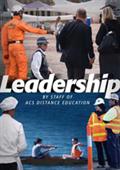
Leadership
What makes a good leader? Is it an innate personality trait or a skill that can be acquired? This book is an excellent guide to the theories and practice of leadership. It is full of interesting facts about social dynamics and examples of leadership styles. For those who are curious or in need of some leadership skills, this book will provide both entertainment and advice.
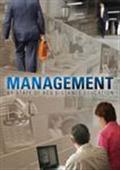
Management
Management is the process of planning, organising, leading, and controlling an organisation’s human and other resources to achieve business goals. More importantly though, effective management needs to be a process of human interaction and compassion. Most bad managers don’t know they are bad. They may well admit that they are a bit erratic, or they are sometimes late to appointments, but it is rare that they will recognise that they are ineffective as managers. Never fear...read here. This book has something to offer even the best of managers.
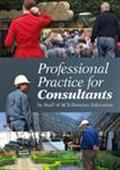
Professional Practice for Consultants
Explore becoming a consultant. This ebook contains chapters on how to be a consultant, packaging your services, delivering the services, building your resources, finding the work and getting the job, planning and ethics.
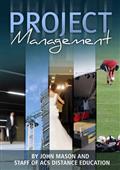
Project Management
This ebook is designed to help improve your capacity to manage any type of project in any type of industry. It may be read as a stand- alone book; used as something to refer to during the process of managing projects, or used as a complementary reference to help enhance the overall learning experience when studying a project management course.