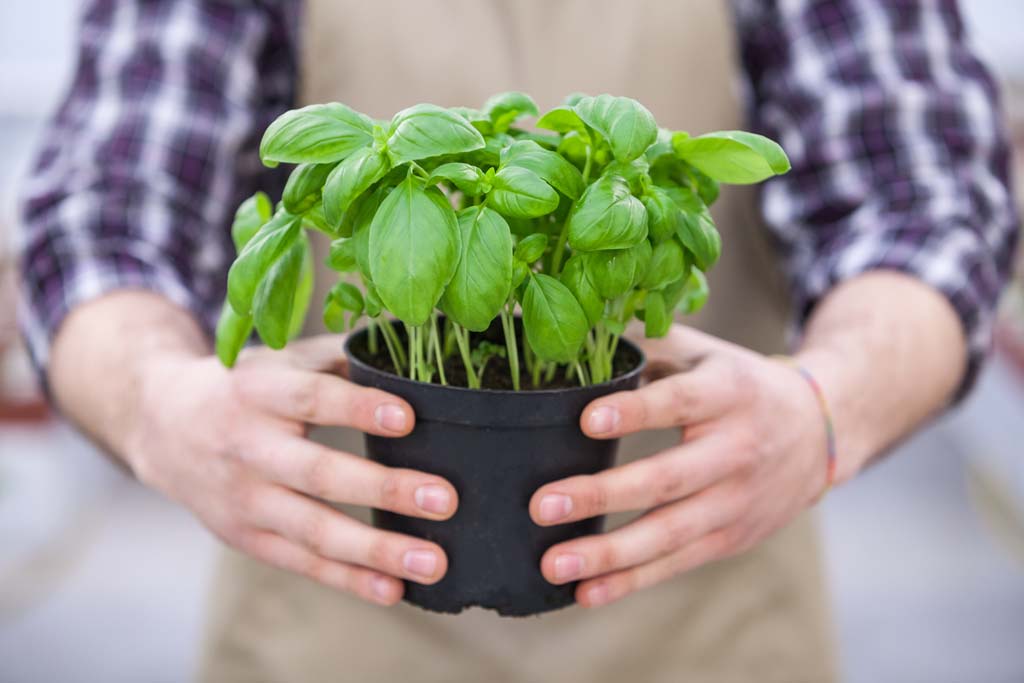
Herb Culture
Commercial herb production - turn a hobby or passion into a career in herbs. Set up a herb farm, grow herbs to sell at markets, or retail. Learn and develop great business opportunities for a career as a professional herb farmer.
TRAIN TO OPERATE A HERB BUSINESS 
- Learn to Grow Herbs Commercially as container plants or to harvest for market or processing.
- Self paced 100 hour course for the herb professional, tradesman, business owner or enthusiast
- Study with a team of herb professionals from both Australia and the UK
This is a fantastic course for anyone who is passionate about herbs, growing them and using them; and wants to learn more. Many of those who have studied this course have gone on to establish successful businesses or careers working with herbs; while others have studied this course to simply indulge their passion and become increasingly involved with herbs in their daily living.
Aims
- Differentiate between different varieties of herbs in cultivation.
- Explain the general cultural practices used for the growing of herbs.
- Determine harvest and post harvest techniques for herb crops, including processing, storage and use of herbs.
- Develop a production plan for a herb crop grown for harvesting.
- Develop a production plan for a herb nursery.
- Design a herb garden for a home or public garden.
- Evaluate the production of herbs or herb products in a commercial business.
What You Will Do
- Distinguish, using illustrations and minimum but adequate comments; between major plant families which herbs belong to.
- Compile a resource file of fifty different sources of information regarding cultivated herbs.
- Prepare an herbarium collection of one hundred different herb varieties.
- Develop guidelines for the general culture of herbs in your locality.
- Explain six different propagation methods suitable for herbs, using illustrations.
- Demonstrate how to prepare cuttings for three different herb varieties.
- Propagate three different varieties of commercially farmed herbs, using appropriate, but different propagation techniques for each.
- Explain natural pest and disease control methods for a specified herb species.
- Explain the concept of companion planting, including three examples of proven companion planting interrelationships.
- Write a maintenance schedule for either a herb garden, nursery or farm.
- Describe two different harvesting techniques for herbs, by outlining the steps to follow for each.
- Determine criteria which are critical to success in the process of drying herbs.
- Compare two different drying processes for herbs, with reference to: *equipment used *procedure *cost.
- Produce two marketable herb products by harvesting, and processing material from a herb plant.
- Prepare five different herbal products for home use.
- Estimate the costs associated with processing four different herbs to a marketable stage, itemising the components of costs for each.
- Determine ten different species of herbs which have potential to be grown commercially as broad acre crops in your locality.
- Describe the process of producing a specified commercial herb crop being grown organically.
- Describe the process of producing a commercial herb crop being grown hydroponically.
- Compare broad-acre production methods, used for three different herbs, including: *propagation *planting *crop management *harvesting *post-harvest processing; by constructing a table or chart.
- Design a simple trial, to test the commercial potential of different varieties of a specific herb species.
- Conduct the simple trial you designed recording details of tasks undertaken.
- Analyse the results of the trial conducted to test the performance of a herb plants.
- Determine the variety with greatest commercial potential from those trialled.
- Prepare flow-sheet broad acre crop production schedules for four herbs; one each from Allium, Apiaceae, Asteraceae, Lamiaceae groups.
- Determine minimum facilities required to produce saleable plants in a specified herb nursery.
- Prepare a potting media suitable for growing a container herb plant of a specified species, as nursery stock.
- Describe the procedures used in a commercial herb nursery, to produce plants for sale.
-
Differentiate between the procedures used for production of different products in a herb nursery, including:
- *Punnets of seedling herbs *Bare rooted plants *Standard container plants *Hanging baskets *Topiary.
- Grow a herb plant to a commercially acceptable standard, as a tubestock container plant, through all stages of production, without supervision.
- Prepare production schedules for two herbs from four different minor herb groups, for a specified nursery.
- Explain the use of general landscape principles and practices in the designs of two different herb gardens.
- Determine different applications for herbs in home gardens.
- Determine applications for herbs in public landscaping, referring to both difficulties and advantages in different situations.
- Design for a herb garden for a site of between 30 and 100 square metres surveyed by you, preparing a scale drawing showing the placement of at least 20 different varieties of herbs.
- Explain the reasoning behind the herb garden designed.
- Determine critical factors to establishing a new herb business, in your locality.
- Analyse the business operations of a specified herb enterprise.
- Assess market demand for a herbal product, through a phone survey and information search.
- Compare the commercial potential of three different types of herb enterprises, in your locality.
Lesson Structure
There are 12 lessons in this course:
-
Unit 1: Introduction to Herb Culture
- Lesson 1.1 Introduction to Herbs - definitions, uses, classification of herbs, using a botanical key
- Lesson 1.2 Cultural Techniques - planting, soils, drainage, feeding, mulching, composting, pruning
- Lesson 1.3 Propagation Techniques - propagation mixes, growing structures, cuttings, seed, separation & division, layering
- Lesson 1.4 Identification of Plant Health Problems - pests & diseases, frost, heat, water stress, etc.
-
Unit 2: Using Herbs
- Lesson 2.1 Processing & Use of Herbs - medicinal, culinary, perfumes, dyes, oils, distillation processes, etc.
- Lesson 2.2 Harvesting & Storage - air drying, oven drying, microwave drying, freezing, fresh storage, when & how to harvest.
-
Unit 3: The Mints (Lamiaceae)
- Lesson 3.1 Mentha Species - peppermint, spearmint, applemint, wintermint, pennyroyal, corsican, ginger mint etc.
- Lesson 3.2 Lavandula and Thymus (lavender & thyme)
- Lesson 3.3 Other Lamiaceae Herbs - lemon balm, hyssop, rosemary, bee balm (monarda), basil, savory, marjoram, sage, etc.
-
Unit 4: The Daisies (Asteraceae)
- Lesson 4.1 Artemisia Species - southernwood, wormwood, tarragon, mugwort
- Lesson 4.2 Other Asteraceae Herbs – chamomile, tansy, safflower, costmary, yarrow, calendula, dandelion, etc.
-
Unit 5: The Parsley Family (Apiaceae)
- Lesson 5.1 The Apiaceae (Umbelliferae) Family - parsley, coriander, dill, caraway, angelica, cumin, fennel, lovage, sweet cicely, etc.
-
Unit 6: The Onion Group
- Lesson 6.1 Chives, leek, garlic chives, tree onion, welsh onion, etc.
- Lesson 6.2 Garlic
-
Unit 7: Other Herbs
- Lesson 7.1 Rosaceae - roses, burnet, strawberry, blackberry, etc.
- Lesson 7.2 Miscellaneous Herbs - lemon grass, lemon verbena, bay, sorrel, dock, juniper, horseradish, evening primrose, etc.
- Lesson 7.3 Scented Geraniums
- Lesson 7.4 Australian Native Herbal Plants - eucalyptus and others
-
Unit 8: Pests & Diseases
- Lesson 8.1 Companion Planting
- Lesson 8.2 Natural Pest Control - herb sprays, biological control, etc.
-
Unit 9: Landscaping
- Lesson 9.1 Landscape Design Principles and Practices - how to draw a landscape plan
- Lesson 9.2 Home Gardening With Herbs - cottage gardens, hedges & borders, tubs, baskets, kitchen gardens, herb lawns, herb indoor plants.
- Lesson 9.3 Public Landscaping - historic herb gardens (e.g. knot gardens), herbs for low maintenance & colour in parks, etc.
-
Unit 10: Herb Farming I
- Lesson 10.1 Establishing & Operating a Herb Nursery - open ground vs container growing, nursery layout, potting soils, pots and labels, marketing, etc.
-
Unit 11: Herb Farming II
- Lesson 11.1 Establishing & Operating a Herb Farm - soil preparation and management (plastic mulch, organic mulches, cultivation), row cropping
-
Unit 12: Herb Farming III
- Lesson 12.1 Evaluating Herb Enterprises - assessing market demand, deciding how to proceed.
Accreditations
TIPS FOR HARVESTING HERBS
For the best results, herbs must be harvested correctly, at the right stage of growth, and stored properly.
Know the part of the plant you are harvesting; choose a dry day (don't harvest when the plant is wet), and in most cases, harvest when the plant is growing rapidly.
Avoid crushing or bruising plant parts during the harvest.
Most herbs can be used either fresh or dried; but some are much better fresh though (eg. chervil, chives, parsley, rosemary and sage).
To preserve the aroma of fresh herbs they can be stored in a plastic bag in the refrigerator until you are ready to use them. You might treat parsley this way for instance, keeping a bunch in the fridge and taking out what you need for each meal.
Herbs can be dried very simply by hanging sprigs upside down in a dry, well ventilated, dark place. A garage or storeroom is often used. A kitchen with large sunny windows is definitely not the place to dry herbs.
Alternatively herbs can be spread on trays or shelves made from wire mesh and stacked to allow good air movement between layers. A fan might even be used to keep air circulating. It is useful to turn the plants every 1‑2 days.
In humid climates the herbs need more ventilation to ensure they don't become infected with fungal growths before they dry. This involves making the bunches smaller or spreading the harvest thinner on the trays.
Drying should be done immediately after picking.
Drying works best if the following conditions are met:
-
A steady warm temperature (25‑35 degrees celsius is ideal)
-
Low light (except for roots which are dried in full sun)
-
Ventilation ‑good air movement around whatever is drying
You may achieve a reasonable result with many herbs even if these conditions are not met exactly ‑but probably the result will not be quite as good as it could have been.
After drying, leaves are removed from stalks by rubbing, then sieved and stored in air tight containers.
GARLIC
Garlic is one of the most widely grown herbs around the world.
Garlic thrives in fertile, well drained loam soils, but will grow satisfactorily in any soil which grows onions. Heavy clay soils should be avoided. Varieties vary in their keeping quality. It is grown early autumn or early spring. Cloves are separated and planted in raised beds with two rows to each bed (12 inches between these rows, and 2 inches between each clove). It requires approx 900pounds of cloves to plant one acre..
Garlic responds to fertilizer, but does not require as heavy feeding as other crops. For high yields, the upper 2ft of soil needs to remain moist, however over watering can be disastrous. Weeds are controlled by shallow cultivation. The bulb clove development commences when the leaves stop growing. To get maximum yields, it is necessary to get maximum top growth before this point.
MINT
There are many different species of Mentha which can be grown commercially. The Egyptian pharaohs are known to have distilled oil from peppermint (Mentha piperita). Commercial production of mint oil in the USA is 1000 metric tons annually, mainly on moist soils on the north west coastal states of Oregon & Washington. Mentha arvensis, piperita & spicata are all grown commercially in the USA.
Typically spearmint & peppermint are planted as rhizomes in rows. Weeds are controlled by cultivation in the first year. In late autumn, the plants are ploughed in before the frost. It spreads rapidly giving a paddock of mint the next season. Mint is cut with a mower and left to dry until moisture content drops to approx. 35% at which point it is collected and distilled for oil using a steam distillation technique.
LAVENDER
The largest lavender farm in the southern hemisphere operates on 150 acres in the north east of Tasmania (Bridestowe Estate at Nabowla). Lavender oil is distilled from Lavandula officinalis. The south of France can produce more than 100 metric tons of lavender oil some years. Bulgaria is another major producer of lavender oil.
MARIGOLD
Calendula officinalis, a common garden flower is valued as a yellow dye, a pot pourri additive (ie: dried flower heads) and for use in cosmetics and soaps.
PAPRIKA
Paprika is a variety of Capsicum annum, with long fruits that are much hotter than the common sweet pepper (grown as a vegetable)
It is a short lived herb normally grown as an annual. Plant is woody at base and grows only to around 1.5metres in height. Flowers are borne singly with a ribbed calyx, which enlarges to enclose the base of the fruit. The fruit is a berry (capsicum) which varies in size, shape, colour and pungency.
Cultivation: Paprika is actually a Capsicum plant, so cultivation is as per capsicums. The following are important when growing capsicums
- Good drainage is important to avoid leaf drop
- High temperatures are good, but excessive heat will reduce fruit set. Temperatures below 16 Degrees Celsius.
- Grows very well at day temperatures between around 22 and 29 degrees celsius
- Pests include aphids, fruit fly, root-knot nematode and thrips
- Used as a culinary herb in curries, salads, etc.
- Dried and ground to produce paprika powder
PARSLEY
Extremely popular herb, but grown widely by market gardeners alongside vegetables. Parsley seed can be slow to germinate, therefore it is often started in a hotbed or greenhouse. Young plants are transplanted to rows 40cms (15inches) apart, and 8cms (4 inches) between plants in the row.
Outer, older leaves are harvested regularly and bunched. Plants can continue to produce for up to 2 years depending on conditions.
Comment from one of our Herb Culture students: 'An excellent guide to self-learning" E. Holsman
AFTER YOUR STUDIES
Some graduates will use this as a starting point for a new business enterprise, while others use it as professional development to enhance their skills and further a business or career they had already begun.
This course will build your knowledge and understanding of herbs, nourish your passion and raise your awareness of opportunities that you may not have even considered.
This course provides a unique opportunity to lay a foundation
for developing a lifelong love affair with this fascinating group of
plants.
Enrol using the automated procedure on this site or contact us via phone or email to ask questions and enrol with a real person.
You can enrol at anytime and start the course when you are ready. Enrolments are accepted all year - students can commence study at any time. All study is self paced and ACS does not set assignment deadlines.
Please note that if a student is being assisted by someone else (e.g. an employer or government subsidy), the body offering the assistance may set deadlines. Students in such situations are advised to check with their sponsor prior to enrolling. The nominal duration of a course is approximately how long a course takes to complete. A course with a nominal duration of 100 hours is expected to take roughly 100 hours of study time to complete. However, this will vary from student to student. Short courses (eg. 100 hrs duration) should be completed within 12 months of enrolment. Certificates, Advanced Certificates and Awards (eg. over 500 hours duration) would normally be completed within 3 -5 years of enrolment. Additional fees may apply if a student requires an extended period to complete.
If a student cannot submit their assignments for 6 months to ACS, they should advise the school to avoid cancellation of their student
registration. Recommencement fees may apply.
Simply click on the ENROL OPTIONS button at the top of this screen and follow the prompts.
You can see the course price at the top of this page. Click 'enrolment options' to see any payment options available.
You can pay by Credit Card, PayPal, Afterpay or bank transfer.
Yes! We have payment plans for most courses. Click 'enrolment options' to see the available payment plans.
We also have Afterpay that will allow you to pay for your course or payment plans in four instalments (if you are in Australia).
There are no entry requirements that you need to meet to enrol in our courses, our courses are for everyone.
If you are under 18, we need written permission from your parent/ guardian for your enrolment to continue, we can arrange that after you have enrolled.
You don’t need to purchase any additional resources to complete our courses.
What do I need to know before I enrol?
We aim to teach you the essentials without you having to purchase any specific computer program.
We recommend that you have access to a word processing program, such as Microsoft Word or Google Docs, so that you can easily complete and submit your assignments.
You sure can. We are here to help you learn whatever your abilities.
Yes, if you are enrolling in a Certificate or Advanced Certificate, you might be eligible for credits if you have evidence of your previous studies or relevant experience. More information is here.
We recommend that you are able to browse websites, send emails and conduct online research. You will need to be able to type and submit your assignments.
If you have limited computer skills, we can make special arrangements for you.
This is possible, it depends on the institution. We recommend that if you would like to use our courses that you contact the institution first. Our Course Handbook is a good resource for this.
Our courses are written in English and we only have English speaking academic staff. If you can read and complete your assignments in English, our courses are ideal for you.
Our courses are designed to build knowledge, hands on skills and industry connections to help prepare you to work in the area, running your own business, professional development or as a base for further study.
This course has been designed to cover the fundamentals of the topic. It will take around 100 hours to complete, which includes your course reading, assignment work, research, practical tasks, watching videos and anything else that is contained in the course. Our short courses are a great way to do some professional development or to learn a new skill.
It’s up to you. The study hours listed in the course are a rough guide, however if you were to study a short course (100 hours) at 10 hours per week, you could finish the course in 10 weeks (just an example). Our courses are self-paced, so you can work through the courses in your own time. We recommend that you wait for your tutor to mark and return your assignment before your start your next one, so you get the benefits of their feedback.
The course consists of course notes, videos, set tasks for your practical work, online quizzes, an assignment for each lesson (that you receive feedback from your tutor from) and ends in an exam (which is optional, if would like to receive the formal award at the end), using our custom built Learning Management System - Login.Training.
Our courses are designed for adults to gain professional development and skills to further their careers and start businesses.
Our custom online learning portal allows you to conduct your learning online. There may be practical tasks that you can do offline. You have the option of downloading your course notes or print them to read later.
There is also the option to pay an additional fee for printed course notes and or USB (availability limited to location and deliverability).
Yes, if you don’t have access to the internet, you can receive the course as paper notes or on a USB stick for an additional fee. We can also make alternative arrangements for you to send your assignments to us.
We offer printed notes for an additional fee. Also, you can request your course notes on a USB stick for an additional fee.
Yes, your tutor is here to help you. Simply post any questions you have in your login.training portal or contact the office and we can pass on a message to your tutor.
We are more learning focussed, rather than assessment focussed. You have online quizzes to test your learning, written assignments and can complete an exam at the end of the course (if you want to receive your certificate). You will not receive a pass/ fail on your course work. If you need to add more details on your assignment, we will ask you to resubmit and direct you where you need to focus. If you need help, you can ask your tutor for advice in the student room.
Each module (short course) is completed with one exam.
Exams are optional, however you must sit an exam if you would like to receive a formal award. You will need to find someone who can supervise that you are sitting the exams under exams conditions. There is an additional cost of $60 incl. GST for each exam.
More information is here
There are practical components built into the course that have been designed to be achieved by anyone, anywhere. If you are unable to complete a task for any reason, you can ask your tutor for an alternative.
When you complete the course work and the exam and you will be able receive your course certificate- a Statement of Attainment. Otherwise, you can receive a Letter of Completion.
You can bundle the short courses to create your own customised learning bundle, Certificates or Advanced Certificates. More information is on this page.
Yes, our courses are built to be applicable for people living anywhere in any situation. We provide the fundamentals, and each student can apply their own unique flair for their own interests, region and circumstances with the one-on-one guidance of a tutor. There is also a bit of student directed research involved.
Employers value candidates with industry skills, knowledge, practical skills and formal learning. Our courses arm you with all of these things to help prepare you for a job or start your own business. The longer you study the more you will learn.
ACS has an arrangement with OAMPS (formerly AMP) who can arrange Professional Indemnity from Australian and New Zealand graduates across all disciplines. Ph: 1800 222 012 or email acs@oamps.com.au.
Who are ACS Distance Education?
ACS Distance Education have been educating people for over 40 years.
We are established and safe- we have been in education for over 40 years.
We are focused on developing innovative courses that are relevant to you now and what you will need to know in the future.
We are focused on helping you learn and make the most of your experience.
You can enrol at any time, you can work on your course when it suits you and at your own pace.
We are connected to many industry bodies and our staff participate in continuous improvement and learning activities to ensure that we are ahead of what learning is needed for the future.
Our courses are not accredited by the Australian Government. However many of our courses are recognised and held in high regard by many industry bodies.
Our courses are written by our staff, who all have many years experience and have qualifications in their speciality area. We have lots of academic staff who write and update our courses regularly.
How do I enrol my staff/ sponsored students?
Yes, you can do a request for a bulk enrolment and request an invoice on our Invoice Request Form
We can prepare an invoice, quote or proforma invoice. Simply complete your details on our Invoice Request form
We can arrange bulk discounts for your course enrolment, please get in touch with us to discuss your needs.
Yes, we have many students who are in locked facilities, such as prisons or hospitals. We can cater by also offering paper notes at an additional cost.
What if I have any more questions or need more information?
We can assist you to find the right course for your needs. Get in touch with us via email (admin@acs.edu.au) call on +61 7 5562 1088 or complete our course advice form.
What if I change my mind?
Please get in touch with studentservices@acs.edu.au if you would like to be removed from our mail list.
If you would like ACS Distance Education to delete your information at any time (whether you are a customer or a prospective customer), please contact our privacy officer and we will process this ( admin@acs.edu.au ).
If students require a reproduction of their certificate, an electronic copy can be provided at a cost of AUD$35 incl GST. Printed copies are not available.
Course Contributors
The following academics were involved in the development and/or updating of this course.

Maggi Brown
Maggi is regarded as an expert in organic growing throughout the UK, having worked for two decades as Education Officer at the world renowned Henry Doubleday Research Association. She has been active in education, environmental management and horticulture across the UK for more than three decades.
Some of Maggi's qualifications include RHS Cert. Hort. Cert. Ed. Member RHS Life Member Garden Organic (HDRA) .

Diana Cole
B.A. (Hons), Dip. Horticulture, BTEC Dip. Garden Design, Diploma Chartered Institute of Personnel & Development, PTLLS (Preparing to Teach in the Life Long Learning Sector), P.D.C.
In addition to the qualifications listed above, Diana holds City & Guild construction qualifications and an NPTC pesticide spraying licence (PA1/PA6). Diana runs her own landscape gardening business (Arbella Gardens). Active in many organisations including the British Trust for Conservation Volunteers.

Adriana Fraser
Freelance writer, businesswoman, educator and consultant for over 30 years. Adriana has written extensively for magazines including free living publications -Grass Roots and Home Grown; and has authored or co authored many books ranging from a biography to books on business and gardening. She holds formal qualifications in education, child care and horticulture and has worked with ACS Distance Education since the mid 1990's.

John Mason (Horticulturist)
Parks Manager, Nurseryman, Landscape Designer, Garden Writer and Consultant.
Over 40 years experience; working in Victoria, Queensland and the UK.
He is one of the most widely published garden writers in the world.
Herbs
Herbs are fascinating plants, mystical and romantic. They have a rich history dating back centuries. Used by monks, apothecaries and ‘witches’ in the past, herbs are undergoing a revival in interest. They are easy to grow, scented, culinary and medicinal plants. In a formal herb garden or peppered throughout the garden, herbs rarely fail! Find out how they are used as medicines, for cooking, perfumes and more.

Roses
There are few things as uplifting as being greeted by the sweet fragrance of roses from your own garden. If you have always wanted to grow roses, or perhaps improve an established rose garden, make sure you are armed with the right knowledge! Learn from the masters in horticulture. This wonderfully colourful ebook will teach you everything you need to know about the passion of growing roses.

Scented Plants
Scented plants can be either a delight or a curse. For many people, there is nothing more pleasing than a garden filled with fragrance, but for others who suffer allergies, certain plants can make them physically ill; sometimes very seriously.
Starting a Nursery or Herb Farm
It's often amazing how much can be produced, and the profit that can be made from a few hundred square meters of land. To work efficiently and profitably, a nursery or herb farm must be both well organised and properly managed. As with any business, it is essential to be confident enough to make firm decisions as and when needed. This e-book is your ticket to a fragrant future.