
Classroom Delivery Skills
Develop your teaching skills with this course in classroom delivery. Learn to guide, mentor, and communicate with students face to face or in groups. A distance education course that teaches you how to teach.
How to Teach in a Classroom

-
Enrol and commence studying anytime
-
Work at your own pace and focus on things of greater interest to you.
-
Great tutors , highly qualified, and with years of experience stand ready to support you every step of the way
Of overriding significance, however, is the teaching-learning relationship that develops between student and teacher, and that depends to a great extent on how they communicate with each other. Regardless of ability, if the teacher cannot communicate effectively to facilitate and encourage learning, the content of a course or training session will simply not be absorbed as intended. On the other hand, learning is improved when the student is able to communicate his/her needs and understanding.
Aims
- Explain the role of communication between individuals in optimising the benefit of education.
- Describe and use strategies to improve listening in order to correctly understand what another person is communicating to you.
- Explain motivation as a factor in the teaching-learning situation and in the cultivation of an inquisitive approach to learning.
- Select and cultivate motivational factors appropriate to particular classroom situations.
- Describe practical techniques which can be used by an educator to motivate their students.
- Describe practical techniques that can be used by an educator for managing their own stress, and also assisting students in stress management.
- Identify, analyse and devise methods for dealing with conflict in an education setting.
- Explain how to apply practical techniques to facilitate mediation in conflict situations in an educational setting.
Lesson Structure
There are 8 lessons in this course:
-
Interpersonal Communication in Education
- Basic principles of communication
- Verbal and non-verbal communication
- Factors affecting communication
- Self-awareness and communication
- Reactive patterns
- Intentions
- Teacher student ratios
- Factors affecting communication in a classroom
- Student diversity
- Student expectations
- Teacher's needs and expectations
- Society and culture
- Communication and education approaches
- Teacher-centred and student-centred learning
- Verbal skills for classroom teaching
- Questioning skills
- Lecturing or giving a talk
- Elements of lecturing.
-
Listening Skills
- Stages of listening
- Key elements of listening in a classroom
- Obstacles to listening
- Anxiety
- Hearing
- Lack of interest
- Bias
- Selective attention
- Negativity
- Listening skills
- Active listening
- Empathic listening
- Responding to received communications.
-
Understanding Motivation
- What is motivation
- Variables of motivation
- Theories of motivation
- Maslow's theory of motivation
- Motivations
- Primary motivator, Unlearned motivators
- Secondary or learned motivators
- Motivation and anxiety
- Motivation and distress.
-
Motivational factors
- Incentives
- Internal and external incentives
- Relational nature of incentives
- Enhancing intrinsic motivators
- Social reinforcers as incentives
- Influence of groups on individual motivation
- Social loafing.
-
Applying Motivation to Education
- Motivation and goals
- Expectations
- Vicious and virtuous cycles
- Practical applications
- Assessing a person's current situation
- Dealing with emotions
- Identifying existing barriers to learning
- Establishing goals and priorities
- Locating and applying useful resources.
-
Stress Management
- Flight or fight response
- Long term problems
- What happens when a person is stressed
- Stress management program.
-
Conflict Management
- What is conflict
- Conflict handling techniques
- Anger
- Dealing with anger in others
- Modifying anger
- Role play and conflict management.
-
Mediation and Negotiation
- What is negotiation?
- Establishment groups
- Community groups
- Joint problem solving approach
- Effective negotiating behaviour
- Mediation
- Mediator's responsibilities
- Facilitation
- Attributes of a good facilitator
- Balance of power
- Power imbalance
- Group work and discussion
- Conflict training exercises.
Accreditations
How to Learn
For successful learning to occur, we require two key human factors:
-
An interested, receptive student who can communicate in ways that meet their learning needs
-
A teacher who can communicate the required information in a way that is responsive to the needs of the student, and that promotes student learning.
This means that to become an effective teacher, an individual must understand how communication works, and use that understanding to create appropriate conditions for successful learning.
While communication is a two-way process, and the success of a communication event is influenced by the behaviour and attitudes of both parties, the teacher can really only control his or her own communications. However, a teacher is also in the position to model effective communication to the student, and to aid the student in developing better communication strategies. This is an essential part of education, though it is not always recognised as such by educators or students. A student who understands a complex concept, or knows a process, but is not able to communicate that understanding or knowledge clearly and unambiguously, or to communicate effectively with others, may not succeed at school or at work, not because of lack of ability, but because of poor communication skills.
Therefore, as you study this course, consider how the strategies, practices and processes discussed can be applied to your teaching or training situations. Also consider how can also use the course to enable students to improve more effectively, both in a classroom and in the workplace.
Who Should Study This Course?
This course is aimed at anyone who provides a teaching or training service. It is suitable for various people including:
- Teachers
- Tutors
- Lecturers
- Teaching aides
- Support workers
- Course developers
- Educators
- Trainers
- Coaches
Enrol to build your teaching skills for work in different educational contexts.
Enrol using the automated procedure on this site or contact us via phone or email to ask questions and enrol with a real person.
You can enrol at anytime and start the course when you are ready. Enrolments are accepted all year - students can commence study at any time. All study is self paced and ACS does not set assignment deadlines.
Please note that if a student is being assisted by someone else (e.g. an employer or government subsidy), the body offering the assistance may set deadlines. Students in such situations are advised to check with their sponsor prior to enrolling. The nominal duration of a course is approximately how long a course takes to complete. A course with a nominal duration of 100 hours is expected to take roughly 100 hours of study time to complete. However, this will vary from student to student. Short courses (eg. 100 hrs duration) should be completed within 12 months of enrolment. Certificates, Advanced Certificates and Awards (eg. over 500 hours duration) would normally be completed within 3 -5 years of enrolment. Additional fees may apply if a student requires an extended period to complete.
If a student cannot submit their assignments for 6 months to ACS, they should advise the school to avoid cancellation of their student
registration. Recommencement fees may apply.
Simply click on the ENROL OPTIONS button at the top of this screen and follow the prompts.
You can see the course price at the top of this page. Click 'enrolment options' to see any payment options available.
You can pay by Credit Card, PayPal, Afterpay or bank transfer.
Yes! We have payment plans for most courses. Click 'enrolment options' to see the available payment plans.
We also have Afterpay that will allow you to pay for your course or payment plans in four instalments (if you are in Australia).
There are no entry requirements that you need to meet to enrol in our courses, our courses are for everyone.
If you are under 18, we need written permission from your parent/ guardian for your enrolment to continue, we can arrange that after you have enrolled.
You don’t need to purchase any additional resources to complete our courses.
What do I need to know before I enrol?
We aim to teach you the essentials without you having to purchase any specific computer program.
We recommend that you have access to a word processing program, such as Microsoft Word or Google Docs, so that you can easily complete and submit your assignments.
You sure can. We are here to help you learn whatever your abilities.
Yes, if you are enrolling in a Certificate or Advanced Certificate, you might be eligible for credits if you have evidence of your previous studies or relevant experience. More information is here.
We recommend that you are able to browse websites, send emails and conduct online research. You will need to be able to type and submit your assignments.
If you have limited computer skills, we can make special arrangements for you.
This is possible, it depends on the institution. We recommend that if you would like to use our courses that you contact the institution first. Our Course Handbook is a good resource for this.
Our courses are written in English and we only have English speaking academic staff. If you can read and complete your assignments in English, our courses are ideal for you.
Our courses are designed to build knowledge, hands on skills and industry connections to help prepare you to work in the area, running your own business, professional development or as a base for further study.
This course has been designed to cover the fundamentals of the topic. It will take around 100 hours to complete, which includes your course reading, assignment work, research, practical tasks, watching videos and anything else that is contained in the course. Our short courses are a great way to do some professional development or to learn a new skill.
It’s up to you. The study hours listed in the course are a rough guide, however if you were to study a short course (100 hours) at 10 hours per week, you could finish the course in 10 weeks (just an example). Our courses are self-paced, so you can work through the courses in your own time. We recommend that you wait for your tutor to mark and return your assignment before your start your next one, so you get the benefits of their feedback.
The course consists of course notes, videos, set tasks for your practical work, online quizzes, an assignment for each lesson (that you receive feedback from your tutor from) and ends in an exam (which is optional, if would like to receive the formal award at the end), using our custom built Learning Management System - Login.Training.
Our courses are designed for adults to gain professional development and skills to further their careers and start businesses.
Our custom online learning portal allows you to conduct your learning online. There may be practical tasks that you can do offline. You have the option of downloading your course notes or print them to read later.
There is also the option to pay an additional fee for printed course notes and or USB (availability limited to location and deliverability).
Yes, if you don’t have access to the internet, you can receive the course as paper notes or on a USB stick for an additional fee. We can also make alternative arrangements for you to send your assignments to us.
We offer printed notes for an additional fee. Also, you can request your course notes on a USB stick for an additional fee.
Yes, your tutor is here to help you. Simply post any questions you have in your login.training portal or contact the office and we can pass on a message to your tutor.
We are more learning focussed, rather than assessment focussed. You have online quizzes to test your learning, written assignments and can complete an exam at the end of the course (if you want to receive your certificate). You will not receive a pass/ fail on your course work. If you need to add more details on your assignment, we will ask you to resubmit and direct you where you need to focus. If you need help, you can ask your tutor for advice in the student room.
Each module (short course) is completed with one exam.
Exams are optional, however you must sit an exam if you would like to receive a formal award. You will need to find someone who can supervise that you are sitting the exams under exams conditions. There is an additional cost of $60 incl. GST for each exam.
More information is here
There are practical components built into the course that have been designed to be achieved by anyone, anywhere. If you are unable to complete a task for any reason, you can ask your tutor for an alternative.
When you complete the course work and the exam and you will be able receive your course certificate- a Statement of Attainment. Otherwise, you can receive a Letter of Completion.
You can bundle the short courses to create your own customised learning bundle, Certificates or Advanced Certificates. More information is on this page.
Yes, our courses are built to be applicable for people living anywhere in any situation. We provide the fundamentals, and each student can apply their own unique flair for their own interests, region and circumstances with the one-on-one guidance of a tutor. There is also a bit of student directed research involved.
Employers value candidates with industry skills, knowledge, practical skills and formal learning. Our courses arm you with all of these things to help prepare you for a job or start your own business. The longer you study the more you will learn.
ACS has an arrangement with OAMPS (formerly AMP) who can arrange Professional Indemnity from Australian and New Zealand graduates across all disciplines. Ph: 1800 222 012 or email acs@oamps.com.au.
Who are ACS Distance Education?
ACS Distance Education have been educating people for over 40 years.
We are established and safe- we have been in education for over 40 years.
We are focused on developing innovative courses that are relevant to you now and what you will need to know in the future.
We are focused on helping you learn and make the most of your experience.
You can enrol at any time, you can work on your course when it suits you and at your own pace.
We are connected to many industry bodies and our staff participate in continuous improvement and learning activities to ensure that we are ahead of what learning is needed for the future.
Our courses are not accredited by the Australian Government. However many of our courses are recognised and held in high regard by many industry bodies.
Our courses are written by our staff, who all have many years experience and have qualifications in their speciality area. We have lots of academic staff who write and update our courses regularly.
How do I enrol my staff/ sponsored students?
Yes, you can do a request for a bulk enrolment and request an invoice on our Invoice Request Form
We can prepare an invoice, quote or proforma invoice. Simply complete your details on our Invoice Request form
We can arrange bulk discounts for your course enrolment, please get in touch with us to discuss your needs.
Yes, we have many students who are in locked facilities, such as prisons or hospitals. We can cater by also offering paper notes at an additional cost.
What if I have any more questions or need more information?
We can assist you to find the right course for your needs. Get in touch with us via email (admin@acs.edu.au) call on +61 7 5562 1088 or complete our course advice form.
What if I change my mind?
Please get in touch with studentservices@acs.edu.au if you would like to be removed from our mail list.
If you would like ACS Distance Education to delete your information at any time (whether you are a customer or a prospective customer), please contact our privacy officer and we will process this ( admin@acs.edu.au ).
If students require a reproduction of their certificate, an electronic copy can be provided at a cost of AUD$35 incl GST. Printed copies are not available.
Course Contributors
The following academics were involved in the development and/or updating of this course.

Dr. Sherif Sakr
Research Scientist and University Lecturer in Computer Science and Engineering. Sherif has a PhD in Computer Science, MSc, BSc.

Lyn Quirk
M.Prof.Ed.; Adv.Dip.Compl.Med (Naturopathy); Adv.Dip.Sports Therapy
Over 30 years as Health Club Manager, Fitness Professional, Teacher, Coach and Business manager in health, fitness and leisure industries. As business owner and former department head for TAFE, she brings a wealth of skills and experience to her role as a tutor for ACS.

Jade Sciascia
Biologist, Business Coordinator, Government Environmental Dept, Secondary School teacher (Biology); Recruitment Consultant, Senior Supervisor in Youth Welfare, Horse Riding Instructor (part-completed) and Boarding Kennel Manager.
Jade has a B.Sc.Biol, Dip.Professional Education, Cert IV TESOL, Cert Food Hygiene.

How to be a Life Coach
Life coaching is a relatively new profession - although coaches have been around for a long time in the guise of trainers, instructors, managers and tutors for various professions and disciplines. Life coaching is not easily defined, but it is a type of mentoring which focuses on helping individuals to achieve what they would like to achieve and thereby to lead more fulfilling lives. Unlike other forms of coaching, it takes place outside of the workplace and is concerned with all aspects of a person’s life.
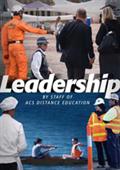
Leadership
What makes a good leader? Is it an innate personality trait or a skill that can be acquired? This book is an excellent guide to the theories and practice of leadership. It is full of interesting facts about social dynamics and examples of leadership styles. For those who are curious or in need of some leadership skills, this book will provide both entertainment and advice.
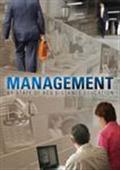
Management
Management is the process of planning, organising, leading, and controlling an organisation’s human and other resources to achieve business goals. More importantly though, effective management needs to be a process of human interaction and compassion. Most bad managers don’t know they are bad. They may well admit that they are a bit erratic, or they are sometimes late to appointments, but it is rare that they will recognise that they are ineffective as managers. Never fear...read here. This book has something to offer even the best of managers.
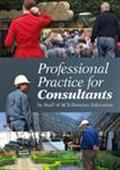
Professional Practice for Consultants
Explore becoming a consultant. This ebook contains chapters on how to be a consultant, packaging your services, delivering the services, building your resources, finding the work and getting the job, planning and ethics.