Certificate In Garden Design
Garden Design - exceptionally solid training for garden designers. Learn to survey a site, deal with clients, choose and arrange soft and hard landscape materials, and create gardens that are both aesthetic and practical.
 Want to be a Garden Designer?
..this course has been producing very successful landscapers and garden designers for over 20 years
- Developed by John Mason (Garden magazine editor and landscaper) with input from over 20 professional garden designers and horticulturists from Australia, the UK and beyond
- Revised regularly to ensure notes are always up to date
- Supported by a wide variety of unique resources including videos, photographs, online library articles... but most of all, opportunity for one on one interaction with highly qualified and experienced landscape professionals
“People working in garden design or as landscape gardeners will find this to be a very comprehensive course. Not only will you learn about construction techniques, garden features, and landscape detailing, but you will also learn how to draw plans and design different types of gardens. Add to that; plant, soil, and maintenance knowledge, and you can appreciate the diversity and completeness of this compelling course.”
- comment from Gavin Cole B.Sc., Psych.Cert., Cert.Garden Design, MACA, ACS Tutor; formerly Manager of The Chelsea Gardener, UK.
COURSE AIMS
- Discuss the principles Garden Design.
- Develop a foundation for systematic identification of plants and systematic determination of cultural requirements.
- Develop an awareness of different styles of gardening, principally through the study of the history of gardening.
- Develop the basic skills of landscape drawing as well as developing a basic understanding of contracts and specifications.
- Identify soil conditions appropriate for a garden design.
- Identify and properly account for environmental conditions within a garden design.
- Determine earthworks required for a garden design.
- Consider the relationship between design and construction when designing a garden.
- Determine appropriate surfacing for different gardens
- Determine appropriate garden structures for a garden.
- Evaluate the functionality of a park design.
- Evaluate the design of a home garden.
- Develop an appreciation for the impact that design can have on the cost of a garden.
- Discuss the functionality and design of surfaced areas in a garden or park, including paths, trails and sporting facilities.
- Discuss the scope and nature of tools used to landscape gardens.
- Discuss ways that plants may be better established.
- Discuss the design of water gardens
- Discuss the use of Rock, Stone, Brick and Concrete in garden designs.
- Discuss the appropriate use of lawns in garden designs.
- Discuss the appropriate use of irrigation in garden designs
- Discuss the design of natural gardens.
- Discuss the design of cottage gardens.
- Discuss the design of children’s play areas.
- Discuss the design of garden beds.
- Identify Management skills required to be a commercially viable garden designer.
- Explain methods of rehabilitation of degraded landscapes.
- Explain methods of dealing with drainage problems in a garden design
- Discuss the relationship between garden design and maintenance.
- Explain how a garden designer should successfully deal with clients.
- Prepare a significant garden design.
WHERE CAN THIS COURSE LEAD?
 This is an industry that has a deficiency of capable people. Surveys in recent years in Australia, the UK, and some other countries have show an increasing (and growing) demand for landscape and horticulture experts. The duration and content of many government sponsored courses have unfortunately come under financial and other pressures; and industry recognises that there are simply not enough people who can draw good plans and know how to select the right plants for appropriate situations.
This certificate is substantial in content, and duration. It may take longer than some other landscape certificates (offered elsewhere), but in our experience, graduates from this course tend to be able to produce better plans, work with a wider range of plant cultivars, and do the job faster and with greater confidence.
If you can talk to clients with more confidence, present more options for their gardens and produce better plans faster; your career is going to be assured in this industry.
In short:
- The work exists
- There are too few good designers
- This course takes longer to complete; but that's what is needed to be a good designer.
EXAMPLES OF TASKS UNDERTAKEN IN THIS COURSE
The following are only some of the activities that the student will undertake in this course.
- Find a site to be landscaped. (It could be a park or home garden; it could be a new development or a redevelopment of an older garden). Visit the site and record pre planning information required to design the landscape.
- Find five examples of the use of landscape principles. Using sketches and written descriptions, describe the way the garden has been laid out in order to achieve those particular effects.
 Find gardens which represent three different styles. Submit a photograph or sketch plan of each along with a half page written description of the style of the garden. Explain any historical influences, including the influence of those who build to owned the garden. The gardens may be gardens you have actually visited, or can be gardens you have seen in a magazine or book.
- Copy the drawings of symbols (ie. drawings which show you how to represent plants, walls, rocks, etc. when you draw plans). Practice drawing these various components of a landscape.
- Using the pre-planning information collected, produce a design for that area. or part of that area.
- Take a sample of soil and attempt to name it using the test given.
- Obtain components of potting or soil mixes; make up different mixes and test their characteristics.
- Survey an area requiring earthmoving. Draw a plan of the area, to scale, showing the area to be excavated. Calculate the volume of earth to be removed. Calculate where it is to be put.
- Find, observe & report on some bad landscape construction work. (You might discuss a poor rockery, a wall which is falling over, or some playground equipment which is unsafe.)
- Find three examples of bad selection of surfaces in a landscape (ie. home garden, park, sports oval, tennis court or whatever). Describe the material used and explain why they are bad. Consider both the aesthetic and functional qualities of the surfacing.
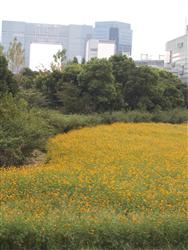 Develop a redevelopment plan for an existing park. Submit a photograph of the park as it exists at the moment (otherwise submit a rough sketch). Prepare a design for redevelopment in line with the suggested changes.
- Choose an established home garden (your own or a friends), and draw a sketch plan as the garden exists. Explain how well do you think this garden is designed?
- Find another home garden, needing either a new design or redevelopment. Prepare four rough sketches showing the stages you would go through in designing or redesigning that particular garden.
- Develop a detailed explanation of how you prepared your costing in the set task. Show the various components of the costing and explain how and why you costed it this way rather than higher or lower.
- Design a trail. It can be any type of trail (fun & fitness, nature, history, etc.) and may be located anywhere (a street, park, home garden, etc).
- Find and visit some recently landscaped gardens (completed within the last 4 months). Visit up to three different properties. Take note of any problems with the maintenance. Consider what could have been done to prevent these problems occurring.
- Design a perennial border along the front wall of a brick house
- Prepare a plan for the establishment of a large number of trees in a degraded area. This plan should cover at least 5 years. You should indicate clearly what the problem is and how you are going to use the trees to help rehabilitate the area.
- Design a water feature (eg. a pond or creek bed) for a bush or natural garden. Submit plans and a step by step description showing how you would construct such a water feature.
- Design a rockery area for a bush garden.
- Design a bush garden using mainly ferns, for a small courtyard of specified dimensions
Assessment: You must satisfactorily complete all assignments and pass four 1.5 hour exams.
Lesson Structure
There are 30 lessons in this course:
- Introduction to Landscaping
- Plant Identification
- History of Gardening
- Drawing Plans
- Soils & Nutrition
- Understanding the Environment
- Earthworks & Surveying
- Basic Landscape Construction
- Surfacings
- Garden Structures
- Park Design
- Home Garden Design
- Costing & Specifications
- Trail Design
- Tools & Machinery
- Plant Establishment Techniques
- Ponds & Pools
- Rockwork & Masonry
- Lawn Construction Techniques
- Irrigation Design & Installation
- Bush Garden Design
- Cottage Garden Design
- Playground Design
- Garden Bed Design
- Management
- Land Rehabilitation
- Drainage
- Maintenance
- Dealing with Clients
- Major Design Project
Accreditations
Start Your Own Garden Design Business
Most students undertake this course with the purpose of setting up their own business. It covers quoting, estimating and other business associated information needed to succeed in this field - plus landscaping, design, plant culture and plant identification. Streets ahead of most other similar courses which seem to concentrate on design - however you cannot design a workable garden without knowing about plants and landscaping techniques as well!
“People working in garden design or as landscape gardeners will find this to be a very comprehensive course. Not only will you learn about construction techniques, garden features, and landscape detailing, but you will also learn how to draw plans and design different types of gardens. Add to that; plant, soil, and maintenance knowledge, and you can appreciate the diversity and completeness of this compelling course.”
What Next?
To be successful in garden design, you need imagination, passion, persistence and a willingness to do whatever it takes to succeed.
If this describes you; we can help you to get a start.
You need to build a foundation of basic knowledge and skills first, understand the science and artistic method that underpins garden design; and to know the materials that are used to build a landscape. This means learning about everything from soil and stone to timber and plants
This course could lead to:
- Starting your own business in landscaping.
- Working for a landscaper, or in a nursery or garden centre - many people in this industry lack plant identification skills.
- Work as a gardener - many gardeners have absolutely no formal training and it shows!
- A hobby gardener turning a passion into a profession.
- A substantial step toward further education.
Enrol using the automated procedure on this site or contact us via phone or email to ask questions and enrol with a real person.
You can enrol at anytime and start the course when you are ready. Enrolments are accepted all year - students can commence study at any time. All study is self paced and ACS does not set assignment deadlines.
Please note that if a student is being assisted by someone else (e.g. an employer or government subsidy), the body offering the assistance may set deadlines. Students in such situations are advised to check with their sponsor prior to enrolling. The nominal duration of a course is approximately how long a course takes to complete. A course with a nominal duration of 100 hours is expected to take roughly 100 hours of study time to complete. However, this will vary from student to student. Short courses (eg. 100 hrs duration) should be completed within 12 months of enrolment. Certificates, Advanced Certificates and Awards (eg. over 500 hours duration) would normally be completed within 3 -5 years of enrolment. Additional fees may apply if a student requires an extended period to complete.
If a student cannot submit their assignments for 6 months to ACS, they should advise the school to avoid cancellation of their student
registration. Recommencement fees may apply.
Simply click on the ENROL OPTIONS button at the top of this screen and follow the prompts.
You can see the course price at the top of this page. Click 'enrolment options' to see any payment options available.
You can pay by Credit Card, PayPal, Afterpay or bank transfer.
Yes! We have payment plans for most courses. Click 'enrolment options' to see the available payment plans.
We also have Afterpay that will allow you to pay for your course or payment plans in four instalments (if you are in Australia).
There are no entry requirements that you need to meet to enrol in our courses, our courses are for everyone.
If you are under 18, we need written permission from your parent/ guardian for your enrolment to continue, we can arrange that after you have enrolled.
You don’t need to purchase any additional resources to complete our courses.
What do I need to know before I enrol?
We aim to teach you the essentials without you having to purchase any specific computer program.
We recommend that you have access to a word processing program, such as Microsoft Word or Google Docs, so that you can easily complete and submit your assignments.
You sure can. We are here to help you learn whatever your abilities.
Yes, if you are enrolling in a Certificate or Advanced Certificate, you might be eligible for credits if you have evidence of your previous studies or relevant experience. More information is here.
We recommend that you are able to browse websites, send emails and conduct online research. You will need to be able to type and submit your assignments.
If you have limited computer skills, we can make special arrangements for you.
This is possible, it depends on the institution. We recommend that if you would like to use our courses that you contact the institution first. Our Course Handbook is a good resource for this.
Our courses are written in English and we only have English speaking academic staff. If you can read and complete your assignments in English, our courses are ideal for you.
Our courses are designed to build knowledge, hands on skills and industry connections to help prepare you to work in the area, running your own business, professional development or as a base for further study.
This course is aimed at providing you with a solid understanding in your selected discipline. It has been designed to take 600 hours, which includes your course reading, assignment work, research, practical tasks, watching videos and more. When you complete the course, will have a good understanding of the area/ industry you want to work in.
It’s up to you. The study hours listed in the course are a rough guide, however if you were to study a short course (100 hours) at 10 hours per week, you could finish the course in 10 weeks (just an example). Our courses are self-paced, so you can work through the courses in your own time. We recommend that you wait for your tutor to mark and return your assignment before your start your next one, so you get the benefits of their feedback.
The course consists of course notes, videos, set tasks for your practical work, online quizzes, an assignment for each lesson (that you receive feedback from your tutor from) and ends in an exam (which is optional, if would like to receive the formal award at the end), using our custom built Learning Management System - Login.Training.
Our courses are designed for adults to gain professional development and skills to further their careers and start businesses.
Our custom online learning portal allows you to conduct your learning online. There may be practical tasks that you can do offline. You have the option of downloading your course notes or print them to read later.
There is also the option to pay an additional fee for printed course notes and or USB (availability limited to location and deliverability).
Yes, if you don’t have access to the internet, you can receive the course as paper notes or on a USB stick for an additional fee. We can also make alternative arrangements for you to send your assignments to us.
We offer printed notes for an additional fee. Also, you can request your course notes on a USB stick for an additional fee.
Yes, your tutor is here to help you. Simply post any questions you have in your login.training portal or contact the office and we can pass on a message to your tutor.
We are more learning focussed, rather than assessment focussed. You have online quizzes to test your learning, written assignments and can complete an exam at the end of the course (if you want to receive your certificate). You will not receive a pass/ fail on your course work. If you need to add more details on your assignment, we will ask you to resubmit and direct you where you need to focus. If you need help, you can ask your tutor for advice in the student room.
Each module (short course) is completed with one exam.
Exams are optional, however you must sit an exam if you would like to receive a formal award. You will need to find someone who can supervise that you are sitting the exams under exams conditions. There is an additional cost of $60 incl. GST for each exam.
More information is here
There are practical components built into the course that have been designed to be achieved by anyone, anywhere. If you are unable to complete a task for any reason, you can ask your tutor for an alternative.
When you complete the course work and the exams (6 exams) and you will be able receive your course certificate- a Certificate. Otherwise, you can receive a Letter of Completion.
You can bundle the short courses to create your own customised learning bundle, Certificates or Advanced Certificates. More information is on this page.
Yes, our courses are built to be applicable for people living anywhere in any situation. We provide the fundamentals, and each student can apply their own unique flair for their own interests, region and circumstances with the one-on-one guidance of a tutor. There is also a bit of student directed research involved.
Employers value candidates with industry skills, knowledge, practical skills and formal learning. Our courses arm you with all of these things to help prepare you for a job or start your own business. The longer you study the more you will learn.
ACS has an arrangement with OAMPS (formerly AMP) who can arrange Professional Indemnity from Australian and New Zealand graduates across all disciplines. Ph: 1800 222 012 or email acs@oamps.com.au.
Who are ACS Distance Education?
ACS Distance Education have been educating people for over 40 years.
We are established and safe- we have been in education for over 40 years.
We are focused on developing innovative courses that are relevant to you now and what you will need to know in the future.
We are focused on helping you learn and make the most of your experience.
You can enrol at any time, you can work on your course when it suits you and at your own pace.
We are connected to many industry bodies and our staff participate in continuous improvement and learning activities to ensure that we are ahead of what learning is needed for the future.
Our courses are not accredited by the Australian Government. However many of our courses are recognised and held in high regard by many industry bodies.
Our courses are written by our staff, who all have many years experience and have qualifications in their speciality area. We have lots of academic staff who write and update our courses regularly.
How do I enrol my staff/ sponsored students?
Yes, you can do a request for a bulk enrolment and request an invoice on our Invoice Request Form
We can prepare an invoice, quote or proforma invoice. Simply complete your details on our Invoice Request form
We can arrange bulk discounts for your course enrolment, please get in touch with us to discuss your needs.
Yes, we have many students who are in locked facilities, such as prisons or hospitals. We can cater by also offering paper notes at an additional cost.
What if I have any more questions or need more information?
We can assist you to find the right course for your needs. Get in touch with us via email (admin@acs.edu.au) call on +61 7 5562 1088 or complete our course advice form.
What if I change my mind?
Please get in touch with studentservices@acs.edu.au if you would like to be removed from our mail list.
If you would like ACS Distance Education to delete your information at any time (whether you are a customer or a prospective customer), please contact our privacy officer and we will process this ( admin@acs.edu.au ).
If students require a reproduction of their certificate, an electronic copy can be provided at a cost of AUD$35 incl GST. Printed copies are not available.
Course Contributors
The following academics were involved in the development and/or updating of this course.

Martin Powdrill
25 years working in Telecommunications, IT, Organisational Development, and Energy Conservation & Efficiency, prior to setting up his own Permaculture consulting business. Martin has a Bsc (Hons) Applied Science (Resources Option), MSc Computer Studies, Permaculture Design Certificate.
Martin volunteers with many local environmental and community groups, and facilitates discussions on climate change, peak oil, and transition towns. Martin has an allotment, and is currently enrolled in the Scottish Mountain Bike Leader Award programme.
Martin’s goal as a catalyst for sustainable change brings together his strengths and experience in his environmental, project management, and business backgrounds.

John Mason (Horticulturist)
Parks Manager, Nurseryman, Landscape Designer, Garden Writer and Consultant.
Over 40 years experience; working in Victoria, Queensland and the UK.
He is one of the most widely published garden writers in the world.

Jacinda Cole (Horticulturist)
B.Sc., Cert.Garden Design. Landscape Designer, Operations Manager, Consultant, Garden Writer.
She was operations manager for a highly reputable British Landscape firm (The Chelsea Gardener) before starting up her own landscaping firm. She spent three years working in our Gold Coast office, as a tutor and writer for Your Backyard (gardening magazine) which we produced monthly for a Sydney punlisher between 1999 and 2003. Since then, Jacinda has contributed regularly to many magazines, co authored several gardening books and is currently one of the "garden experts" writing regularly for the "green living" magazine "Home Grown".

Adriana Fraser (Horticulturist)
Over 30 years working in horticulture, as a gardener, propagator, landscape designer
, teacher and consultant. Adriana has spent much of her life living on large properties, developing and maintaining her own gardens, and living a semi self sufficient lifestyle. She has decades of practical experience growing her own fruit, vegetables and herbs, and making her own preserves. She is well connected with horticulture professionals across Australia, and amongst other things, for a period, looked after Australia's national collection of Thymus. Advanced Diploma in Horticulture, Advanced Certificate in Horticulture.

Garden Design Part 1
This stunning full colour Garden Design ebook is full of useful tips, information and inspiration. It contains around 300 colour illustrations! It is comprised of three parts: Design, How a Garden Functions and Aesthetics (making it look good).

Garden Design Part 2
Part 2 of the Garden Design Series is an inspiring accompaniment to the first book, but works equally well in its own right. It's brimming with ideas and practical advice for designing a wide variety of different gardens. You will learn about different styles of gardens and how to create a style to suit a site or client. It contains around 300 colour photos! Written by John Mason over several decades of visiting and photographing gardens, writing, teaching and creating gardens.
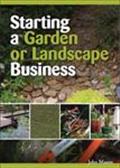
Starting a Garden or Landscape Business
Expert advice on how to get started in your own garden or landscape business! Packed with valuable business advice, horticultural and landscaping knowledge, and practical ideas - this book is a must have for garden lovers. It is great for anyone thinking about (or already involved in), a horticultural, landscaping or garden business. This updated re-print is only available as an ebook.

Landscaping & Gardening in the Shade
With 120 pages, the ‘Landscaping and Gardening in the Shade’ ebook is wonderfully illustrated and will give you great direction when designing a garden or landscaping.