
 Professional Training Online Course in Biopsychology
Study biopsychology to learn about how hormones, brain
structure and genetics affect our behaviour and mental health.
A useful qualification for careers in health, psychology,
care, social work etc. Professional training to improve your knowledge of
mental and physical health.
Flexible Online Training Course consisting of 6 Modules.
Tutors
Course developed and tutored by international experts
including -
Tracey Jones M.Soc.Sc, B.Sc (Hons) PG Dip. DipSW -
psychologist, author, educator, experienced in working with adults and children
with learning disabilities for over 3 decades
Jacinda Cole, B.Sc., M. Psych. - psychologist, author,
educator, experienced working with children in hospitals
Jade Sciacia, B. Sc.(Hons) -former playleader and teacher,
author and educator for over 2 decades
How does the course work?
This certificate qualification requires the completion of six x 100 hour modules. At the end of each lesson, there is an assignment to submit to your tutor for marking and feedback. There is also an exam at the end of each module. This can be taken at a time and location to suit you, or online.
Course Structure
Core Modules
Accreditations
Frequently Asked Questions (FAQs)
What will I learn in this biopsychology course?
This certificate course provides a solid foundation in the study of the anatomy of the brain and body, and biological and chemical bodily processes. The biopsychology and neuropsychological components provide the link between our physical bodies and mental processes. You will also learn about –
How different diseases and injuries to the nervous system can impact upon behaviour, as well as medicines and illicit drugs.
The brain and behaviour.
What can I do with a qualification in biopsychology?
This course is a useful stepping stone for people who work
in/are hoping to work in areas such as -
- Clinical
neuropsychology
- Psychology
- Human
physiology
- Physiotherapy
- Medicine
- Psychotherapy
- Counselling
- Sports
training
- Life
Coaching
- Health
Services
- Research
- Teaching
Enrol using the automated procedure on this site or contact us via phone or email to ask questions and enrol with a real person.
You can enrol at anytime and start the course when you are ready. Enrolments are accepted all year - students can commence study at any time. All study is self paced and ACS does not set assignment deadlines.
Please note that if a student is being assisted by someone else (e.g. an employer or government subsidy), the body offering the assistance may set deadlines. Students in such situations are advised to check with their sponsor prior to enrolling. The nominal duration of a course is approximately how long a course takes to complete. A course with a nominal duration of 100 hours is expected to take roughly 100 hours of study time to complete. However, this will vary from student to student. Short courses (eg. 100 hrs duration) should be completed within 12 months of enrolment. Certificates, Advanced Certificates and Awards (eg. over 500 hours duration) would normally be completed within 3 -5 years of enrolment. Additional fees may apply if a student requires an extended period to complete.
If a student cannot submit their assignments for 6 months to ACS, they should advise the school to avoid cancellation of their student
registration. Recommencement fees may apply.
Simply click on the ENROL OPTIONS button at the top of this screen and follow the prompts.
You can see the course price at the top of this page. Click 'enrolment options' to see any payment options available.
You can pay by Credit Card, PayPal, Afterpay or bank transfer.
Yes! We have payment plans for most courses. Click 'enrolment options' to see the available payment plans.
We also have Afterpay that will allow you to pay for your course or payment plans in four instalments (if you are in Australia).
There are no entry requirements that you need to meet to enrol in our courses, our courses are for everyone.
If you are under 18, we need written permission from your parent/ guardian for your enrolment to continue, we can arrange that after you have enrolled.
You don’t need to purchase any additional resources to complete our courses.
What do I need to know before I enrol?
We aim to teach you the essentials without you having to purchase any specific computer program.
We recommend that you have access to a word processing program, such as Microsoft Word or Google Docs, so that you can easily complete and submit your assignments.
You sure can. We are here to help you learn whatever your abilities.
Yes, if you are enrolling in a Certificate or Advanced Certificate, you might be eligible for credits if you have evidence of your previous studies or relevant experience. More information is here.
We recommend that you are able to browse websites, send emails and conduct online research. You will need to be able to type and submit your assignments.
If you have limited computer skills, we can make special arrangements for you.
This is possible, it depends on the institution. We recommend that if you would like to use our courses that you contact the institution first. Our Course Handbook is a good resource for this.
Our courses are written in English and we only have English speaking academic staff. If you can read and complete your assignments in English, our courses are ideal for you.
Our courses are designed to build knowledge, hands on skills and industry connections to help prepare you to work in the area, running your own business, professional development or as a base for further study.
This course is aimed at providing you with a solid understanding in your selected discipline. It has been designed to take 600 hours, which includes your course reading, assignment work, research, practical tasks, watching videos and more. When you complete the course, will have a good understanding of the area/ industry you want to work in.
It’s up to you. The study hours listed in the course are a rough guide, however if you were to study a short course (100 hours) at 10 hours per week, you could finish the course in 10 weeks (just an example). Our courses are self-paced, so you can work through the courses in your own time. We recommend that you wait for your tutor to mark and return your assignment before your start your next one, so you get the benefits of their feedback.
The course consists of course notes, videos, set tasks for your practical work, online quizzes, an assignment for each lesson (that you receive feedback from your tutor from) and ends in an exam (which is optional, if would like to receive the formal award at the end), using our custom built Learning Management System - Login.Training.
Our courses are designed for adults to gain professional development and skills to further their careers and start businesses.
Our custom online learning portal allows you to conduct your learning online. There may be practical tasks that you can do offline. You have the option of downloading your course notes or print them to read later.
There is also the option to pay an additional fee for printed course notes and or USB (availability limited to location and deliverability).
Yes, if you don’t have access to the internet, you can receive the course as paper notes or on a USB stick for an additional fee. We can also make alternative arrangements for you to send your assignments to us.
We offer printed notes for an additional fee. Also, you can request your course notes on a USB stick for an additional fee.
Yes, your tutor is here to help you. Simply post any questions you have in your login.training portal or contact the office and we can pass on a message to your tutor.
We are more learning focussed, rather than assessment focussed. You have online quizzes to test your learning, written assignments and can complete an exam at the end of the course (if you want to receive your certificate). You will not receive a pass/ fail on your course work. If you need to add more details on your assignment, we will ask you to resubmit and direct you where you need to focus. If you need help, you can ask your tutor for advice in the student room.
Each module (short course) is completed with one exam.
Exams are optional, however you must sit an exam if you would like to receive a formal award. You will need to find someone who can supervise that you are sitting the exams under exams conditions. There is an additional cost of $60 incl. GST for each exam.
More information is here
There are practical components built into the course that have been designed to be achieved by anyone, anywhere. If you are unable to complete a task for any reason, you can ask your tutor for an alternative.
When you complete the course work and the exams (6 exams) and you will be able receive your course certificate- a Certificate. Otherwise, you can receive a Letter of Completion.
You can bundle the short courses to create your own customised learning bundle, Certificates or Advanced Certificates. More information is on this page.
Yes, our courses are built to be applicable for people living anywhere in any situation. We provide the fundamentals, and each student can apply their own unique flair for their own interests, region and circumstances with the one-on-one guidance of a tutor. There is also a bit of student directed research involved.
Employers value candidates with industry skills, knowledge, practical skills and formal learning. Our courses arm you with all of these things to help prepare you for a job or start your own business. The longer you study the more you will learn.
ACS has an arrangement with OAMPS (formerly AMP) who can arrange Professional Indemnity from Australian and New Zealand graduates across all disciplines. Ph: 1800 222 012 or email acs@oamps.com.au.
Who are ACS Distance Education?
ACS Distance Education have been educating people for over 40 years.
We are established and safe- we have been in education for over 40 years.
We are focused on developing innovative courses that are relevant to you now and what you will need to know in the future.
We are focused on helping you learn and make the most of your experience.
You can enrol at any time, you can work on your course when it suits you and at your own pace.
We are connected to many industry bodies and our staff participate in continuous improvement and learning activities to ensure that we are ahead of what learning is needed for the future.
Our courses are not accredited by the Australian Government. However many of our courses are recognised and held in high regard by many industry bodies.
Our courses are written by our staff, who all have many years experience and have qualifications in their speciality area. We have lots of academic staff who write and update our courses regularly.
How do I enrol my staff/ sponsored students?
Yes, you can do a request for a bulk enrolment and request an invoice on our Invoice Request Form
We can prepare an invoice, quote or proforma invoice. Simply complete your details on our Invoice Request form
We can arrange bulk discounts for your course enrolment, please get in touch with us to discuss your needs.
Yes, we have many students who are in locked facilities, such as prisons or hospitals. We can cater by also offering paper notes at an additional cost.
What if I have any more questions or need more information?
We can assist you to find the right course for your needs. Get in touch with us via email (admin@acs.edu.au) call on +61 7 5562 1088 or complete our course advice form.
What if I change my mind?
Please get in touch with studentservices@acs.edu.au if you would like to be removed from our mail list.
If you would like ACS Distance Education to delete your information at any time (whether you are a customer or a prospective customer), please contact our privacy officer and we will process this ( admin@acs.edu.au ).
If students require a reproduction of their certificate, an electronic copy can be provided at a cost of AUD$35 incl GST. Printed copies are not available.
Course Contributors
The following academics were involved in the development and/or updating of this course.
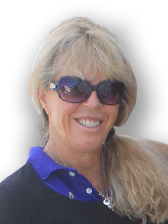
Lyn Quirk
M.Prof.Ed.; Adv.Dip.Compl.Med (Naturopathy); Adv.Dip.Sports Therapy
Over 30 years as Health Club Manager, Fitness Professional, Teacher, Coach and Business manager in health, fitness and leisure industries. As business owner and former department head for TAFE, she brings a wealth of skills and experience to her role as a tutor for ACS.

Jade Sciascia
Biologist, Business Coordinator, Government Environmental Dept, Secondary School teacher (Biology); Recruitment Consultant, Senior Supervisor in Youth Welfare, Horse Riding Instructor (part-completed) and Boarding Kennel Manager.
Jade has a B.Sc.Biol, Dip.Professional Education, Cert IV TESOL, Cert Food Hygiene.
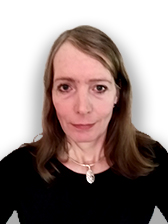
Jacinda Cole (Psychologist)
Psychologist, Educator, Author, Psychotherapist.
B.Sc., Psych.Cert., M. Psych. Cert.Garden Design, MACA
Jacinda has over 25 years of experience in psychology, in both Australia and England. She holds a BSc (Hons) in Psychology and a Masters in Psychology (Clinical) and also trained in psychoanalytic psychotherapy at the London Centre for Psychotherapy. She has co-authored several psychology text books and many courses including diploma and degree level courses in psychology and counselling. Jacinda has worked for ACS for over 10 years.
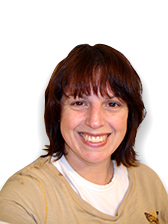
Tracey Jones (Psychologist)
B.Sc. (Psych), M.Soc.Sc., Dip.Social Work, P.G.Dip Learning Disability, Cert Editing, Cert Creative Writing, PGCE.
Member British Psychological Society, Member Assoc. for Coaching, Member British Learning Assoc.
25 years industry experience in writing, editing, education, psychology, and business. Tracey has several books and hundreds of articles published; in both fiction and non fiction.

How Children Think
Anyone who has ever tried to make a child do anything (clean up their mess, desist from throwing mud, stop drawing on the walls) knows that children think differently to adults. This book attempts to provide the skills and knowledge to develop a greater understanding of children.
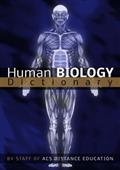
Human Biology
For any new student of human biology, being confronted with thousands of unfamiliar words can be overwhelming. It can also be difficult to identify which words you need to learn first. This book presents words that have been carefully selected as the most important for new biology students to learn and understand. It also provides more information about each word than is often found in traditional dictionaries, giving students a more in-depth understanding of the word's meaning. The book is intended as an aid to all new students of human biology.

Psychological Profiling
Psychological profiling is used to assess anyone from potential new staff and school children to serial killers. It helps you to determine someone’s personality, neuroses, mental health and career suitability. This book provides an excellent overview of psychological profiling techniques and pitfalls.

Psychology Dictionary
This book provides explanations for common terms used in Psychology.