
Advertising and Promotions
Understand the marketing world and develop your business decision making skills in advertising and promotions - to attract more customers and enhance profits. Know how to reach your target market and communicate more effectively.

Advertising and Promotions - Not just for the 'Big Boys'
LERAN TO ATTRACT NEW BUSINESS
Many believe it's the realm of the large corporates only, but in this course you will learn how to create relevant, affordable and effective promotion campaigns regardless of the size of your business.
A relevant advertising and promotion campaign can kick start a new business or launch plateauing sales to new heights. When times are tough, rather than cutting back, a fresh look at advertising and promotions can breathe new life into your business.
- Understand where Advertising and Promotions fits within the marketing framework and your overall business.
- Become familiar with the campaign planning, implementing, controlling and evaluating processes.
- Unpack and apply a number of tools from your promotional campaign kit including events, printed promotional materials, free and paid advertising, reward programs, joint promotions, word of mouth marketing, networking, social media etc.
PUT YOUR MESSAGES WHERE THEY REACH YOUR TARGET AUDIENCE

Aims
- Analyse a market and understand what prompts people to choose one product or service over another.
- Determine the promotional effort on an identified target market.
- Explain how to organise and/or conduct displays.
- Plan an advertising program.
- Review a promotions campaign.
- Explain how to choose and develop marketing of new products and services.
- Explain how to organise and/or conduct promotions.
- Develop a sales approach for a product or service which has a difficult sales history.
- Plan a sales staff training program.
- Develop different advertisements and different promotional leaflets or brochures.
- Describe promotional and advertising techniques using electronic media, in particular the phone and the internet.
- Determine an appropriate direct mailing campaign.
- Design a show/exhibition stand.
- Explain how to organise or conduct shows.
What You Will Do
- EXAMPLES OF TASKS YOU MIGHT BE ASKED TO UNDERTAKE
- Go shopping (your routine weekly shopping if you like). Take notice of how different sales staff communicate with you. Note the techniques they use (verbal & non verbal), and how effective they are. Note the type of impression they seem to be creating. When you come home, write down notes on your observations.
-
Look through newspapers or magazines at advertisements or articles which discuss products offered for sale and find what you consider to be good examples of each of the following types of communication:
- Combination of verbal & non verbal communication together.
-
Explain why you think these are good examples?
- Select a product or service which you would like to improve the marketing of. This might be something you are dealing with in your own business or a business you work for; or it might be something you think has potential -an idea you would like to develop into a business OR something another business is dealing with, but not handling as well as what you think they should be.
- Develop an advertising campaign for this product or service.
-
You will need to select a method for determining an advertising budget, and then set that budget.
- You will then need to find out the costs of advertising in different places.
- You will then need to write advertisements for these various places. The campaign should be well targeted. NB: We do not expect you to present a highly detailed and involved campaign. This could take longer than the whole course! Put about 10 hours of work into this project, at the most, and then you will present what you have been able to achieve in that time. (You need to not only develop the ability to put a campaign together... but you need to be able to put it together within a reasonable time frame).
Lesson Structure
There are 10 lessons in this course:
-
Analysing the Market
- Scope and nature of Promotions and Marketing.
- Role of Marketing, Approaches to Marketing (The Production Approach: 1820sto 1910s, The Sales Approach: 1920s to 1960s, The Marketing Approach: Stage One – 1960s to 1980s, The Marketing Approach: Stage Two – 1980s to Present).
- Goals of Marketing.
- What makes people buy (Attitude, Defining attitudes, How attitudes form, Changing attitudes).
- Practical Applications (Strengthen an existing attitude, Develop a change in attitude, Increase involvement, Focus on changing several different attitudes toward a product, Message Evaluation & Selection. Message execution, What words sell, Deciding to Buy, Rational Decisions, Heuristic Procedures).
- Decision Making Process (Recognising a Problem, Seeking Information, Evaluating Alternatives, Purchase Processes).
- Understanding Communication (Types, Methods, Channels, etc.).
- Managing the Marketing Process (Organising, Analysing, Select Targets, Develop the Mix, Managing the marketing Effort).
- Market Research (Types of research, Gathering data), Managing the Marketing Plan.
-
Target Marketing
- The Process of Identifying a Target Market.
- Micro marketing.
- Developing a Marketing Plan.
- Organising a Planning Process.
- Reviewing (Mission statement, Goals & Objectives).
- Establishing Market Objectives.
- Increasing Market Share.
- Expanding Product Mix.
- Broadening Geographic Range.
- Expansion through Export.
- Maximising Customer Service.
- Develop Objective Focussed Strategies.
- Increasing Market Share.
- Analysing Opportunities.
- External Influences (General economy, Government, Overseas, Demographics, Technology, Changing customer values, Competitor activity, Alternative marketing methods).
- Internal Influences (Resources, Market Share, Product characteristics, Advertising, Price, Financial capacity, Innovative potential).
- Selecting Target Markets –Market Segmentation, Mass Marketing, Concentrated or Niche Markets, Differentiated Markets.
- Physical Basis for Segmentation, Behavioural basis for Segmentation, Developing a Marketing Mix (Product, Price, Promotion, Distribution).
- Brand Names, Symbols, Logos, Packaging, Positioning and Image, Providing warranties.
- Price (Pricing Objectives, Pricing Methods, Cost-Price margin, Competition based Pricing, List and Discount Pricing).
-
Display and Display Techniques
- Channels of Distribution.
- Market Coverage (Intensive, Selective, Exclusive Distribution).
- Warehousing.
- Physical.
- Distribution and Coverage.
- Inventory Control.
- Determining Emphasis within Marketing Mix.
- Product Life Cycle.
- Product Strategy.
- Shop Layout, Fixtures and Fittings, Space Available, Displaying Products for Sale.
- What Sells Best.
- Spacing, Quantity Displayed.
- Merchandising Suggestions, Stock Control.
- Merchandising Program.
- Signs, Signposting.
-
Advertising and Promotions Strategy
- Promotional Element.
- Publicity.
- Public Relations.
- Forms of Advertising.
- Sales Promotion.
- Personal Selling Method.
- Promotion Principles.
- Scope of PR.
- Steps in Designing a PR Strategy (Set Advertising Objectives, Decide Advertising Budget, Decide Advertising Message, Decide Media to Use, Evaluate Advertising Effectiveness).
-
New Product Development
- Product Line Decisions.
- New Products.
- Tracking Trends.
- Knowing Your Customers.
- Packaging.
- Cost-Benefit Analysis.
- Financial Forecasting.
- Project Revenues and Costs.
- Expenditure Breakdown.
- Revenue Breakdown.
-
Sales Techniques
- Promotion and Sales.
- Steps in the Sales Order.
- Understanding Persuasion.
- Materials of Persuasion (Know the Audience, Subject and Yourself, Influencing Opponents, Influencing Neutrals, Handling Criticism, Logical Persuasion);
- Questioning.
- Sales Staff Training, Theory of Helping, Strategies (Traditional Approach, Task Approach), Common Strategies for Staff Training and Teaching.
-
Writing Advertisement
- Purpose of Advertising.
- Writing an Effective Advertisement.
- Structure of an Ad.
- Importance of Colour and Size.
- Advertisement Creation (Develop Product Awareness, Provide Information, Develop a Desire, Develop Conviction, Differentiate Brand, Make a Decision).
- The Advertising Message, Message Generation, Combining Rewards and Experiences to design a message, Delivering the Message.
- Advertisement Creation Checklist.
- Verification and Proofing.
-
Electronic Marketing -Telephone & Email
- Telephone Manner.
- Managing an Unmanned Phone.
- Internet Promotions ( Larger audience, Lower Conversion Factor, Different Etiquette, Different Cost Structures, etc.).
- Netiquitte.
- Ways of Using Web, Web sites.
- Site Construction, Site Use.
- Emails
-
Direct Mailing
- Types of Direct Mailing (The Direct, The Informative. The Reminder, The Utility).
- Advantages.
- Disadvantages.
- Appropriateness.
-
Exhibitions and Shows
- Types of Exhibitions.
- Judging it’s Value.
- What can go Wrong.
- Catering for People Overload.
- Measuring Success.
- Organising an Event.
- Planning a Display.
Accreditations
Attract More Customers
The success of any business (or enterprise) depends upon finding customers (or clients) and converting them into business.
- PR and Advertising has the aim of attracting the customers.
- Sales staff then take over and have the role of converting the potential customer into a deal.
Marketing any product or service, will require you to do three things:
- Make potential customers aware of what you offer.
- Nurture a relationship with potential customers that results in you becoming a preferred option for them to buy from.
- Engage and make a sale.
The first thing can be achieved through advertising. PR is required to achieve the second though. Both 1 & 2 are to no avail, if you can't make a sale though. Similarly, having the ability to make a sale is of little use if you can't attract customers and nurture a positive attitude in those potential customers.
This course is all about finding and preparing potential customers for the sale. If you then want to learn more about how to make the sale, consider taking our 'sales skills' course as a follow on from this.
Some marketing professionals are specialists; with an ability to advertise only; promote only, or only sell. Others can be a jack of all trades, with broader abilities.
Small business owners often need to become marketing professionals, out of necessity. This may be a very good reason to undertake this course. Others pursue a marketing career because it interests or excites them (An equally valid reason for undertaking this course).
Some people have a personality that is more naturally suited to marketing than others.
You may not need to be a particularly gregarious person to be good at advertising; but many of the tasks involved in promoting and selling things, may require an assertive nature and social personality.
Not everyone can market themselves well. Businesses fail and disappear when their marketing campaigns are not successful; but succeed and grow when they are.
More often than not, businesses fail because they cannot get enough customers; not because they cannot produce enough products (or services).
The aim of advertising and public relations is simple. Advertising is all about getting noticed. Public relations is about developing and reinforcing a positive awareness. Having people aware of your existence, does not guarantee they think highly of you, but when effective advertising combines with effective public relations, awareness and reputation will both strengthen.
WHY DO THIS COURSE?
 This course is for anyone wanting to attract more customers to their
business, launch their career in advertising and promotions or add a
valuable marketing skill to their CV.
This course is for anyone wanting to attract more customers to their
business, launch their career in advertising and promotions or add a
valuable marketing skill to their CV.
- Business owners will improve their understanding and awareness of how to make their business more visible to potential customers.
- People with some experience or training in marketing or sales may widen and strengthen their perception of how to promote any type of product or service.
- You will understand how to systematically develop a promotional campaign that reduces the risk of wasting money, and increases the likelihood of success.
Graduates from this course will have a changed outlook on advertising and promotion. You are likely to notice advertising and promotions by other businesses in a different way, as you go about your daily life. Whether in broadcast or print media, shopping centres or exhibitions, you will see what others are doing to promote their businesses and products, and have a deeper perception about what they are doing. When you see promotions that work and can be translated to your own situation, you will remember them. When you see advertising, you will analyse it and see both strong and weak points.
Enrol using the automated procedure on this site or contact us via phone or email to ask questions and enrol with a real person.
You can enrol at anytime and start the course when you are ready. Enrolments are accepted all year - students can commence study at any time. All study is self paced and ACS does not set assignment deadlines.
Please note that if a student is being assisted by someone else (e.g. an employer or government subsidy), the body offering the assistance may set deadlines. Students in such situations are advised to check with their sponsor prior to enrolling. The nominal duration of a course is approximately how long a course takes to complete. A course with a nominal duration of 100 hours is expected to take roughly 100 hours of study time to complete. However, this will vary from student to student. Short courses (eg. 100 hrs duration) should be completed within 12 months of enrolment. Certificates, Advanced Certificates and Awards (eg. over 500 hours duration) would normally be completed within 3 -5 years of enrolment. Additional fees may apply if a student requires an extended period to complete.
If a student cannot submit their assignments for 6 months to ACS, they should advise the school to avoid cancellation of their student
registration. Recommencement fees may apply.
Simply click on the ENROL OPTIONS button at the top of this screen and follow the prompts.
You can see the course price at the top of this page. Click 'enrolment options' to see any payment options available.
You can pay by Credit Card, PayPal, Afterpay or bank transfer.
Yes! We have payment plans for most courses. Click 'enrolment options' to see the available payment plans.
We also have Afterpay that will allow you to pay for your course or payment plans in four instalments (if you are in Australia).
There are no entry requirements that you need to meet to enrol in our courses, our courses are for everyone.
If you are under 18, we need written permission from your parent/ guardian for your enrolment to continue, we can arrange that after you have enrolled.
You don’t need to purchase any additional resources to complete our courses.
What do I need to know before I enrol?
We aim to teach you the essentials without you having to purchase any specific computer program.
We recommend that you have access to a word processing program, such as Microsoft Word or Google Docs, so that you can easily complete and submit your assignments.
You sure can. We are here to help you learn whatever your abilities.
Yes, if you are enrolling in a Certificate or Advanced Certificate, you might be eligible for credits if you have evidence of your previous studies or relevant experience. More information is here.
We recommend that you are able to browse websites, send emails and conduct online research. You will need to be able to type and submit your assignments.
If you have limited computer skills, we can make special arrangements for you.
This is possible, it depends on the institution. We recommend that if you would like to use our courses that you contact the institution first. Our Course Handbook is a good resource for this.
Our courses are written in English and we only have English speaking academic staff. If you can read and complete your assignments in English, our courses are ideal for you.
Our courses are designed to build knowledge, hands on skills and industry connections to help prepare you to work in the area, running your own business, professional development or as a base for further study.
This course has been designed to cover the fundamentals of the topic. It will take around 100 hours to complete, which includes your course reading, assignment work, research, practical tasks, watching videos and anything else that is contained in the course. Our short courses are a great way to do some professional development or to learn a new skill.
It’s up to you. The study hours listed in the course are a rough guide, however if you were to study a short course (100 hours) at 10 hours per week, you could finish the course in 10 weeks (just an example). Our courses are self-paced, so you can work through the courses in your own time. We recommend that you wait for your tutor to mark and return your assignment before your start your next one, so you get the benefits of their feedback.
The course consists of course notes, videos, set tasks for your practical work, online quizzes, an assignment for each lesson (that you receive feedback from your tutor from) and ends in an exam (which is optional, if would like to receive the formal award at the end), using our custom built Learning Management System - Login.Training.
Our courses are designed for adults to gain professional development and skills to further their careers and start businesses.
Our custom online learning portal allows you to conduct your learning online. There may be practical tasks that you can do offline. You have the option of downloading your course notes or print them to read later.
There is also the option to pay an additional fee for printed course notes and or USB (availability limited to location and deliverability).
Yes, if you don’t have access to the internet, you can receive the course as paper notes or on a USB stick for an additional fee. We can also make alternative arrangements for you to send your assignments to us.
We offer printed notes for an additional fee. Also, you can request your course notes on a USB stick for an additional fee.
Yes, your tutor is here to help you. Simply post any questions you have in your login.training portal or contact the office and we can pass on a message to your tutor.
We are more learning focussed, rather than assessment focussed. You have online quizzes to test your learning, written assignments and can complete an exam at the end of the course (if you want to receive your certificate). You will not receive a pass/ fail on your course work. If you need to add more details on your assignment, we will ask you to resubmit and direct you where you need to focus. If you need help, you can ask your tutor for advice in the student room.
Each module (short course) is completed with one exam.
Exams are optional, however you must sit an exam if you would like to receive a formal award. You will need to find someone who can supervise that you are sitting the exams under exams conditions. There is an additional cost of $60 incl. GST for each exam.
More information is here
There are practical components built into the course that have been designed to be achieved by anyone, anywhere. If you are unable to complete a task for any reason, you can ask your tutor for an alternative.
When you complete the course work and the exam and you will be able receive your course certificate- a Statement of Attainment. Otherwise, you can receive a Letter of Completion.
You can bundle the short courses to create your own customised learning bundle, Certificates or Advanced Certificates. More information is on this page.
Yes, our courses are built to be applicable for people living anywhere in any situation. We provide the fundamentals, and each student can apply their own unique flair for their own interests, region and circumstances with the one-on-one guidance of a tutor. There is also a bit of student directed research involved.
Employers value candidates with industry skills, knowledge, practical skills and formal learning. Our courses arm you with all of these things to help prepare you for a job or start your own business. The longer you study the more you will learn.
ACS has an arrangement with OAMPS (formerly AMP) who can arrange Professional Indemnity from Australian and New Zealand graduates across all disciplines. Ph: 1800 222 012 or email acs@oamps.com.au.
Who are ACS Distance Education?
ACS Distance Education have been educating people for over 40 years.
We are established and safe- we have been in education for over 40 years.
We are focused on developing innovative courses that are relevant to you now and what you will need to know in the future.
We are focused on helping you learn and make the most of your experience.
You can enrol at any time, you can work on your course when it suits you and at your own pace.
We are connected to many industry bodies and our staff participate in continuous improvement and learning activities to ensure that we are ahead of what learning is needed for the future.
Our courses are not accredited by the Australian Government. However many of our courses are recognised and held in high regard by many industry bodies.
Our courses are written by our staff, who all have many years experience and have qualifications in their speciality area. We have lots of academic staff who write and update our courses regularly.
How do I enrol my staff/ sponsored students?
Yes, you can do a request for a bulk enrolment and request an invoice on our Invoice Request Form
We can prepare an invoice, quote or proforma invoice. Simply complete your details on our Invoice Request form
We can arrange bulk discounts for your course enrolment, please get in touch with us to discuss your needs.
Yes, we have many students who are in locked facilities, such as prisons or hospitals. We can cater by also offering paper notes at an additional cost.
What if I have any more questions or need more information?
We can assist you to find the right course for your needs. Get in touch with us via email (admin@acs.edu.au) call on +61 7 5562 1088 or complete our course advice form.
What if I change my mind?
Please get in touch with studentservices@acs.edu.au if you would like to be removed from our mail list.
If you would like ACS Distance Education to delete your information at any time (whether you are a customer or a prospective customer), please contact our privacy officer and we will process this ( admin@acs.edu.au ).
If students require a reproduction of their certificate, an electronic copy can be provided at a cost of AUD$35 incl GST. Printed copies are not available.
Course Contributors
The following academics were involved in the development and/or updating of this course.

David Crothers
Extensive international experience in business and finance. Chartered Accountant with 20 years experience in corporate and financial roles. David has a FCA, GAICD, B.Sc.Econ (Hons), Cert IV TAA.

Kate Gibson
Kate has 12 years experience as a marketing advisor and experience as a project manager. Kate has traveled and worked in a variety of locations including London, New Zealand and Australia. Kate has a B.Soc.Sc, Post-Grad. Dip. Org Behaviour (HR).

Denise Hodges
Promotions Manager for ABC retail, Fitness Programmer/Instructor, Small Business Owner, Marketing Coordinator (Laserpoint). Over 20 years varied experienced in business and marketing. More recently Denise studied naturopathy to share her passion for health and wellness. Denise has an Adv.Dip.Bus., Dip. Clothing Design, Adv.Dip.Naturopathy (completing).

Tracey Jones
Widely published author, Psychologist, Manager and Lecturer. Over 10 years working with ACS and 25 years of industry experience.
Qualifications include: B.Sc. (Hons) (Psychology), M.Soc.Sc (social work), Dip. SW (social work), PGCE (Education), PGD (Learning Disability Studies).
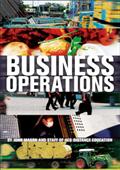
Business Operations
Covers things from running a business from finance and forecasting to staffing changes and legal issues. Chapters include: People, Law, Finance, Risk, Product Management, and Daily challenges.
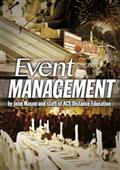
Event Management
Learn to plan and run events -parties, concerts, exhibitions, weddings, festivals etc. What is an event? An event is an occurrence, usually a special occasion. It can be either “a thing that just happens”; or a “planned social or public occasion”. An event is not always planned, but in the world of event management, the more planning that goes into an event, the smoother the event will run.

Modern Marketing
This book explores new approaches to marketing, how to adapt to a continually changing world both through online marketing, and more. Some aspects of marketing never change; but many of the well established approaches used in the past simply do not work any more. This book lays a foundation for thinking about marketing in a different way

Professional Writing
Professional writing is any writing that you are being paid for. It can include fiction writing, a best-selling book, articles in a magazine, articles in a newspaper, blogs for companies, technical manuals or procedure manuals, copy for catalogues, newsletters, text books and other academic material and so on.