
Advanced Certificate in Applied Management (Publishing & Journalism)
Professional course with equal focus on developing writing, publishing, business and management skills, in order to be a successful writer, editor or publisher.

Develop your skills in both professional writing skills and management.
Traditional journalism careers are not as secure as they once were; but the possibilities for a life long career in publishing and journalism have never been so great.
Whether you have already embarked on a career; or are hoping to; it is important to understand the changes that have occurred and monitor the changes that continue to occur in the world of publishing.
- Much of what is published today is being published electronically
- Printed publications like newspapers, magazines and books, have experienced difficulty in adapting to changes brought about by the growth of electronic publishing, and there has been a reluctance by many in print media to commit to employing staff on a permanent basis, to the same degree that they did before electronic publishing
- Change has weakened some in the established mainstream publishing industry; but at the same time created opportunities for new businesses and professionals to enter the industry.
The future of publishing is as certain as the future of the written word. People will always write; and publishers will always package and distribute what is written. The things that will continue to change will be what is written, how it is packaged and the way in which it is delivered to readers.
If you learn to write well, package and market what is written, and manage the business that underpins all of that; you will be well placed to adapt to work in journalism or publishing; no matter how the industry changes.
This course is unique in that it doesn't just teach you about writing and publishing, but also the business, management and marketing that makes a difference to success or failure of a publishing enterprise. Learn about the whole industry; and lay a foundation to develop more specialised skills.
This course is internationally accredited through I.A.R.C
Course Structure
This course is made up of a number of modules. To complete this course you must study and pass all of the modules listed below.
Core Modules
Elective Modules
In addition to the core modules, students must also choose 2 of the following elective modules.
Stream Modules
Accreditations
CORE UNITS Click on each module for more details
- Office Practices
Develops basic office skills covering use of equipment, communication systems (telephone, fax, etc) and office procedures such as filing, security, workplace organisations, etc.
Business Operations - Develops knowledge of basic business operations and procedures (eg. types of businesses, financial management, business analysis, staffing, productivity, etc) and the skills to develop a 12 month business plan.
- Management
- Develops knowledge of management structures, terminology, supervision, recruitment and workplace health and safety.
- Marketing Foundations.
- Develops a broad understanding of marketing and specific skills in writing advertisements, undertaking market research, developing an appropriate marketing plan and selling.
STREAM STUDIES
Three modules as follows:
Publishing I
There are ten lessons as outlined below:
- The Publishing World Nature & scope of publishing, types of publishers, how books are published, market research.
- Publishing Procedures & Techniques Colour or black & white; film or digital imaging, types of printing, alternative ways of doing layout (eg. typesetting, paste up, electronic layout with Adobe products or MS publisher), comparing types of digital graphic files, printing costs, etc
- Desktop Publishing Word Processing, Alternative publishing methods: Printing on a Computer Printer; Supplying a "Master" to a commercial printer, or publishing electronically (eg. Internet or CD)
- Desktop Publishing Software options, use of colour, black and white, use of graphics, putting it together, etc.
- Illustration: Graphics Line illustrations, cartoons, photos etc. Freehand work, Computer graphics, etc
- Illustration: Photography Photographic Equipment & Materials; Composition; Development of Photographic Style Portraiture, Posing for Photographs, Planning a Photo Session, Studio Photography, Fault Finding, etc
- Researching Types of Research (Exploratory, Experimental etc), Primary & Secondary Data sources,Planning a survey, Conducting an interview
- Marketing in Publishing Understanding marketing & publicity –what makes a publication succeed or fail, launches, press releases, etc.
- Publishing: Ethics & The Law Public attitudes, accuracy of writing, bias, monopolies, media ownership concerns, etc
Freelance Writing
The ten lessons cover:
- Introduction to freelancing - Scope of freelance writing (types of writing, where to begin, styles, etc). getting help, finding resources & contacts, understanding industry terminology.
- Basic writing skills - What is communication, types of communication, types of language, clear wording, concise wording, parts of speech, grammar, punctuation.
- The publishing world - Periodicals, books, remaindering, copyright, publishers advertising conditions, public lending rights, contracts, selling.
- Manuscripts - Types of printing, preparing a type script, etc.
- Planning what you write - Mechanics of writing, developing an idea, sentence structure, precis, planning what you write, building a paragraph.
- Newspaper writing - Newspapers, regular columns, fillers, short features, etc.
- Magazine writing - Travel writing, magazine articles/features, determining potentially marketable articles.
- Writing books - Non fiction, fiction, short stories, determining what to write and developing an idea.
- Writing advertising - Writing a press release, writing an advertisement, writing for public relations, etc.
- Special project - Planning and developing a manuscript for a small book.
Editing I
There are eight lessons as follows:
- Introduction to Editing – the role and scope of editing; tools for editing; editing skills; the production process: an overview; who does what in publishing
- The Mechanics of Clear Writing – spelling, punctuation, grammar, language; style; tense
- Assessing Manuscripts – readability; word length; structure; consistencies and inaccuracies; the reader’s report; substantive editing; the author’s responsibilities; the author/editor relationship
- Copy Editing I – what the copy editor does; the procedure; house style; style sheets.
- Copy Editing II – marking up; parts of a publication; editing non-text material; illustrations
- Preparing Copy for Printing – type design and page layout; proof stages
- Proof Reading
- The Final Stages – indexes; blurbs; checking final proofs
WHAT YOU WILL DO IN THIS COURSE
Here are some examples of the type of thing you will do:
- Plan and write at several major articles and one short story manuscript.
- Analyse different articles.
- Survey the scope and current status of the publishing industry and interpret a range of indicators to the viability of different existing or proposed publications.
- Explain the publishing industry, the procedures (stages) in bringing a publication to print and the different people (& jobs) involved.
- Explain how to present a manuscript to a publisher.
- List the differences between audiences for different types of publications.
- Explain the differences between types of writing required for newspaper publishing compared with magazine or book.
- Prepare or select appropriate illustrations (graphic or photographic) for publishing.
- Explain the processes involved in the production and use of these illustrations.
- Conduct and report on several interviews.
- Take a number of photographs with the intention to use them to illustrate a publication.
- Plan the contents and publishing procedure for different types of articles.
- Plan the contents and publication of a small book, booklet or magazine.
- List the scope of statistical information available through government agencies and report on the relevance of such information to the publishing industry.
- Write copy for different advertisements and different promotional leaflets or brochures.
- Design the layout for two promotional brochures, and determine the cost of typesetting, paste up and printing each.
- Compare the scope and nature of business conducted by different publishers.
- Plan and determine costs for the publication of a new newspaper, newsletter or magazine.
- Use prescribed reference books and other resources to gain relevant information.
INDUSTRY PROJECT OR WORK EXPERIENCE
This is the final requirement that you must satisfy before receiving your award.
Here are two options available to you to satisfy this requirement:
Alternative 1.
If you work in the industry that you have been studying; you may submit a reference from your employer, in an effort to satisfy this industry (ie. workplace project) requirement; on the basis of RPL (ie. recognition for prior learning), achieved through your current and past work experience.
The reference must indicate that you have skills and an awareness of your industry, which is sufficient for you to work in a position of responsibility.
Alternative 2.
If you do not work in the relevant industry, you need to undertake a project as follows.
This project is a major part of the course involving the number of hours relevant to the course (see above). Although the course does not contain mandatory work requirements, work experience is seen as highly desirable.
This project is based on applications in the work place and specifically aims to provide the student with the opportunity to apply and integrate skills and knowledge developed through various areas of formal study.
Students will design this project in consultation with a tutor to involve industry based activities in the area of specialized study which they select to follow in the course. The project outcomes may take the form of a written report, folio, visuals or a mixture of forms. Participants with relevant, current or past work experience will be given exemption from this project if they can provide suitable references from employers that show they have already fulfilled the requirements of this project.
For courses that involve more than 100 hours, more than one workplace project topic may be selected. For example, 200 hours may be split into two projects each of 100 hours. This will offer the student better scope to fulfill the needs of their course and to meet the number of hours required. Alternatively, the student may wish to do one large project with a duration of 200 hours.
Students will be assessed on how well they achieve the goals and outcomes they originally set as part of their negotiations with their tutor. During each 100 hours of the project, the students will present three short progress reports. These progress reports will be taken into account when evaluating the final submission. The tutor must be satisfied that the work submitted is original.
If the student wishes to do one large 200 hour report, then only three progressive reports will be needed (however the length of each report will be longer).
THE NATURE OF PUBLISHING ENTERPRISES
The term ‘publisher’ has two meanings. On one hand, it refers to a person responsible for managing and running a publishing enterprise, or for getting material published. On the other hand, the term publisher can refer to the publishing enterprise itself. These enterprises include small book publishers and large publishing houses, magazine publishers, desktop publishers, e-zine publishers, self-publishing enterprises, and non-profit organisations involved in publishing, such as universities, galleries, professional bodies, community groups.
Each publisher will answer the question, “What to publish?” differently. Some establish a limited repertoire of publication activities, focusing on
The nature of the enterprise can also determine the content, format, quantity and quality of its publications. For instance, a grass-roots publisher might offset low budget and limited readership with low grade paper and no or few colour photographs. A larger, wealthier publisher, on the other hand, might offset the cost of quality materials, many colour photographs, and flashy, glossy format with high retail price and by aiming for a much more general, larger readership. While the more popular and expensive magazine features mostly general interest, light reading to attract an ever-larger audience, the grass-roots magazine may feature specialist articles and lots of personal stories to develop a loyal though small audience.
DECIDING WHAT TO PUBLISH
Publishing is a business and, like any business, can be either profitable or unprofitable. The initial choice that faces any publisher is what to publish. This relates not only to the content of the publication, but also size, format, quantity and commercial potential. Most publishers apply restrictions on what they will publish, minimising the danger of over-extending their resources (physical and intellectual) or harming their reputation by producing inferior products in some areas. Some choose to focus on certain categories of writing, and to build their business by producing a limited but quality range of products (such as children’s books). There can be considerable market value in growing a reputation as a publisher of a certain kind of book (or journal or newspaper).
Each time a publisher confronts a new manuscript or idea for a publication, he or she must decide whether or not to publish it, even if it was commissioned. While personal taste will probably influence the publisher’s decision (consider how many best sellers were repeatedly rejected by unimpressed publishers), the decision will also be based on some basic, practical questions; among them, how closely the manuscript (or article) aligns with the publisher’s standard criteria and requirements. Market analysis helps a publisher make these kinds of decisions.
Commissioned Documents
While many publishers will accept proposals or manuscripts to consider for publication, most non-fiction and educational publications result from publishers’ suggestions or commissions. One of a publisher’s chief duties is to find new titles or ideas and to commission writers for them. These may be ideas or titles consistent with the publisher’s established identity, or may contribute to the gradual development of a publisher’s identity as their reputation for producing particular kinds of works grows. In acknowledgement of this seeking role, the publisher is sometimes called the ‘commissioning editor’, and larger publishing houses may have more than one commissioning editor to help create its list of titles and preferred writers.
AFTER YOUR STUDIES
Every graduate will emerge with different capabilities. This is an important characteristic of this course. Many of the practical tasks and assignments scattered throughout this course will provide you with opportunities to choose what you explore, report on and write about. The interaction which every student has with the school is different for every student. ACS is all about helping you discover your strengths and develop your potential. This approach leaves every student with a raised awareness of not just what they are more capable of, but also where the opportunities for success might be strongest for them.
In today's economy where most employment is self employment (either sub contracting, or running your own business); understanding business, management and marketing is more critical than ever. Realistically, most writers and publishing professionals (editors, publishers, journalists, etc), will need to understand that security in employment will probably mean working as a freelancer, sub contractor or starting your own business. Being a good writer or editor by itself is no longer sufficient -but this course may well be all you need to forge a successful career.
Enrol using the automated procedure on this site or contact us via phone or email to ask questions and enrol with a real person.
You can enrol at anytime and start the course when you are ready. Enrolments are accepted all year - students can commence study at any time. All study is self paced and ACS does not set assignment deadlines.
Please note that if a student is being assisted by someone else (e.g. an employer or government subsidy), the body offering the assistance may set deadlines. Students in such situations are advised to check with their sponsor prior to enrolling. The nominal duration of a course is approximately how long a course takes to complete. A course with a nominal duration of 100 hours is expected to take roughly 100 hours of study time to complete. However, this will vary from student to student. Short courses (eg. 100 hrs duration) should be completed within 12 months of enrolment. Certificates, Advanced Certificates and Awards (eg. over 500 hours duration) would normally be completed within 3 -5 years of enrolment. Additional fees may apply if a student requires an extended period to complete.
If a student cannot submit their assignments for 6 months to ACS, they should advise the school to avoid cancellation of their student
registration. Recommencement fees may apply.
Simply click on the ENROL OPTIONS button at the top of this screen and follow the prompts.
You can see the course price at the top of this page. Click 'enrolment options' to see any payment options available.
You can pay by Credit Card, PayPal, Afterpay or bank transfer.
Yes! We have payment plans for most courses. Click 'enrolment options' to see the available payment plans.
We also have Afterpay that will allow you to pay for your course or payment plans in four instalments (if you are in Australia).
There are no entry requirements that you need to meet to enrol in our courses, our courses are for everyone.
If you are under 18, we need written permission from your parent/ guardian for your enrolment to continue, we can arrange that after you have enrolled.
You don’t need to purchase any additional resources to complete our courses.
What do I need to know before I enrol?
We aim to teach you the essentials without you having to purchase any specific computer program.
We recommend that you have access to a word processing program, such as Microsoft Word or Google Docs, so that you can easily complete and submit your assignments.
You sure can. We are here to help you learn whatever your abilities.
Yes, if you are enrolling in a Certificate or Advanced Certificate, you might be eligible for credits if you have evidence of your previous studies or relevant experience. More information is here.
We recommend that you are able to browse websites, send emails and conduct online research. You will need to be able to type and submit your assignments.
If you have limited computer skills, we can make special arrangements for you.
This is possible, it depends on the institution. We recommend that if you would like to use our courses that you contact the institution first. Our Course Handbook is a good resource for this.
Our courses are written in English and we only have English speaking academic staff. If you can read and complete your assignments in English, our courses are ideal for you.
Our courses are designed to build knowledge, hands on skills and industry connections to help prepare you to work in the area, running your own business, professional development or as a base for further study.
This course is aimed at providing you with a solid understanding of the subject. It has been designed to take 600 hours, which includes your course reading, assignment work, research, practical tasks, watching videos and more. When you complete the course, will have a good understanding of the area/ industry you want to work in.
It’s up to you. The study hours listed in the course are a rough guide, however if you were to study a short course (100 hours) at 10 hours per week, you could finish the course in 10 weeks (just an example). Our courses are self-paced, so you can work through the courses in your own time. We recommend that you wait for your tutor to mark and return your assignment before your start your next one, so you get the benefits of their feedback.
The course consists of course notes, videos, set tasks for your practical work, online quizzes, an assignment for each lesson (that you receive feedback from your tutor from) and ends in an exam (which is optional, if would like to receive the formal award at the end), using our custom built Learning Management System - Login.Training.
Our courses are designed for adults to gain professional development and skills to further their careers and start businesses.
Our custom online learning portal allows you to conduct your learning online. There may be practical tasks that you can do offline. You have the option of downloading your course notes or print them to read later.
There is also the option to pay an additional fee for printed course notes and or USB (availability limited to location and deliverability).
Yes, if you don’t have access to the internet, you can receive the course as paper notes or on a USB stick for an additional fee. We can also make alternative arrangements for you to send your assignments to us.
We offer printed notes for an additional fee. Also, you can request your course notes on a USB stick for an additional fee.
Yes, your tutor is here to help you. Simply post any questions you have in your login.training portal or contact the office and we can pass on a message to your tutor.
We are more learning focussed, rather than assessment focussed. You have online quizzes to test your learning, written assignments and can complete an exam at the end of the course (if you want to receive your certificate). You will not receive a pass/ fail on your course work. If you need to add more details on your assignment, we will ask you to resubmit and direct you where you need to focus. If you need help, you can ask your tutor for advice in the student room.
Each module (short course) is completed with one exam.
Exams are optional, however you must sit an exam if you would like to receive a formal award. You will need to find someone who can supervise that you are sitting the exams under exams conditions. There is an additional cost of $60 incl. GST for each exam.
More information is here
There are practical components built into the course that have been designed to be achieved by anyone, anywhere. If you are unable to complete a task for any reason, you can ask your tutor for an alternative.
When you complete the course work and the exams (8-9 exams) and you will be able receive your course certificate- an Advanced Certificate. Otherwise, you can receive a Letter of Completion.
You can bundle the short courses to create your own customised learning bundle, Certificates or Advanced Certificates. More information is on this page.
Yes, our courses are built to be applicable for people living anywhere in any situation. We provide the fundamentals, and each student can apply their own unique flair for their own interests, region and circumstances with the one-on-one guidance of a tutor. There is also a bit of student directed research involved.
Employers value candidates with industry skills, knowledge, practical skills and formal learning. Our courses arm you with all of these things to help prepare you for a job or start your own business. The longer you study the more you will learn.
ACS has an arrangement with OAMPS (formerly AMP) who can arrange Professional Indemnity from Australian and New Zealand graduates across all disciplines. Ph: 1800 222 012 or email acs@oamps.com.au.
Who are ACS Distance Education?
ACS Distance Education have been educating people for over 40 years.
We are established and safe- we have been in education for over 40 years.
We are focused on developing innovative courses that are relevant to you now and what you will need to know in the future.
We are focused on helping you learn and make the most of your experience.
You can enrol at any time, you can work on your course when it suits you and at your own pace.
We are connected to many industry bodies and our staff participate in continuous improvement and learning activities to ensure that we are ahead of what learning is needed for the future.
Our courses are not accredited by the Australian Government. However many of our courses are recognised and held in high regard by many industry bodies.
Our courses are written by our staff, who all have many years experience and have qualifications in their speciality area. We have lots of academic staff who write and update our courses regularly.
How do I enrol my staff/ sponsored students?
Yes, you can do a request for a bulk enrolment and request an invoice on our Invoice Request Form
We can prepare an invoice, quote or proforma invoice. Simply complete your details on our Invoice Request form
We can arrange bulk discounts for your course enrolment, please get in touch with us to discuss your needs.
Yes, we have many students who are in locked facilities, such as prisons or hospitals. We can cater by also offering paper notes at an additional cost.
What if I have any more questions or need more information?
We can assist you to find the right course for your needs. Get in touch with us via email (admin@acs.edu.au) call on +61 7 5562 1088 or complete our course advice form.
What if I change my mind?
Please get in touch with studentservices@acs.edu.au if you would like to be removed from our mail list.
If you would like ACS Distance Education to delete your information at any time (whether you are a customer or a prospective customer), please contact our privacy officer and we will process this ( admin@acs.edu.au ).
If students require a reproduction of their certificate, an electronic copy can be provided at a cost of AUD$35 incl GST. Printed copies are not available.
Course Contributors
The following academics were involved in the development and/or updating of this course.

John Mason
Writer, Manager, Teacher and Businessman with over 40 years interenational experience covering Education, Publishing, Leisure Management, Education, and Horticulture. He has extensive experience both as a public servant, and as a small business owner.
John is a well respected member of many professional associations, and author of over seventy books and of over two thousand magazine articles.

Rachel Syers
Rachel has worked as a newspaper journalist for the past 15 years in a range of roles from sub-editor and social columnist to news reporter, covering rounds such as education, health, council, music, television, court, police, Aboriginal and Islander affairs, and agriculture.
Her current role is Fashion Editor, features writer and features sub-editor with The Gold Coast Bulletin. She has co-authored a successful biography "Roma: From Prison to Paradise" about former prisoner-of-war turned yoga guru, Roma Blair, as well as freelanced as a writer, reviewer and researcher for Australian music and celebrity magazines such as WHO Weekly, Rave, Australasian Post and New Idea.
Rachel has a B.Journalism.

Tracey Jones
Widely published author, Psychologist, Manager and Lecturer. Over 10 years working with ACS and 25 years of industry experience.
Qualifications include: B.Sc. (Hons) (Psychology), M.Soc.Sc (social work), Dip. SW (social work), PGCE (Education), PGD (Learning Disability Studies).
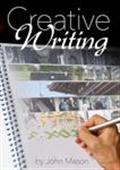
Creative Writing
Creative writing can be applied not only to articles and books; but in everything we write, from marketing material to social media. Writing that is creative will usually be more interesting, communicative and effective. This book explores not only how to be more creative with your writing, but also expands your perspective on how and where to use it.
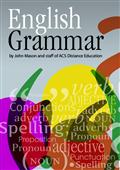
English Grammar
Grammar demystified -Learn the rules of grammar, punctuation, sentence construction; etc, for writing or editing. Grammar provides a coherent structure for the expression of thoughts and ideas. By following grammatical rules we are able to construct logical sentences that make sense to the receiver.
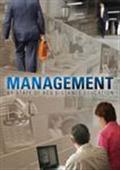
Management
Management is the process of planning, organising, leading, and controlling an organisation’s human and other resources to achieve business goals. More importantly though, effective management needs to be a process of human interaction and compassion. Most bad managers don’t know they are bad. They may well admit that they are a bit erratic, or they are sometimes late to appointments, but it is rare that they will recognise that they are ineffective as managers. Never fear...read here. This book has something to offer even the best of managers.
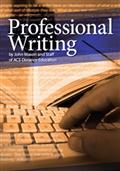
Professional Writing
Professional writing is any writing that you are being paid for. It can include fiction writing, a best-selling book, articles in a magazine, articles in a newspaper, blogs for companies, technical manuals or procedure manuals, copy for catalogues, newsletters, text books and other academic material and so on.