
Advanced Certificate in Applied Management (Photography)
Flexible, practical, online training for photographers. Study core subjects in both photography and management; then choose from a range of electives to further grow skills where you need them most.
 Online Course - Be a business owner, manager or team leader in the photo industry.
- Learn about management, marketing and business
- Learn about photography and the photographic industry
- Combine these skills and discover opportunities for employment and business in the photo industry
- 900 hour, self paced practical course with options to upgrade to a diploma
This course is designed to train people for supervisory or managerial positions in the photographic industry.
There are seven modules plus a workplace project in this course.
There are the four core units common to all streams of this Advanced Certificate and three photography units involving another 300 hours of study.
A workplace project on the photography industry involves the final 200 hrs of study.
Course Structure
This course is made up of a number of modules. To complete this course you must study and pass all of the modules listed below.
Core Modules
- Industry Project I
- Introduction To Photography
- Management
- Operations Management
- Photographic Practice
- Project Management
Elective Modules
In addition to the core modules, students must also choose 4 of the following elective modules.
Accreditations
CORE UNITS Click on each module for more details
Office Practices
Develops basic office skills covering use of equipment, communication systems (telephone, fax, etc) and office procedures such as filing, security, workplace organisations, etc.
Business Operations
Develops knowledge of basic business operations and procedures (eg. types of businesses, financial management, business analysis, staffing, productivity, etc) and the skills to develop a 12 month business plan.
Management
Develops knowledge of management structures, terminology, supervision, recruitment and workplace health and safety.
Marketing Foundations.
Develops a broad understanding of marketing and specific skills in writing advertisements, undertaking market research, developing an appropriate marketing plan and selling.
STREAM STUDIES
PHOTOGRAPHY INTRODUCTION STAGE 1
-
Origins of Photography
-
Film
-
Photo Equipment: Part 1
-
Photo Equipment: Part 2
-
Developing Film
-
Enlarging
-
Lighting
-
Fault Finding
PHOTOGRAPHIC PRACTICE STAGE 2
-
Composition
-
Photographing People
-
Nature & Landscape Photography
-
Colour vs. Black & White
-
Special Techniques
-
Illustrative Photography
-
Publishing
-
Business Opportunities in Photography
PHOTOGRAPHIC TECHNOLOGY STAGE 3
-
Image Formatting
-
Lighting
-
Sensitometry Part 1.
-
Sensitometry Part 2.
-
Understanding Colour
-
Chemistry of Colour Photography
-
Filters & Attachments
-
Lenses
Note: Enrolment fees do not include exam fees (x 7).
An exam fee is paid when each exam is sat.
Final Requirement:
200 hrs work related learning (e.g. experience or a workplace project).
Here are various options available to you to satisfy this requirement, such as:
Alternative 1.
If you work in the industry that you have been studying; you may submit a reference from your employer, in an effort to satisfy this industry (ie. workplace project) requirement; on the basis of RPL (ie. recognition for prior learning), achieved through your current and past work experience.
The reference must indicate that you have skills and an awareness of your industry, which is sufficient for you to work in a position of responsibility.
Alternative 2.
If you do not work in the relevant industry, you need to undertake a project as follows.
Procedure for a Workplace Project
This project is a major part of the course involving the number of hours relevant to the course (see above). Although the course does not contain mandatory work requirements, work experience is seen as highly desirable.
This project is based on applications in the work place and specifically aims to provide the student with the opportunity to apply and integrate skills and knowledge developed through various areas of formal study.
Students will design this project in consultation with a tutor to involve industry based activities in the area of specialized study which they select to follow in the course. The project outcomes may take the form of a written report, folio, visuals or a mixture of forms. Participants with relevant, current or past work experience will be given exemption from this project if they can provide suitable references from employers that show they have already fulfilled the requirements of this project.
For courses that involve more than 100 hours, more than one workplace project topic may be selected. For example, 200 hours may be split into two projects each of 100 hours. This will offer the student better scope to fulfill the needs of their course and to meet the number of hours required. Alternatively, the student may wish to do one large project with a duration of 200 hours.
Students will be assessed on how well they achieve the goals and outcomes they originally set as part of their negotiations with their tutor. During each 100 hours of the project, the students will present three short progress reports. These progress reports will be taken into account when evaluating the final submission. The tutor must be satisfied that the work submitted is original.
If the student wishes to do one large 200 hour report, then only three progressive reports will be needed (however the length of each report will be longer).
Your Choice of Viewpoint can Dramatically Change a Photo
The viewpoint you select may dramatically alter the effects of the photo. Choosing a less common viewpoint has the potential to change a mundane photo into an intriguing one. The average picture is taken 5-6 feet off the ground (at eye level), and this is view everyone expects to see. Step away from this and your images will step away from the norm. This can be particularly useful when photographing much-photographed places or scenes – the Arc de Triomphe, Sydney Opera House or Taj Mahal for example.
You can give a fascinating insight into a subject by photographing it from a rarer viewpoint. For instance, an aerial viewpoint of a landscape is often more interesting because it provides a view people rarely get to see. This viewpoint can pick up patterns on the surface that could not be seen at ground level. Try lying on the ground to take the photo, and see what you pick up. Then stand on stairs or on a building to get up higher to 9 or 10 feet. The same scene looks different. Which viewpoint do you want to present?
To keep the object size the same, move the camera left or right to get a different viewpoint. To change the height of the object, raise the camera up or down. Looking up at the object will magnify it, while objects further away will become even tinier. To change the scale of an object, cut the distance between the object and your lens by simply moving forward.
Photographs depicting a precise moment in time are more rewarding and exciting than others. Busy city streetscapes, for example, are constantly changing and you will need to be both patient and prepared to capture the exact moment in time where all the aspects of the scene slide together for a split second to create your wow-factor picture. Another example is after a storm when clouds move quickly across the sky with rays of sunlight softly creeping out between them. These types of conditions are both brief and spectacular. Such a moment can only be captured under certain conditions which we have no control over. The patient and prepared photographer will reap the rewards.
Consider Aerial Photography
Many destinations offer scenic flights over areas of interest, and even non-tourist localities may offer this opportunity if you make enquiries. Some jobs even involve aerial; photography. If the budget allows, an aerial flight provides a marvelous chance to experience a completely different view of the area, and produce some exciting photography.
Since you’re able to shoot downwards and cut out the horizon, aerial photography allows the photographer to focus on the unexpected graphical patterns and symmetries of the landscape. The patterns of fields or housing estate, rock formations in a desert, or snow drifts accenting the contours of winder hills – all these make striking and distinctive patterns from the air.
Weather
Not surprisingly, clear, bright weather is preferred. For added contrast, sharper details and enhanced texture, time your flight for early morning or late afternoon when the sun is lower.
If your destination is humid, hazy or prone to smog a low-flying flight and a wide angle lens are your best options. Haze always appears worse from a height and can make photography impossible. It can be reduced by using UV and polarizing filters, however be aware that the light requirements are higher for the polarizing filter and photography through non-opening windows may not be possible.
Before You Fly
If you have a private flight, discuss your plans with your pilot before you leave; discuss flight plan and preferred subjects, agree on a signals for banking a turning and ask that the pilot throttles back as the aircraft slips sideways to reduce vibration. Slow passes around landmarks are not recommended, as this too can cause excessive vibration and disrupt your composition and image clarity.
On commercial flights, a window set on the side away from the sun is ideal. You should be prepared to shoot at take-off and landing, and particularly when banking, and shoot quickly while the opportunity presents itself. Have your equipment at the ready.
In the Air
The shutter speed should be as high as possible, preferably 1/250 sec or faster. Vibration is your enemy in this setting, and even fast speeds may not be enough if the aircraft banks slowly. This is also not the time to brace yourself against the wall of the cabin – this will magnify the aircraft’s vibrations and make quality shooting impossible.
The optical qualities of aeroplane glass are not the same as normal glass and they can be a pain to shoot through. Expect reduced quality in your images, or try for an open helicopter instead!
Why Choose This Course?
Learn more than just photography
- Develop an awareness of the industry and start networking with others in this industry.
- Gain business, communications and management skills that complement an understanding of photography and improve your opportunities for work.
Enrol using the automated procedure on this site or contact us via phone or email to ask questions and enrol with a real person.
You can enrol at anytime and start the course when you are ready. Enrolments are accepted all year - students can commence study at any time. All study is self paced and ACS does not set assignment deadlines.
Please note that if a student is being assisted by someone else (e.g. an employer or government subsidy), the body offering the assistance may set deadlines. Students in such situations are advised to check with their sponsor prior to enrolling. The nominal duration of a course is approximately how long a course takes to complete. A course with a nominal duration of 100 hours is expected to take roughly 100 hours of study time to complete. However, this will vary from student to student. Short courses (eg. 100 hrs duration) should be completed within 12 months of enrolment. Certificates, Advanced Certificates and Awards (eg. over 500 hours duration) would normally be completed within 3 -5 years of enrolment. Additional fees may apply if a student requires an extended period to complete.
If a student cannot submit their assignments for 6 months to ACS, they should advise the school to avoid cancellation of their student
registration. Recommencement fees may apply.
Simply click on the ENROL OPTIONS button at the top of this screen and follow the prompts.
You can see the course price at the top of this page. Click 'enrolment options' to see any payment options available.
You can pay by Credit Card, PayPal, Afterpay or bank transfer.
Yes! We have payment plans for most courses. Click 'enrolment options' to see the available payment plans.
We also have Afterpay that will allow you to pay for your course or payment plans in four instalments (if you are in Australia).
There are no entry requirements that you need to meet to enrol in our courses, our courses are for everyone.
If you are under 18, we need written permission from your parent/ guardian for your enrolment to continue, we can arrange that after you have enrolled.
You don’t need to purchase any additional resources to complete our courses.
What do I need to know before I enrol?
We aim to teach you the essentials without you having to purchase any specific computer program.
We recommend that you have access to a word processing program, such as Microsoft Word or Google Docs, so that you can easily complete and submit your assignments.
You sure can. We are here to help you learn whatever your abilities.
Yes, if you are enrolling in a Certificate or Advanced Certificate, you might be eligible for credits if you have evidence of your previous studies or relevant experience. More information is here.
We recommend that you are able to browse websites, send emails and conduct online research. You will need to be able to type and submit your assignments.
If you have limited computer skills, we can make special arrangements for you.
This is possible, it depends on the institution. We recommend that if you would like to use our courses that you contact the institution first. Our Course Handbook is a good resource for this.
Our courses are written in English and we only have English speaking academic staff. If you can read and complete your assignments in English, our courses are ideal for you.
Our courses are designed to build knowledge, hands on skills and industry connections to help prepare you to work in the area, running your own business, professional development or as a base for further study.
This course is aimed at providing you with a solid understanding of the subject. It has been designed to take 600 hours, which includes your course reading, assignment work, research, practical tasks, watching videos and more. When you complete the course, will have a good understanding of the area/ industry you want to work in.
It’s up to you. The study hours listed in the course are a rough guide, however if you were to study a short course (100 hours) at 10 hours per week, you could finish the course in 10 weeks (just an example). Our courses are self-paced, so you can work through the courses in your own time. We recommend that you wait for your tutor to mark and return your assignment before your start your next one, so you get the benefits of their feedback.
The course consists of course notes, videos, set tasks for your practical work, online quizzes, an assignment for each lesson (that you receive feedback from your tutor from) and ends in an exam (which is optional, if would like to receive the formal award at the end), using our custom built Learning Management System - Login.Training.
Our courses are designed for adults to gain professional development and skills to further their careers and start businesses.
Our custom online learning portal allows you to conduct your learning online. There may be practical tasks that you can do offline. You have the option of downloading your course notes or print them to read later.
There is also the option to pay an additional fee for printed course notes and or USB (availability limited to location and deliverability).
Yes, if you don’t have access to the internet, you can receive the course as paper notes or on a USB stick for an additional fee. We can also make alternative arrangements for you to send your assignments to us.
We offer printed notes for an additional fee. Also, you can request your course notes on a USB stick for an additional fee.
Yes, your tutor is here to help you. Simply post any questions you have in your login.training portal or contact the office and we can pass on a message to your tutor.
We are more learning focussed, rather than assessment focussed. You have online quizzes to test your learning, written assignments and can complete an exam at the end of the course (if you want to receive your certificate). You will not receive a pass/ fail on your course work. If you need to add more details on your assignment, we will ask you to resubmit and direct you where you need to focus. If you need help, you can ask your tutor for advice in the student room.
Each module (short course) is completed with one exam.
Exams are optional, however you must sit an exam if you would like to receive a formal award. You will need to find someone who can supervise that you are sitting the exams under exams conditions. There is an additional cost of $60 incl. GST for each exam.
More information is here
There are practical components built into the course that have been designed to be achieved by anyone, anywhere. If you are unable to complete a task for any reason, you can ask your tutor for an alternative.
When you complete the course work and the exams (8-9 exams) and you will be able receive your course certificate- an Advanced Certificate. Otherwise, you can receive a Letter of Completion.
You can bundle the short courses to create your own customised learning bundle, Certificates or Advanced Certificates. More information is on this page.
Yes, our courses are built to be applicable for people living anywhere in any situation. We provide the fundamentals, and each student can apply their own unique flair for their own interests, region and circumstances with the one-on-one guidance of a tutor. There is also a bit of student directed research involved.
Employers value candidates with industry skills, knowledge, practical skills and formal learning. Our courses arm you with all of these things to help prepare you for a job or start your own business. The longer you study the more you will learn.
ACS has an arrangement with OAMPS (formerly AMP) who can arrange Professional Indemnity from Australian and New Zealand graduates across all disciplines. Ph: 1800 222 012 or email acs@oamps.com.au.
Who are ACS Distance Education?
ACS Distance Education have been educating people for over 40 years.
We are established and safe- we have been in education for over 40 years.
We are focused on developing innovative courses that are relevant to you now and what you will need to know in the future.
We are focused on helping you learn and make the most of your experience.
You can enrol at any time, you can work on your course when it suits you and at your own pace.
We are connected to many industry bodies and our staff participate in continuous improvement and learning activities to ensure that we are ahead of what learning is needed for the future.
Our courses are not accredited by the Australian Government. However many of our courses are recognised and held in high regard by many industry bodies.
Our courses are written by our staff, who all have many years experience and have qualifications in their speciality area. We have lots of academic staff who write and update our courses regularly.
How do I enrol my staff/ sponsored students?
Yes, you can do a request for a bulk enrolment and request an invoice on our Invoice Request Form
We can prepare an invoice, quote or proforma invoice. Simply complete your details on our Invoice Request form
We can arrange bulk discounts for your course enrolment, please get in touch with us to discuss your needs.
Yes, we have many students who are in locked facilities, such as prisons or hospitals. We can cater by also offering paper notes at an additional cost.
What if I have any more questions or need more information?
We can assist you to find the right course for your needs. Get in touch with us via email (admin@acs.edu.au) call on +61 7 5562 1088 or complete our course advice form.
What if I change my mind?
Please get in touch with studentservices@acs.edu.au if you would like to be removed from our mail list.
If you would like ACS Distance Education to delete your information at any time (whether you are a customer or a prospective customer), please contact our privacy officer and we will process this ( admin@acs.edu.au ).
If students require a reproduction of their certificate, an electronic copy can be provided at a cost of AUD$35 incl GST. Printed copies are not available.
Course Contributors
The following academics were involved in the development and/or updating of this course.

John Edwards
Professional photographer. Experienced in Environmental and Water Services management. Has traveled extensively for photography projects. John has a BA (Hons) Photography, BSc (Hons) Env.Mgt, PGCE

Rachel Syers
Rachel has worked as a newspaper journalist for the past 15 years in a range of roles from sub-editor and social columnist to news reporter, covering rounds such as education, health, council, music, television, court, police, Aboriginal and Islander affairs, and agriculture.
Her current role is Fashion Editor, features writer and features sub-editor with The Gold Coast Bulletin. She has co-authored a successful biography "Roma: From Prison to Paradise" about former prisoner-of-war turned yoga guru, Roma Blair, as well as freelanced as a writer, reviewer and researcher for Australian music and celebrity magazines such as WHO Weekly, Rave, Australasian Post and New Idea.
Rachel has a B.Journalism.

Josiane Joubran
CSC consultant with IBM, Software QA Engineer, Course Writer and Tutor. Josiane is an I.T professional with extensive experience with computer hardware and engineering in Lebanon and Australia. Josiane has a B.Eng., Grad.Dip.I.T., Master Info.Tech., MCP, MCSE.
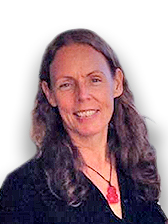
Christine Todd
University lecturer, businesswoman, photographer, consultant and sustainability expert; with over 40 years industry experience
B.A., M.Plan.Prac., M.A.(Social).
An expert in planning, with years of practical experience in permaculture.
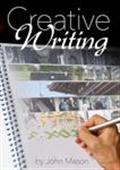
Creative Writing
Creative writing can be applied not only to articles and books; but in everything we write, from marketing material to social media. Writing that is creative will usually be more interesting, communicative and effective. This book explores not only how to be more creative with your writing, but also expands your perspective on how and where to use it.
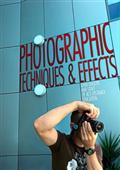
Photographic Techniques
Explore how to take better photos. This is a book packed full of practical tips, from the authors own experience, coupled with a solid introduction to well established and widely practiced photographic techniques. This is a well illustrated, excellent reference for students of photography; and an equally useful source of inspiration to the amateur photographer.
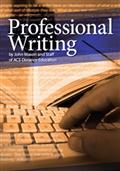
Professional Writing
Professional writing is any writing that you are being paid for. It can include fiction writing, a best-selling book, articles in a magazine, articles in a newspaper, blogs for companies, technical manuals or procedure manuals, copy for catalogues, newsletters, text books and other academic material and so on.

Starting a Business
Businesses don't need to fail! This is concise, easy to read, and alerts you to all of the things that commonly make a difference to business success or failure. Seven chapters are: “A Reality Check”, “The Product or service”, “Managing a Business”, “How to Find Customers”, “How to Make a Sale”, “Delivering the Product or Service”, “Pitfalls to Avoid”.