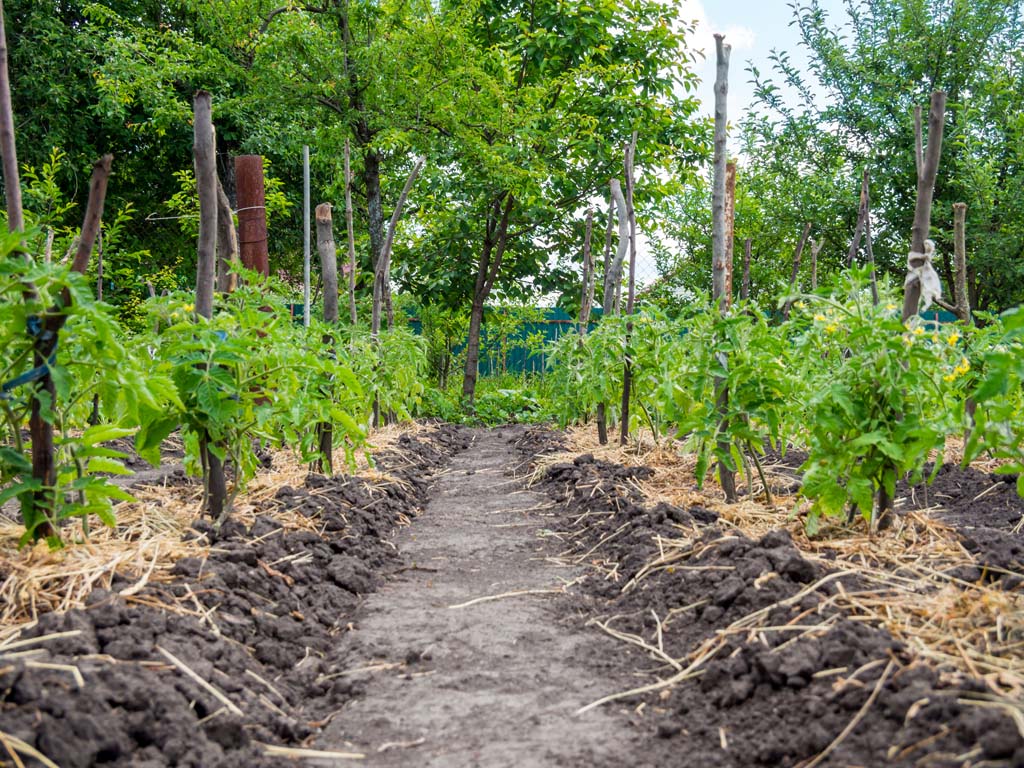
Organic Plant Culture
100 hour organic plant culture course and benefit from ACS tutors' years of experience and numerous qualifications in this field. Study via distance education, from anywhere in the world.
Learn to Grow Organic Food at Home
- Create Gardens or Grow Crops with fewer Pests; and no chemicals
- Convert a garden to organics
- Develop skills to work as a gardener; to get a job or develop your own business.
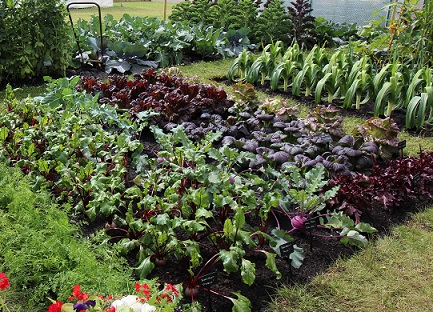
“This is a very intensive course that develops your ability to grow and market a range of crops. Grow your own organic crops or advise others. Many opportunities exist in this field as public interest is rapidly increasing. Organic growing is the path to the future.” - Adriana Fraser Cert.Hort., Cert.Child Care, Adv.Cert.App.Mgt., Cert 1V Assessment and Training, Adv.Dip.Hort., ACS Tutor.
Is Organic Really Healthier?
- Organic growing will avoid using undesirable chemicals or anything else that can contaminate people or the environment; and it's obviously healthier to avoid undesirable contaminants.
- Organics also uses manures, mulches and other organic materials that may otherwise have been waste -and that has to be healthier for the environment (and in turn healthier for all of us who share the environment
Aims
- Explain the concepts and principles of organic growing, including the common techniques used in organic growing systems (Part A).
- Explain the concepts and principles of organic growing, including the common techniques used in organic growing systems (Part B).
- Determine soil management procedures, which are consistent with organic growing principles.
- Explain how pests and diseases are controlled using organic growing principles
- Determine appropriate mulches for use in different organic growing situations.
- Determine the appropriate use of seed propagation, in organic plant culture.
- Plan the production of an organically grown vegetable food crop
- Plan the production of an organically grown fruit crop
What You Will Do
- Determine the roles of different organic farming and gardening organisations.
- Explain how organic crops can be 'certified' as being organic in your country.
- Explain the application of crop rotation in a specified garden, or farm.
- Describe the construction of a 'No-Dig' garden, using materials readily available in your locality.
- Explain the intended aims of a specific 'Permaculture' designed garden.
- Explain different organic growing concepts, including: *biodynamics *sustainable agriculture *companion planting *fallowing *composting *recycling.
- Explain how organic matter may benefit plants growing in different soils.
- Compare the advantages with disadvantages of using organic versus non-organic fertilizers.
- Determine different organic fertilizers that are commonly available in your locality.
- Compare factors affecting the selection of different organic fertilisers, including: *Proportions of different nutrients *Likelihood of burn *Buffering characteristics *Where it is to be used *Method of handling *Cost *Availability.
- Determine mulch materials readily available for organic growing in your locality.
- Compare different mulches suitable for organic growing systems, in terms of: *Interaction with water (eg. repellence, absorbency, drainage) *Nitrogen draw down *Toxins *Rate of decomposition *Insulation properties *Weed suppression *Availability *Cost *Nutrient content *Ease of handling.
- Explain how different, specified leguminous plant species, may be used to improve soil fertility.
- Explain how different worm species may be used to improve soil fertility, on a specific site.
- Determine how soils on a specific site may be managed, using organic principles.
- Explain the different methods of natural control of pests and diseases, including:
- *Quarantine *Natural sprays *Physical controls *Plant selection
- *Use of natural predators *Environment manipulation.
- Determine commercially available, naturally derived sprays that can be used in organic growing.
- Explain the benefits of ten specified examples of companion planting, including:
- *Repelling pests away from crop plants *Attracting pests to bait plants
- *Improving soil (structure and nutrition) *Deterring growth of pests and diseases.
- Develop criteria for evaluating pesticides, including natural pesticides, for use in an organic garden or farm.
- Develop appropriate programs to control pests and diseases on different, specified cultivated plants.
- Develop guidelines for seed variety selection, appropriate to organic plant culture.
- Explain the importance of preserving seed sources of 'older' plant varieties.
- Compile a catalogue of different, reliable seed sources for organic culture.
- Explain appropriate methods for storage of different types of seed.
- Explain various ways dormancy factors can affect seed germination.
- Develop an annual timetable for planting different varieties of vegetables, appropriate to organic growing systems, in your district.
- Compare the culture of different specified vegetable species, in organic with non organic production.
-
Prepare organic production schedules for different food crops, including:
- *A vegetable *A fruit *A berry.
Lesson Structure
There are 10 lessons in this course:
- Introduction Gardening styles, basic organic procedures, etc.
- Plant Culture
- Understanding Soils
- Fertilizers and Plant Nutrition
- Soil Management
- Pests & Diseases
- Mulching
- Seeds - Collecting, storing & sowing
- Vegetable Growing in your locality
- Fruit Growing in your locality
Accreditations
WHY GROW ORGANICALLY?
Soils that have more organic material tend to remain more stable. They heat up and cool down more slowly. They contain more of the necessary microorganisms that are needed to make plants grow well, and they are better able to supply plants with micro nutrients needed to see plants grow and produce the best crops. Opinions will always differ on how beneficial organics really is; but there is no doubt that there are some indisputable advantages.
How to Move Toward More Sustainable Land Management
When we manage land we need to think about the wider consequences of all our actions, as these contribute to the sustainability, resilience and well-being.
Prevention of problems is better economically, socially and environmentally rather than trying to cure them.
When we take into consideration all aspects of land management, i.e. its environmental impacts, its social impacts and its economic impacts, we are better able to ensure the long term viability, sustainability health and productivity of the land. Important ways to help achieve this are:
- Avoid using land outside of its capabilities. A good example is using drylands for extensive rather than intensive cropping.
- Avoid compromising the productivity potential of land through mismanagement, as it thereby loses its economic potential.
- Maintain productivity potential. The land’s ability to preserve its water holding ability should be maintained. Hydrophobic soil compromises productivity and encourages habitat loss and lowers biodiversity. The ability of soil to retain and recycle nutrients is also vital, to enhance plant productivity on-site, rather than nutrients being lost, causing pollution in water sources.
- Retain or improve vegetation cover, as this is often a key to protecting land.
- Preventing land degradation or rehabilitating land requires social solutions as much as technical solutions. Land users must be involved in providing these solutions, not merely as a result of enforcement by regulatory authorities.
- Achieve sustainable land use. The way land is used today should never reduce it's potential use tomorrow.
- Broader environmental aspects should always be taken into account. Habitat loss, biodiversity loss, shrinking genetic pools, pest and weed invasion and their control, appropriate tillage methods, soil conservation and erosion prevention and control (e.g. creating contours), the protection of rehabilitation areas (degraded sites e.g. through erosion or salinity), minimising energy use, controlling waste, protecting natural vegetation and habitats, minimising run-off into waterways; should all be part of a land management plan.
WHERE MIGHT THIS COURSE TAKE YOU?
Every graduate will have a different journey through this course. That is the way our courses are designed. They give you lots of options to undertake practical and research projects in different ways, interacting with our academic staff one to one, getting original and unique feedback tailored to your own needs.As such, different students will have built knowledge and awareness of different aspects of organic growing.
Every student will however, leave this course with a fundamental understanding of the things that underpin all organic growing; and a capacity to see possibilities to apply what they learned in ways they may not have envisaged before commencing their studies.
Enrol using the automated procedure on this site or contact us via phone or email to ask questions and enrol with a real person.
You can enrol at anytime and start the course when you are ready. Enrolments are accepted all year - students can commence study at any time. All study is self paced and ACS does not set assignment deadlines.
Please note that if a student is being assisted by someone else (e.g. an employer or government subsidy), the body offering the assistance may set deadlines. Students in such situations are advised to check with their sponsor prior to enrolling. The nominal duration of a course is approximately how long a course takes to complete. A course with a nominal duration of 100 hours is expected to take roughly 100 hours of study time to complete. However, this will vary from student to student. Short courses (eg. 100 hrs duration) should be completed within 12 months of enrolment. Certificates, Advanced Certificates and Awards (eg. over 500 hours duration) would normally be completed within 3 -5 years of enrolment. Additional fees may apply if a student requires an extended period to complete.
If a student cannot submit their assignments for 6 months to ACS, they should advise the school to avoid cancellation of their student
registration. Recommencement fees may apply.
Simply click on the ENROL OPTIONS button at the top of this screen and follow the prompts.
You can see the course price at the top of this page. Click 'enrolment options' to see any payment options available.
You can pay by Credit Card, PayPal, Afterpay or bank transfer.
Yes! We have payment plans for most courses. Click 'enrolment options' to see the available payment plans.
We also have Afterpay that will allow you to pay for your course or payment plans in four instalments (if you are in Australia).
There are no entry requirements that you need to meet to enrol in our courses, our courses are for everyone.
If you are under 18, we need written permission from your parent/ guardian for your enrolment to continue, we can arrange that after you have enrolled.
You don’t need to purchase any additional resources to complete our courses.
What do I need to know before I enrol?
We aim to teach you the essentials without you having to purchase any specific computer program.
We recommend that you have access to a word processing program, such as Microsoft Word or Google Docs, so that you can easily complete and submit your assignments.
You sure can. We are here to help you learn whatever your abilities.
Yes, if you are enrolling in a Certificate or Advanced Certificate, you might be eligible for credits if you have evidence of your previous studies or relevant experience. More information is here.
We recommend that you are able to browse websites, send emails and conduct online research. You will need to be able to type and submit your assignments.
If you have limited computer skills, we can make special arrangements for you.
This is possible, it depends on the institution. We recommend that if you would like to use our courses that you contact the institution first. Our Course Handbook is a good resource for this.
Our courses are written in English and we only have English speaking academic staff. If you can read and complete your assignments in English, our courses are ideal for you.
Our courses are designed to build knowledge, hands on skills and industry connections to help prepare you to work in the area, running your own business, professional development or as a base for further study.
This course has been designed to cover the fundamentals of the topic. It will take around 100 hours to complete, which includes your course reading, assignment work, research, practical tasks, watching videos and anything else that is contained in the course. Our short courses are a great way to do some professional development or to learn a new skill.
It’s up to you. The study hours listed in the course are a rough guide, however if you were to study a short course (100 hours) at 10 hours per week, you could finish the course in 10 weeks (just an example). Our courses are self-paced, so you can work through the courses in your own time. We recommend that you wait for your tutor to mark and return your assignment before your start your next one, so you get the benefits of their feedback.
The course consists of course notes, videos, set tasks for your practical work, online quizzes, an assignment for each lesson (that you receive feedback from your tutor from) and ends in an exam (which is optional, if would like to receive the formal award at the end), using our custom built Learning Management System - Login.Training.
Our courses are designed for adults to gain professional development and skills to further their careers and start businesses.
Our custom online learning portal allows you to conduct your learning online. There may be practical tasks that you can do offline. You have the option of downloading your course notes or print them to read later.
There is also the option to pay an additional fee for printed course notes and or USB (availability limited to location and deliverability).
Yes, if you don’t have access to the internet, you can receive the course as paper notes or on a USB stick for an additional fee. We can also make alternative arrangements for you to send your assignments to us.
We offer printed notes for an additional fee. Also, you can request your course notes on a USB stick for an additional fee.
Yes, your tutor is here to help you. Simply post any questions you have in your login.training portal or contact the office and we can pass on a message to your tutor.
We are more learning focussed, rather than assessment focussed. You have online quizzes to test your learning, written assignments and can complete an exam at the end of the course (if you want to receive your certificate). You will not receive a pass/ fail on your course work. If you need to add more details on your assignment, we will ask you to resubmit and direct you where you need to focus. If you need help, you can ask your tutor for advice in the student room.
Each module (short course) is completed with one exam.
Exams are optional, however you must sit an exam if you would like to receive a formal award. You will need to find someone who can supervise that you are sitting the exams under exams conditions. There is an additional cost of $60 incl. GST for each exam.
More information is here
There are practical components built into the course that have been designed to be achieved by anyone, anywhere. If you are unable to complete a task for any reason, you can ask your tutor for an alternative.
When you complete the course work and the exam and you will be able receive your course certificate- a Statement of Attainment. Otherwise, you can receive a Letter of Completion.
You can bundle the short courses to create your own customised learning bundle, Certificates or Advanced Certificates. More information is on this page.
Yes, our courses are built to be applicable for people living anywhere in any situation. We provide the fundamentals, and each student can apply their own unique flair for their own interests, region and circumstances with the one-on-one guidance of a tutor. There is also a bit of student directed research involved.
Employers value candidates with industry skills, knowledge, practical skills and formal learning. Our courses arm you with all of these things to help prepare you for a job or start your own business. The longer you study the more you will learn.
ACS has an arrangement with OAMPS (formerly AMP) who can arrange Professional Indemnity from Australian and New Zealand graduates across all disciplines. Ph: 1800 222 012 or email acs@oamps.com.au.
Who are ACS Distance Education?
ACS Distance Education have been educating people for over 40 years.
We are established and safe- we have been in education for over 40 years.
We are focused on developing innovative courses that are relevant to you now and what you will need to know in the future.
We are focused on helping you learn and make the most of your experience.
You can enrol at any time, you can work on your course when it suits you and at your own pace.
We are connected to many industry bodies and our staff participate in continuous improvement and learning activities to ensure that we are ahead of what learning is needed for the future.
Our courses are not accredited by the Australian Government. However many of our courses are recognised and held in high regard by many industry bodies.
Our courses are written by our staff, who all have many years experience and have qualifications in their speciality area. We have lots of academic staff who write and update our courses regularly.
How do I enrol my staff/ sponsored students?
Yes, you can do a request for a bulk enrolment and request an invoice on our Invoice Request Form
We can prepare an invoice, quote or proforma invoice. Simply complete your details on our Invoice Request form
We can arrange bulk discounts for your course enrolment, please get in touch with us to discuss your needs.
Yes, we have many students who are in locked facilities, such as prisons or hospitals. We can cater by also offering paper notes at an additional cost.
What if I have any more questions or need more information?
We can assist you to find the right course for your needs. Get in touch with us via email (admin@acs.edu.au) call on +61 7 5562 1088 or complete our course advice form.
What if I change my mind?
Please get in touch with studentservices@acs.edu.au if you would like to be removed from our mail list.
If you would like ACS Distance Education to delete your information at any time (whether you are a customer or a prospective customer), please contact our privacy officer and we will process this ( admin@acs.edu.au ).
If students require a reproduction of their certificate, an electronic copy can be provided at a cost of AUD$35 incl GST. Printed copies are not available.
Course Contributors
The following academics were involved in the development and/or updating of this course.

Maggi Brown
Maggi is regarded as an expert in organic growing throughout the UK, having worked for two decades as Education Officer at the world renowned Henry Doubleday Research Association. She has been active in education, environmental management and horticulture across the UK for more than three decades.
Some of Maggi's qualifications include RHS Cert. Hort. Cert. Ed. Member RHS Life Member Garden Organic (HDRA) .

Marius Erasmus
Subsequent to completing a BSc (Agric) degree in animal science, Marius completed an honours degree in wildlife management, and a masters degree in production animal physiology. Following the Masters degree, he has worked for 9 years in the UK, and South Africa in wildlife management, dairy, beef and poultry farming.

Adriana Fraser
Freelance writer, businesswoman, educator and consultant for over 30 years. Adriana has written extensively for magazines including free living publications -Grass Roots and Home Grown; and has authored or co authored many books ranging from a biography to books on business and gardening. She holds formal qualifications in education, child care and horticulture and has worked with ACS Distance Education since the mid 1990's.
Poultry
Poultry are entertaining as pets and life sustaining as a commercial product! Whether you are seeking a book as a beginner poultry keeper or if you are embarking on a new career in poultry production or management, this book is for you. Easy to read, easy to understand and packed with easy to implement practical advice. Know how to care for the health and wellbeing of poultry and make production a commercially viable enterprise.

Animal Health 2nd edition
Understand health issues, disease and injury prevention, inspecting animals, differential diagnosis and common illnesses. Animals can suffer from injury, poisoning, hereditary conditions, nutritional problems and viral, bacterial and fungal infections. A book for managing pets, farm animals, or wildlife.

Fruit, Vegetables and Herbs
Home grown produce somehow has a special quality. Some say it tastes better, others believe it is just healthier. And there is no doubt it is cheaper! Watching plants grow from seed to harvest and knowing that the armful of vegies and herbs you have just gathered for the evening meal will be on the table within an hour or two of harvest, can be an exciting and satisfying experience.
Organic Gardening
For decades farmers have relied upon chemicals to control pests and diseases in order to produce saleable crops. In the ornamental, vegetable and fruit gardens reliance on chemical controls has also been the mainstay for many gardeners.