
Garden History
Study the history of gardens, great gardens and landscape designers. Garden history informs us not only about different garden styles and how to design a garden, but also the connection between culture, society and the evolution of civilisations.
Study the History of Gardens.
 Some study history because it is interesting.
- Others study history because it gives insights into how to do things today.
- Landscapers who don't know garden history are lacking a complete understanding of the art they are practicing; and are probably not seeing possibilities in their work which history can inspire.
ACS Student Comment: The course has been fabulous because it really made me think beyond my own planting ideas. I have particularly enjoyed the research into noted garden writers and considering the legal aspects of conservation for the future. Melanie Veasey, UK - Garden History Course.
Garden history will enlighten you, and vastly expand the scope of possibilities you have before you as a modern garden designer. Lessons cover garden designers, great gardens and gardeners of the world, private and public gardens, globilisation of gardens, scope and nature of modern garden conservation, the roles of organisations in garden conservation and much more.
Aims
- Become familiar with a brief outline of garden history, reasons for studying garden history, and the scope and nature of garden conservation today.
- Discuss the development of private gardens through to the present day and to identify the influence of key factors such as wealth, status, war, travel and function.
- Discuss the development of public gardens and commercial landscapes through to the present day and to identify the influence of key factors such as wealth, status, war, travel and function.
- Provide examples of gardens and designed landscapes associated with individuals and illustrate the association both from historic and contemporary perspectives.
- Identify key individuals such as designers, horticulturists, plant hunters and writers who have influenced horticulture
- Describe how various influences from different countries have come together in the modern world to impact on garden designs and built landscape developments, across the modern world, in places other than where those cultural, historic or other influences first originated.
- Identify the value of gardens and designed landscapes
- Show an awareness of planning policy, planning law and planning bodies.
- Explain the role of ‘English Heritage’ and its equivalents in promoting and protecting significant landscapes; and the role of the Register of Parks & Gardens of Special Historic Interest
- Describe the role of other organisations in garden conservation.
Lesson Structure
There are 8 lessons in this course:
-
Introduction
- Review of garden history
- Reasons for studying garden history
- Scope and nature of garden conservation today
-
Development of Private Gardens
- The historical development of parks and gardens to the present day
- Key factors such as wealth, status, war, travel and function
- Influence they have had on styles of gardens and designed landscapes
-
Development of Public and Commercial Landscapes
- Parks, Streetscapes, Commercial landscapes
- The historical development of parks & gardens to the present day
- Identifying key factors such as wealth, status, war, travel and function
- The influence they have had on styles of gardens and designed landscapes.
-
Great Gardens and Gardeners of the World
- Key individuals such as designers, horticulturists, plant hunters and writers who have influenced horticulture
- Study of range of gardens and designed landscapes such as landscape parks, botanic gardens, public parks, private gardens etc,
- Study examples of gardens and designed landscapes associated with individuals and illustrate the association both from historic and contemporary perspectives
-
People who Influenced Gardens other than Designers
- Gardeners, Plant Collectors and Writers
- Key individuals such as designers, horticulturists, plant hunters and writers who have influenced horticulture.
- Gardens and designed landscapes including landscape parks, botanic gardens, public parks, private gardens etc.
- Examples of gardens and designed landscapes associated with individuals and illustrate the association both from historic and contemporary perspectives)
-
Globalisation of Gardens
- Different garden histories and cultures being adapted and applied in modern gardens
- Range of gardens and designed landscapes such as landscape parks, botanic gardens, public parks, private gardens etc.
- Examples of gardens and designed landscapes associated with individuals and illustrate the association both from historic and contemporary perspectives)
-
Scope and Nature of Modern Garden Conservation
- The value of gardens and designed landscapes in terms such as education, heritage, leisure, tourism, plant conservation, economy and conservation of skills.
- Threats to these landscapes
- Available mitigation measures including legal safeguards
- Planning policy, planning law and planning bodies.
-
Role of Organisations in Garden Conservation
- The role of English Heritage and it’s equivalents in promoting and protecting significant landscapes
- Register of Parks & Gardens of Special Historic Interest
- Role of other organisations such as CABE Space, Local authorities, Historic Houses Association, Garden History Society, National Trust, Council for conservation of plants, and private owners of gardens.
Accreditations
GARDENING IS BOTH AN ART AND A SCIENCE
Gardening is as old as civilisation.
There are records of gardening to be found everywhere from neolithic settlements to Egyptian, Chinese and Roman civilisations.
The way we have gardened has changed from place to place and time to time.
Gardens have come in all shapes and forms; and with varying purposes. A times they have been primarily places to grow things to use (food, medicine, craft materials). At other times they have been a place to relax in, or to simply look at and admire in the same way one might admire any other work of art.
To understand the evolution of gardens, in different parts of the world, is to discover a wealth of outstanding achievements by remarkable people over millennia; and in doing so, explore a wider variety of things that may be applied to garden development today.
Plant Collectors
Plant collectors emerged in the eighteenth century and their desire to broaden their collections introduced new plants which would influence gardening. The eighth Lord Petre (1713-1742) was an amateur plant collector who traded with Collinson and Bartram who were also collectors. Lord Petre is believed to have established a collection of some 200,000 plants, including many exotic species, at his home in Old Thorndon Hall, Essex by the time he died. In Europe, J. C. Volkamer amassed a huge collection of fruit trees. These were displayed in his book ‘Nürnbergische Hesperides’ (1708) which also included descriptions of German gardens.
As the century progressed botanic gardens in different cities across Europe extended their plant collections and botanists worked together to classify plants. The Chelsea Physic Garden became influential under the stewardship of Philip Miller (1691-1771) and his publication of the ‘Gardener’s Dictionary’ 1724 became a work of botanical and, to a lesser extent, gardening significance. The 1768 version of his dictionary was the first to include the Linnaeus system of classification. Carl von Linne (Linnaeus: 1707-1778), who was regarded as the greatest botanist of his age, corresponded with Miller from Sweden. He also corresponded with the likes of Collinson and Bartram and other botanists whilst his colleagues set about finding more plant specimens from overseas. These would be brought back and added to the expanding ‘Catalogus Plantarum’.
Opportunities Following Study
Garden history not only fulfills a need to understand how gardens have evolved and how they reflect our culture but knowledge of garden history can be of value in a number of different fields such as:
- Garden design.
- Landscaping.
- Garden renovation and restoration.
- Urban planning and construction industries.
- Conservation.
- History.
- Working for councils or heritage trusts.
- Grounds staff at parks and gardens.
Enrol using the automated procedure on this site or contact us via phone or email to ask questions and enrol with a real person.
You can enrol at anytime and start the course when you are ready. Enrolments are accepted all year - students can commence study at any time. All study is self paced and ACS does not set assignment deadlines.
Please note that if a student is being assisted by someone else (e.g. an employer or government subsidy), the body offering the assistance may set deadlines. Students in such situations are advised to check with their sponsor prior to enrolling. The nominal duration of a course is approximately how long a course takes to complete. A course with a nominal duration of 100 hours is expected to take roughly 100 hours of study time to complete. However, this will vary from student to student. Short courses (eg. 100 hrs duration) should be completed within 12 months of enrolment. Certificates, Advanced Certificates and Awards (eg. over 500 hours duration) would normally be completed within 3 -5 years of enrolment. Additional fees may apply if a student requires an extended period to complete.
If a student cannot submit their assignments for 6 months to ACS, they should advise the school to avoid cancellation of their student
registration. Recommencement fees may apply.
Simply click on the ENROL OPTIONS button at the top of this screen and follow the prompts.
You can see the course price at the top of this page. Click 'enrolment options' to see any payment options available.
You can pay by Credit Card, PayPal, Afterpay or bank transfer.
Yes! We have payment plans for most courses. Click 'enrolment options' to see the available payment plans.
We also have Afterpay that will allow you to pay for your course or payment plans in four instalments (if you are in Australia).
There are no entry requirements that you need to meet to enrol in our courses, our courses are for everyone.
If you are under 18, we need written permission from your parent/ guardian for your enrolment to continue, we can arrange that after you have enrolled.
You don’t need to purchase any additional resources to complete our courses.
What do I need to know before I enrol?
We aim to teach you the essentials without you having to purchase any specific computer program.
We recommend that you have access to a word processing program, such as Microsoft Word or Google Docs, so that you can easily complete and submit your assignments.
You sure can. We are here to help you learn whatever your abilities.
Yes, if you are enrolling in a Certificate or Advanced Certificate, you might be eligible for credits if you have evidence of your previous studies or relevant experience. More information is here.
We recommend that you are able to browse websites, send emails and conduct online research. You will need to be able to type and submit your assignments.
If you have limited computer skills, we can make special arrangements for you.
This is possible, it depends on the institution. We recommend that if you would like to use our courses that you contact the institution first. Our Course Handbook is a good resource for this.
Our courses are written in English and we only have English speaking academic staff. If you can read and complete your assignments in English, our courses are ideal for you.
Our courses are designed to build knowledge, hands on skills and industry connections to help prepare you to work in the area, running your own business, professional development or as a base for further study.
This course has been designed to cover the fundamentals of the topic. It will take around 100 hours to complete, which includes your course reading, assignment work, research, practical tasks, watching videos and anything else that is contained in the course. Our short courses are a great way to do some professional development or to learn a new skill.
It’s up to you. The study hours listed in the course are a rough guide, however if you were to study a short course (100 hours) at 10 hours per week, you could finish the course in 10 weeks (just an example). Our courses are self-paced, so you can work through the courses in your own time. We recommend that you wait for your tutor to mark and return your assignment before your start your next one, so you get the benefits of their feedback.
The course consists of course notes, videos, set tasks for your practical work, online quizzes, an assignment for each lesson (that you receive feedback from your tutor from) and ends in an exam (which is optional, if would like to receive the formal award at the end), using our custom built Learning Management System - Login.Training.
Our courses are designed for adults to gain professional development and skills to further their careers and start businesses.
Our custom online learning portal allows you to conduct your learning online. There may be practical tasks that you can do offline. You have the option of downloading your course notes or print them to read later.
There is also the option to pay an additional fee for printed course notes and or USB (availability limited to location and deliverability).
Yes, if you don’t have access to the internet, you can receive the course as paper notes or on a USB stick for an additional fee. We can also make alternative arrangements for you to send your assignments to us.
We offer printed notes for an additional fee. Also, you can request your course notes on a USB stick for an additional fee.
Yes, your tutor is here to help you. Simply post any questions you have in your login.training portal or contact the office and we can pass on a message to your tutor.
We are more learning focussed, rather than assessment focussed. You have online quizzes to test your learning, written assignments and can complete an exam at the end of the course (if you want to receive your certificate). You will not receive a pass/ fail on your course work. If you need to add more details on your assignment, we will ask you to resubmit and direct you where you need to focus. If you need help, you can ask your tutor for advice in the student room.
Each module (short course) is completed with one exam.
Exams are optional, however you must sit an exam if you would like to receive a formal award. You will need to find someone who can supervise that you are sitting the exams under exams conditions. There is an additional cost of $60 incl. GST for each exam.
More information is here
There are practical components built into the course that have been designed to be achieved by anyone, anywhere. If you are unable to complete a task for any reason, you can ask your tutor for an alternative.
When you complete the course work and the exam and you will be able receive your course certificate- a Statement of Attainment. Otherwise, you can receive a Letter of Completion.
You can bundle the short courses to create your own customised learning bundle, Certificates or Advanced Certificates. More information is on this page.
Yes, our courses are built to be applicable for people living anywhere in any situation. We provide the fundamentals, and each student can apply their own unique flair for their own interests, region and circumstances with the one-on-one guidance of a tutor. There is also a bit of student directed research involved.
Employers value candidates with industry skills, knowledge, practical skills and formal learning. Our courses arm you with all of these things to help prepare you for a job or start your own business. The longer you study the more you will learn.
ACS has an arrangement with OAMPS (formerly AMP) who can arrange Professional Indemnity from Australian and New Zealand graduates across all disciplines. Ph: 1800 222 012 or email acs@oamps.com.au.
Who are ACS Distance Education?
ACS Distance Education have been educating people for over 40 years.
We are established and safe- we have been in education for over 40 years.
We are focused on developing innovative courses that are relevant to you now and what you will need to know in the future.
We are focused on helping you learn and make the most of your experience.
You can enrol at any time, you can work on your course when it suits you and at your own pace.
We are connected to many industry bodies and our staff participate in continuous improvement and learning activities to ensure that we are ahead of what learning is needed for the future.
Our courses are not accredited by the Australian Government. However many of our courses are recognised and held in high regard by many industry bodies.
Our courses are written by our staff, who all have many years experience and have qualifications in their speciality area. We have lots of academic staff who write and update our courses regularly.
How do I enrol my staff/ sponsored students?
Yes, you can do a request for a bulk enrolment and request an invoice on our Invoice Request Form
We can prepare an invoice, quote or proforma invoice. Simply complete your details on our Invoice Request form
We can arrange bulk discounts for your course enrolment, please get in touch with us to discuss your needs.
Yes, we have many students who are in locked facilities, such as prisons or hospitals. We can cater by also offering paper notes at an additional cost.
What if I have any more questions or need more information?
We can assist you to find the right course for your needs. Get in touch with us via email (admin@acs.edu.au) call on +61 7 5562 1088 or complete our course advice form.
What if I change my mind?
Please get in touch with studentservices@acs.edu.au if you would like to be removed from our mail list.
If you would like ACS Distance Education to delete your information at any time (whether you are a customer or a prospective customer), please contact our privacy officer and we will process this ( admin@acs.edu.au ).
If students require a reproduction of their certificate, an electronic copy can be provided at a cost of AUD$35 incl GST. Printed copies are not available.
Course Contributors
The following academics were involved in the development and/or updating of this course.

Dr. Lynette Morgan
Broad expertise in horticulture and crop production. She travels widely as a partner in Suntec Horticultural Consultants, and has clients in central America, the USA, Caribbean, South East Asia, the Middle East, Australia and New Zealand.

Marie Beermann
Marie has more than 10 years experience in horticulture and education in both Australia and Germany. Marie's qualifications include B. Sc., M. Sc. Hort., Dip. Bus., Cert. Ldscp.

John Mason (Horticulturist)
Parks Manager, Nurseryman, Landscape Designer, Garden Writer and Consultant.
Over 40 years experience; working in Victoria, Queensland and the UK.
He is one of the most widely published garden writers in the world.

Jacinda Cole (Horticulturist)
B.Sc., Cert.Garden Design. Landscape Designer, Operations Manager, Consultant, Garden Writer.
She was operations manager for a highly reputable British Landscape firm (The Chelsea Gardener) before starting up her own landscaping firm. She spent three years working in our Gold Coast office, as a tutor and writer for Your Backyard (gardening magazine) which we produced monthly for a Sydney punlisher between 1999 and 2003. Since then, Jacinda has contributed regularly to many magazines, co authored several gardening books and is currently one of the "garden experts" writing regularly for the "green living" magazine "Home Grown".

Growing Conifers
The great thing about conifers is they look good all year round. Most of them are grown for foliage, and in general, foliage remains the same pretty well all year. Unlike other trees and shrubs, you do not have a month of attractive flowers, followed by an obscure plant the remainder of the year. A brilliant blue of gold foliage conifer will be blue or gold month in, month out.

Scented Plants
Scented plants can be either a delight or a curse. For many people, there is nothing more pleasing than a garden filled with fragrance, but for others who suffer allergies, certain plants can make them physically ill; sometimes very seriously.
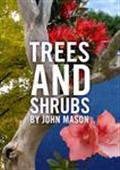
Trees and Shrubs
Useful for students, tradespeople already working in the field, or the home gardener who needs a quick reference when choosing plants for a garden.

Tropical Plants
This luscious, illustrated ebook covers hundreds of different plant genera, and many more cultivars. You will learn how to grow plants commonly cultivated in the tropics and subtropics. It contains everything you need to know about growing tropical plants, managing them and working with them (they can be a little temperamental). Many of the plants can also grow in milder climates as indoor plants or in protected places. Previously published in print form by Kangaroo Press (Simon and Schuster).