
Ecotour Management
Online course. Develop a foundation for employment managing or developing a business in ecotourism. Learn ecotourism principles in ethics, safety & law. Determine needs of ecotourists. Plan ecotour activities.
Learn to Plan and Manage Ecotourism Businesses and Activities
Study at home, online or by distance learning
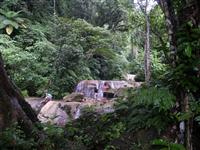
Ecotourism has emerged out of growing interest in outdoor activities - from mountaineering and bird watching, to low impact bush walking. Establishing such an enterprise requires an understanding of a wide range of issues including:
-
destinations
-
safety
-
accommodation
-
transport
-
the tour desk as a first point of contact
-
legal considerations
-
management
This course develops your ability to establish and operate an ecotourism enterprise
Aims
- Describe the scope of ecotourism experiences available.
- Determine management issues related to ecotourism activities/enterprises, giving due consideration to environmental and ethical concerns.
- Develop in the learner an awareness of ecotourism destinations in existence and possibilities (in the learner's country).
- Explain the management and operation of an ecotourism office.
-
Explain the management of ecotourist accommodation facilities including:
- camp sites
- cabins
- caravans
- resorts
- Identify catering options for different ecotourism activities.
- Identify legal and statutory requirements for the establishment and operation of an ecotourism enterprise.
- Identify/establish safety precautions/requirements/procedures for an ecotourism enterprise.
- Plan for an ecotourism activity.
What You Will Do
- Prepare reviews of six different ecotourism destinations
- Contact travel agencies and information centres to research the scope of ecotourism activities available in your area
- Contact a range of ecotourism operators to research their concerns for the environment
- Determine three examples of ecotourism activities that have had undesirable social or environmental impacts
- Report on the relevance of indigenous culture to ecotourism in your locality
- Carry out research into desirable ecotourism destinations
- Identify potential ecotourism activities in your locality
- Observe the administrative operations of an existing ecotourism venture
- Establish administrative procedures for your own hypothetical ecotourism enterprise
- Inspect an ecotourism accommodation facility
- Research the statutory/legislative requirements for setting up ecotourism accommodation in your locality
- Determine suitable layout for an ecotourism accommodation facility
- Visit at least two suppliers of outdoor/recreation camping and cooking equipment
- Contact your local health department or similar to find out causes of food poisoning and how it can be prevented
- Make contact with several local ecotourism associations to research membership requirements
- Research law and regulations in your state that may affect the operation of an ecotourism enterprise
- Contact at least two insurance brokers for their recommendations on the type of insurance needed for a proposed ecotourism activity
- Research safety notification requirements in a natural area
- Interview someone who has been involved in the planning and/or delivery of an ecotourism activity.
Lesson Structure
There are 9 lessons in this course:
-
Nature and Scope of Ecotourism
- Definition of ecotourism
- Negative ecotourism
- Principles of ecotourism
-
Management Issues
- Recreation and the environment
- recreational impacts on the environment
- ethical and legal concerns
- code of practice for ecotourism operators
- incorporating ecotourism principles into activities
- interpretation
- visitor guidelines
- planning for minimal impact
- quality control
-
Industry Destinations
- The ecotourism market
- what do ecotourists want?
- trends in international tourism
- understanding the needs of the consumer
- consumer expectations
-
The Tour Desk/Office
- Office procedures
- providing information
- employment prospects in ecotourism
- bookings
- business letters
- telephone manner
-
Accommodation Facilities
- Types of accommodation facilities
- layout of facilities
-
Catering Facilities
- Introduction to catering
- accepted practice for service facilities
- storing and preserving food
-
Legal Considerations
- National Parks
- land use/planning restrictions
- code of practice
-
Safety
- The safety strategy
- hazards
- first aid
-
Planning an Ecotourism Activity
- A special project where the student plans out an ecotourism activity including:
- budget
- accommodation
- licenses
- meals
- destination
Accreditations
Putting the ‘Eco’ back into Ecotourism
Most of what is called "ecotourism" has very little "eco". A high percentage of the profits from most ecotour operations go to city based companies. This same profit is then spent within the city rather than in the ecotour environment. The rental van or car, food supplies for the lodges in the field, etc., come from that city. In most areas almost none of the profit stays with the people that live in areas rich in biodiversity.
Many eco-tourism claims concerning its benefits are exaggerated, or owe more to labelling and marketing than genuine sustainability. Many of these projects are carried out without local consent and support and they often threaten these local cultures, economies, and natural resources. Some critics regard eco-tourism as an `eco-facade': a tactic concealing the mainstream tourism industry's consumptive and exploitative practices by `greening' it. This is not so in all cases but there are many we can find. For example, a wilderness lodge in a nature area may market on its location as an ecotourism destination when it does nothing else that is sustainable or ‘eco’ based and all profits go to the company owner. People often think many of the island resorts are ecotourist destinations. They may well be where ecotourists go but many can be fooled. These resorts may be doing nothing to hand back to the local community or to reduce its impact on the natural environment.There is a developing trend to encourage ecotour companies to put some of the profit back into the areas they profit from. A lot of this money seems to go towards research, particularly of single species and is not seen as an efficient tool for conservation by most conservation groups and organisations. These groups are hoping to put more emphasis on preserving habitat first; wildlife can not exist without a habitat.
To ensure that the “eco” does stay in ecotourism it is important for Ecotour Managers to encourage the following:
- Aim to do the most towards biodiversity preservation i.e. be part of community based conservation groups.
- Tourists have to be educated to choose to travel with companies that do the most for real biodiversity preservation.
- Many more community-based ecotourism businesses need to be developed.
- Community-based ecotourism businesses need to be developed with guides as professional as the best bird watching and nature tour guides currently working if they hope to capture part of this lucrative market.
Benefits Of This Course
If you already work in tourism, this course can broaden and deepen your knowledge and lead to new opportunities.
If you aspire to work in ecotourism, you will better understand the industry, be less likely to make mistakes, and be more capable of succeeding in this industry.
If you hope to start or buy an ecotourism business, you will make better business choices, both in what you start or buy, and how you move forward beyond that.
This course will improve your knowledge and understanding of ecotourism; but beyond that it will raise your awareness of the industry and help you to see opportunities in a different way - a more enlightened way.
Enrol with us to develop your ecotourism skills.
Enrol using the automated procedure on this site or contact us via phone or email to ask questions and enrol with a real person.
You can enrol at anytime and start the course when you are ready. Enrolments are accepted all year - students can commence study at any time. All study is self paced and ACS does not set assignment deadlines.
Please note that if a student is being assisted by someone else (e.g. an employer or government subsidy), the body offering the assistance may set deadlines. Students in such situations are advised to check with their sponsor prior to enrolling. The nominal duration of a course is approximately how long a course takes to complete. A course with a nominal duration of 100 hours is expected to take roughly 100 hours of study time to complete. However, this will vary from student to student. Short courses (eg. 100 hrs duration) should be completed within 12 months of enrolment. Certificates, Advanced Certificates and Awards (eg. over 500 hours duration) would normally be completed within 3 -5 years of enrolment. Additional fees may apply if a student requires an extended period to complete.
If a student cannot submit their assignments for 6 months to ACS, they should advise the school to avoid cancellation of their student
registration. Recommencement fees may apply.
Simply click on the ENROL OPTIONS button at the top of this screen and follow the prompts.
You can see the course price at the top of this page. Click 'enrolment options' to see any payment options available.
You can pay by Credit Card, PayPal, Afterpay or bank transfer.
Yes! We have payment plans for most courses. Click 'enrolment options' to see the available payment plans.
We also have Afterpay that will allow you to pay for your course or payment plans in four instalments (if you are in Australia).
There are no entry requirements that you need to meet to enrol in our courses, our courses are for everyone.
If you are under 18, we need written permission from your parent/ guardian for your enrolment to continue, we can arrange that after you have enrolled.
You don’t need to purchase any additional resources to complete our courses.
What do I need to know before I enrol?
We aim to teach you the essentials without you having to purchase any specific computer program.
We recommend that you have access to a word processing program, such as Microsoft Word or Google Docs, so that you can easily complete and submit your assignments.
You sure can. We are here to help you learn whatever your abilities.
Yes, if you are enrolling in a Certificate or Advanced Certificate, you might be eligible for credits if you have evidence of your previous studies or relevant experience. More information is here.
We recommend that you are able to browse websites, send emails and conduct online research. You will need to be able to type and submit your assignments.
If you have limited computer skills, we can make special arrangements for you.
This is possible, it depends on the institution. We recommend that if you would like to use our courses that you contact the institution first. Our Course Handbook is a good resource for this.
Our courses are written in English and we only have English speaking academic staff. If you can read and complete your assignments in English, our courses are ideal for you.
Our courses are designed to build knowledge, hands on skills and industry connections to help prepare you to work in the area, running your own business, professional development or as a base for further study.
This course has been designed to cover the fundamentals of the topic. It will take around 100 hours to complete, which includes your course reading, assignment work, research, practical tasks, watching videos and anything else that is contained in the course. Our short courses are a great way to do some professional development or to learn a new skill.
It’s up to you. The study hours listed in the course are a rough guide, however if you were to study a short course (100 hours) at 10 hours per week, you could finish the course in 10 weeks (just an example). Our courses are self-paced, so you can work through the courses in your own time. We recommend that you wait for your tutor to mark and return your assignment before your start your next one, so you get the benefits of their feedback.
The course consists of course notes, videos, set tasks for your practical work, online quizzes, an assignment for each lesson (that you receive feedback from your tutor from) and ends in an exam (which is optional, if would like to receive the formal award at the end), using our custom built Learning Management System - Login.Training.
Our courses are designed for adults to gain professional development and skills to further their careers and start businesses.
Our custom online learning portal allows you to conduct your learning online. There may be practical tasks that you can do offline. You have the option of downloading your course notes or print them to read later.
There is also the option to pay an additional fee for printed course notes and or USB (availability limited to location and deliverability).
Yes, if you don’t have access to the internet, you can receive the course as paper notes or on a USB stick for an additional fee. We can also make alternative arrangements for you to send your assignments to us.
We offer printed notes for an additional fee. Also, you can request your course notes on a USB stick for an additional fee.
Yes, your tutor is here to help you. Simply post any questions you have in your login.training portal or contact the office and we can pass on a message to your tutor.
We are more learning focussed, rather than assessment focussed. You have online quizzes to test your learning, written assignments and can complete an exam at the end of the course (if you want to receive your certificate). You will not receive a pass/ fail on your course work. If you need to add more details on your assignment, we will ask you to resubmit and direct you where you need to focus. If you need help, you can ask your tutor for advice in the student room.
Each module (short course) is completed with one exam.
Exams are optional, however you must sit an exam if you would like to receive a formal award. You will need to find someone who can supervise that you are sitting the exams under exams conditions. There is an additional cost of $60 incl. GST for each exam.
More information is here
There are practical components built into the course that have been designed to be achieved by anyone, anywhere. If you are unable to complete a task for any reason, you can ask your tutor for an alternative.
When you complete the course work and the exam and you will be able receive your course certificate- a Statement of Attainment. Otherwise, you can receive a Letter of Completion.
You can bundle the short courses to create your own customised learning bundle, Certificates or Advanced Certificates. More information is on this page.
Yes, our courses are built to be applicable for people living anywhere in any situation. We provide the fundamentals, and each student can apply their own unique flair for their own interests, region and circumstances with the one-on-one guidance of a tutor. There is also a bit of student directed research involved.
Employers value candidates with industry skills, knowledge, practical skills and formal learning. Our courses arm you with all of these things to help prepare you for a job or start your own business. The longer you study the more you will learn.
ACS has an arrangement with OAMPS (formerly AMP) who can arrange Professional Indemnity from Australian and New Zealand graduates across all disciplines. Ph: 1800 222 012 or email acs@oamps.com.au.
Who are ACS Distance Education?
ACS Distance Education have been educating people for over 40 years.
We are established and safe- we have been in education for over 40 years.
We are focused on developing innovative courses that are relevant to you now and what you will need to know in the future.
We are focused on helping you learn and make the most of your experience.
You can enrol at any time, you can work on your course when it suits you and at your own pace.
We are connected to many industry bodies and our staff participate in continuous improvement and learning activities to ensure that we are ahead of what learning is needed for the future.
Our courses are not accredited by the Australian Government. However many of our courses are recognised and held in high regard by many industry bodies.
Our courses are written by our staff, who all have many years experience and have qualifications in their speciality area. We have lots of academic staff who write and update our courses regularly.
How do I enrol my staff/ sponsored students?
Yes, you can do a request for a bulk enrolment and request an invoice on our Invoice Request Form
We can prepare an invoice, quote or proforma invoice. Simply complete your details on our Invoice Request form
We can arrange bulk discounts for your course enrolment, please get in touch with us to discuss your needs.
Yes, we have many students who are in locked facilities, such as prisons or hospitals. We can cater by also offering paper notes at an additional cost.
What if I have any more questions or need more information?
We can assist you to find the right course for your needs. Get in touch with us via email (admin@acs.edu.au) call on +61 7 5562 1088 or complete our course advice form.
What if I change my mind?
Please get in touch with studentservices@acs.edu.au if you would like to be removed from our mail list.
If you would like ACS Distance Education to delete your information at any time (whether you are a customer or a prospective customer), please contact our privacy officer and we will process this ( admin@acs.edu.au ).
If students require a reproduction of their certificate, an electronic copy can be provided at a cost of AUD$35 incl GST. Printed copies are not available.
Course Contributors
The following academics were involved in the development and/or updating of this course.

Dr Robert Browne
Zoologist, Environmental Scientist and Sustainability, science based consultancy with biotechnology corporations. Work focused on conservation and sustainability.
Robert has published work in the fields of nutrition, pathology, larval growth and development, husbandry, thermo-biology, reproduction technologies, and facility design.Robert has B.Sc., Ph, D.

Alison Pearce
University Lecturer, Quality Assurance Manager, Writer and Research Technician. Alison originally graduated with an honors degree in science from university and beyond that has completed post graduate qualifications in education and eco-tourism. She has managed veterinary operating theatre, responsible for animal anesthesia, instrument preparation, and assistance with surgical techniques and procedures.
Marine Animals
With colour photos splashed throughout, this Marine Animals e-book is designed to provide a guide for some of the more common animals found in marine ecosystems around the world. Learn about the creatures hidden by the other 70% of the earth's surface. Explore more...

Growing Ferns
A complete guide to growing Ferns in Australia, New Zealand and beyond. A great reference for professional and amateur gardeners, and fern enthusiasts from anywhere around the world.
Leadership
What makes a good leader? Is it an innate personality trait or a skill that can be acquired? This book is an excellent guide to the theories and practice of leadership. It is full of interesting facts about social dynamics and examples of leadership styles. For those who are curious or in need of some leadership skills, this book will provide both entertainment and advice.
Professional Practice for Consultants
Explore becoming a consultant. This ebook contains chapters on how to be a consultant, packaging your services, delivering the services, building your resources, finding the work and getting the job, planning and ethics.