
Certificate In Horticulture (Horticultural Technology)
Online horticultural technology course covering both hydroponics and broader horticulture, to provide a wider range of horticulture skills than other hydroponic certificates.
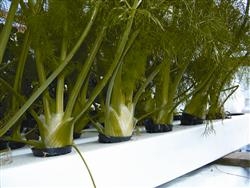
Learn to Apply Science and Technology to Horticulture
Hydroponic Growing Systems, Plant Breeding, Growing Plants and General Horticulture....all wrapped up in the one course; providing a great foundation for starting a hydroponic or plant breeding business, or starting a career in modern horticulture.
“Want to work in hydroponics? You will need more than just knowledge of hydroponic growing systems. This excellent and comprehensive course covers the general horticultural knowledge required for successful plant growing (irrelevant of the method) in the first 15 lessons then focuses on hydroponics in the second half.” - Adriana Fraser Cert.Hort., Cert.Child Care, Adv.Cert.App.Mgt., Cert 1V Assessment and Training, Adv.Dip.Hort, ACS Tutor.
Accreditations
CORE UNITS
Students must complete and pass all of these core units.
1. Introduction to plants Minimum 40 hours instruction
The purpose of this study area is to explain the binomial system of plant classification and demonstrate identification of plant species through the ability of using botanical descriptions for leaf shapes and flowers.
Objectives
- Describe the relevant identifying physical features of flowering ornamental plants.
- Demonstrate how to use prescribed reference books and other resources to gain relevant information.
- Dissect, draw and label two different flowers.
- Collect and identify the shapes of different leaves.
- Demonstrate how to identify between family, genus, species, variety and cultivar.
2. Plant culture Minimum 60 hours instruction
The purpose of this study area is to demonstrate the ability to care for plants so as to maintain optimum growth and health while considering pruning, planting, and irrigation.
Objectives
- Describe how to prune different plants.
- Demonstrate how to cut wood correctly, on the correct angle and section of the stem.
- Describe how to plant a plant.
- Demonstrate an awareness of different irrigation equipment, sprinklers, pumps and turf systems available by listing their comparative advantages and disadvantages.
- Demonstrate competence in selecting an appropriate irrigation system for a garden, explaining why that system would be preferred.
- Define water pressure and flow rate and how to calculate each.
- Explain the need for regular maintenance of garden tools and equipment.
- List factors that should be considered when comparing types of machinery for use in garden maintenance.
3. Soils and plant nutrition Minimum 50 hours instruction
The purpose of this study area is to provide students with the skills and knowledge to identify, work with, and improve the soil condition and potting mixes, and to evaluate fertilisers for use in landscape jobs to maximize plant growth.
Objectives
- Describe the soil types commonly found in plant culture in terms of texture, structure and water-holding and nutrient holding capacity.
- Describe methods of improving soil structure, infiltration rate, water holding capacity, drainage and aeration.
- List the elements essential for plant growth.
- Diagnose the major nutrient deficiencies that occur in ornamental plants and prescribe treatment practices.
- Describe soil pH and its importance in plant nutrition.
- Describe the process by which salting occurs and how to minimise its effect.
- Conduct simple inexpensive tests on three different potting mixes and report accordingly.
- Describe suitable soil mixes for container growing of five different types of plants.
- List a range of both natural and artificial fertilizers.
- Describe fertilizer programs to be used in five different situations with ornamental plants.
4. Introductory propagation Minimum 40 hours duration
The purpose of this study area is to improve the student's understanding of propagation techniques with particular emphasis on cuttings and seeds. Other industry techniques such as grafting and budding are also explained.
Objectives
- Demonstrate propagation of six (6) different plants by cuttings and three from seed.
- Construct a simple inexpensive cold frame.
- Mix and use a propagation media suited to propagating both seed and cuttings.
- Describe the method and time of year used to propagate different plant varieties.
- Describe and demonstrate the steps in preparing and executing a variety of grafts and one budding technique.
- Explain the reasons why budding or grafting are sometimes preferred propagation methods.
5. Identification and use of plants Minimum 60 hours instruction
The purpose of this study area is to improve the student's range of plant knowledge and the plant use in landscaping and the ornamental garden, and the appreciation of the different optimum and preferred growing conditions for different plants.
Objectives
- Select plants appropriate for growing in different climates.
- Select plants appropriate to use for shade, windbreaks, as a feature, and for various aesthetic effects.
- Organise priorities which effect selection of plants for an ornamental garden.
- Explain the differences in the way plants perform in different micro climates within the same area.
- List and analyze the situations where plants are used.
6. Pests, diseases and weeds Minimum 50 hours instruction
The purpose of this study area is develop the student’s ability to identify, describe and control a variety of pests, diseases and weeds in ornamental situation, and to describe safety procedures when using agricultural chemicals.
Objectives
- Explain in general terms the principles of pest, disease and weed control and the ecological (biological) approach to such control.
- Explain the host‑pathogen‑environment concept.
- Describe a variety of pesticides for control of pests, diseases and weeds of ornamental plants in
- terms of their active constituents, application methods, timing and rates, and safety procedures.
- Photograph or prepare specimens, identify and recommend control practices for at least five insect pests of ornamental plants.
- Photograph, sketch or prepare samples, identify and recommend control practices for three non‑insect ornamental plant health problems (e.g. fungal, viral, bacterial).
- Describe the major ways in which diseases (fungal, viral, bacterial and nematode) affect turf, the life cycle features that cause them to become a serious problem to turf culture and the methods available for their control.
- Identify, describe and recommend treatment for three different weed problems.
- Collect, press, mount and identify a collection of ten different weeds, and recommend chemical and non-chemical treatments which may be used to control each.
- List and compare the relative advantages and disadvantages of different weed control methods.
STREAM UNITS
Hydroponics I
There are ten lessons as follows:
- Introduction
- How a Plant Grows
- Hydroponic Systems
- Nutrition & Nutrition management
- Plant Culture
- Hydroponic Vegetable Production
- Hydroponic Cut Flower Production
- Solid Media vs Nutrient Film
- Greenhouse Operation & Management
- Special Assignment
Hydroponic Management
There are eleven lessons as follows:
- How the Crop Plant Grows
- How to Run a Small Evaluation Trial
- Harvest and Post Harvest
- Tomatoes
- Capsicum
- Lettuce, Salad Greens and Foliage Herb Crops
- Cucurbits (Cucumber and Melons)
- Strawberries
- Roses
- Carnations
- Orchids
Plant Breeding
There are 7 lessons in this module as follows:
- The Scope and Nature of the Plant Breeding Industry
- Introduction to Genetics
- Gamete Production, Pollination and Fertilisation in Plants
- Mono Hybrid and Dihybrid Inheritance in Plants
- Systematic Botany and Floral Structures
- Practical Plant Breeding Techniques
- Current Developments in Plant Genetics
HOW THIS COURSE CAN BENEFIT YOU
- You will understand how to grow plants in any context, in the ground, in pots, in hydroponics, outdoors or indoors.
- You will also have a more specialised knowledge of hydroponics and horticultural technology such as plant breeding.
- Graduates will have the foundation they need to begin (or expand) a career or business in horticultural technology (particularly hydroponics), but will also have a broad enough understanding of general horticulture, that they will be able to adapt to working in any other horticultural specialisations.
WHAT SETS ACS APART?
Service – We put the student first. Tutors and administration can be contacted 5 days a week, 50 weeks of the year, by phone or email.
We provide Better Learning – We’ve been delivering distance education for over 3 decades, and we understand how people learn by home study.
Our methods are unique, developed through experience with a focus squarely on helping you learn.
Up to Date – We are continually revising and updating courses. We listen to our students feed-back and we always improve the course if a change is identified that will help significantly improve your learning.
More Choice – Graduates need a set of skills that will set them apart and give them an advantage over competition in the world after study. We have a wide variety of study choices, and give you lots of options to choose different paths throughout a course. Doing this has meant our graduates very successful.
No Short Cuts –You can’t take short cuts in learning, and that is why our courses are often longer than you will find elsewhere. You could choose to study a short course, quickly sit an exam (while the information is fresh) and pass, but if you want to really understand something and retain it, that takes time.
More than just Learning Facts – We understand that success in the workplace or business requires you to not only learn things, but also build networks, understand the commercial world, be able to solve problems, communicate with people, and have an attitude that will function in your chosen industry.
Enrol using the automated procedure on this site or contact us via phone or email to ask questions and enrol with a real person.
You can enrol at anytime and start the course when you are ready. Enrolments are accepted all year - students can commence study at any time. All study is self paced and ACS does not set assignment deadlines.
Please note that if a student is being assisted by someone else (e.g. an employer or government subsidy), the body offering the assistance may set deadlines. Students in such situations are advised to check with their sponsor prior to enrolling. The nominal duration of a course is approximately how long a course takes to complete. A course with a nominal duration of 100 hours is expected to take roughly 100 hours of study time to complete. However, this will vary from student to student. Short courses (eg. 100 hrs duration) should be completed within 12 months of enrolment. Certificates, Advanced Certificates and Awards (eg. over 500 hours duration) would normally be completed within 3 -5 years of enrolment. Additional fees may apply if a student requires an extended period to complete.
If a student cannot submit their assignments for 6 months to ACS, they should advise the school to avoid cancellation of their student
registration. Recommencement fees may apply.
Simply click on the ENROL OPTIONS button at the top of this screen and follow the prompts.
You can see the course price at the top of this page. Click 'enrolment options' to see any payment options available.
You can pay by Credit Card, PayPal, Afterpay or bank transfer.
Yes! We have payment plans for most courses. Click 'enrolment options' to see the available payment plans.
We also have Afterpay that will allow you to pay for your course or payment plans in four instalments (if you are in Australia).
There are no entry requirements that you need to meet to enrol in our courses, our courses are for everyone.
If you are under 18, we need written permission from your parent/ guardian for your enrolment to continue, we can arrange that after you have enrolled.
You don’t need to purchase any additional resources to complete our courses.
What do I need to know before I enrol?
We aim to teach you the essentials without you having to purchase any specific computer program.
We recommend that you have access to a word processing program, such as Microsoft Word or Google Docs, so that you can easily complete and submit your assignments.
You sure can. We are here to help you learn whatever your abilities.
Yes, if you are enrolling in a Certificate or Advanced Certificate, you might be eligible for credits if you have evidence of your previous studies or relevant experience. More information is here.
We recommend that you are able to browse websites, send emails and conduct online research. You will need to be able to type and submit your assignments.
If you have limited computer skills, we can make special arrangements for you.
This is possible, it depends on the institution. We recommend that if you would like to use our courses that you contact the institution first. Our Course Handbook is a good resource for this.
Our courses are written in English and we only have English speaking academic staff. If you can read and complete your assignments in English, our courses are ideal for you.
Our courses are designed to build knowledge, hands on skills and industry connections to help prepare you to work in the area, running your own business, professional development or as a base for further study.
This course is aimed at providing you with a solid understanding in your selected discipline. It has been designed to take 600 hours, which includes your course reading, assignment work, research, practical tasks, watching videos and more. When you complete the course, will have a good understanding of the area/ industry you want to work in.
It’s up to you. The study hours listed in the course are a rough guide, however if you were to study a short course (100 hours) at 10 hours per week, you could finish the course in 10 weeks (just an example). Our courses are self-paced, so you can work through the courses in your own time. We recommend that you wait for your tutor to mark and return your assignment before your start your next one, so you get the benefits of their feedback.
The course consists of course notes, videos, set tasks for your practical work, online quizzes, an assignment for each lesson (that you receive feedback from your tutor from) and ends in an exam (which is optional, if would like to receive the formal award at the end), using our custom built Learning Management System - Login.Training.
Our courses are designed for adults to gain professional development and skills to further their careers and start businesses.
Our custom online learning portal allows you to conduct your learning online. There may be practical tasks that you can do offline. You have the option of downloading your course notes or print them to read later.
There is also the option to pay an additional fee for printed course notes and or USB (availability limited to location and deliverability).
Yes, if you don’t have access to the internet, you can receive the course as paper notes or on a USB stick for an additional fee. We can also make alternative arrangements for you to send your assignments to us.
We offer printed notes for an additional fee. Also, you can request your course notes on a USB stick for an additional fee.
Yes, your tutor is here to help you. Simply post any questions you have in your login.training portal or contact the office and we can pass on a message to your tutor.
We are more learning focussed, rather than assessment focussed. You have online quizzes to test your learning, written assignments and can complete an exam at the end of the course (if you want to receive your certificate). You will not receive a pass/ fail on your course work. If you need to add more details on your assignment, we will ask you to resubmit and direct you where you need to focus. If you need help, you can ask your tutor for advice in the student room.
Each module (short course) is completed with one exam.
Exams are optional, however you must sit an exam if you would like to receive a formal award. You will need to find someone who can supervise that you are sitting the exams under exams conditions. There is an additional cost of $60 incl. GST for each exam.
More information is here
There are practical components built into the course that have been designed to be achieved by anyone, anywhere. If you are unable to complete a task for any reason, you can ask your tutor for an alternative.
When you complete the course work and the exams (6 exams) and you will be able receive your course certificate- a Certificate. Otherwise, you can receive a Letter of Completion.
You can bundle the short courses to create your own customised learning bundle, Certificates or Advanced Certificates. More information is on this page.
Yes, our courses are built to be applicable for people living anywhere in any situation. We provide the fundamentals, and each student can apply their own unique flair for their own interests, region and circumstances with the one-on-one guidance of a tutor. There is also a bit of student directed research involved.
Employers value candidates with industry skills, knowledge, practical skills and formal learning. Our courses arm you with all of these things to help prepare you for a job or start your own business. The longer you study the more you will learn.
ACS has an arrangement with OAMPS (formerly AMP) who can arrange Professional Indemnity from Australian and New Zealand graduates across all disciplines. Ph: 1800 222 012 or email acs@oamps.com.au.
Who are ACS Distance Education?
ACS Distance Education have been educating people for over 40 years.
We are established and safe- we have been in education for over 40 years.
We are focused on developing innovative courses that are relevant to you now and what you will need to know in the future.
We are focused on helping you learn and make the most of your experience.
You can enrol at any time, you can work on your course when it suits you and at your own pace.
We are connected to many industry bodies and our staff participate in continuous improvement and learning activities to ensure that we are ahead of what learning is needed for the future.
Our courses are not accredited by the Australian Government. However many of our courses are recognised and held in high regard by many industry bodies.
Our courses are written by our staff, who all have many years experience and have qualifications in their speciality area. We have lots of academic staff who write and update our courses regularly.
How do I enrol my staff/ sponsored students?
Yes, you can do a request for a bulk enrolment and request an invoice on our Invoice Request Form
We can prepare an invoice, quote or proforma invoice. Simply complete your details on our Invoice Request form
We can arrange bulk discounts for your course enrolment, please get in touch with us to discuss your needs.
Yes, we have many students who are in locked facilities, such as prisons or hospitals. We can cater by also offering paper notes at an additional cost.
What if I have any more questions or need more information?
We can assist you to find the right course for your needs. Get in touch with us via email (admin@acs.edu.au) call on +61 7 5562 1088 or complete our course advice form.
What if I change my mind?
Please get in touch with studentservices@acs.edu.au if you would like to be removed from our mail list.
If you would like ACS Distance Education to delete your information at any time (whether you are a customer or a prospective customer), please contact our privacy officer and we will process this ( admin@acs.edu.au ).
If students require a reproduction of their certificate, an electronic copy can be provided at a cost of AUD$35 incl GST. Printed copies are not available.
Course Contributors
The following academics were involved in the development and/or updating of this course.

Dr. Lynette Morgan
Broad expertise in horticulture and crop production. She travels widely as a partner in Suntec Horticultural Consultants, and has clients in central America, the USA, Caribbean, South East Asia, the Middle East, Australia and New Zealand.

Marie Beermann
Marie has more than 10 years experience in horticulture and education in both Australia and Germany. Marie's qualifications include B. Sc., M. Sc. Hort., Dip. Bus., Cert. Ldscp.

John Mason (Horticulturist)
Parks Manager, Nurseryman, Landscape Designer, Garden Writer and Consultant.
Over 40 years experience; working in Victoria, Queensland and the UK.
He is one of the most widely published garden writers in the world.

Climbing Plants
“A doctor can bury his mistakes, but an architect can only advise his clients to plant vines.” ― Frank Lloyd Wright This e-book is a wonderful guide to climbing plants. Complete with full colour photographs, it is ideal for the home gardening enthusiast, landscape designer, or architect.
Commercial Hydroponics
Learn how to grow vegetables, fruit, cut flowers, herbs and other plants hydroponically. This classic is now re-published with new images, a new layout and revised text. A must have resource for anyone who wants to grow hydroponically.
Farm Management
This new e-book looks at everything you need to improve your farm management skills. Learn about the farm site, production systems, managing livestock, managing pasture, crops, marketing and more.

Fruit, Vegetables and Herbs
Home grown produce somehow has a special quality. Some say it tastes better, others believe it is just healthier. And there is no doubt it is cheaper! Watching plants grow from seed to harvest and knowing that the armful of vegies and herbs you have just gathered for the evening meal will be on the table within an hour or two of harvest, can be an exciting and satisfying experience.