Bush Tucker Plants
Learn about edible Australian native (bush tucker) plants. This is a subject that is showing growing interest and opportunities: how to identify, grow and use them including roots, berries, nuts, flowers and vegetables.
Learn to Identify, Growing and Use Australian Indigenous Plants for Food.
There are many Australian plants that are edible, and even some that are in very high demand as foods throughout the world. The Aborigines lived off the land before white civilization came to Australia. Plants contributed significantly to their diet.
There are many different types of bush tucker foods:
- Nuts and seeds (eg. Acacia, Macadamia, bunya nuts)
- Drinks (eg. hot teas, infusions of nectar laden flowers, fruit juices)
- Flavourings (eg. lemon scented myrtle)
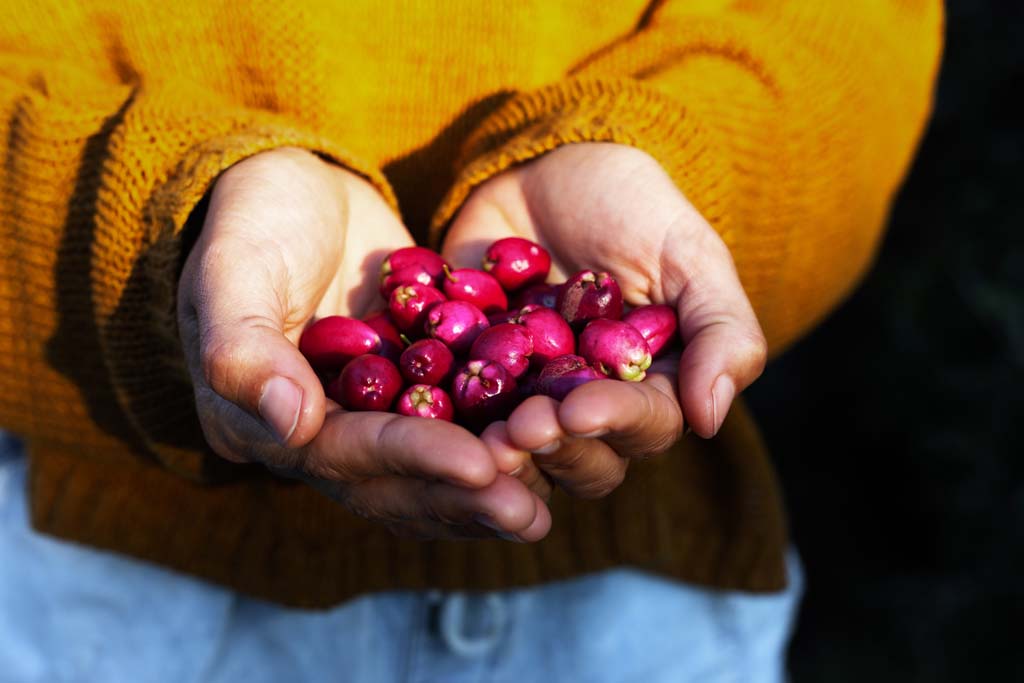
- Berries (eg. Astroloma, some Solanum species)
- Fruits (eg. quandong, Ficus macrophylla, Syzygium)
- Vegetables
- Wattle seeds ground to produce ‘flour’
- Plant roots ground to produce a paste or flour.
Aims
- Discuss the nature and scope of bush tucker plants.
- Review the way bush tucker plants are accurately identified.
- Describe how to cultivate a range of bush tucker plants.
- Describe how bush foods are harvested from the wild and how to set up a cultivated bush food garden.
- Outline the cultivation, harvest and use of various bush tucker nuts and seeds.
- Explain the cultivation, harvest and use of various bush tucker vegetables
- Explain the cultivation, harvest and use of various bush tucker fruits.
- Explain the cultivation, harvest and use of various bush tucker plants that are used to flavour foods or beverages.
- Describe the preparation of bush tucker.
Lesson Structure
There are 8 lessons in this course:
-
Introduction
- Scope
- Is it Edible
- Native Plants to be Cautious with
- Understanding Plant Toxins
- Nutritional Value of Bush tucker
- Plant Identification
- Naming Plants
- Hybrids, Varieties and Cultivars
- Plant Families
- Pronouncing Plant Names
- Resources
-
Growing
- Understanding Soil
- Improving Soil
- Feeding Plants
- Growing Australian Plants on Low Fertility Soils
- Planting Procedure
- Mulching
- Pruning Australian Plants
- Propagation
- Seed
- Collecting, Storing, Germinating Seed
- Difficult Seeds
- Seed Germination Techniques
- Handling and raising seedlings
- Asexual Propagation (Cuttings, Division, etc)
-
Gathering
- Introduction
- Ethics
- Bush Foods as A Commercial Venture
- Gathering Acacia Seed
- Developing a Bush Food Garden
- Designing a Bush Garden
- Selected Native Trees for a Bush Tucker Garden
- Selected Shrubs for a Bush Tucker Garden
- Selected Small Indigenous Australian Plants for a Bush Tucker Garden
- Rainforest Gardens
- Desert Gardens
- Edible Arid Zone Bush Tucker plants
- Water Management
-
Nuts and Seeds
- Macadamia
- Araucaria
- Aleurites moluccana
- Athertonia diversifolia (Atherton Oak)
- Castanospermum australe
- Hicksbeachia pinnatifolia
- Acacias
- Using Acacias (eg. Wattleseed Essence)
-
Vegetables
- Native Spinach (Tetragonia tetragonioides)
- Pigface (Carpobrotus sp.)
- Longleaf Mat Rush (Lomandra longifolia)
- Solanums (Bush Tomatoes or Kangaroo Apple)
- Blechnum indicum
- Apium prostratum (Sea Celery)
- Native Lilies
- Microseris lanceolata (Yam Daisy)
- Dioscorea transversa (Wild Yams)
- Native ginger Alpinia caerulea
- Seaweeds
-
Fruits
- Astroloma
- Austromyrtus dulcis (Midgen Berry)
- Billardiera sp. (e.g. Appleberry)
- Davidsonia purescens (Davidson’s Plum)
- Eugenia spp. and Syzygium spp. (eg. Bush Cherries)
- Ficus (Native Figs)
- Planchonella australis (Black Apple)
- Quandong (Santalum)
- Rubus sp (Native Raspberry)
- Other Fruits - lots more outlined
-
Flavourings, Teas, Essences
- Backhousia
- Curcuma (related to ginger)
- Eucalyptus
- Leptospermum
- Soaked Flowers (e.g. Grevillea)
- Acacia
- Alpinia caerulea
- Tasmannia sp.
-
Using Bush Tucker Plants
- Develop your ability to identify, select, and develop processing procedures, for a range of varieties of bush food plants selected.
CREATE A FOOD GARDEN WITH AUSTRALIAN PLANTS
Designing an edible garden is not that different to designing any type of garden; you need to give thought to what will grow in your area and climatic zone, which plants you will incorporate into the garden and how to arrange these plants for aesthetic value. Unlike a ‘normal’ garden however your design will most probably not be cut into sections i.e. vegetable garden, fruit garden and ornamental garden. The edible ornamental bush garden you design can include all those features within it, without separation.
A natural edible garden need not be boring or look untended. If carefully designed it can incorporate all the normal design elements that make bush gardens interesting and beautiful, the only difference is that you will be consciously choosing plants that can be harvested for their edible produce.
Australian Trees that are a Good Food Source
Consider these:
Acacia longifolia (Golden Wattle)
A fast growing tree 7-10m tall native to south eastern Australia, lower southeast of Qld, Eastern NSW, eastern and southern Victoria and south eastern SA. Green wattle seeds are quite similar in composition to cultivated garden peas but are best cooked by lightly baking. Flowers appear in July through to September with seed pods ripening in summer.
Acacia mearnsii
This plant is found in southern Victoria, South Australia, Tasmania as well as the coast and tablelands of New South Wales. Flowering occurs from September to December. Edible gum and seed; bark tea is used for indigestion. This tree grows to 15m and needs an open, dry, well-drained positioning full sun.
Backhousia citriodora (Lemon Myrtle)
A small, low branching tree, 3m - 8m tall native to Qld and NSW It needs warm, well-drained soil and grows in full sun to part shade; protect from frost. The leaves are intensely lemon flavoured used in teas, as a lemongrass substitute. Wonderful in cheesecakes; dry and grind the leaves for cakes and biscuits.
Brachychiton populneus (Kurrajong)
Large tree to 10m requires a moist, well-drained position; frost tender when young plant in sun to part shade. Nutty flavoured edible seed.
Citrus australasica (Native Finger Lime)
A small tree, 4m - 6m tall native to Qld and NSW that grows in full sun to part shade on moist, fertile, well-drained soil but can also be grown in pots. The finger shaped fruit is filled with edible tiny balls they have a lovely lime taste great in Asian dishes but also suited to cocktails.
Eucalyptus olida (Strawberry Gum)
A medium-sized tree to 20m, restricted to sclerophyll woodlands on the Northern Tableland of NSW; cream flowers are followed by small woody capsules. The juvenile leaves are ovate, dull green and 7cm long. The intensely aromatic adult leaves are to 17cm lanceolate, glossy green and are used as a spice. E.olida is classified as threatened species in the wild, but is becoming more common in cultivation due to its essential oil and spice qualities; suited to larger gardens.
Macadamia integrifolia (Macadamia Nut)
A rounded, slow growing tree 12 - 15m tall; for best results buy a grafted variety (these are readily available in Australia). Best suited to the warmer climates of coastal south Qld and northern NSW. The delicious nuts should be allowed to ripen on the tree. Nuts ripen approx. 7 months after flowers appear in June through to March. Bronze leaves appear opposite in seedings and in whorls of 3 and pale green on mature plants, 10–30 cm long, margins with few or no spines, petioles (leaf stalks are about 1.3 cm long. Flowers creamy-white, without petals are borne in groups of 3 or 4 along a long axis in racemes, similar to grapes. The fruit consist of a fleshy green husk enclosing a spherical shaped seed the nuts are roundish and 1.3–2.5 cm in diameter. The shell is tough, fibrous and quite difficult to crack; (more on this species in the following lesson).
Syzygium luehmannii (Riberry)
A small bushy tree to 8m needs well drained fertile soil and full sun to semi shade; native to Qld and NSW. A lovely compact, medium tree sized with foliage to ground level. Small white flowers are followed by fleshy red berries. The small, glossy, lance-shaped leaves are pink/red when young. They are opposite, simple, entire, lanceolate to ovate in shape on a 2-3mm leaf stalk; leaves are 4 to 5 cm long with a long prominent point. Small 2.5cm panicles of white or cream petal flowers (petals appear in 4 s or 5s) form at the ends of branchlets in November or December. Flower stamens are 2 to 5 mm long. Pear shaped 13mm long red berry fruit containing a single seed, matures in December to February. Cuttings of this plant strike easily although seeds can be used but germination is sporadic and unreliable. The sweet purple berries have a tart after-taste and are great in jams, sauces to accompany meat or as cordial. Prune after flowering to maintain compact growth.
WHO SHOULD STUDY THIS COURSE
This course was designed for both people who might grow and who might use Australian Bush Tucker Plants.
- Anyone who works with food -from production and manufacture to selling and cooking, can find value in this course.
- You may use this course to explore new and innovative possibilities as a grower or as a cook.
- Whatever your purpose in studying Bush Tucker, you will expand your knowledge and awareness of foods that might be exploited as crops, to produce new food products and to create new menu items.
Enrol using the automated procedure on this site or contact us via phone or email to ask questions and enrol with a real person.
You can enrol at anytime and start the course when you are ready. Enrolments are accepted all year - students can commence study at any time. All study is self paced and ACS does not set assignment deadlines.
Please note that if a student is being assisted by someone else (e.g. an employer or government subsidy), the body offering the assistance may set deadlines. Students in such situations are advised to check with their sponsor prior to enrolling. The nominal duration of a course is approximately how long a course takes to complete. A course with a nominal duration of 100 hours is expected to take roughly 100 hours of study time to complete. However, this will vary from student to student. Short courses (eg. 100 hrs duration) should be completed within 12 months of enrolment. Certificates, Advanced Certificates and Awards (eg. over 500 hours duration) would normally be completed within 3 -5 years of enrolment. Additional fees may apply if a student requires an extended period to complete.
If a student cannot submit their assignments for 6 months to ACS, they should advise the school to avoid cancellation of their student
registration. Recommencement fees may apply.
Simply click on the ENROL OPTIONS button at the top of this screen and follow the prompts.
You can see the course price at the top of this page. Click 'enrolment options' to see any payment options available.
You can pay by Credit Card, PayPal, Afterpay or bank transfer.
Yes! We have payment plans for most courses. Click 'enrolment options' to see the available payment plans.
We also have Afterpay that will allow you to pay for your course or payment plans in four instalments (if you are in Australia).
There are no entry requirements that you need to meet to enrol in our courses, our courses are for everyone.
If you are under 18, we need written permission from your parent/ guardian for your enrolment to continue, we can arrange that after you have enrolled.
You don’t need to purchase any additional resources to complete our courses.
What do I need to know before I enrol?
We aim to teach you the essentials without you having to purchase any specific computer program.
We recommend that you have access to a word processing program, such as Microsoft Word or Google Docs, so that you can easily complete and submit your assignments.
You sure can. We are here to help you learn whatever your abilities.
Yes, if you are enrolling in a Certificate or Advanced Certificate, you might be eligible for credits if you have evidence of your previous studies or relevant experience. More information is here.
We recommend that you are able to browse websites, send emails and conduct online research. You will need to be able to type and submit your assignments.
If you have limited computer skills, we can make special arrangements for you.
This is possible, it depends on the institution. We recommend that if you would like to use our courses that you contact the institution first. Our Course Handbook is a good resource for this.
Our courses are written in English and we only have English speaking academic staff. If you can read and complete your assignments in English, our courses are ideal for you.
Our courses are designed to build knowledge, hands on skills and industry connections to help prepare you to work in the area, running your own business, professional development or as a base for further study.
This course has been designed to cover the fundamentals of the topic. It will take around 100 hours to complete, which includes your course reading, assignment work, research, practical tasks, watching videos and anything else that is contained in the course. Our short courses are a great way to do some professional development or to learn a new skill.
It’s up to you. The study hours listed in the course are a rough guide, however if you were to study a short course (100 hours) at 10 hours per week, you could finish the course in 10 weeks (just an example). Our courses are self-paced, so you can work through the courses in your own time. We recommend that you wait for your tutor to mark and return your assignment before your start your next one, so you get the benefits of their feedback.
The course consists of course notes, videos, set tasks for your practical work, online quizzes, an assignment for each lesson (that you receive feedback from your tutor from) and ends in an exam (which is optional, if would like to receive the formal award at the end), using our custom built Learning Management System - Login.Training.
Our courses are designed for adults to gain professional development and skills to further their careers and start businesses.
Our custom online learning portal allows you to conduct your learning online. There may be practical tasks that you can do offline. You have the option of downloading your course notes or print them to read later.
There is also the option to pay an additional fee for printed course notes and or USB (availability limited to location and deliverability).
Yes, if you don’t have access to the internet, you can receive the course as paper notes or on a USB stick for an additional fee. We can also make alternative arrangements for you to send your assignments to us.
We offer printed notes for an additional fee. Also, you can request your course notes on a USB stick for an additional fee.
Yes, your tutor is here to help you. Simply post any questions you have in your login.training portal or contact the office and we can pass on a message to your tutor.
We are more learning focussed, rather than assessment focussed. You have online quizzes to test your learning, written assignments and can complete an exam at the end of the course (if you want to receive your certificate). You will not receive a pass/ fail on your course work. If you need to add more details on your assignment, we will ask you to resubmit and direct you where you need to focus. If you need help, you can ask your tutor for advice in the student room.
Each module (short course) is completed with one exam.
Exams are optional, however you must sit an exam if you would like to receive a formal award. You will need to find someone who can supervise that you are sitting the exams under exams conditions. There is an additional cost of $60 incl. GST for each exam.
More information is here
There are practical components built into the course that have been designed to be achieved by anyone, anywhere. If you are unable to complete a task for any reason, you can ask your tutor for an alternative.
When you complete the course work and the exam and you will be able receive your course certificate- a Statement of Attainment. Otherwise, you can receive a Letter of Completion.
You can bundle the short courses to create your own customised learning bundle, Certificates or Advanced Certificates. More information is on this page.
Yes, our courses are built to be applicable for people living anywhere in any situation. We provide the fundamentals, and each student can apply their own unique flair for their own interests, region and circumstances with the one-on-one guidance of a tutor. There is also a bit of student directed research involved.
Employers value candidates with industry skills, knowledge, practical skills and formal learning. Our courses arm you with all of these things to help prepare you for a job or start your own business. The longer you study the more you will learn.
ACS has an arrangement with OAMPS (formerly AMP) who can arrange Professional Indemnity from Australian and New Zealand graduates across all disciplines. Ph: 1800 222 012 or email acs@oamps.com.au.
Who are ACS Distance Education?
ACS Distance Education have been educating people for over 40 years.
We are established and safe- we have been in education for over 40 years.
We are focused on developing innovative courses that are relevant to you now and what you will need to know in the future.
We are focused on helping you learn and make the most of your experience.
You can enrol at any time, you can work on your course when it suits you and at your own pace.
We are connected to many industry bodies and our staff participate in continuous improvement and learning activities to ensure that we are ahead of what learning is needed for the future.
Our courses are not accredited by the Australian Government. However many of our courses are recognised and held in high regard by many industry bodies.
Our courses are written by our staff, who all have many years experience and have qualifications in their speciality area. We have lots of academic staff who write and update our courses regularly.
How do I enrol my staff/ sponsored students?
Yes, you can do a request for a bulk enrolment and request an invoice on our Invoice Request Form
We can prepare an invoice, quote or proforma invoice. Simply complete your details on our Invoice Request form
We can arrange bulk discounts for your course enrolment, please get in touch with us to discuss your needs.
Yes, we have many students who are in locked facilities, such as prisons or hospitals. We can cater by also offering paper notes at an additional cost.
What if I have any more questions or need more information?
We can assist you to find the right course for your needs. Get in touch with us via email (admin@acs.edu.au) call on +61 7 5562 1088 or complete our course advice form.
What if I change my mind?
Please get in touch with studentservices@acs.edu.au if you would like to be removed from our mail list.
If you would like ACS Distance Education to delete your information at any time (whether you are a customer or a prospective customer), please contact our privacy officer and we will process this ( admin@acs.edu.au ).
If students require a reproduction of their certificate, an electronic copy can be provided at a cost of AUD$35 incl GST. Printed copies are not available.
Course Contributors
The following academics were involved in the development and/or updating of this course.

Rosemary Davies (Horticulturist)
Leading horticultural expert in Australia.
Rosemary trained in Horticultural Applied Science at Melbourne University. Initially she worked with Agriculture Victoria as an extension officer, taught horticulture students, worked on radio with ABC radio (clocking up over 24 years as a presenter of garden talkback programs, initially the only woman presenter on gardening in Victoria) and she simultaneously developed a career as a writer.
She then studied Education and Training, teaching TAFE apprentices and developing curriculum for TAFE, before taking up an offer as a full time columnist with the Herald and Weekly Times and its magazine department after a number of years as columnist with the Age. She has worked for a number of companies in writing and publications, PR community education and management and has led several tours to Europe.
In 1999 Rosemary was BPW Bendigo Business Woman of the Year and is one of the founders and the Patron, of the Friends of the Bendigo Botanic gardens. She has completed her 6th book this year and is working on concepts for several others.
Rosemary has a B Ed, BSc Hort, Dip Advertising & Marketing

John Mason (Horticulturist)
Parks Manager, Nurseryman, Landscape Designer, Garden Writer and Consultant.
Over 40 years experience; working in Victoria, Queensland and the UK.
He is one of the most widely published garden writers in the world.

Adriana Fraser (Horticulturist)
Over 30 years working in horticulture, as a gardener, propagator, landscape designer
, teacher and consultant. Adriana has spent much of her life living on large properties, developing and maintaining her own gardens, and living a semi self sufficient lifestyle. She has decades of practical experience growing her own fruit, vegetables and herbs, and making her own preserves. She is well connected with horticulture professionals across Australia, and amongst other things, for a period, looked after Australia's national collection of Thymus. Advanced Diploma in Horticulture, Advanced Certificate in Horticulture.
Fruit, Vegetables and Herbs
Home grown produce somehow has a special quality. Some say it tastes better, others believe it is just healthier. And there is no doubt it is cheaper! Watching plants grow from seed to harvest and knowing that the armful of vegies and herbs you have just gathered for the evening meal will be on the table within an hour or two of harvest, can be an exciting and satisfying experience.

Getting Work in Horticulture
Find out what it is like to work in horticulture; how diverse the industry is, how to get a start, and how to build a sustainable, long term and diverse career that keeps your options broad, so you can move from sector to sector as demand and fashion changes across your working life.

Profitable Farming
Discover new ways to make money from your farm and broaden your perspective on the farming industry. A few things in life are certain; change is inevitable and people need to eat. Learn to embrace change as an opportunity and improve your ability to forge a sustainable career in farming.

Landscaping with Australian Plants
Explore the world of Australian plants and the exciting ways in which they can bring a new depth to a landscape or garden design.
Ideal for students, landscape gardeners and gardening enthusiasts alike, this ebook is full of glorious colour pictures of Australian native plants.