
PERSONAL TRAINER - START YOUR EXCITING NEW CAREER!
 This is an fast expanding industry - more people than ever before understand the value of exercise and the importance of a program that is tailored to suit them as individuals.
- Be sought after - an expert trainer has waiting lists of potential customers
- Be respected - be the best in the industry and your clients will respect you and your work
- Work hours that suit you!
Where are personal trainers employed?
- Self-employed
- In gyms
A Personal Trainer is more often than not a self employed fitness leader who works one on one with clients, providing services that are more in depth and often with a broader scope than what a typical gym based fitness leader might offer.
A course such as this will take you well beyond the level of training that an average fitness leader will receive.
Course Structure
This course is made up of a number of modules. To complete this course you must study and pass all of the modules listed below.
Core Modules
Elective Modules
In addition to the core modules, students must also choose 4 of the following elective modules.
- Advanced Aerobics
- Aquafitness
- Business Coaching
- Cardiorespiratory Performance (Human Biology III)
- Food Coaching
- Healthy Aging
- Muscles & Movement (Human Biology II)
- Nutrition for Weight Loss
- Professional Practice in Counselling
- Resistance & Gym Supervision
- Sports Coaching
- Sports Nutrition
- Sports Psychology
- Weight Loss Consultant
- Wellness Coaching
Accreditations
What's Covered in this Course?
FITNESS LEADERS CERTIFICATE
Part 1
UNIT ONE – Anatomy and Physiology and Exercise
Lesson 1. Introduction to Health and Fitness
Lesson 2. Exercise Physiology
Lesson 3. Exercise Principles and Cardio-respiratory Programming
Lesson 4. Physiology: Digestion, Excretion, Physiological Systems
UNIT TWO - Biomechanics
Lesson 5. Introduction to Biomechanics: The skeleton and muscles
Lesson 6. Biomechanics and Risk
Lesson 7. Aquafitness, exercise, routines, and equipment
PART 2
UNIT THREE – Program Design and Performance
Lesson 8. Fitness Program Design
Lesson 9. Delivering A Fitness Program
Lesson 10. Ergogenic Aids to Performance
UNIT FOUR – Safety, Injury, and Body Physiology
Lesson 11. Regulating Body Physiology
Lesson 12. Safety, Injury and General Wellbeing
Lesson 13. Fitness Programs for Special Groups
Practicum: Undertake 40 hours of practical at an approved fitness centre (under the supervision of a reputable instructor)
MOTIVATION
There are 8 lessons in this course:
- Introduction
- Describe the nature and scope of motivation, and identify the differences between people that distinguish the application of motivational skills to achieve a successful outcome
- Awareness
- Explain the significance of knowledge and understanding to motivation.
- Tangible Rewards
- Explain the effect of tangible rewards (e.g. money, services, goods) as a major motivator.
- Intangible Rewards
- Explain the effect of intangible rewards (e.g. security, ethics, gratitude, belief systems/religion, peer pressure) as a major motivator.
- Negative Motivators
- Explain how actions can be motivated by negative motivators (e.g. pain, suffering, discipline, threats), and distinguish this type of motivation from that achieved through positive motivators.
- Initiating Motivation
- Explain how to initiate motivation with an individual or group for a situation not previously confronted.
- Maintaining Motivation
- Explain how motivation can be maintained or increased in both successful and unsuccessful environments.
- Applications
- Identify a wide range of situations where motivational skills can be applied, and determine an appropriate way to initiate and maintain motivation in each of those situations.
LIFE COACHING
There are 10 lessons in this course:
- Introduction
- nature of life coaching
- cognitive behaviour therapy
- different approaches
- the scope of life coaching.
- Individual Perception
- psychology of self-perception
- perceptual barriers
- motivating clients to challenge their perceptions.
- A Well Balanced Life
- the inter-relationship between psychology and physiology
- stress
- the psychology of balance.
- Coaching Processes
- key coaching processes
- assessment of the client's situation
- dealing with emotions
- setting goals
- replacing negative habits with positive ones
- leadership qualities in a life coach
- imagination and enthusiasm
- clarifying goals
- recognition of limitations.
- Coaching Skills
- understanding the communication process
- body language
- communication barriers
- listening skills
- assessing learning styles.
- Coaching and physical well-being
- human nutrition
- important factors in nutrition
- physical well-being.
- Coaching and psychological well-being
- the psychology of self-esteem
- stress management programme
- identifying stressors.
- Coaching Success
- high achievement
- coaching success
- career guidance
- managing your money
- beginning a business.
- Goal Setting
- values
- aims and goals
- types of goals
- planning
- future goals
- steps for successful goal achievement
- effort and attribution.
- Review and Adjustment
- indications that a programme needs to be reassessed
- client's lack of confidence
- personality clash
- over-achievers
- health and safety issues.
INDUSTRY PROJECT OR WORK EXPERIENCE
This is the final requirement that you must satisfy before receiving your award.
There are two options available to you to satisfy this requirement:
Alternative 1.
If you work in the industry that you have been studying; you may submit a reference from your employer, in an effort to satisfy this industry (i.e. workplace project) requirement; on the basis of RPL (i.e. recognition for prior learning), achieved through your current and past work experience.
The reference must indicate that you have skills and an awareness of your industry, which is sufficient for you to work in a position of responsibility.
Alternative 2.
If you do not work in the relevant industry, you need to undertake a two standard work oriented modules such as Workplace Project I and II or Research Project I & II
ELECTIVES
These are designed to build extra skills which compliment job in fitness, personal training, sports or coaching.
In most countries, there are no legal requirements for being a personal trainer; however, there can certainly be risks and legal liability to consider if you are not properly skilled at what you do.
Exercise Has More Benefits Than Most People Realise
Exercise has an interplay with every aspect of our lives; and a good personal trainer needs to convey this understanding to their clients. Without exercise, food is not processed as well, and psychological health can be impaired.
While a fitness instructor may not need to focus so much on these other health aspects; an effective personal trainer does need to be more holistic if they are to properly help people and build a reputation that sustains their career; not to mention being of optimum service to the client.
Exercise is useful to reduce stress. As well as stress, it can also reduce a person’s risk of other major illnesses, such as strokes, diabetes, heart disease and cancer by up to 50%. But today so many of us have less exercise than we should. We drive to places when we could walk. We may have jobs that require us to sit down on a computer for hours of the day, we may watch TV instead of go for a walk, or play video games instead of playing netball or football, and so on. The UK Department of Health call this sedentary life style – the “silent killer”.
"If exercise were a pill, it would be one of the most cost-effective drugs ever invented"
(Dr Nick Cavill, Health Promotion Expert)
There is a lot of scientific evidence to show that leading a physically active life can lead to a healthier and happier life, reducing the risk of a lot of chronic disease, as mentioned above. But we can also improve our mental health with physical activity. Physical activity can boost our self-esteem, boost our mood, improve the quality of our sleep, increase our energy and also reduce the risk of stress, dementia, depression and Alzheimer’s Disease.
The National Health Service in the UK have conducted research and found the following benefits from regular activity.
- 35% lower risk of stroke and coronary heart disease
- 50% lower risk of type 2 diabetes
- 50% lower risk of colon cancer
- 20% lower risk of breast cancer
- 30% lower risk of early death
- 83% lower risk of osteoarthritis
- 68% lower risk of hip fracture
- 30% lower risk of falls in older adults
But also they found there was a 30% lower risk of depression and a 30% lower risk of dementia.
So, how much exercise is required to improve a person’s physical and mental health? The National Health Service suggests that moderate intensity aerobic activity is the most important form of exercise. This means you are working hard enough to break a sweat and raise your heart rate. This includes activities such as walking fast, pushing a lawn mower, or playing tennis. They suggest that 150 minutes a week of moderate intensity aerobic activity is important.
Get Onto The Right Career Path
You don't become a competent personal trainer by undertaking quickie short courses. It takes time to learn properly and embed knowledge into your mind. It also takes a properly constructed learning experience supported by capable and knowledgeable educators such as this course provides.
This is the path we strive to set you on!
Who Should Study This Course?
This course is suitable for many people including:
- Personal trainers
- Sports coaches
- Health & fitness personnel
- Sport & leisure facility staff
- Gym personnel
- Health & wellness coaches
- Athletes
- Keep-fit enthusiasts
- Fitness fanatics
- School leavers
Enrol to begin an exciting career as a personal trainer.
Enrol using the automated procedure on this site or contact us via phone or email to ask questions and enrol with a real person.
You can enrol at anytime and start the course when you are ready. Enrolments are accepted all year - students can commence study at any time. All study is self paced and ACS does not set assignment deadlines.
Please note that if a student is being assisted by someone else (e.g. an employer or government subsidy), the body offering the assistance may set deadlines. Students in such situations are advised to check with their sponsor prior to enrolling. The nominal duration of a course is approximately how long a course takes to complete. A course with a nominal duration of 100 hours is expected to take roughly 100 hours of study time to complete. However, this will vary from student to student. Short courses (eg. 100 hrs duration) should be completed within 12 months of enrolment. Certificates, Advanced Certificates and Awards (eg. over 500 hours duration) would normally be completed within 3 -5 years of enrolment. Additional fees may apply if a student requires an extended period to complete.
If a student cannot submit their assignments for 6 months to ACS, they should advise the school to avoid cancellation of their student
registration. Recommencement fees may apply.
Simply click on the ENROL OPTIONS button at the top of this screen and follow the prompts.
You can see the course price at the top of this page. Click 'enrolment options' to see any payment options available.
You can pay by Credit Card, PayPal, Afterpay or bank transfer.
Yes! We have payment plans for most courses. Click 'enrolment options' to see the available payment plans.
We also have Afterpay that will allow you to pay for your course or payment plans in four instalments (if you are in Australia).
There are no entry requirements that you need to meet to enrol in our courses, our courses are for everyone.
If you are under 18, we need written permission from your parent/ guardian for your enrolment to continue, we can arrange that after you have enrolled.
You don’t need to purchase any additional resources to complete our courses.
What do I need to know before I enrol?
We aim to teach you the essentials without you having to purchase any specific computer program.
We recommend that you have access to a word processing program, such as Microsoft Word or Google Docs, so that you can easily complete and submit your assignments.
You sure can. We are here to help you learn whatever your abilities.
Yes, if you are enrolling in a Certificate or Advanced Certificate, you might be eligible for credits if you have evidence of your previous studies or relevant experience. More information is here.
We recommend that you are able to browse websites, send emails and conduct online research. You will need to be able to type and submit your assignments.
If you have limited computer skills, we can make special arrangements for you.
This is possible, it depends on the institution. We recommend that if you would like to use our courses that you contact the institution first. Our Course Handbook is a good resource for this.
Our courses are written in English and we only have English speaking academic staff. If you can read and complete your assignments in English, our courses are ideal for you.
Our courses are designed to build knowledge, hands on skills and industry connections to help prepare you to work in the area, running your own business, professional development or as a base for further study.
This course is aimed at providing you with a solid understanding of the subject. It has been designed to take 600 hours, which includes your course reading, assignment work, research, practical tasks, watching videos and more. When you complete the course, will have a good understanding of the area/ industry you want to work in.
It’s up to you. The study hours listed in the course are a rough guide, however if you were to study a short course (100 hours) at 10 hours per week, you could finish the course in 10 weeks (just an example). Our courses are self-paced, so you can work through the courses in your own time. We recommend that you wait for your tutor to mark and return your assignment before your start your next one, so you get the benefits of their feedback.
The course consists of course notes, videos, set tasks for your practical work, online quizzes, an assignment for each lesson (that you receive feedback from your tutor from) and ends in an exam (which is optional, if would like to receive the formal award at the end), using our custom built Learning Management System - Login.Training.
Our courses are designed for adults to gain professional development and skills to further their careers and start businesses.
Our custom online learning portal allows you to conduct your learning online. There may be practical tasks that you can do offline. You have the option of downloading your course notes or print them to read later.
There is also the option to pay an additional fee for printed course notes and or USB (availability limited to location and deliverability).
Yes, if you don’t have access to the internet, you can receive the course as paper notes or on a USB stick for an additional fee. We can also make alternative arrangements for you to send your assignments to us.
We offer printed notes for an additional fee. Also, you can request your course notes on a USB stick for an additional fee.
Yes, your tutor is here to help you. Simply post any questions you have in your login.training portal or contact the office and we can pass on a message to your tutor.
We are more learning focussed, rather than assessment focussed. You have online quizzes to test your learning, written assignments and can complete an exam at the end of the course (if you want to receive your certificate). You will not receive a pass/ fail on your course work. If you need to add more details on your assignment, we will ask you to resubmit and direct you where you need to focus. If you need help, you can ask your tutor for advice in the student room.
Each module (short course) is completed with one exam.
Exams are optional, however you must sit an exam if you would like to receive a formal award. You will need to find someone who can supervise that you are sitting the exams under exams conditions. There is an additional cost of $60 incl. GST for each exam.
More information is here
There are practical components built into the course that have been designed to be achieved by anyone, anywhere. If you are unable to complete a task for any reason, you can ask your tutor for an alternative.
When you complete the course work and the exams (8-9 exams) and you will be able receive your course certificate- an Advanced Certificate. Otherwise, you can receive a Letter of Completion.
You can bundle the short courses to create your own customised learning bundle, Certificates or Advanced Certificates. More information is on this page.
Yes, our courses are built to be applicable for people living anywhere in any situation. We provide the fundamentals, and each student can apply their own unique flair for their own interests, region and circumstances with the one-on-one guidance of a tutor. There is also a bit of student directed research involved.
Employers value candidates with industry skills, knowledge, practical skills and formal learning. Our courses arm you with all of these things to help prepare you for a job or start your own business. The longer you study the more you will learn.
ACS has an arrangement with OAMPS (formerly AMP) who can arrange Professional Indemnity from Australian and New Zealand graduates across all disciplines. Ph: 1800 222 012 or email acs@oamps.com.au.
Who are ACS Distance Education?
ACS Distance Education have been educating people for over 40 years.
We are established and safe- we have been in education for over 40 years.
We are focused on developing innovative courses that are relevant to you now and what you will need to know in the future.
We are focused on helping you learn and make the most of your experience.
You can enrol at any time, you can work on your course when it suits you and at your own pace.
We are connected to many industry bodies and our staff participate in continuous improvement and learning activities to ensure that we are ahead of what learning is needed for the future.
Our courses are not accredited by the Australian Government. However many of our courses are recognised and held in high regard by many industry bodies.
Our courses are written by our staff, who all have many years experience and have qualifications in their speciality area. We have lots of academic staff who write and update our courses regularly.
How do I enrol my staff/ sponsored students?
Yes, you can do a request for a bulk enrolment and request an invoice on our Invoice Request Form
We can prepare an invoice, quote or proforma invoice. Simply complete your details on our Invoice Request form
We can arrange bulk discounts for your course enrolment, please get in touch with us to discuss your needs.
Yes, we have many students who are in locked facilities, such as prisons or hospitals. We can cater by also offering paper notes at an additional cost.
What if I have any more questions or need more information?
We can assist you to find the right course for your needs. Get in touch with us via email (admin@acs.edu.au) call on +61 7 5562 1088 or complete our course advice form.
What if I change my mind?
Please get in touch with studentservices@acs.edu.au if you would like to be removed from our mail list.
If you would like ACS Distance Education to delete your information at any time (whether you are a customer or a prospective customer), please contact our privacy officer and we will process this ( admin@acs.edu.au ).
If students require a reproduction of their certificate, an electronic copy can be provided at a cost of AUD$35 incl GST. Printed copies are not available.
Course Contributors
The following academics were involved in the development and/or updating of this course.

Lyn Quirk
M.Prof.Ed.; Adv.Dip.Compl.Med (Naturopathy); Adv.Dip.Sports Therapy
Over 30 years as Health Club Manager, Fitness Professional, Teacher, Coach and Business manager in health, fitness and leisure industries. As business owner and former department head for TAFE, she brings a wealth of skills and experience to her role as a tutor for ACS.
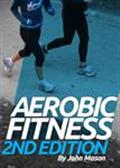
Aerobic Fitness
Understand cardio respiratory fitness. Keep your heart, lungs and circulatory system healthy.
Aerobic fitness can contribute more to your quality of life than any other aspect of fitness! This updated version of a book originally published by Kangaroo Press (Simon and Schuster)
It is an informative read, and also contains detailed illustrations of which exercises to use for individual muscle groups.
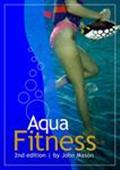
Aqua Fitness
Aqua fitness is low impact exercise in water. It is great for rehabilitation after injury, weight loss, and general fitness. This e-book is full of well illustrated exercises to try and has been written for both exercise professionals and amateurs. It is the revised edition of a book by John Mason, originally published by Kangaroo Press (Simon & Schuster).

How to be a Life Coach
Life coaching is a relatively new profession - although coaches have been around for a long time in the guise of trainers, instructors, managers and tutors for various professions and disciplines. Life coaching is not easily defined, but it is a type of mentoring which focuses on helping individuals to achieve what they would like to achieve and thereby to lead more fulfilling lives. Unlike other forms of coaching, it takes place outside of the workplace and is concerned with all aspects of a person’s life.