
LEARN TO SELL MORE!
- Learn management, communications and business
- Learn about marketing, sales and promotions
- Combine these skills and discover opportunities for employment and business in the marketing industry
- 900 hour, self paced practical course with options to upgrade to a diploma
MANAGE YOUR MARKETING BETTER
This course will give you the basic knowledge and basic practical experience to boost your confidence in moving to a new position or creating your own company.
Course Structure
This course is made up of a number of modules. To complete this course you must study and pass all of the modules listed below.
Core Modules
Elective Modules
In addition to the core modules, students must also choose 5 of the following elective modules.
Accreditations
Understanding the Scope of Marketing
 Marketing is concerned with relating the supply of products to its potential demand in such a way as to satisfy the needs and wants of buyers and create a profit for the supplier. The process of marketing is that of transferring goods and/or services from producer to consumer at a profit. It should add maximum value to the product at minimum cost.
The marketing manager/personnel are concerned with such activities as: pricing, selling, merchandising, advertising, promotion, packaging, market research, transport, destination, placement, planning, and accounting. In fact, marketing includes all those processes which will enable a manager to maximize the added value of a profit. Sales are one of those.
Marketing is, in the fullest sense of the phrase, "THE NAME OF THE GAME", or the primary purpose of most business activity. The ‘game’ is fundamentally concerned with competition, which relies heavily on the offering of substitutes and/or complements.
Marketing today is a consumer-based approach to business activity, where each aspect of business is
coordinated in terms of what the customer wants.
Marketing is not just selling, and involves a lot more than selling. Sales are part of marketing, and good sales are usually the end product of successful marketing. Marketing involves several crucial processes:
- Attracting customers (through promotions and advertising).
- Persuading them to buy (through promotions and advertising).
- Selling
- Keeping customers satisfied (by delivering what they expect, and giving service so that they come back!)
Graduates from this course may become involved in one, several, or all of these processes.
Some marketing jobs involve managing the whole four stages (e.g A Marketing Manager) while others might only be responsible for one part (e.g. A Sales Manager, or Customer Service Officer).
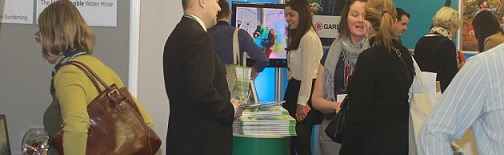
HOW DO YOU DEVELOP A RETAIL STRATEGY?
Retailing is the final step in the process through which consumers buy goods or services for their personal use. A retail outlet is more than just a place where you buy and sell things though. It provides important benefits to society, including providing employment for many people and making significant contributions to the economies of countries throughout the world. On a more personal scale, retailers provide a convenient service for both sellers and buyers. They save people time and money by locating a range of products for sale in one location. And just as importantly, they fulfill our need for shopping as a leisure experience by providing interesting and pleasurable environments in which to acquire goods.
Retail Life Cycle
Retailing is never static. Even in the short term of one or two seasons, retail outlets must cater for change as new products become available and changing trends influence what customers want to buy. In the longer term, retail businesses must be prepared to adapt to such things as:
- Changing demographics; for example an aging population among the customer base or an increase in double or triple income households in the area.
- Changing patterns in urban development; for example, the development of nearby large shopping centres, retirement villages or freeways
- Economic upturns and downturns - both globally and nationally.
- New technology; for example, shopping over the internet and electronic bar coding.
- Increased competition – from similar businesses in the local area and further afield.
In recent years, the outstanding trends in retailing are that customers are generally more affluent, have higher expectations, are more consumer-oriented and have less leisure time. On the one hand this means that retailing is easier because customers have more money to spend and a greater desire to spend it. But on the other hand, many retailers have to work longer hours and put more effort into merchandising to meet customer expectations. Many retailers also face ever-increasing competition, as urban populations grow and globalisation brings new competitors to local market places.
The retail life cycle is a concept that summarises how retail outlets develop and decline:
1. Introduction Stage: The new retailer adopts an aggressive marketing stance to ensure their success. This typically means lower prices so the retailer can compete with other businesses and lower profits because of development costs.
2. Growth Stage: Sales and profits increase as customers try out the new shop. Competition increases as other businesses copy the idea so the retailer needs to expand to stay ahead – possibly starting up new outlets and more sophisticated distribution channels. Profits may decline slightly as a result of this investment.
3. Maturity Stage: The retailer has over expanded and faces intense competition which makes it difficult to retain loyal customers. Profits decline as the retailer cuts prices to attract customers.
4. Decline Stage: The business can no longer compete and becomes obsolete. Businesses which change the nature of their operations to suit the changing times may be able to avert decline.
Factors That Influence Retailing Strategies
The success or otherwise of a retailer depends on many things. Some are beyond the retailer’s control; for example, the flow-on effects of natural disasters, international events or government policies. Normally though retail success is dependent on the choices made by the retailer. These include the following:
Product type and price
What to sell depends firstly on the retailer’s personal choice (for example, choosing to sell gourmet foods or convenience groceries, or both) but is also driven by consumer demand (do customers want to buy gourmet foods in your shop?) and competition (are other shops nearby selling the same gourmet foods and at what price?).
The characteristics of a product affect its ability to make a profit. The retailer depends on both markup and turnover to make a profit. The markup is the increase in price between what the retailer has to pay the wholesaler and what the buyer pays the retailer. Some products have a high markup but low turnover, e.g. furniture. Other products such as groceries have a low markup because of competition, but high turnover.
The gross margin of a product also needs to be considered as this allows the retailer to compare how the shop is performing compared to similar businesses and how much different product lines within the shop are contributing to profits. (Gross margin is the amount the retailer makes on an item (revenue minus the cost of goods sold, calculated as a percentage of sales. It does not take into account the operating costs.) In general terms, businesses that sell goods with high mark-ups have higher gross margins.
High turnover, high mark-ups and high gross margins do not necessarily make large profits. A retailer that sells large quantities of an item in a short space of time may have to continually reorder small amounts to meet demand, which means they cannot take advantage of bulk discounts offered by wholesalers. Smaller shipments also increases the cost of delivery charges. Ideally the retailer achieves a balance between turnover and gross margins.
Outlet location
Factors that influence the outlet location include:
- Cost of land to build a new outlet or cost to lease an existing premises. Large superstores often build on the outskirts of regional towns where land is cheap, flat, and easily accessible by road.
- Zoning regulations – local commercial and industrial zoning laws determine where outlets may operate.
- Convenience – for both customers and deliveries. This includes proximity to highways, major traffic routes, major shopping centres and housing areas. Also consider ease of delivery access, signs, parking areas and street visibility.
- Location of competitors. Competition from similar businesses nearby isn’t necessarily a bad thing. Many businesses benefit by clustering together to draw in customers who wish to browse and compare a range of products before making a purchase. Camping shops, clothing stores, fast food outlets and antiques shops commonly use this strategy.
- Customer demographics – age, income, lifestyle, etc. determine what consumers are likely to buy. For example, a garden centre or hardware store is likely to do well located near new housing areas.
Shop ambience and image
Increasingly shopping is a leisure experience – we don’t just shop to buy items we need; we visit shops to pass the time, to meet people, to see what’s new, and to eat and relax in an attractive setting. ‘Retail therapy’ is a fact of modern urban life.
Creating a desirable image and ambience is important for luring customers into the shop. Customer targeting is vital – a surf wear shop for example uses very different music, décor, lighting, and other fixtures to a women’s clothing boutique. Creating the right mood or ambience is more likely to encourage customers to buy what’s in the shop.

AFTER THIS COURSE
All businesses not matter what they do or sell (whether a service or a product) need marketing expertise to succeed in a competitive business environment. If you don't have marketing skills it will leave you behind and your competitors in front. Whether you are running your own business or working for others, gaining marketing skills helps drive you and the business you are working in forward.
Marketing involves a whole range of activities and procedures and before you can even sell a product you need to understand the benefits of marketing it first. An great course if you work in sales, hope to work in marketing, want to advance your careeer to a management position or just want to understand the marketing process in order to sell more.
Enrol using the automated procedure on this site or contact us via phone or email to ask questions and enrol with a real person.
You can enrol at anytime and start the course when you are ready. Enrolments are accepted all year - students can commence study at any time. All study is self paced and ACS does not set assignment deadlines.
Please note that if a student is being assisted by someone else (e.g. an employer or government subsidy), the body offering the assistance may set deadlines. Students in such situations are advised to check with their sponsor prior to enrolling. The nominal duration of a course is approximately how long a course takes to complete. A course with a nominal duration of 100 hours is expected to take roughly 100 hours of study time to complete. However, this will vary from student to student. Short courses (eg. 100 hrs duration) should be completed within 12 months of enrolment. Certificates, Advanced Certificates and Awards (eg. over 500 hours duration) would normally be completed within 3 -5 years of enrolment. Additional fees may apply if a student requires an extended period to complete.
If a student cannot submit their assignments for 6 months to ACS, they should advise the school to avoid cancellation of their student
registration. Recommencement fees may apply.
Simply click on the ENROL OPTIONS button at the top of this screen and follow the prompts.
You can see the course price at the top of this page. Click 'enrolment options' to see any payment options available.
You can pay by Credit Card, PayPal, Afterpay or bank transfer.
Yes! We have payment plans for most courses. Click 'enrolment options' to see the available payment plans.
We also have Afterpay that will allow you to pay for your course or payment plans in four instalments (if you are in Australia).
There are no entry requirements that you need to meet to enrol in our courses, our courses are for everyone.
If you are under 18, we need written permission from your parent/ guardian for your enrolment to continue, we can arrange that after you have enrolled.
You don’t need to purchase any additional resources to complete our courses.
What do I need to know before I enrol?
We aim to teach you the essentials without you having to purchase any specific computer program.
We recommend that you have access to a word processing program, such as Microsoft Word or Google Docs, so that you can easily complete and submit your assignments.
You sure can. We are here to help you learn whatever your abilities.
Yes, if you are enrolling in a Certificate or Advanced Certificate, you might be eligible for credits if you have evidence of your previous studies or relevant experience. More information is here.
We recommend that you are able to browse websites, send emails and conduct online research. You will need to be able to type and submit your assignments.
If you have limited computer skills, we can make special arrangements for you.
This is possible, it depends on the institution. We recommend that if you would like to use our courses that you contact the institution first. Our Course Handbook is a good resource for this.
Our courses are written in English and we only have English speaking academic staff. If you can read and complete your assignments in English, our courses are ideal for you.
Our courses are designed to build knowledge, hands on skills and industry connections to help prepare you to work in the area, running your own business, professional development or as a base for further study.
This course is aimed at providing you with a solid understanding of the subject. It has been designed to take 600 hours, which includes your course reading, assignment work, research, practical tasks, watching videos and more. When you complete the course, will have a good understanding of the area/ industry you want to work in.
It’s up to you. The study hours listed in the course are a rough guide, however if you were to study a short course (100 hours) at 10 hours per week, you could finish the course in 10 weeks (just an example). Our courses are self-paced, so you can work through the courses in your own time. We recommend that you wait for your tutor to mark and return your assignment before your start your next one, so you get the benefits of their feedback.
The course consists of course notes, videos, set tasks for your practical work, online quizzes, an assignment for each lesson (that you receive feedback from your tutor from) and ends in an exam (which is optional, if would like to receive the formal award at the end), using our custom built Learning Management System - Login.Training.
Our courses are designed for adults to gain professional development and skills to further their careers and start businesses.
Our custom online learning portal allows you to conduct your learning online. There may be practical tasks that you can do offline. You have the option of downloading your course notes or print them to read later.
There is also the option to pay an additional fee for printed course notes and or USB (availability limited to location and deliverability).
Yes, if you don’t have access to the internet, you can receive the course as paper notes or on a USB stick for an additional fee. We can also make alternative arrangements for you to send your assignments to us.
We offer printed notes for an additional fee. Also, you can request your course notes on a USB stick for an additional fee.
Yes, your tutor is here to help you. Simply post any questions you have in your login.training portal or contact the office and we can pass on a message to your tutor.
We are more learning focussed, rather than assessment focussed. You have online quizzes to test your learning, written assignments and can complete an exam at the end of the course (if you want to receive your certificate). You will not receive a pass/ fail on your course work. If you need to add more details on your assignment, we will ask you to resubmit and direct you where you need to focus. If you need help, you can ask your tutor for advice in the student room.
Each module (short course) is completed with one exam.
Exams are optional, however you must sit an exam if you would like to receive a formal award. You will need to find someone who can supervise that you are sitting the exams under exams conditions. There is an additional cost of $60 incl. GST for each exam.
More information is here
There are practical components built into the course that have been designed to be achieved by anyone, anywhere. If you are unable to complete a task for any reason, you can ask your tutor for an alternative.
When you complete the course work and the exams (8-9 exams) and you will be able receive your course certificate- an Advanced Certificate. Otherwise, you can receive a Letter of Completion.
You can bundle the short courses to create your own customised learning bundle, Certificates or Advanced Certificates. More information is on this page.
Yes, our courses are built to be applicable for people living anywhere in any situation. We provide the fundamentals, and each student can apply their own unique flair for their own interests, region and circumstances with the one-on-one guidance of a tutor. There is also a bit of student directed research involved.
Employers value candidates with industry skills, knowledge, practical skills and formal learning. Our courses arm you with all of these things to help prepare you for a job or start your own business. The longer you study the more you will learn.
ACS has an arrangement with OAMPS (formerly AMP) who can arrange Professional Indemnity from Australian and New Zealand graduates across all disciplines. Ph: 1800 222 012 or email acs@oamps.com.au.
Who are ACS Distance Education?
ACS Distance Education have been educating people for over 40 years.
We are established and safe- we have been in education for over 40 years.
We are focused on developing innovative courses that are relevant to you now and what you will need to know in the future.
We are focused on helping you learn and make the most of your experience.
You can enrol at any time, you can work on your course when it suits you and at your own pace.
We are connected to many industry bodies and our staff participate in continuous improvement and learning activities to ensure that we are ahead of what learning is needed for the future.
Our courses are not accredited by the Australian Government. However many of our courses are recognised and held in high regard by many industry bodies.
Our courses are written by our staff, who all have many years experience and have qualifications in their speciality area. We have lots of academic staff who write and update our courses regularly.
How do I enrol my staff/ sponsored students?
Yes, you can do a request for a bulk enrolment and request an invoice on our Invoice Request Form
We can prepare an invoice, quote or proforma invoice. Simply complete your details on our Invoice Request form
We can arrange bulk discounts for your course enrolment, please get in touch with us to discuss your needs.
Yes, we have many students who are in locked facilities, such as prisons or hospitals. We can cater by also offering paper notes at an additional cost.
What if I have any more questions or need more information?
We can assist you to find the right course for your needs. Get in touch with us via email (admin@acs.edu.au) call on +61 7 5562 1088 or complete our course advice form.
What if I change my mind?
Please get in touch with studentservices@acs.edu.au if you would like to be removed from our mail list.
If you would like ACS Distance Education to delete your information at any time (whether you are a customer or a prospective customer), please contact our privacy officer and we will process this ( admin@acs.edu.au ).
If students require a reproduction of their certificate, an electronic copy can be provided at a cost of AUD$35 incl GST. Printed copies are not available.
Course Contributors
The following academics were involved in the development and/or updating of this course.

John Mason
Writer, Manager, Teacher and Businessman with over 40 years interenational experience covering Education, Publishing, Leisure Management, Education, and Horticulture. He has extensive experience both as a public servant, and as a small business owner.
John is a well respected member of many professional associations, and author of over seventy books and of over two thousand magazine articles.

Kate Gibson
Kate has 12 years experience as a marketing advisor and experience as a project manager. Kate has traveled and worked in a variety of locations including London, New Zealand and Australia. Kate has a B.Soc.Sc, Post-Grad. Dip. Org Behaviour (HR).

Denise Hodges
Promotions Manager for ABC retail, Fitness Programmer/Instructor, Small Business Owner, Marketing Coordinator (Laserpoint). Over 20 years varied experienced in business and marketing. More recently Denise studied naturopathy to share her passion for health and wellness. Denise has an Adv.Dip.Bus., Dip. Clothing Design, Adv.Dip.Naturopathy (completing).

Tracey Jones
Widely published author, Psychologist, Manager and Lecturer. Over 10 years working with ACS and 25 years of industry experience.
Qualifications include: B.Sc. (Hons) (Psychology), M.Soc.Sc (social work), Dip. SW (social work), PGCE (Education), PGD (Learning Disability Studies).
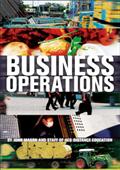
Business Operations
Covers things from running a business from finance and forecasting to staffing changes and legal issues. Chapters include: People, Law, Finance, Risk, Product Management, and Daily challenges.
Management
Management is the process of planning, organising, leading, and controlling an organisation’s human and other resources to achieve business goals. More importantly though, effective management needs to be a process of human interaction and compassion. Most bad managers don’t know they are bad. They may well admit that they are a bit erratic, or they are sometimes late to appointments, but it is rare that they will recognise that they are ineffective as managers. Never fear...read here. This book has something to offer even the best of managers.

Modern Marketing
This book explores new approaches to marketing, how to adapt to a continually changing world both through online marketing, and more. Some aspects of marketing never change; but many of the well established approaches used in the past simply do not work any more. This book lays a foundation for thinking about marketing in a different way

Starting a Business
Businesses don't need to fail! This is concise, easy to read, and alerts you to all of the things that commonly make a difference to business success or failure. Seven chapters are: “A Reality Check”, “The Product or service”, “Managing a Business”, “How to Find Customers”, “How to Make a Sale”, “Delivering the Product or Service”, “Pitfalls to Avoid”.